Raja Mohan on Indian Foreign Policy and the Rebalancing of Asia

In this episode of Asia Inside Out, Rorry Daniels, Managing Director of the Asia Society Policy Institute (ASPI), speaks with Raja Mohan, ASPI Non-Resident Distinguished Fellow and author of the forthcoming India and the Rebalancing of Asia. Daniels and Mohan discuss India’s relationship China, the U.S., and Russia; regional headwinds impacting New Delhi; and India’s strategic vision for its role in a changing Asia.

Pakistan as India’s Ukraine?

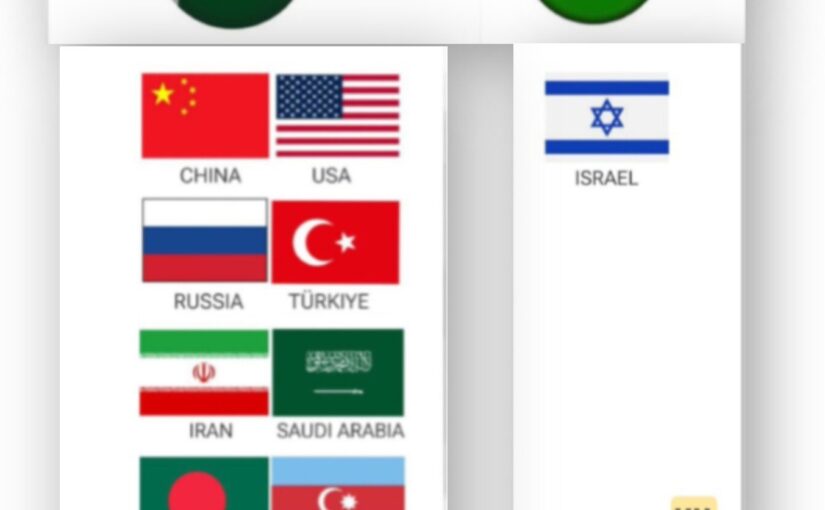
The chart above lays out “strategic partners” for 2025. Pakistan lists China, TĂŒrkiye, Iran, Saudi Arabia, and assorted others. India, by contrast, shows Israel. But the real issue isn’t who collects more flags; it’s whether any of Pakistan’s patrons will ever raise its HDI, improve infrastructure, or embed long-term stability.

I’m interested to hear what the commentariat thinks of this moment. India’s foreign policy is already locking it into superpower status. Pakistan remains reactive, borrowing survival from whoever will lend it.

The analogy that strikes me: India–Pakistan resembles Russia–Ukraine, except if Ukraine had kept nuclear weapons. The parallels are strong:

  • Ukraine, like Pakistan, is a breakaway sibling — the “other half” of a civilizational whole.

  • Ukraine, like Pakistan, survives by appealing to larger patrons.

  • And interestingly, the GDP ratio gap between Russia and Ukraine is almost exactly the same as between India and Pakistan (please fact check me).

Just as Ukraine is considered the homeland of the Russian Empire (Kievan Rus’), Pakistan carries the legacy of Partition as the “Indus homeland.” That symmetry makes the analogy more than superficial.

On Kabir: I understand his consistent emphasis on Muslim rights and Muslim nationalism. Readers should be aware of that lens. I’m not moderating him out, but I would caution the commentariat against being gaslit into endless provocations by Kabir. The question here is not identity politics, but the direction of Indian and Pakistani foreign policy in a critical moment in global history (decades are happening in weeks).

Trump Has Birthed Eurasia

I’ve been busy, but I can’t shake the feeling that we’re living through the beginning of a new world.

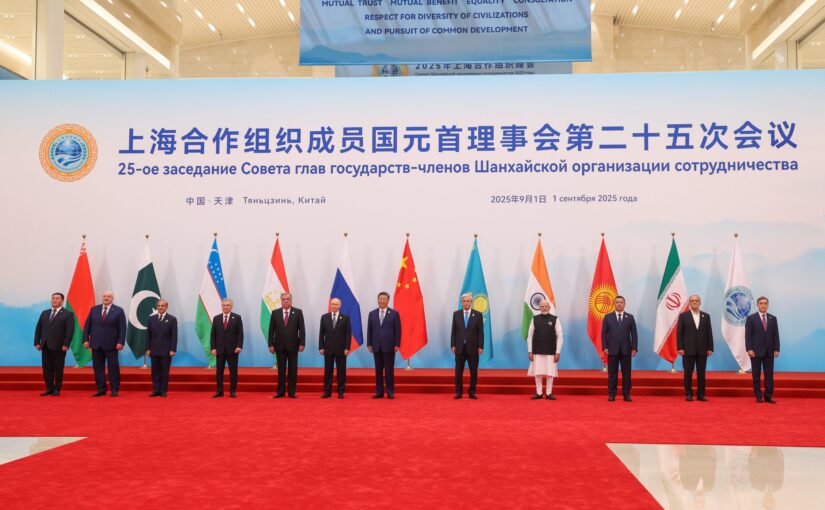
It was acute with the SCO summit; not just through the headlines, but the atmospherics. The handshakes, the body language, the ease. It’s the kind of thing that barely registered in Western media, but Modi’s presence, standing shoulder to shoulder with Xi, Putin, and Pezeshkian, felt like the curtain rising on a new geopolitical epoch.

And at the center of it all? Donald J. Trump. Not by design, of course. But by consequence.


đŸ”„ The Modi Factor Continue reading Trump Has Birthed Eurasia

đŸȘ™ What’s in a Name? Mukesh, Not Mukash.

While reading Brad DeLong’s fascinating newsletter on centi-billionaires and political power (I’m going to ignore Elon’s self-imploding stunt), I noticed something that jarred me more than it should have: Mukesh Ambani’s name was misspelled as “Mukash.” A minor slip, perhaps. But it was the only error in a list that included Bernard Arnault, Warren Buffett, and Michael Bloomberg—men whose names command a certain global familiarity.

What does it say that even after spending nearly half a billion dollars on a wedding for his son, India’s wealthiest man doesn’t merit a spellcheck? It says a lot.

🧠 The Chimera of Respect via Capital Continue reading đŸȘ™ What’s in a Name? Mukesh, Not Mukash.

USA, China, Taiwan. A Fateful Triangle.

Following was part of conversations with few well-informed folks about the subject.

Hamid

Fateful Triangle – China-United States & Taiwan

By Hamid Hussain

November 10, 2022

“Let China sleep; when she wakes, she will shake the world”.       Napoleon 1817

In the last two decades, United States and China have emerged as competitors for political and economic influence especially in the Indo-Pacific region. This has invariably influenced the military posture of both countries to secure economic gains. Most strategists are of the view that Taiwan will be the most likely cause of military conflict between China and United States. Continue reading USA, China, Taiwan. A Fateful Triangle.

India as a global factory: A project seventy years in the making

A potential watershed event in India’s modern economic history passed by recently. A state of the art, globally recognized, electronic product is to be made in India for export to the world.

Apple announced plans to make its latest phone model – iPhone 14 – in India, a significant milestone in the company’s strategy to diversify manufacturing outside of China.

Five percent of iPhone 14 production is expected to shift to the country this year, much sooner than analysts had anticipated.

While Apple is big, a more telling example of India’s potential is at the end of this post. But before that, how did India, a country that struggled to feed itself in the 1950s, get into the running for ‘factory of the world’ ?

In 1950, less than 1% of Indian college students studied science and engineering. By 2022, this number had risen to more than 30%. In fact, science and engineering have become so popular in India today, that a counter culture has arisen in the form of movies like 3 Idiots. Back in 1950, India’s best students were focused on subjects like law and social sciences, primed to manage the Empire. In fact, some have remarked that the independence movement was a result of the British producing too many lawyers in India.

Since independence, a concerted effort has been made by the Indian state to popularize science and engineering. This was done under the aegis of spreading a ‘scientific temper’, starting with the establishment of Vigyan Mandir in 1953. Subsequently, following in the legacy of medieval India’s Jantar Mantars, Nehru planetariums were established in major Indian cities. Further, the establishment of the IIT system gave a formal structure and high standard to engineering education. In 1976, the cultivation of scientific temper was included as a fundamental duty in the Constitution.

By the late 1970s, India’s growing pool of scientists and engineers had attracted attention from abroad, specifically Japanese automakers. This resulted in a dramatic increase in India’s automobile production, more than doubling from 700,000 to 2 million in the 1980s.An entire ecosystem of vendors producing automobile components came up around Suzuki’s Gurgaon factory. It is perhaps surprising that the Indian government did not think about replicating this success in the electronics sector. This oversight turned out to be an enormous missed opportunity.
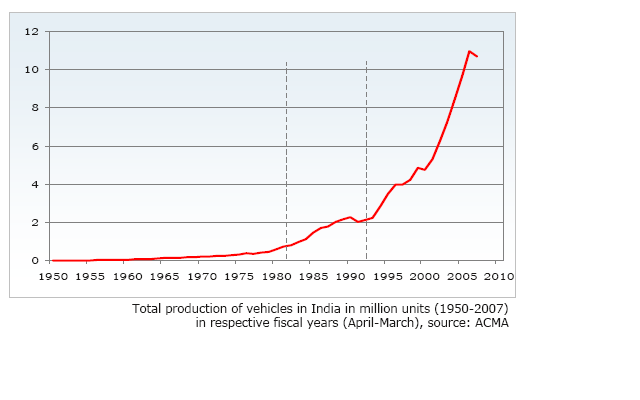
The post 1990 period saw an acceleration in India’s economic growth, with the software and IT sector taking a prime position both in the export numbers and the economic narrative. However, India was a manufacturing star as well, particularly its pharma, petrochemical and automobile industries.

However, its potential in the wider manufacturing arena remained unrealized and indeed unrecognized. The late 2010s produced new exigencies in the global order, with Western countries trying to pivot away from their dependence on China. In this process, India has emerged as the only real alternative to achieve the technical complexity and economies of scale demanded by modern industry.

An equally important turn of events has been the precipitous decline in India-China relations. If Chinese support for Pakistan had made Indians wary of the CCP, its direct clashes with India on the border have made China enemy number one in the Indian public’s eye. There is a determination at the political and public level to not depend on Chinese manufacturing imports. This mark has already been achieved for toys, cell phones and PPE. Make no mistake, India wants to bring Chinese imports down to zero. This is what ‘Atma Nirbhar Bharat’ (self reliant India) really means.

On the other hand, Western business seems keen to move out of China. The LA Times describes the experience of one European manufacturer to move away from China,

In 2019, he began assessing the possibility of moving some manufacturing capabilities to Vietnam. But he abandoned the plan eight months later after price increases for about half of the company’s projects upset his customers. Product development also took longer — one prototype that would have been completed in three weeks in China required six months in Vietnam.

A review of other countries in Southeast Asia proved even less fruitful, he said.

By late 2020, Gaussorgues turned farther afield — to India. The local electronics and automotive ecosystem offered lower manufacturing costs and easy access to parts. With five employees so far, he aims to start assembly work next year, and hopes to host the majority of manufacturing there after five years.

What is important to note here is that India being able provide an alternative to China is not about the population. SE Asia, where the person in the article first when to has enormously populated countries, all with fantastic port access. India is able to provide an alternative because of the consistent emphasis on science and technology education over the past 70 years.

If you build it, they will come. Eventually.

China: A Book and a TV serial..

I just finished Edward Rutherford’s “China, the novel” and enjoyed it. Capsule review:

China: The Novel by [Edward Rutherfurd]

This author writes sweeping sagas about particular places (London, New York) and clearly researches a lot before he writes. This one covers China from the first opium war to the end of the Qing dynasty. As usual, he has created characters (a British opium trader, a missionary, a Chinese mandarin, a Chinese rebel, a eunuch in the Manchu court, etc) that cover all important events (opium wars, Taiping rebellion, court intrigues, empress Cixi, etc). The book is a fun read and the history is well researched. While you can read many books about the history of the era, this one fills in the social mores, family dynamics etc in ways that a history text cannot. Well worth a read.

And happened to finish the overly long serial “Ruyi, Royal Love in the Palace” on Amazon Prime at the same time. This is a (very fictional) account of Ruyi, the Ula Nara empress in the reign of the Qianlong emperor. The details are ALL fictional, but the serial is lavishly produced and seems to capture the atmosphere of the harem (or what i imagine to be the atmosphere of the harem) very well. The novelist seems to have had some moral purpose in view, so the evil nature of the whole arrangement is perhaps a bit overdone (but it is also possible that in actual practice it was even more evil than this), and the serial is TOO long, going on for 87 episodes where 20 would have been more than enough. And some of the plot devices are also unrealistic (everyone is plotting, plots get discovered all the time, but the emperor never seems to take precautions against them; on the other hand, he too may be constrained the nature of the institution). But slowly but surely it does capture the terrible nature of this institution. Worth skimming through if you don’t have the time for a long soap opera.

Why did so many BAME (Black, Asian and Minority Ethnic) voted Tory? (a)

This is a follow up to:

Why did so many BAME (Black, Asian and Minority Ethnic) voted Tory?

It appears that Jews, Indian and African Britons abandoned Labour in droves and voted for other political parties. Would be curious to learn who they voted for. Suspect many voted for the Liberal Democrats.

As described by Veedu Vidz in the above previous Brown Pundit post, moderate muslims also appear to have abandoned Labour en mass. Who did moderate muslims vote for?

Are there any English exit polls? [Updated with this exit poll hat trip Ali Choudhury.] Do we know how Pakistani Britons, Bangladeshi Britons, Indian musiim Britons, muslim Britons in general voted?

In the above conversation it was implied that minorities and people of color in USA vote Democrat. My response is that in America Asian Americans and Latino Americans are “swing voters” not wedded to either party. Black African Americans vote overwhelmingly Democrat. However, I think President Trump will likely do a lot better with the Black African American vote in 2020 than he did in 2016.

From page 26 of the exit poll provided by Ali Choudhury, we can see the following:

  • Labour lost only nine percentage points of the BAME vote
  • Conservative Tories gained only one percentage point in additional BAME voters
  • Liberal Democrats gained only six percentage point in additional BAME voters
  • Other political parties gained two percentage points of additional BAME voters

Labour–if these exit polls are not contradicted by other exit polls–did FAR better in 2019 among BAME voters than I thought (and that many political commentators thought). To my surprise the Liberal Democrats only gained six percentage points of BAME voters (for 12% total) and the Conservative Tories only gained one percentage point in additional BAME voters.

My new question is why did the overwhelming vast majority of BAME Britons vote for Jeremy Corbyn? Why did so few BAME Britons vote Liberal Democrat?

Did the moderate muslim Britons almost universally vote for Jeremy Corbyn? If so, why? Would love to hear from Veedu Vidz and Rakib Ehsan.

Welcome back Mahathir Mohamad, Hero of Asia! (a)

https://www.youtube.com/watch?v=7_NMXgdCP-U

This is a follow up to:

Welcome back Mahathir Mohamad, Hero of Asia!

Rishabh Gulat–who I respect greatly has a different take on Datuk Mahathir Mohamad, Hero of Asia, than I do. Some argue that Datuk Mahathir has recently shifted his policy and allied with conservative Wahhabi (subset of Salafi, subset of Sunni) muslims, MBS, Saudi Arabia and Pakistan against India. Mr. Gulat implies that Datuk Mahathir is backing Brown Pundit favorite Dr. Zakir Naik against India:

https://www.youtube.com/watch?v=GfhVQoIvGIs

Please watch Mr. Gulat and come to your own conclusions.

The Indian Malays (7% of the population, 15% of the professional workforce, 40% of all Malaysian doctors, economic engine that moves Malaysia) are rallying the opposition to Datuk Mahatir. Mr. Gulat thinks the global Indian diaspora and global Eastern philosophy diaspora (presumably inclusive of Confucians, Toaists and Chinese) should back the Indian Malays in this.

I need to do a lot more research before proposing an alternative course of action. But here is a question. Can the Indian Malays, global Indian diaspora, global Eastern Philosophy, global Muraqabah tilted Sunnis and Shia and global liberal muslims unite and offer Datuk Mahathir Mohammed an offer he can’t refuse?:

There are many great and powerful Indian and Indonesian muslims–friends of PM Modi–who can make the offer.

As an aside, many Brown Pundits readers know Dr. Zakir Naik fanboy and heart throb Veedu Vidz. Please ask him to come on the Brown Pundits Podcast!

Mr. Rishabh Gulat is a great thought leader and expert on Indonesia, Malaysia and South East Asia more generally. He says that India and Indonesia should make a civilizational, cultural, economic and geopolitical alliance. Is there an interest in the Brown Pundits Podcast interviewing Mr. Rishabh Gulat?

Please let us know in the comments.

American Caste (b)

America has a national crisis in math capacity, competence and merit. American students sharply underperform students in many countries all over the world. Including Vietnam, which is a poorer country than India per capita. We will heavily refer to the 2018 OECD PISA report in below paragraphs, but the below chart graphic is from the 2015 OECD PISA scores report because math scores are reported for more countries in the 2015 report. Perhaps the 2018 report will be revised to add more countries in the future:

In my view  a level 5 PISA score is the minimum requirement for a person to be considered a high school graduate who is literate in math, able to function in the modern global economy, or be qualified to attend college. The PISA report defines a level 5 PISA score or better as a fifteen year old that “can model complex situations mathematically, and can select, compare and evaluate appropriate problem-solving strategies for dealing with them.” How does America perform in the 2018 PISA report?:

  • United States: 8% of students scored at Level 5 or higher in mathematics
  • OECD average: 11%
  • Six Asian countries and economies had the largest shares of students who did so:
    • Beijing, Shanghai, Jiangsu and Zhejiang (China): 44%
    • Singapore: 37%
    • Hong Kong (China): 29%
    • Macao (China): 28%
    • Chinese Taipei: 23%
    • Korea: 21%

Note that these six countries were among the poorest countries in the world in the 1950s, far poorer than poor Americans or poor Europeans or poor Chileans can even imagine. In 1979 China was unbelievably poor. Much of the population of China–perhaps as many as 100 million–had starved to death because of extreme poverty in the 1970s. Poor children around the world are outperforming American children in mathematics despite extremely low education spending per student and very low socio-economic level of their legal guardians, where socio-economic level is defined as:

  • income
  • wealth
  • formal education of parents

Do any American high school student subgroups perform well in Mathematics? Yes, “people of color” or “minority” Americans perform well in Mathematics. America’s “people of color” or “minority” students are orders of magnitude more likely to get an 800 on the mathematics SAT than European Americans. If we assume this is an extreme tail end distribution issue related to European Americans having a lower standard deviation and non standard distribution in mathematics performance relative to “people of color” or “minority” Americans, we can explore the breakdown of Americans who score between 750 and 800 on the Mathematics SAT. Here European Americans perform far better relative to “people of color” or “minority” Americans.  In 2015 16,000 European Americans scored 750 or higher. 33,000 “people of color” and “minority” Americans scored 750 or higher. We further know that 51% of SAT test takers were European Americans and 49% were “people of color” or “minority” Americans.  “People of color” or “minority” Americans are [33,000/16,000]*[51%/49%] or 2.15 times as likely to score 750 or higher on the mathematics SAT compared to European Americans.  If we examine the 107,900 test takers who got SAT math scores of 700 or higher; 59,900 are “people of color” or “minority” Americans, versus 48,000 European Americans. “People of color” or “minority” Americans are [59,900/48,000]*[51%/49%] or 1.30 times as likely to score 700 or higher on the mathematics SAT compared to European Americans. For data junkie geeks like me there is a lot more data on SAT math score distributions here and here. The Greta Anderson article’s comment section in particular has some very intelligent commentators who have studied the American SAT score distribution. This is likely to be the subject of many future blog posts and Brown Pundits Podcasts.

What about this is worrying?:

  1. European Americans in particular are sharply under-performing both very poor children around the world and “people of color” and “minority” Americans in mathematics.
  2. American mathematics SAT scores have fallen between 1972 and 2016. 1972 is the earliest year for which I could find comparable SAT mathematics scores. In 2017, 2018 and 2019 the SAT mathematics exam was completely restructured to make scores no longer comparable to SAT mathematics scores between 1972 and 2016.
  3. 90% or more of current jobs and businesses are likely to be replaced by artificial intelligence (AI), brain electro-therapy (meditation . . . practiced by civilizations around the world for over 5,000 years), brain sound therapy (naad or mantra yoga and their equivalents in Native American, Egyptian, Sumerian, Taoist and other civilizations around the world for over 5,000 years), bio-engineering tissue, genetic editing, and fused AI-brain interface synthesis intelligence. Almost all of these future disciplines are complementary to mathematics.

Future articles and podcasts are planned all six of these future disciplines. If you are curious about fused AI-brain interface synthesis intelligence, please watch my main man Elon Musk:

Some say that the tension and relationship challenges between America’s four big castes–European Americans, European “Latino” Americans, Black Americans and Asian American–are driving low math scores for European Americans “AND” other Americans. One example is where thought leader Mark J Perry explores the possibility that tension between the European American caste and the Asian American caste are lowering American  mathematics performance. Excerpts of his article are reproduced below:

Continue reading American Caste (b)

Brown Pundits