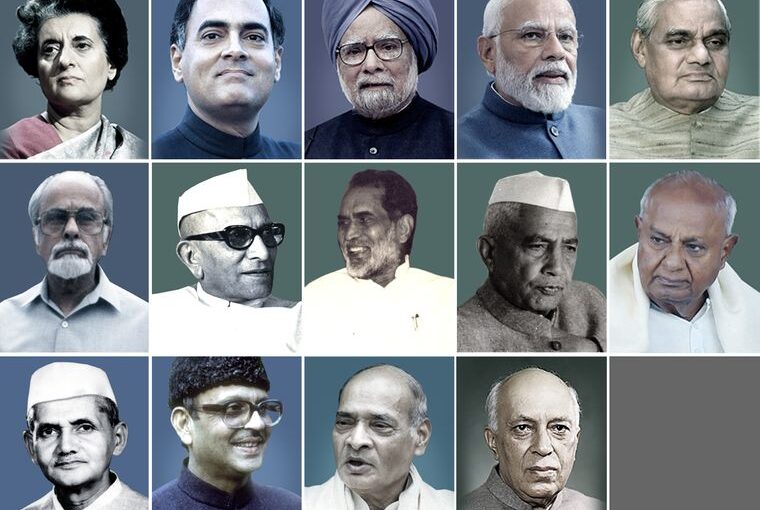
Open Thread: Who Would Be India’s Best Prime Minister, And Why?

Replying to Sbarrkum got me thinking; instead of relitigating India-Pakistan, a more interesting question: across 14 India Prime Ministers, who actually did the job best?

Simple question. Hard answer.

Make the case. What criteria matters most to you?

  • Economic stewardship
  • Institutional integrity
  • Foreign policy judgment
  • Social cohesion
  • Crisis management

No slogans. No party loyalty. Just reasoning.

Moderated for substance. Indian-centred perspectives prioritised.

Setting the ground straight on the Indian economy

“I could see some parts of the coastal peninsula approaching Thai levels at best”

Some comments in our discussion threads necessitate a deconstruction of the Indian economy.

In my opinion, a good place to start analyzing national economies is nominal industrial output. This is a good measure of the level and depth of industrial prowess of a country. The prices of industrial goods also tend to be less sensitive to locale, than services.

As an example of the usefulness of this measure, consider the economies of Italy and Germany. Seeing the number of German brands around the world, the reputation of German engineering and more recently, the exodus of highly educated Italians from their country, we have a strong intuition that the German economy is stronger than the Italian one. Yet the difference between Germany and Italy in terms of overall PPP GDP per capita does not seem very large. However, restricting to the nominal industrial output, the German output is more than twice that of Italy.


India’s lost decades: A failure of discourse

Plot of world gdp growth versus Indian gdp growth

There is much historical work on the Indian economy under British rule. The top line summary is indicated in the graph above, while the world grew quickly from 1800 to 1950 (per capita gdp more than tripling), India stayed exactly where it was. Plenty of reasons have been offered, but India’s troubles in this time come down to two reasons:

  1. A lack of natural resources necessary for industrial growth.
  2. British racial attitudes that deemed Indians unworthy of human investment.

The period I am more interested is the time between 1965 and 1982. The world experienced a surge in output in this time. South Korea went from around the same GDP per capita as India, to 7 times India’s output.


Why does the West get Immigrants and not Indigenous

A post as a result of discussion I had with a classmate, now an Aussie for about 30 years

Classmate: As for Australia and need for immigrants…. insufficient labor supply for the growing economy!

My reply::Plenty of Labor, the Indigenous Aborigines.
Why are they (First Aussies) not being educated, Racism ??

Classmate:  Barr…you are clearly unaware of the reality..there is no simple solution to the barriers faced by Aborigines in integrating into the Australian economy.

My long reply, the crux of this Post
There are parallels of why Immigrants are preferred over Aus Aborigines and why the Brits got Indentured South Indian Labor for the Estates in Ceylon  (Same as why Immigrants are preferred  over African Americans in US too)

Indenture Estate Labor in Ceylon was essentially undocumented, i.e. not given any legal status (Residency ) or even Birth not recorded, The reason was simple, residency or similar would have meant Ceylon Labor Laws would have been applicable. Ceylon Labor Laws were pretty decent and reasonable for those times. So it was easier to control undocumented South Indian Labor. Sinhalese were notorious for NOT being docile and prone to Litigation. Just keep in mind only a select few Ceylonese got a decent education. Universal literacy (and Life Expectancy) only happened after Independence. Tamil were more prone to violent crime, but among themselves. Oppressed rarely fight the oppressor in this caste the high caste Tamils.

Continue reading Why does the West get Immigrants and not Indigenous

Brown Pundits