Should Babri Masjid have been moved to Pakistan?

This deliberately provocative piece draws on Kabir’s recent comments, Arkacanda’s excellent essay, Musings on & Answers, and Nikhil’s profound piece in “Urdu: An Indian Language.”

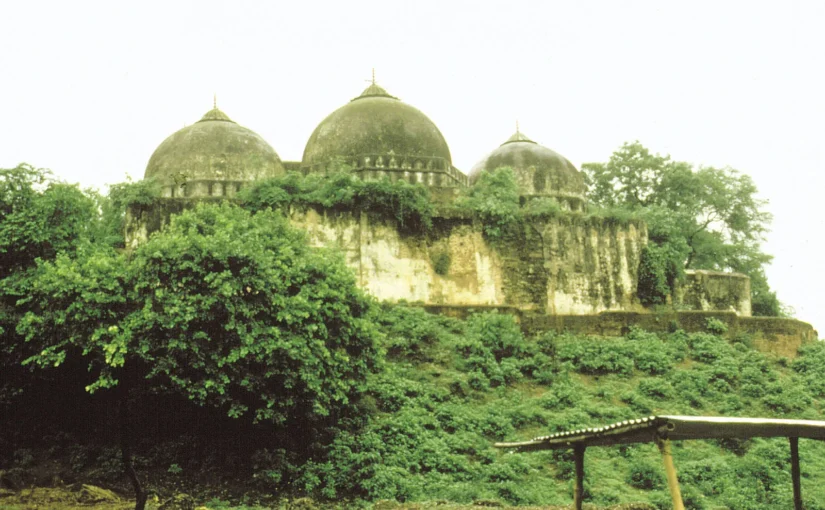
If India wants to avoid future Babri Masjids, it needs a clearer, more orderly doctrine for handling irreconcilable sacred disputes. Excavation, relocation, and compensation should be formalised as the default tools, rather than allowing conflicts to metastasise into civilisational crises. Geography matters. Some sites carry layered sanctity for multiple traditions; others do not. Al-Aqsa, for instance, is both the site of the Jewish Temple and central to Islamic sacred history through the Isra and MiÊżraj. Babri Masjid was not comparable. It had no unique pan-Islamic significance, while the site was widely regarded within Hindu tradition as the birthplace of Lord Ram. The same logic applies to Mathura, associated with Lord Krishna. Recognising asymmetry of sacred weight is not prejudice; it is common sense. A rules-based system—full archaeological excavation, dignified relocation of structures where necessary, and generous compensation—would allow India to preserve heritage without endlessly reopening civilisational wounds.

Urdu is not an Indian language but Hindu nationalists made it one

It is a Muslim-inspired language that emerged in India. That distinction matters. Blurring it creates confusion, not harmony. There was an early misstep in North Indian language politics. Modern Hindi was deliberately standardised on Khari Boli rather than on Braj Bhasha or Awadhi, both of which possessed far richer literary lineages. This decision, shaped by colonial administrative needs and North Indian elite nationalism, flattened a complex linguistic ecology and hardened later divides. One unintended consequence was the permanent preservation of Urdu within the Indian subcontinent. Because Khari Boli Hindi remained structurally interchangeable with Urdu, Urdu survived as a parallel high language. Had Braj or Awadhi become the standard instead, that mutual intelligibility would have collapsed, and Urdu would likely have been pushed entirely outside the Indian linguistic sphere.

Persian Linguistic Pride

Today, a similar impulse is at work. There is a growing tendency, often well intentioned, to Indianise the Mughals and Urdu, to fold them into a seamless civilisational story. This misunderstands both history and the settlement that Partition produced. Partition did not merely redraw borders. It separated elites, languages, and political destinies. Urdu crossed that line with Muslim nationalism. It cannot now be reclaimed without ignoring that choice. I say this as someone with both an Urdu-speaking and Persian-speaking inheritance. When I chose which tradition to consciously relearn and deepen, I chose Persian. Not out of sentiment, but judgment. Persian language nationalism remains rigorous, self-confident, and civilisationally anchored. Persian survived empire, exile, and modernity without losing coherence. It carries philosophy, poetry, statecraft, and metaphysics as a single, continuous tradition. Shi‘ism, Persianate culture, and Persian literature remain intertwined. They preserve depth rather than dilute it. As a Bahá’í, that continuity has personal resonance. But the argument does not depend on belief. It stands on history.

Urdu as the “Muslim tongue” Continue reading Should Babri Masjid have been moved to Pakistan?
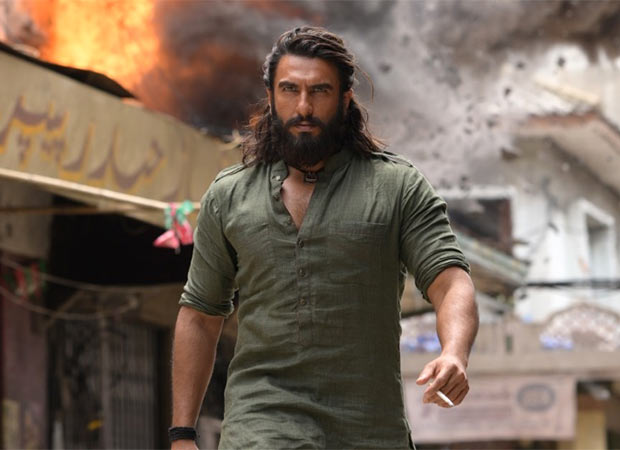
Dhurandhar showcases Bollywood’s New Obsession: The Sexy Pakistani Villain

We watched Dhurandhar last night at Apple Cinemas (the last time we went to see Ishaan Khatter’s Homebound). It is the best mass-market Bollywood film I’ve seen since Animal, and far more immersive. What struck me most was not the action, nor the plot, but Bollywood’s new formula: a full-scale fetishisation of Pakistan.

Kabir keeps claiming that Bollywood casts Pakistanis as villains. This misses the point. The villain is always the sexiest figure in any film. Bollywood has finally realised this. Raazi hinted at it. Animal stumbled on it with Bobby Deol’s star stealing turn. Dhurandhar perfects it.

For the first time, Hindu actors are not performing cartoon versions of Pakistan. They are cosplaying Pakistanis with forensic precision; the clothes, the diction, the swagger, the social codes. In earlier decades the attempt was clumsy. Now the calibration is exact. Pakistan, in these films, becomes the Wild West of the subcontinent: familiar enough to feel intimate, distant enough to feel dangerous. Continue reading Dhurandhar showcases Bollywood’s New Obsession: The Sexy Pakistani Villain

Who can speak for the “Muslim minority” of India?

Public debates on Indian Muslims often make one basic mistake: they collapse all minorities into a single category and then declare that “everyone is thriving because a few individuals have done well”. This flattens history, erases structure, and turns civilisational questions into census arithmetic.

1. Minorities Are Not Interchangeable

Jains, Sikhs, and Buddhists offer no meaningful analogy to Indian Muslims.

  • Jains were never politically central to the subcontinent.

  • Sikhs built a regional power, not a pan-subcontinental order.

  • Buddhists have been demographically marginal for a thousand years.

Indian Muslims were different. For centuries they formed the civilisational elite of North India; shaping courts, languages, music, etiquette, food, architecture, and the ways Indian states understood power. Delhi, Agra, Lucknow, Hyderabad were not enclaves. They were the centre of the political and aesthetic world of the Indo-Gangetic plain. A fall from centrality is not comparable to never having been central at all.

2. Individual Success Is Not Structural Health Continue reading Who can speak for the “Muslim minority” of India?

Moderation Note: On Gaza, October 7, and the Limits of Tolerance

Kabir’s Muslim nationalism cosplaying as liberalism is vexatious (it would be excellent if he just disclosed his priors), but I give the admin full authority to handle that directly.

My immediate concern is with BB-HS. I have barred him from becoming an author and have removed his last twenty comments. Despite his earlier misrepresentation about being “half-Muslim,” I allowed him to return under a new handle, tabula rasa. His output, however, is increasingly defined by “fantasies” about what a model minority should be; deracinated and devoid of meaningful character.

BB’s Response (after I had deleted his past 20 comments)

“Why though? The only animus I have is with Kabir because he represents a demographic I loathe – The soft Islamist | The ‘liberal’ English-speaking version who whitewashes his more hardcore cousins’ atrocities. Actual people have died due to Islamists which Kabir downplays (Pahalgam, October 7th). Some ribbing online is nothing in comparison. And I haven’t even said anything insulting.”

My Response

    1. Kabir is not an Islamist. He is a Muslim nationalist—since Pakistan itself is sine qua non Muslim nationalism (the idea that Indian Muslims were entitled to their own nation). Just as every Israeli is, by definition, a Zionist/Jewish nationalist, even if individuals disagree with its implications, Kabir represents that current.
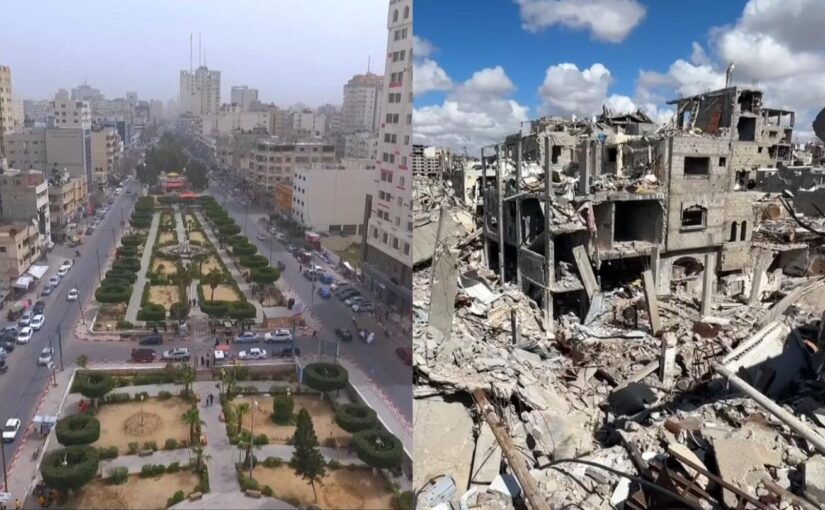
    2. What stands out is that BB mentions only Pahalgam and October 7—both undeniably tragic events, and I say this as someone who is not Muslim—while omitting the ongoing genocide in Gaza.It is akin to referencing 9/11, a devastating moment in history, without also acknowledging the destruction of Afghanistan and Iraq and the millions of lives lost in their aftermath.
    3. Unlike Kabir, vexatious, but rarely personal, BB makes his attacks direct. He is not Kabir’s friend indulging in ribbing; he is simply “Honey” under another guise.
    4. What sets him apart is an openly hierarchical stance: non-Muslim lives ranked above Muslim ones, echoing the very post-colonial divide-and-rule strategies we are meant to reject.
    5. Kabir manipulates through weaponised victimhood; BB chooses blunt hostility, lacing personal abuse into his commentary. I have permanently removed Honey’s comments for that reason, vulgarity leaves no space for debate and I treat BB and Honey as a single entity.
    6. Beneath the very different styles of BB-HS & Kabir lies the same contempt: the belief that the only acceptable minority is one hollowed out, compliant, and dead on the inside.

Moderation Philosophy

As a Founder, my job is to ensure Brown Pundits does not become an echo chamber. I have repeatedly critiqued Kabir’s contradictions, but once I accepted him as a Muslim nationalist cosplaying liberalism, I could also accept his place in the debate. We have multiple Hindu nationalists here, and when Kabir is challenged\moderated, the balance tends to restore itself. The ecosystem can correct for his presence.

Finally, let me stress: the comment boards are not the only heart of this site. Too often they descend into noise. If regular commentators want to influence debate constructively, they should apply to become Authors; where they can speak directly to our 2,000+ daily readers, not just the dozen or so regular commentariat.

Brown Pundits is rapidly emerging as the most interesting Indo-Pak cross-channel precisely because it is not an echo chamber. We literally upset everyone and that is a great thing because it means we are covering new difficult terrain. My moderation began with strict principles, but like everyone else, I have a life, job, and family. That means I must also be pragmatic.

Modernization leading toward confessionalization

From the comments:

I think what’s underappreciated is that hindu nationalism is partly caused by the collapse of the caste system. I know that may not intuitively make sense at first, but compared to when I was a boy the caste system has significantly weakened. People are finally starting to look at each other as hindus rather than by caste – and this has never been the case in the past. Obviously caste is still here and we all have a long way to go but it is substantially weakened and weaker than its ever been. I believe this is the major cause for the rise of hindu nationalism.

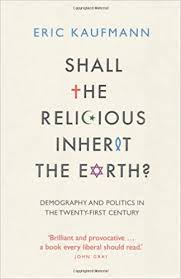
One of the strange things that surprises many people is that modernization often produces stronger and more robust confessional identities. In Eric Kaufmann’s Shall the Religious Inherit the Earth? Demography and Politics in the Twenty-First Century he talks about the fact that urbanization and increased access to educational opportunities for the rural middle-class in Muslim countries resulted in gains in power to Islamist movements. The reasons are manifold, but one issue is that local power blocs centered around customary and traditional relationships and patronage networks were disrupted by development. In a flatter and more deracinated landscape simple and universal Islamist messages were appealing.

You see the same process happening in Indonesia. Traditional Islam among the Javanese is syncretistic. But its power and strength are in the solidities of the rural cultural order which has deep local roots. Development and migration to urban areas result in a shift toward more world-normative (santri) Islam which is not contingent on local cultural and social frameworks.

In this model then the economic liberalization ushered in by the Congress Party in the early 1990s sowed the seeds for the emergence of a broad-based Hindu nationalism, as economic dynamism and urbanization begins to erode the older caste-based solidities.

Brown Pundits