Trump Has Birthed Eurasia

I’ve been busy, but I can’t shake the feeling that we’re living through the beginning of a new world.

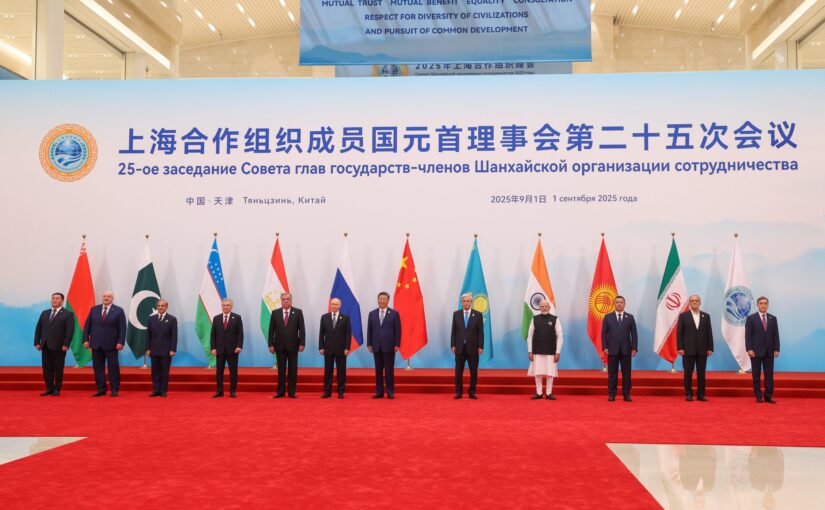
It was acute with the SCO summit; not just through the headlines, but the atmospherics. The handshakes, the body language, the ease. It’s the kind of thing that barely registered in Western media, but Modi’s presence, standing shoulder to shoulder with Xi, Putin, and Pezeshkian, felt like the curtain rising on a new geopolitical epoch.

And at the center of it all? Donald J. Trump. Not by design, of course. But by consequence.


đŸ”„ The Modi Factor Continue reading Trump Has Birthed Eurasia

The Long Defeat: How Hinduphobia Hollowed Out Pakistan

I lost an entire post earlier, but perhaps it’s for the best. I’ve had the time now to clarify my thoughts and this is better to make clear the new policy of just junking comments that don’t “smell right.”

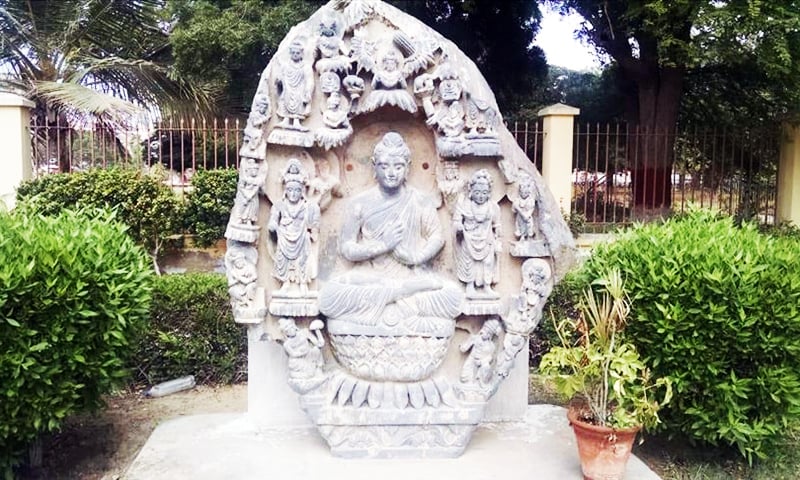
What prompted me to write again was a small but telling excerpt from a recent Dawn article. It wasn’t just that they misspelled “Brahman”; they wrote “Barhaman,” a word that doesn’t exist in any linguistic tradition. It was also the order in which they listed religions. They wrote:

“
revered for not only the followers of the world’s three major religions — Buddhism, Sikhism and Hinduism
”

Hinduism, the oldest and most foundational of the three, was placed last. This is not trivial. Both Buddhism and Sikhism evolved from Hinduism. Yet in Pakistani discourse, so marked by dislocation and disavowal, Hinduism is routinely treated as a junior or fringe faith. This is what endemic Hinduphobia looks like: not explicit violence, but civilizational misordering, semantic erasure, and the subtle, continuous downgrading of Hindu memory.

It’s barely recognized. And that’s the point. Continue reading The Long Defeat: How Hinduphobia Hollowed Out Pakistan

Browncast: Trump, Tariffs, Hurt Feelings, and India..

Another Browncast is up. You can listen on Libsyn, Apple, Spotify, and Stitcher (and a variety of other platforms). Probably the easiest way to keep up the podcast since we don’t have a regular schedule is to subscribe to one of the links above!

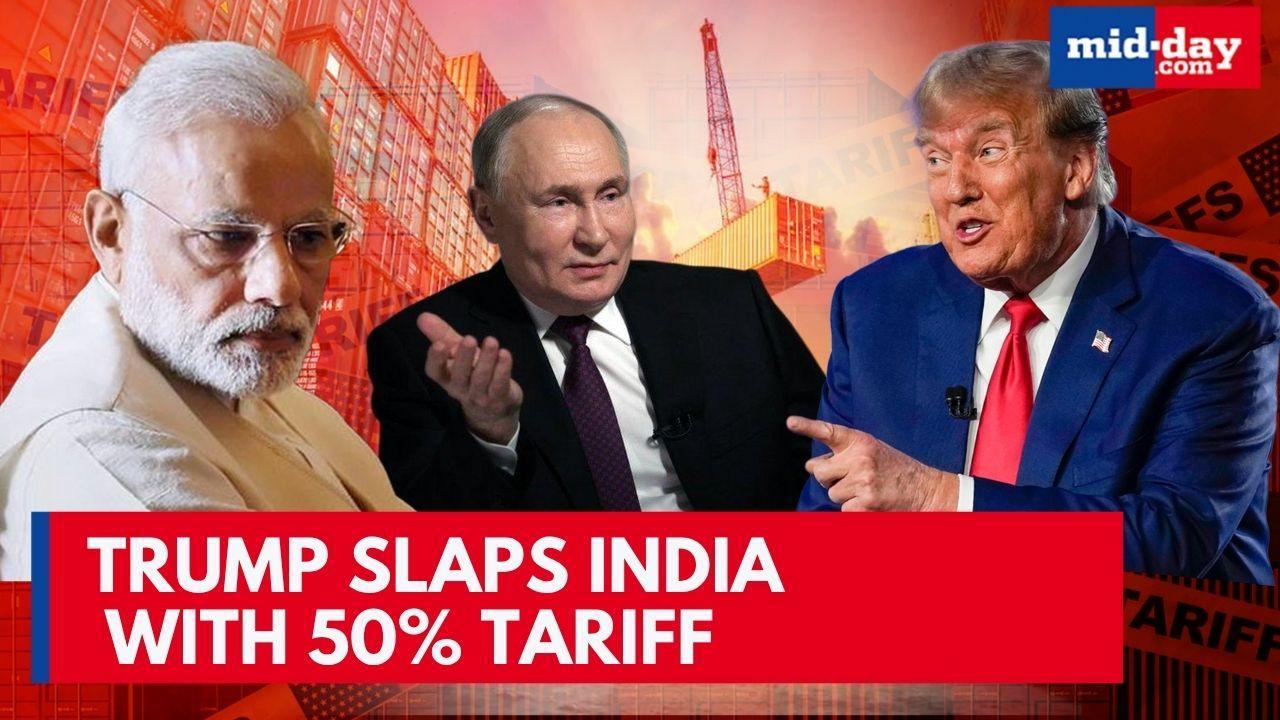
In this episode I talk to Kushal Mehra (Host of the Carvaka podcast) and regular Brownpundit Amey Chaugle about the tariff kerfuffle… the public (and on Trump’s side, frequently intemperate) war of words between the USA and India that is partly about India’s protectionist tariff regime but maybe mostly about other things (such as Donald’s ego and his desire to get that Nobel Peace Prize)..
Dig in and add your comments. We too don’t know exactly why this is going on and where it will end..  🙂

Trump Imposes Total 50% Tariff On Indian Goods, India Hits Back

Why Indian English Loves Long Sentences

If China endured a century of humiliation, India has lived through a thousand years of it. Invasions and exploitation left it poor in wealth but rich in culture; intricate, adaptive, and resilient. That depth shows in Desi English, which often favours long, ornate sentences over plain ones.

This habit echoes Persian’s former role in the subcontinent: a prestige language whose mastery signalled rank. Even Ghalib’s vast Persian verse drew less love than his Urdu. In India, Persian was the colonial language of power; today, English plays that part.

In Iran, Persian changes fast. Slang, borrowed terms, and foreign tones reshape it so quickly that many in their forties struggle with teenage speech. My own Persian, kept alive in Kuwait and India, is closer to Shirazi and Tehrani standards than to the language my ancestors spoke. I’m self-conscious with Iranians, but with diaspora Persians, I speak freely; we share a looser, accented form of speech. Continue reading Why Indian English Loves Long Sentences

đŸŽ¶ Bravo, Kabir | Artists Across Borders

This Sunday, something quietly powerful is taking place: Indian and Pakistani artists will share a virtual stage, and among them is our very own Kabir Altaf, performing as a Hindustani classical vocalist and ethnomusicologist based in Pakistan.

Kabir shared that Sheema ji personally invited him to sing, and he’s planning to perform the Kabir bhajan already available on Spotify. A simple act but a potent one. Rooted in shared heritage, offered in public.

It’s easy to be cynical about India–Pakistan relations. But these moments matter. When musicians from Sindh and Delhi, translators from Karachi, and filmmakers from Mumbai come together, even on Zoom, they create a space that politics cannot reach. A space where memory, performance, and shared roots do the work diplomacy cannot.

This is the kind of initiative we need more of: not policy, but presence; not diplomacy, but dialogue. These exchanges don’t dilute identity; they deepen it.

Bravo and huzzah to Kabir, and to all involved.


🗓 Event:

Indian–Pakistani Artists in Dialogue

📅 Saturday, 3rd August 2025

⏰ 7:30 PM Pakistan time / 8:00 PM India time

đŸ‘©â€đŸŽ€ Moderator:

Sheema Kermani – Bharatanatyam dancer, theatre personality, Karachi

🎙 Featured Speakers & Performers:

  1. Dr. Syeda Saiyidain Hameed – Writer, former Member of India’s Planning Commission

  2. Dr. Ghazala Irfan – Philosopher and Chair, Department of Humanities, LUMS; affiliated with All Pakistan Music Conference

  3. Anand Patwardhan – Documentary filmmaker, Mumbai

  4. Saleema J. Khawaja – Vocalist of Punjabi Kafi and Guru Nanak verses, Lahore

  5. Neela Bhagwat – Hindustani vocalist (Gwalior Gharana), Mumbai

  6. Azhar Shan – Folk musician from Sindh

  7. Dhruv Sangari – Hindustani classical and Sufi vocalist, Delhi

  8. Zainub J. Khawaja – Musician, member of Harsukhiyaan, Pakistan

  9. Yousuf Saeed – Documentary filmmaker, known for work on classical music in Pakistan, Delhi

  10. Kabir Altaf – Hindustani classical vocalist and ethnomusicologist, Pakistan

  11. Nishtha Jain – Documentary filmmaker, Mumbai

  12. Zahra Sabri – Lecturer and translator, Karachi

  13. Zulaikha Jabeen – Independent scholar, India


🔗 Join via Zoom

Click here to join

Meeting ID: 897 8701 6742

What kind of nationalism is it to live in India and have an Arabic name?

I’d said to myself: Why don’t I do my own Bhartiya-karan, that is, Indianise myself, before someone else thinks of doing it? The first problem was my name. Perhaps you don’t know: my name is Iqbal Chand. It occurred to me that “Iqbal” is an Arabic word. What kind of nationalism is it to live in India and have an Arabic name? And so, I changed my name to Kangaal Chand. As it happens, this name is far better suited to my financial condition considering that “kangaal” means “poor”. And why just me, it suits the rest of my country too.

The second problem that arose was of the dress. There was no trace of Indianness in the pants, coat and tie that I wore. In fact, all three were a reflection of my slave mentality. I was amazed that I had worn them all this while. I decided to wear pajamas instead of pants. But then, a certain Persian person told me that the pajama had come to India from Iran. And so, I began to wear dhoti and kurta. But not a kameez, as the word “kameez”, too, is of Arabic origin and it reeks of the stench and stink of an Arab!

The third problem was of hair! After all, was it not treachery against the country, a blatant form of antinationalism, to keep one’s hair fashioned in the English style? I instructed the barber to keep only one lock of long hair at the back of my head and shave off the rest. He did exactly that. I had seen images from ancient India showing men with long and lush moustaches. Following their example, I began to grow my moustache. When my friends saw the large moustache on my somewhat small face, they assumed that I had put on a fake one, possibly because I was acting in some play. Forget my friends, when I saw myself in this new look, I began to feel that I had been created not by God, but Shankar, the cartoonist. But I did not lose heart. One has to do all manner of things to be Indian.

An excerpt from a story by Kanhaiyalal Kapoor in ‘Whose Urdu Is It Anyway?: Stories by Non-Muslim Urdu Writers’, edited and translated by Rakhshanda Jalil.


As the posting on BP (and the comments) are pretty fast and furious; my capacity to edit and moderate is getting pretty stretched..

War in the Sanskritopolis

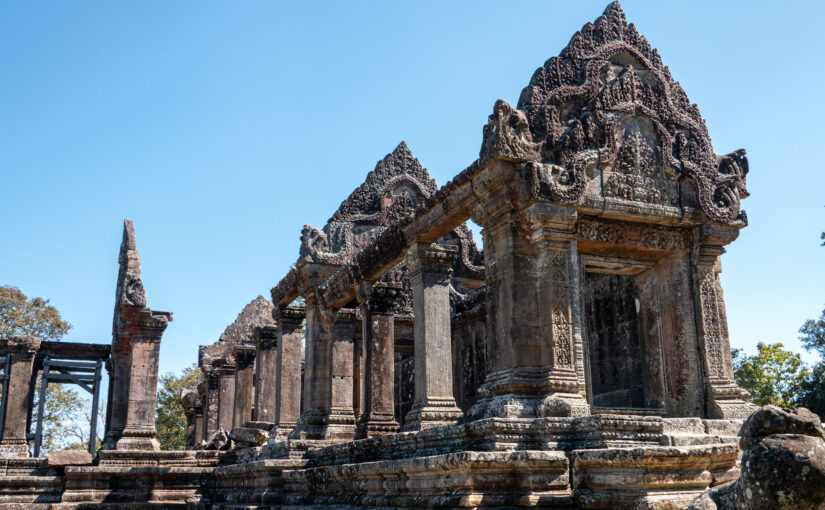
The long-running dispute between Thailand and Cambodia dates back more than a century, when the borders of the two nations were drawn after the French occupation of Cambodia.

Things officially became hostile in 2008, when Cambodia tried to register an 11th Century temple located in the disputed area as a Unesco World Heritage Site – a move that was met with heated protest from Thailand.

Why A Cluster Of Hindu Temples Is At Heart Of Thailand-Cambodia Conflict

It’s striking to see just how deeply Dharmic culture shaped Southeast Asia — not just as historical residue, but as a living civilizational layer. Buddhism, in many respects, prepared the civilizational terrain that Islam would later traverse.

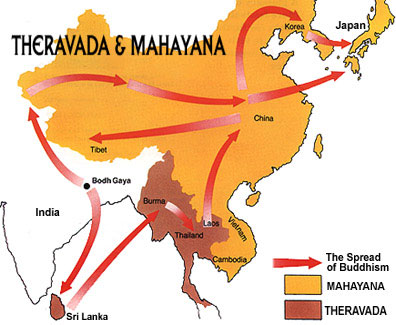
The Buddhist Studies: Theravada and Mahayana - buddhanet.net

Buddhism, too, was not monolithic. The Sri Lankan Theravāda tradition influenced the western flank of Indo-China, while Mahayana currents, traveling through Sumatra, appear to have looped back toward Guangzhou, feeding into the Sinosphere.

HISTORY OF MAHAYANA BUDDHISM | Facts and Details

The sectarian divergence between Thailand and Cambodia — Theravāda vs. Mahayana— adds nuance to territorial and cultural disputes like the Preah Vihear Temple, whose iconography and inheritance clearly align more with Cambodian history.

These are not just archaeological debates. They’re about cultural legitimacy, historical continuity, and civilizational memory.

In such moments, India, that is Bharat, must not remain a bystander. As the civilizational fountainhead, it should be playing a constructive role in cultural mediation and soft power diplomacy.

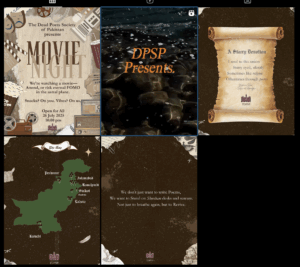
Dead Poets of Pakistan

After Kabir exited the WhatsApp group, the conversation between the Manavs and Furqan (who I have made Editor to encourage more DPPs) drifted, inevitably, to poetry and Punjabi. Furqan has already made two excellent contributions, A flying peacock and Lord Ganesh in a confectionary mill. Kabir did a great job in diversifying the Authorial voices on BP.

As we shape the future of Brown Pundits, I keep returning to one submerged voice in the Persianate world, particularly in Pakistan. A voice that is Westernised, undercapitalised, and culturally adrift. These are not the clerics, generals, or capitalists. These are the middle-gentry, the in-betweeners; fluent in English, wired to the internet, but uncoupled from patronage and power.

Like much of the Muslim world, Pakistan remains profoundly hierarchical. And I suspect its creative pulse, its latent genius, lies in that Westernised fringe of the lower elite: the zone between the bourgeoisie and the establishment. The boundary class. Half-in, half-out.

In a strange way, Pakistan’s obscurity may be its shield. Unlike India, an excavated society with every civilizational layer being rapidly monetised (Saiyaara is breaking records), Pakistan is a half-formed splinter. It doesn’t face the same pressures of internal reckoning. That may be a blessing.

Across the Persianate world, from Anatolia to Delhi, we are witnessing a civilizational scatter. The old cosmopolis of the Gunpowder Empires (Ottoman, Safavid, Mughal) has collapsed, leaving behind cultural debris. The Persianate polity, once a unified Empire of the Mind, is now a broken archipelago.

India, by contrast, benefits from its post-colonial majority. Like Israel, it is 80% one faith; with all the confidence and coherence that brings. It has the numbers, the market, and a dominant civilizational script. The Sanskrit world, if not unified, is at least centrally anchored.

In this context, Kabir represents one pole of the Pakistani elite: articulate, English-speaking, confidently liberal but also capable of drowning out the marginal voices he’s adjacent to. And yet sadly, I don’t think Pakistan is headed for any Hindufication. The trajectory is different.

Pakistan is not returning to India. It is, perhaps, becoming the lowlands of the Iranian plateau; a bridge nation once again, neither fully Arab nor Indic. Suspended between worlds, it may rediscover itself in that liminality.

Because sometimes, the dead poets are not gone. They’re just waiting for the right silence.
Brown Pundits: Broad Church or Narrow Canon?

Brown Pundits Must Stay a Broad Church

Reading Kabir’s thoughtful post on the “soft Hindutva” bias at Brown Pundits, I found myself both agreeing with parts of his argument and diverging from its framing. My own journey with BP goes back to its inception. The blog was born in Twixmas December 2010; 10 days after I had met Dr. Lalchand, whose presence has profoundly shaped my civilizational views.

I say this not as a biographical aside but because BP, at its best, is where the personal and civilizational collide. We bring who we are; our marriages, our migrations, our contradictions, into this messy, brilliant conversation.

At the time, like many Pakistanis, I held a deep-seated assumption: that Hindus were fundamentally “other.” It wasn’t overt hatred; just a civilizational distance, internalized from birth. But Dr. V & Brown Pundits challenged that.

A Forum With Bias? Yes. But Which One?

The heart of BP is not neutrality; it’s the willingness to host contradiction. That is its genius, and it must be protected.

Continue reading Brown Pundits: Broad Church or Narrow Canon?

Was Partition Good for Muslims?

Kabir:I will remind you of the Sachar Committee Report which stated that the condition of Indian Muslims was worse than that of Dalits. This was a report commissioned by the Congress government not by Pakistanis. India has never had a Muslim Prime Minister. I would be willing to bet that this is not going to happen in my lifetime. The Muslim League succeeded in getting the Muslim majority provinces a country of our own. This is a huge achievement.

Partition was sold as deliverance. In hindsight, it may have been the most sophisticated act of self-disinheritance in modern Muslim history. A century ago, Muslims on the subcontinent were a political force — deeply embedded, numerically significant, and intellectually diverse. Today, they are divided, disenfranchised, and disoriented. Three nations. No unity. No power. No clear path forward. Let’s take stock:

1. Divided into Three

Pakistan. Bangladesh. India. Three fractured expressions of one civilizational legacy — none of which fully represents or protects the totality of South Asia’s Muslims.

2. No Electorate Leverage

In India, Muslims lost their negotiating bloc overnight. From being a decisive vote in undivided India, they became a permanent minority — politically cautious, rhetorically silenced, and often viewed with suspicion. In Pakistan, Muslim identity became so hegemonic it erased internal plurality. In Bangladesh, it became suspect altogether.

3. Psychological Cleft

Two-thirds of Muslims had to unlearn India. Partition forced them to disown their history. The other third had to choose between being Muslim or becoming more Indian. This psychic wound — of being here, but not quite belonging — has never healed.

4. Urdu: From Bridge to Burden

Urdu, once the cultural glue of the Muslim elite, is now:

  • Enforced in Pakistan (to the resentment of Sindhis, Baloch, and Pashtuns)
  • Marginalized in India
  • Extinct in Bangladesh

A shared language was replaced by suspicion and statecraft.

5. Islam as a Spent Force

Partition Islam was meant to be political. It became performative. There is no robust Muslim political expression in the subcontinent today — only tokenism, sectarianism, or silence. It resembles post-revolution Iran: Islam was not discredited by the West, but by what its stewards did in its name. Partition didn’t solve the “Muslim Question.” It just made it unspeakable — in three different politicised idioms.

Brown Pundits