What Is Not India Is Pakistan

As Dave mentioned, there is a lively WhatsApp group of BP authors and editors, and it inevitably shapes the comment ecosystem. But one comment on the blog stood out:

“The very foundation of Pakistan is an anti-position. What is not India is Pakistan. So isn’t it obvious?”

It’s an extraordinarily crisp description of Pakistani identity-building. What is not India is Pakistan. That is not a slur; it is, in many ways, a psychologically accurate frame for how the state narrates itself.

What I increasingly find misplaced on this blog is the recurring assumption that Pakistanis are somehow “Indians-in-waiting,” or that Punjab is “West Punjab,” Pakistan “Northwest India,” or Bangladesh “East Bengal.” These are irredentist projections that simply do not match lived identities. This is not “North Korea” or “East Germany,” where both sides continue to imagine themselves as fragments of one common nation.

Yes, Pakistan consumes Bollywood and Hindi music, which themselves derive from Mughal and Indo-Persian syncretic traditions. Yes, Pakistan is culturally embedded in the greater Indo-Islamic civilizational sphere. But emotionally, Pakistan has severed itself from the Indian Subcontinent as a cohesive landscape. It has constructed a hybrid identity; part Turko-Persian, part Islamic internationalist, part anti-India.

I don’t personally agree with this move, and my own trajectory has been toward a strong Hinducised, Dharmic identification. But my view is irrelevant here. What matters is that Pakistani identity is defined negatively; as the commentator put it, “What is not India is Pakistan.”

Whether that is healthy or sustainable is another matter. But identities can persist in unhealthy configurations for a very long time; the stock market can be irrational longer than your liquidity can survive.

Hijab: Between Revelation and Regulation

When Bahá’u’lláh wrote that every word of the Qur’ān bears meaning and intention, he was reminding us that revelation, properly read, resists reduction.  Scripture, like language itself, is alive; it breathes, it hesitates, it renews.  Yet somewhere between the living word and the legislated code, the hijab became a symbol, of modesty, of defiance, of cultural siege, of theological purity, until its nuance was lost to politics.

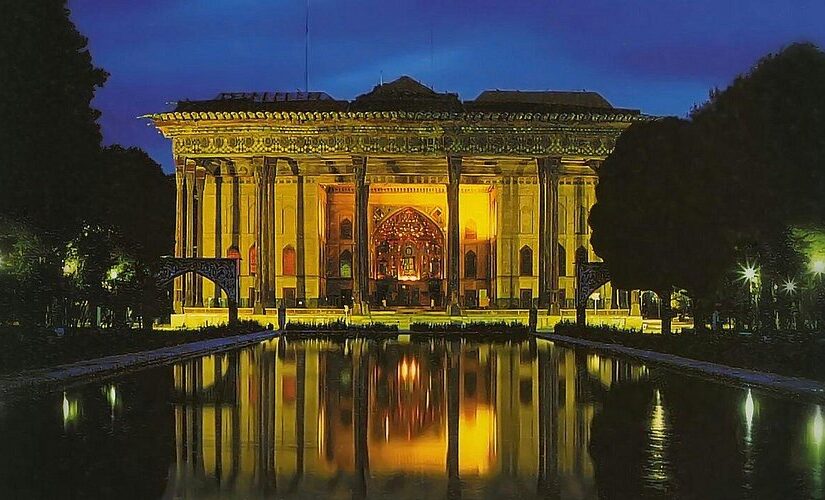
My friend is in Kashan, a city of gardens and scholars, and perhaps among the most traditional pockets of Iran.  She forgot her hijab back in her home city and now cannot step out of her hotel.  The irony is sharp: the veil that once signified spiritual privacy has become an enclosure of space.  Kashan’s cobbled lanes whisper poetry, but they also enforce silence.

Meanwhile, the liberal axis of Iran, Shiraz, Tehran, Gilan, Mazandaran, Semnan, walks the tightrope between revelation and rebellion.  The North dresses as Europe, the Centre prays as Qom.  Mahsa Amini’s martyrdom was Kurdish, and therefore doubly liminal: ethnically marginal, religiously symbolic (the Kurds are very secular as a rule of thumb; more Zoroastrian than the Persians).  Her death reopened a question the Qur’ān itself leaves open — what, after all, does áž„ijāb mean?

1. The Qur’ānic Vocabulary of Modesty Continue reading Hijab: Between Revelation and Regulation

L’OpĂ©ra, Iran, and the Post-Hindu Condition

A Meditation on Revolution, Secularism, and South Asia’s Futures


Inspiration arrives in the strangest of places.

Recently, I found myself deep in yoga, settling deeper roots in Cambridge, Massachusetts. It’s not clear whether this will be our long-term home yet but even so time to lay down the contours of a life (our main life of course still remains Cambridge, UK while Chennai, India is a must thrice yearly ensconcement).

In the midst of this personal flux, a video Nivedita just shared with cut through the noise: a YouTube interview about Iran before and after the Islamic Revolution, told through the eyes of a Baha’i couple who fled Iran and went on to create a French patisserie empire in India, L’OpĂ©ra.

Continue reading L’OpĂ©ra, Iran, and the Post-Hindu Condition

The Pakistani Inferiority Complex

These excellent tweets exhibit a painful pattern that many of us see but few want to name.

Pakistanis, particularly its establishment and elite classes, exhibit a deep inferiority complex towards white (light) Muslims; Arabs, Turks, Persians, and Afghans. These groups are valorized, romanticized, and used as benchmarks for identity and belonging. Meanwhile, other Asian groups, especially within South Asia and Southeast Asia, are seen as lesser. This manifests not only in foreign policy but in pop culture, education, and internalized social hierarchies.

This is why, even if Partition had to happen (and it was undeniably disastrous), Pakistan still could have been something else. It could’ve been a GCC meets Pahlavi Iran construct—a sleek, semi-modernist, high-income Asian Muslim republic with cultural gravitas and economic depth.

Instead, as others have rightly pointed out, Pakistan today has one of the lowest HDIs in its region. Karachi didn’t become Dubai. Lahore didn’t become Paris. Islamabad remains a ghost town of beautiful boulevards and hollow institutions. The promise wasn’t just broken; it was never even understood.

In some ways, Pakistan inherited the worst of both its imagined lineages: neither the intellectual cosmopolitanism of Persianate high culture, nor the industrious civic ambition of Indian civilizational continuity.

This is why tweets like those from @MrFreeFighter land so hard. They expose the psychic dissonance at the heart of the Pakistani state’s anxieties; its hatred of Pashtuns, its paranoia about “Afghanism,” and its inability to deal with its own peripheral ethnic groups as anything but threats.

Meanwhile, Indian Muslims like bombaybadshah, though deeply patriotic to India, often voice critiques of Pakistan with a clarity born of disappointment. They represent what Pakistan could have cultivated: a civic Islam, grounded in identity but untethered to ethnic obsession.

The final irony? South East Asia, Thailand, Cambodia, even Bali, retains more civilizational Dharma than most of Pakistan. Religion is irrespective of that elusive civilisational quality of Dharma, thus the true borders of Bharat lie eastward, not northwest.

Pakistan is not the enemy of India. It is the shattered mirror. And what it reflects, feudalism, insecurity, bigotry, and colonial hangover, is what the entire subcontinent must transcend. Again anyone who reads this can see I’m not saying this from a place of hate but love.


Why Pakistan Won’t Go the Way of Iran

I’ve been enjoying the new direction Brown Pundits has taken since the recent shake-up. Posts are now generating 100+ comments, and that kind of engagement creates a virtuous cycle. You want to write more, think more, respond more. I’m leaning into that.

For now, a lot of the content burden rests on me and that’s okay. It’s been encouraging to see older names return: Girmit, for instance. It feels like a slow reconsolidation of the original readership. Letting people return on their own terms.

Meanwhile, BRAHM, my newsletter, has taken on a different role; a home for more composed writing, life pieces, and the slow launchpad for my business. I just posted something there recently, which I’ll link to for now and follow up on soon. But here, on BP, is where I let myself think in public. Where I go long. Where thoughts breathe.

Continue reading Why Pakistan Won’t Go the Way of Iran

Dead Poets of Pakistan

After Kabir exited the WhatsApp group, the conversation between the Manavs and Furqan (who I have made Editor to encourage more DPPs) drifted, inevitably, to poetry and Punjabi. Furqan has already made two excellent contributions, A flying peacock and Lord Ganesh in a confectionary mill. Kabir did a great job in diversifying the Authorial voices on BP.

As we shape the future of Brown Pundits, I keep returning to one submerged voice in the Persianate world, particularly in Pakistan. A voice that is Westernised, undercapitalised, and culturally adrift. These are not the clerics, generals, or capitalists. These are the middle-gentry, the in-betweeners; fluent in English, wired to the internet, but uncoupled from patronage and power.

Like much of the Muslim world, Pakistan remains profoundly hierarchical. And I suspect its creative pulse, its latent genius, lies in that Westernised fringe of the lower elite: the zone between the bourgeoisie and the establishment. The boundary class. Half-in, half-out.

In a strange way, Pakistan’s obscurity may be its shield. Unlike India, an excavated society with every civilizational layer being rapidly monetised (Saiyaara is breaking records), Pakistan is a half-formed splinter. It doesn’t face the same pressures of internal reckoning. That may be a blessing.

Across the Persianate world, from Anatolia to Delhi, we are witnessing a civilizational scatter. The old cosmopolis of the Gunpowder Empires (Ottoman, Safavid, Mughal) has collapsed, leaving behind cultural debris. The Persianate polity, once a unified Empire of the Mind, is now a broken archipelago.

India, by contrast, benefits from its post-colonial majority. Like Israel, it is 80% one faith; with all the confidence and coherence that brings. It has the numbers, the market, and a dominant civilizational script. The Sanskrit world, if not unified, is at least centrally anchored.

In this context, Kabir represents one pole of the Pakistani elite: articulate, English-speaking, confidently liberal but also capable of drowning out the marginal voices he’s adjacent to. And yet sadly, I don’t think Pakistan is headed for any Hindufication. The trajectory is different.

Pakistan is not returning to India. It is, perhaps, becoming the lowlands of the Iranian plateau; a bridge nation once again, neither fully Arab nor Indic. Suspended between worlds, it may rediscover itself in that liminality.

Because sometimes, the dead poets are not gone. They’re just waiting for the right silence.

Ta’arof & The Art of Flattery


Because Tarof isn’t about numerical formulae. It’s not just “no means yes after the third try.” It’s not a knock-knock joke.

Onunchi, Ta’arof, and High-Context Societies

Tarof is best understood as high-context negotiation within deeply hierarchical and emotionally attuned societies; a kind of cultural Onunchi (옚눈ìč˜), for those familiar with Korean sociolinguistics. It’s the art of reading the room before the room speaks. More than etiquette, Tarof is a performance of dignity through flattery, deferral, and intuition.
And that’s precisely what’s being lost; not just in Rainn’s version, but in the Westernisation of diasporic Persian culture more broadly.


Read More Here

Resistance, Realignment, and the Roads Not Taken

First, a brief acknowledgment: Kabir remains one of the pillars of this blog. His consistency, depth, and willingness to engage with the hardest questions are invaluable. I don’t always agree with him—but the conversation would be much poorer without his voice. The post is a series of reflections—stitched together from the comment threads.

I. Gaza: Beyond the Pale of Language

The death of a 19-year-old TikToker, Medo Halimy, in South Gaza this week caught my eye—not because it was the most horrific (foetuses are sliced in two in Gaza as Dr. Feroze Sidwa* attests). But because having seen his video, it just made the death so immediate (yes that is a cognitive bias).

At this point, to debate whether what is happening is a genocide feels grotesque. It clearly is. The scale, the intent, the targeting of civilians and children—it’s all there. The legal frame collapses under the moral weight. We are witnessing something darker than war: ethnocultural suffocation & demographic extinction, broadcast live and met with diplomatic shrugs. But the world is watching inspired by the very brave Bob Vylan duo (UK punk-rap duo opposing imperialism, recently denied US visas):

Something stirs and pricks beneath the rubble.

II. The Huma Moment: A Civilizational Reversal? Continue reading Resistance, Realignment, and the Roads Not Taken

What Was the Point of Israel’s Iran Strike?

The Limits of Provocation

At some point, the world will have to ask: what exactly was Israel hoping to achieve?

In the days following the dramatic escalation between Tel Aviv and Tehran, we are left not with clarity but with a deepening sense of confusion. If the intention was to disrupt Iran’s nuclear program, there is little to show for it—centrifuges still spin, scientists remain in place, and the infrastructure of Iran’s deterrent capability stands unshaken. If the aim was to trigger chaos within the Iranian regime, then that too has failed—Tehran did not descend into disarray; it retaliated, measured and intact. And if the goal was symbolic, to remind the world of Israel’s reach and resolve, then the moment has already passed, clouded by questions of proportionality, legality, and consequence.

For all the fire and fury, the strike landed with the strategic weight of a gesture. Continue reading What Was the Point of Israel’s Iran Strike?

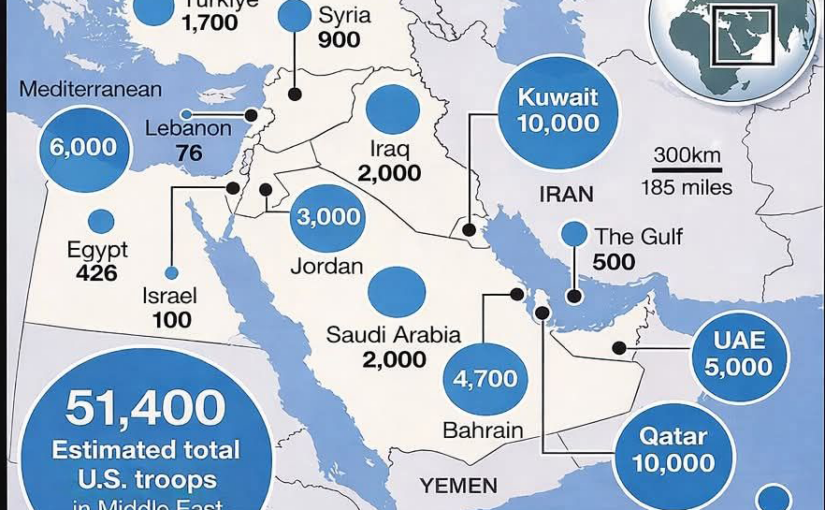
Satyajit Das: Middle East Trajectories – Implications for the Region and Energy Markets

This excerpts of the above titled article. Full article at
https://www.nakedcapitalism.com/2025/06/satyajit-das-middle-east-trajectories-implications-for-the-region-and-energy-markets.html

A little intro

When I first got hired to a small Wall Street startup I had low opinion of Traders and the like. Had to change my mind in a month or two. It was impressive to see how successful Traders could reduce different information from politics to medicine into one common Denominator: MONEY. This was the holy grail that Enron was pursuing, to have different markets, eg Water and Weather Futures to Credit Defauls Swaps all in one Porrfolio and integrated Pricing and Risk Management. Got wined and dined by Enron but was woefully lacking in knowledge.

Anyway  was never interested in Finance etc, so was somewhat clueless. The Traders gave me a grounding, but to get a more formal background worked my way thru about 30% of Risk Management and Financial Derivatives: A Guide to the Mathematics by Satyajit Das. Been impressed by him ever since. So when he writes I read very carefully

Later was very disillusioned, Wall Street as it was full of schemes to scam the middle classes and poor out of their money directly or indirectly.  The best example being Sub Prime Mortgages which led to Financial Crash in 2008 (Quite hypocritical of me because I made some decent moolah as well, even though a very small minion)
——————-

Some excerpts
Complacent financial markets and policymakers are playing out a theatre of the absurd based on little detail and propaganda– as the old trope states truth is the first casualty of war.

Caution is warranted. There is no certainty that Iran’s nuclear capabilities have been destroyed or significantly degraded. The fate of Iran’s highly enriched Uranium is unknown. Iran, which has extensive nuclear expertise despite the targeted killings of its scientists, has not indicated abandonment of its programs.

In effect, Iran is being forced to choose between becoming Libya (where Colonel Gaddafi gave up his nuclear ambition and was removed then murdered) or North Korea.

Its campaign against the abandoned Palestinians and attacks on Lebanon and Syria have not ceased. The Iranian action was in part to distract the world’s attention from its continuing genocidal atrocities. These will come back into focus.

Despite its undoubted military capabilities, the Islamic Republic will have noted that the Jewish state is not invulnerable to its missiles and needed extensive US support and intervention in the “12-day war”.

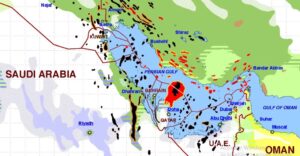
Oil Matters
Western focus on the Middle East is because of Israel, to expiate its own Holocaust guilt, and energy

Currently the world consumes around 100 million barrels of oil daily (around 50 percent for transport and 20 percent for petrochemicals). While energy intensity (usually measured as the tonnes of oil needed to create $1,000 of GDP) has declined from 0.12 in 1975 to 0.05 in 2022, no significant decline in demand is forecast due to limited alternatives for heavy transportation and as a chemical feedstock. Natural gas is around 23 percent of the world’s total energy consumption and provides a quarter of global electricity.

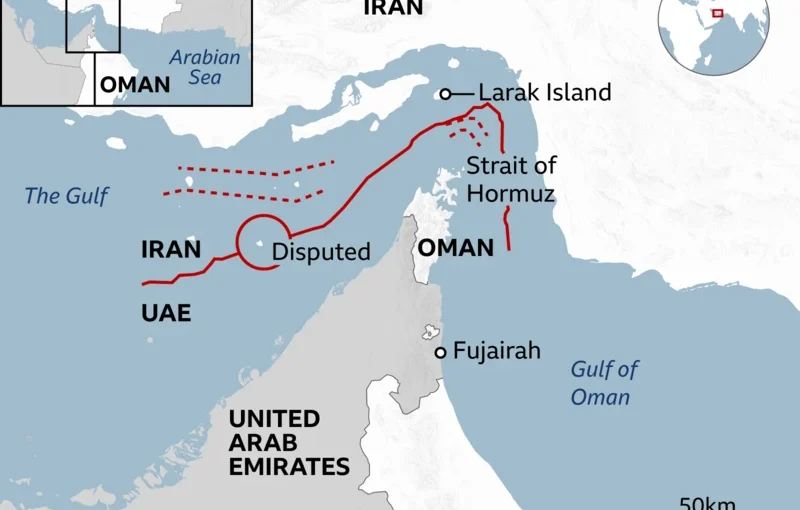
Saudi Arabia’s objectives remain unchanged: generate revenue at necessary levels, maintain its market share as low prices make US shale oil and gas uncompetitive and accelerate use of a potentially stranded resource.

The ruling dynasties can be displaced at the whim of the West. Given the volatile foreign policies of the US and its allies including their short-lived and disastrous backing of the ill-fated Arab Spring, this possibility is non-trivial. As Hosni Mubarak discovered, US support for its ‘allies’ exists until it doesn’t. Subsequently, the Muslim Brotherhood found that Western belief in democracy was highly selective.

In a curious twist which would have been unwelcome in Israel, following the announcement of the ceasefire, President Trump announced that China would be allowed to buy oil from Iran, reversing a policy of sanctioning Chinese refineries for these purchases.

While they may not acknowledge the reality, failure to act strategically now undermines the ruling dynasties of the Gulf states and Jordan. They become little more than rich puppets who serve their American, Israeli and allied masters and whose policies are chosen for them. Their standing and wealth is dependent on a dwindling finite resource with an uncertain future.

For many, MAGA has morphed into MIGA – Make Israel Great Again. The US appears to have been coerced into intervening on behalf of the Jewish state. One X denizen tweeted that “America so deindustrialized we don’t even manufacture our own consent”.

Conflict, most worthwhile military strategists agree, is like opening a door into a dark room where no one knows what is hidden in the darkness. The only certainty is that a new most likely tragic and violent chapter in the history of the region is under way.

The US, Israel and its allies would do well to remember Thucydides’ Melian Dialogue which records Athens’ conquest of Melos. The Melians unsuccessfully resisted suffering horrific losses. Athens believed that “the strong do what they can and the weak suffer what they must”. They believed that they could act with impunity because their power was complete. Less than three years later Athens suffered a military disaster in Sicily from which they never recovered.

Brown Pundits