
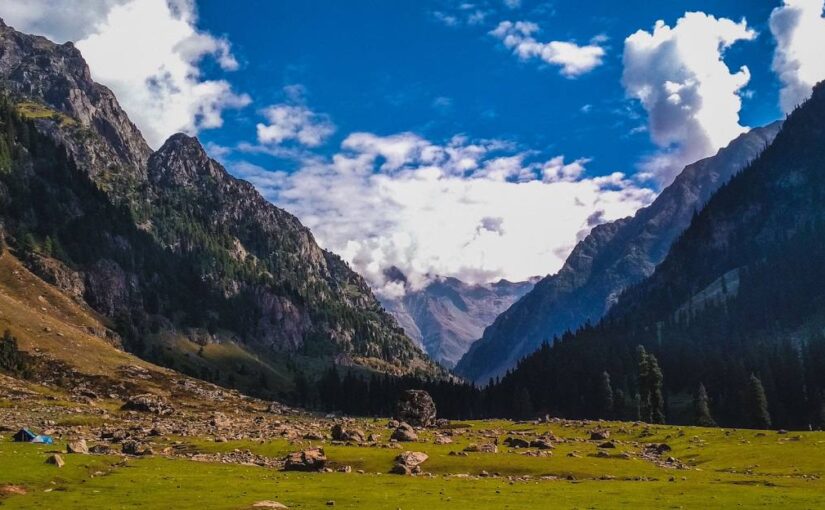
Someone on Twitter asked me for my opinion on Pahalgam and its aftermath now that several months have passed. I wrote up a quick reply, which I am posting here. I realize I am not writing much on this blog these days, but life has been busy and I barely keep up with Twitter and reading books, this blog gets pushed down.. But lets see if this sparks some discussion. Continue reading Pahalgam and Aftermath
Tag: nuclear deterrence
Links on My Browser Right Now – Open Thread
A few pieces I’ve been reading this week:
-
The Lies America Tells Itself About the Middle East: (Foreign Affairs) – On how U.S. narratives obscure its own role in the region.
-
Don’t Overestimate the Autocratic Alliance: (Foreign Affairs) – A counterpoint: authoritarian states may not be as cohesive as advertised.
-
The Four Humours: Our 2,500-Year-Old Mania for Personality Types: (BBC Future) – Why these frameworks endure and what that says about how societies interpret character.
-
Can We Hear God? (Bahá’í Teachings) – A reflection on divine communication and perception.
- The Dawn of the Post-Literate Society: (James Marriott, Substack) – On how screens and AI are reshaping reading and writing itself. Thanks Kabir for the suggestion.
Reflections
On the Ummah: Muslims have often failed to concede ground in internal debates, which has left them politically boxed in. One reform across all denominations would be to return directly to the Quran as the primary authority. That alone would dissolve many cultural accretions, halal (animals should be stunned before slaughter), hijab (a Sassanian trait), and other practices, into something more adaptive.
And here’s a more speculative question: if the “Satanic Verses” were reconsidered if Al-Lat, Al-Uzzah, and Al-Manat were understood as sacred divinities at the threshold of the Lote Tree, would that make Islam more fluid, especially for minority-majority dynamics?
On Kabir: I’m not moderating him out, but readers should be aware that he frames everything through Muslim-rights activism. Engage, but don’t get gaslit into endless provocations. Everyone is entitled to their nationalisms — but they can’t claim liberalism at the same time. That tension makes it worth examining how plurality is treated within the Hindu fold itself. Dharma, unlike the Abrahamic Faiths, tends to all for multiple truths co-existing with each other (Buddhism and indigenous East Asian religions).
👉 Over to you. I’m retreating from heavy moderation — I see BP’s strength in letting the commentariat lead. Biases are fine. Gratuitous abuse is not.

“In March 1998 the Indian PM Gujral, told … “Pakistan was not capable of making atomic bombs.” he had been convinced by Indian Intelligence and Dr Raja Raman, the head of Indian Atomic Energy Commission, who had publicly claimed that nuclear weapon were beyond Pakistan’s reach.”
Pakistan as India’s Ukraine?
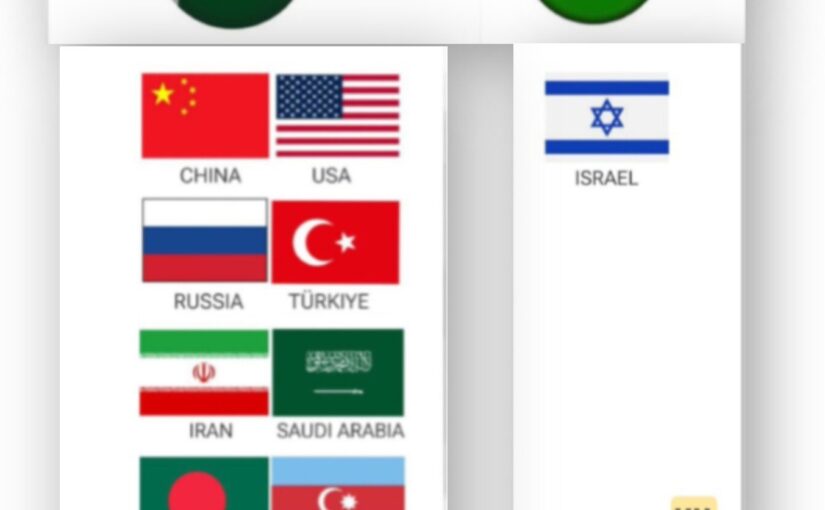
The chart above lays out “strategic partners” for 2025. Pakistan lists China, Türkiye, Iran, Saudi Arabia, and assorted others. India, by contrast, shows Israel. But the real issue isn’t who collects more flags; it’s whether any of Pakistan’s patrons will ever raise its HDI, improve infrastructure, or embed long-term stability.
I’m interested to hear what the commentariat thinks of this moment. India’s foreign policy is already locking it into superpower status. Pakistan remains reactive, borrowing survival from whoever will lend it.
The analogy that strikes me: India–Pakistan resembles Russia–Ukraine, except if Ukraine had kept nuclear weapons. The parallels are strong:
-
Ukraine, like Pakistan, is a breakaway sibling — the “other half” of a civilizational whole.
-
Ukraine, like Pakistan, survives by appealing to larger patrons.
-
And interestingly, the GDP ratio gap between Russia and Ukraine is almost exactly the same as between India and Pakistan (please fact check me).
Just as Ukraine is considered the homeland of the Russian Empire (Kievan Rus’), Pakistan carries the legacy of Partition as the “Indus homeland.” That symmetry makes the analogy more than superficial.
On Kabir: I understand his consistent emphasis on Muslim rights and Muslim nationalism. Readers should be aware of that lens. I’m not moderating him out, but I would caution the commentariat against being gaslit into endless provocations by Kabir. The question here is not identity politics, but the direction of Indian and Pakistani foreign policy in a critical moment in global history (decades are happening in weeks).
Israel, India, and the Rise of Defensive Asymmetry
A Pause in the Offensive:
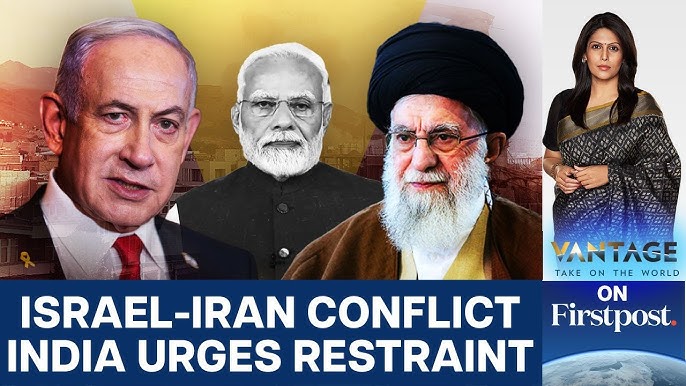
Without getting into the ideological or emotional dimensions of current conflicts, one point stands out: both Israel and India seem quietly surprised by the defensive resilience of their adversaries.
Whether it’s Iran-Israel, India-Pakistan, or even Russia-Ukraine, a pattern is emerging: offensive campaigns that assumed rapid success are stalling against increasingly capable—and surprisingly tenacious—defensive postures.
In classic military doctrine, a successful offense requires a 3:1 superiority. That logic appears to be inverting. What we may be witnessing is a shift in the scientific and technological balance—not just in weaponry, but in surveillance, cyber, and even psychological endurance as evidenced by the Iranians on national television in this clip, IMG_0631.
Continue reading Israel, India, and the Rise of Defensive Asymmetry