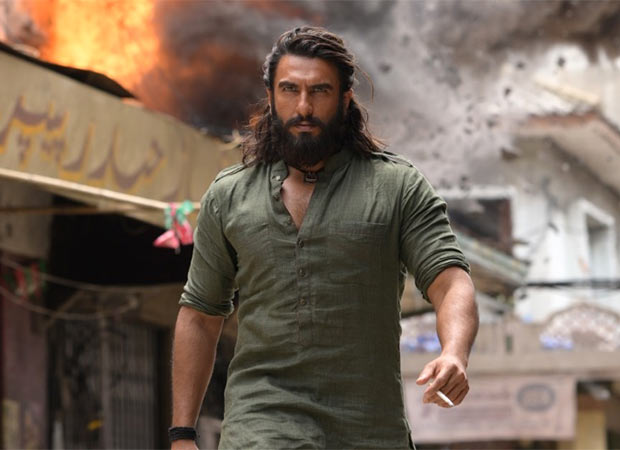
Dhurandhar showcases Bollywood’s New Obsession: The Sexy Pakistani Villain

We watched Dhurandhar last night at Apple Cinemas (the last time we went to see Ishaan Khatter’s Homebound). It is the best mass-market Bollywood film I’ve seen since Animal, and far more immersive. What struck me most was not the action, nor the plot, but Bollywood’s new formula: a full-scale fetishisation of Pakistan.

Kabir keeps claiming that Bollywood casts Pakistanis as villains. This misses the point. The villain is always the sexiest figure in any film. Bollywood has finally realised this. Raazi hinted at it. Animal stumbled on it with Bobby Deol’s star stealing turn. Dhurandhar perfects it.

For the first time, Hindu actors are not performing cartoon versions of Pakistan. They are cosplaying Pakistanis with forensic precision; the clothes, the diction, the swagger, the social codes. In earlier decades the attempt was clumsy. Now the calibration is exact. Pakistan, in these films, becomes the Wild West of the subcontinent: familiar enough to feel intimate, distant enough to feel dangerous. Continue reading Dhurandhar showcases Bollywood’s New Obsession: The Sexy Pakistani Villain

India’s Demographic Nervous System: Partition, Federalism, and the Fear of Muslim Majority Provinces

King Khan — I don’t think it’s irrelevant that Muslim-majority regions would have been liminal. Literally.

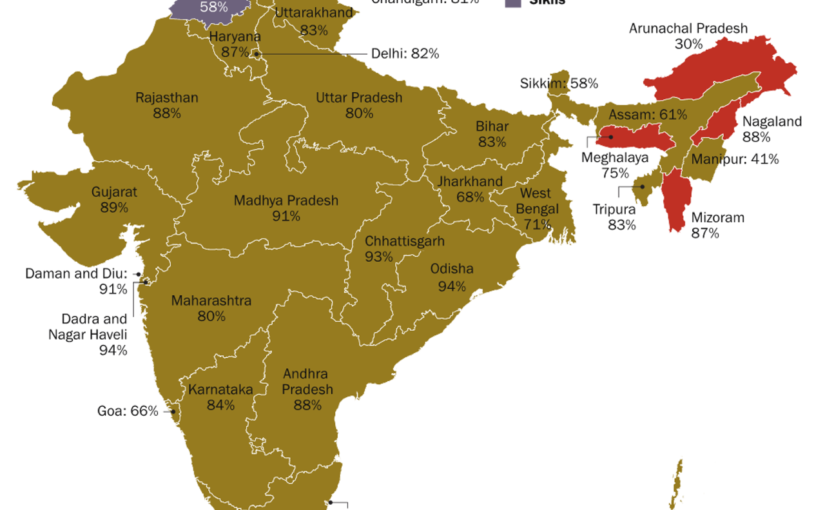
The previous post got me thinking about demographic engineering, and how it has quietly shaped post-Partition India — not just at the borders, but deep inside the Union itself. When Qureishi redefined the demographic weightage of the Indo-Gangetic, I was reminded of how states like Madhya Pradesh (I’ve had a post waiting on this for months), Maharashtra, Uttar Pradesh, and Bihar — the so-called “giants” of India’s federal structure — were similarly calibrated. Even the historical Andhra Pradesh (before Telangana split), Kerala, and distant territories like the Lakshadweep Islands show signs of internal rebalancing. The logic? To prevent the consolidation of another Muslim-majority province — something the Indian state has remained deeply wary of since Kashmir’s accession crisis in 1947–48.

The anxiety over Muslim-majority units lies at the core of why Kashmir remains “special” — not spiritually, but politically. Its sovereign ambiguity and constitutional exceptionalism stem directly from the post-Partition plebiscite logic, which India initially welcomed. At the time, Nehru and the Congress were confident of winning that vote. Quaid-e-Azam had thoroughly alienated Sheikh Abdullah, by backing the non-consequential “Muslim Conference” and the National Conference had significantly diverged from the Muslim League. The shift didn’t come until later — particularly after the rigged 1987 elections and the spillover from the Afghan jihad, which together detonated the insurgency.

This raises an unsettling but important question: Continue reading India’s Demographic Nervous System: Partition, Federalism, and the Fear of Muslim Majority Provinces

South India Makes British India Hindu?

TNT Saved Hinduism; Dravidia preserved Aryavarta?

S. Qureshi: “Muslims are today a majority of the population >50% of North British India. If peninsular south was made into its own country in 1947, India would be a Muslim majority country today. Many Muslims actually wanted South India to be a separate country and North India (including Pakistan/Bengal) to be one unit. To say that Indian Muslims who lived in the historical centre of Muslim power for centuries would just get up and leave for Pakistan is just farcical and delusional. These types of ideas were only proposed by extreme right-wing Hindu organizations after partition, and these ideas seem to become mainstream today with BJP. Historical reality, like always, is very different.”

The demographic map of the subcontinent tells a startling story. If South India had formed a separate state in 1947, the rest of British India — encompassing Pakistan, Bangladesh, and the northern Hindi belt — would today constitute a Muslim-majority civilizational bloc. This isn’t conjecture. It’s arithmetic.


The Numbers That Reorder the Narrative

Here’s what the Indo-Gangetic arc looks like today (please fact check me): Continue reading South India Makes British India Hindu?

Brown Pundits