Review: A Return to Self: Excursions in Exile by Aatish Taseer

From my Substack:

Aatish Taseer begins his new essay collection A Return to Self: Excursions in Exile (Catapult 2025) by recounting the Indian government’s 2019 cancellation of his Overseas Citizenship of India (OCI). The pretext for this decision was that Taseer had concealed the Pakistani origin of his father (the late Salman Taseer, a former Governor of Punjab who was assassinated by his own bodyguard after calling for Pakistan’s blasphemy laws to be amended). However, Taseer believes that the real reason that his OCI was canceled was that he had written a critical article about Prime Minister Modi entitled ā€œIndia’s Divider in Chiefā€. He writes: ā€œIn one stroke, Modi’s government cut me off from the country I had written and thought about my whole life, and where all the people I grew up with still lived.ā€

Later in the ā€œIntroductionā€, Taseer describes the impact that this decision had on him and how it led to the essays contained in the book under review:

If these essays feel like a return to self, it is because they represent the return of my natural curiosities and, dare I say it, cosmopolitanism, after the long night of cutting away parts of myself in order to better fit back into Indian life. They are a response to the illusion of the idea of home. The strand of elation that runs through them is the simple joy of being out in the world, free of the pressures of belonging. Perhaps there could not have been any other response, given that my country, my material, my world in India,had been snatched from me. I grew up in what felt to me like the crucible of all anxieties related to belonging. Those anxieties run through these essays, but they are also a tribute to the individual. After all the wringing of wrists, the stewing over questions of place, of feeling myself forever betwixt and between, I woke up one day to find the bars of my prison had magically disappeared, and, far from being scared, I felt a new vein of intellectual curiosity had opened for me. With the idea of home gone, I stepped out into the world again.

Continue reading Review: A Return to Self: Excursions in Exile by Aatish Taseer

Quite Hectic Days

Recently, I’ve been traveling a lot for my formal project: assessing the governance framework of 46 HEIs (universities) in Pakistan. We’re looking at the de jure autonomy of universities (in governance, finance, staffing, academics, and research) versus the de facto reality. Where, like many other sectors, higher education is overregulated.

We’re struggling a lot. Universities are mushrooming (95 in 2002 to 269 in 2024) without any meaningful output, just producing PhDs like rabbits (177 in 2002 to 3489 in 2024). Result: not a single Pakistani university ranks in the global top 350.

I’ve visited different universities. (inter-alia):

Riphah International University, Islamabad – a private HEI. The I-8 campus is small, but with multiple campuses they cater to around 30,000 students. What’s interesting is how deeply Islamic morality is embedded in their institutional values. It’s the only university (out of the 8–9 I’ve visited so far) whose vision and mission are explicitly integrated with Islamic principles. They even have around 10 credit hours dedicated to teaching morality. Quite remarkable in this era of modernity and expediency. Continue reading Quite Hectic Days

Madhuri is stronger than the Ambanis

In the name of Pakistan, which is a beautiful poetic name, ā€œLand of the Pureā€, lies the tragedy of pathological purity. It is an addendum to the desire to stay pure. To remain untainted. But purity, when pursued absolutely, becomes brittle.

Madhuri Mahadevi

The Ambanis recently relocated Elephant Madhuri from Kolhapur’s Jain Math to the Vantara rehab centre, citing health concerns. But the move, though framed as rescue, triggered emotional protests, political pushback, and a national debate over animal welfare vs. sacred tradition.

Why did it explode? Because Madhuri wasn’t just a creature in need of savin; she was a living deity to those who loved her. Her departure wasn’t a routine animal welfare decision. It was a rupture in India’s civilizational relationship to the divine in nature. One of the most remarkable aspects of Hinduism is its seamless veneration of the natural world. The river is a mother. The cow, a guardian. The elephant, divine.

Few religions integrate reverence for nature into daily life with such tenderness and theological consistency. This story, of an elephant, a corporate empire, and a temple, speaks to a larger tension in India today: Who gets to define care? And when does ā€œrescueā€ become removal? Continue reading Madhuri is stronger than the Ambanis

Review: Shattered Lands: Five Partitions and the Making of Modern Asia by Sam Dalrymple

From my Substack:

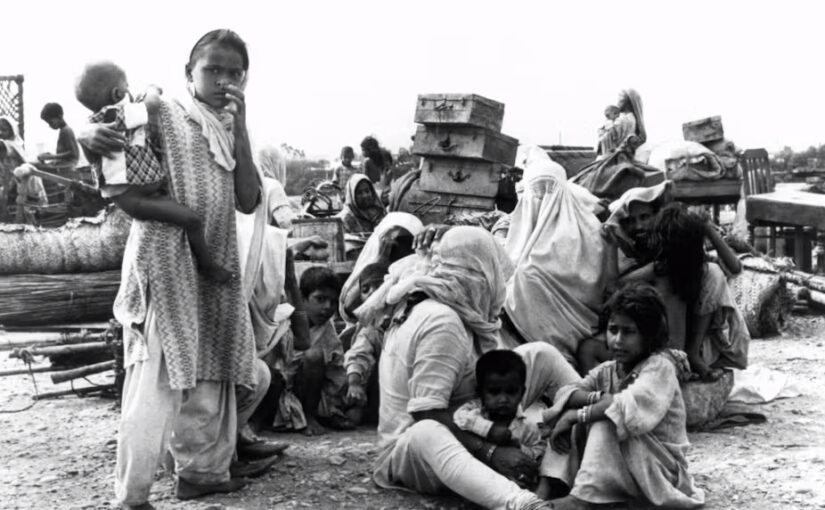
When South Asians speak of ā€œPartitionā€ they are usually referring to the 1947 partition of British India that created the nation-states of India and Pakistan. This partition involved the division of the provinces of Punjab and Bengal on the basis of religious demographics and led to some of the worst ethnic cleansing of the 20th century. It is estimated that between 200,000 to 2 million people were killed and 12 to 20 million people were displaced. The word ā€œpartitionā€ may also remind Pakistanis of the 1971 secession of East Pakistan (what Bangladeshis refer to as the ā€œliberationā€ of Bangladesh). However, as Sam Dalrymple argues in his new book Shattered Lands: Five Partitions and the Making of Modern Asia (William Collins 2025), the British Indian Empire actually spanned a much greater geographical extent than today’s India, Pakistan and Bangladesh, including areas such as Aden (in today’s Yemen) and Burma. In his ā€œIntroductionā€ he writes:

The collapse of the Indian Empire has remarkably never been told as a single story. With every division archives were scattered across twelve nation states– thirteen if we include Britain. Subsequent divisions between the ā€˜Middle East’, ā€˜South Asia’ and ā€˜Southeast Asia’ crystallised after the Second World War. Each Partition is now studied by a different group of scholars and the ties that once linked a quarter of the world lie forgotten… This book, for the first time, presents the whole story of how the Indian Empire was unmade. How a single, sprawling dominion became twelve modern nations. How maps were redrawn in boardrooms and on battlefields, by politicians in London and revolutionaries in Delhi, by kings in remote palaces and soldiers in trenches. (Dalrymple 8)

Continue reading Review: Shattered Lands: Five Partitions and the Making of Modern Asia by Sam Dalrymple

Ghosts of 1947

I’m Sumayya from Pakistan, it’s very nice to meet you all. I need your help, it’s about my Dadi.
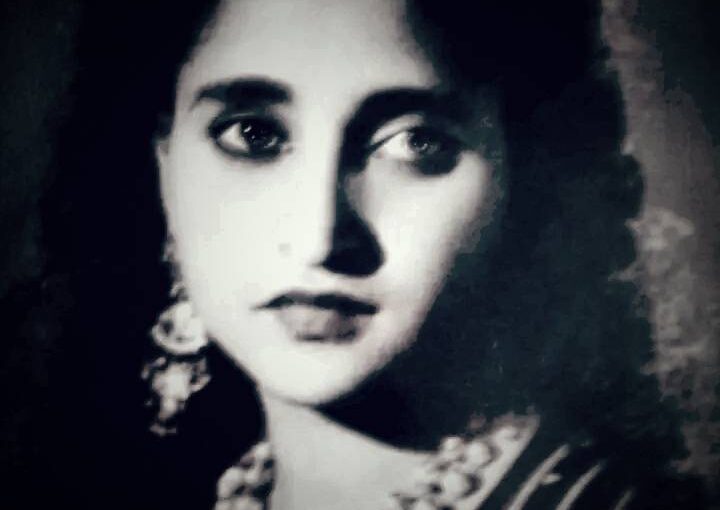
I’m attaching a picture of my Dadi a year after Partition. She opened up about Partition 1947. I believe it has been a severe kind of trauma where it took her nearly 70 years to open up completely, and even then she stopped talking after a while. It was a bloody massacre, Kashmir sadly bearing the brunt of it. Her last memories are being deceived to get in a bus which would take them to Pakistan, but then women yelling at the driver that he was taking them somewhere else.
Then men standing outside scaring them with swords, while women ran away from the bus and jumped into a nearby river. My Dadi (fourteen at the time) and her younger sister also ran to jump, but her father held them and said nothing would happen to them, and directed them to hide under a seat. She doesn’t remember much after that, just the fact that she heard her baby sister being taken away, and then herself being dragged out, upon which she tried to clutch onto her mother’s kurta but it tore. At that point, herself and her mother were the last in the bus, everyone else was either killed or taken away.
I am not sure, but she firmly, firmly believes that her sister was the most beautiful of them all and must not have been killed and maybe taken away to get married to someone. During her youth she tried posting about her in newspapers but it never helped. I know it’s probably too late, but maybe if she did get married and had children, she must’ve told her story to her kids, whom I could locate? I’ve registered to many Kashmiri directories and pages, let me know what else I could do to locate her family.
The only information I know is that they lived in Jammu, Kashmir and my Dadi’s name is Mehmooda. Her sister was Kulsoom (Ummul Kulsoom), they had eight more siblings. Their parents were Hakim Din and Amna.This is in no way a religious/political debate. Just want to use the internet to locate my long lost family.
Post Credit: Sumayya T Malick

Continue reading Ghosts of 1947

🧵 Open Thread: Hate Speech, Travel Notes, and Diplomatic Surprises

I just saw a comment that genuinely crossed the line; not just a misstep, but something hateful, dehumanizing, and deeply communal. It invoked Partition violence in a way that glorified massacre. That’s not just a dogwhistle, that’s a foghorn.

As most of you know, I’m a light-touch moderator. I tolerate a lot. I believe in messy dialogue. I’ve been fair on my WhatsApp groups, fair on BP, and generally try to err on the side of letting things play out. But this? This wasn’t a close call. It was a clear failure of moral language.

Even if the commenter didn’t ā€œmean it,ā€ this kind of rhetoric has consequences. When you’re speaking about events like 1947, where entire families were destroyed, you need to speak with care, not contempt. There’s no room for casual violence, coded language, or historical gloating. None. Zero.

Before this commenter contributes further to the blog, he will need to fully retract and apologise for the communal language he used. Criticism is fair game. But hate speech is not. Kabir can be theatrical, yes but he does not traffic in dehumanization. The standards must be consistent, and that comment clearly crossed the line.

Please observe this on the thread. I’m traveling, and this is an open post. I’ll be back with more soon. I’ve written a bit in my newsletter but I will expand on those.

In the meantime:

āž”ļø Yes, it appears Pakistan is running smart diplomacy — both with Iran and the U.S.

āž”ļø  I don’t have time to share the links (plane about to take off); they’re all Google-able.

āž”ļø But credit where it’s due. There is no infallibility in foreign affairs. But when someone cannot stand to see Pakistan get anything right, it reveals more about their own biases than about geopolitics.

This isn’t about defending states or “sides”; it’s about defending basic decency in discourse.

How US Unemployment Numbers are Created

Many of us take numbers like Unemployment as Gods Truth.

First the last paragraphs of a CNN piece on Unemployment numbers
https://edition.cnn.com/2025/08/01/business/trump-job-report-number-fire

For example, the BLS posted a notice in June stating it stopped collecting data for its Consumer Price Index in three cities (Lincoln, Nebraska; Buffalo, New York; and Provo, Utah) and increased ā€œimputationsā€ for certain items (a statistical technique that, when boiled down to very rough terms, essentially means more educated guesses).

That worried Federal Reserve Chair Jerome Powell. In testimony before Congress in June, Powell said he believed the BLS data to be accurate, but he was upset about what could become a trend.

ā€œI wouldn’t say that I’m concerned about the data today, although there has been a very mild degradation of the scope of the surveys,ā€ Powell said at the time, in response to a question about survey data quality. ā€œBut I would say the direction of travel is something I’m concerned about.ā€

How many actually know that these numbers are model generated. At BLS (US Bureau of Labor Statistics) they use a version of the Birth and Death model. This is a model initially built to model Population Dynamics and other related Biological Processes (i). It is also used in Finance to Build Credit Curves which are used to Price Credit Default Swaps (CDS)

As I have worked a little bit on Credit Curves and CDS 15-20 years ago ((2005-2010) can add a little more detail. One samples the number of companies created, credit rating down grades, out of business etc. Then the Birth and Death model is used to get a broader picture and the Credit Curves created by numerical and statistical models.

There are other methods too, such as using the Prices of CDS at different maturities (end date). Then using numerical models to generate the forward curve (i.e. the credit regime in the next few years)

So now we realize that what we think is an absolute value of a Unemployment or Bond Price is really a kind of guesstimate laundered through numerical models. What about the Bond Price or a Stock Price someone pays. Is that an absolute VALUE. Again the issue is that what was the mental or other analysis that went into that Price offer. Could it have been erroneous. eg. A dear friend and classmate participated in the Sri Lankan mob protests (Aragalaya) in 2022. One of his reasons was that the economy fell because of “unprecedented reductions of taxes resulting loss of revenue of 30%”. Erroneous thinking as it was 7% reduction in VAT taxes on transactions for goods and servicing. The reduction excluded VAT on Financial Services. It is an arithmetic impossibility to have 7% reduction in taxes to cause loss of revenue by 30%.

Anyway back to US Unemployment Model and excerpts from description

Difficulty in capturing information from business birth and death units is not unique to the CES program; virtually all current business surveys face these limitations. CES adjusts for these limitations explicitly, using a statistical modeling technique in conjunction with the sample for estimating employment for private-sector industries. Without the net birth–death model-based adjustment, the CES nonfarm payroll employment estimates would be considerably less accurate.

You can read the steps in using data and creating the Unemployment figures here.
https://www.bls.gov/opub/hom/ces/calculation.htm#business-births-and-deaths

The BIG TAKE home, be it Unemployment Numbers or Bond Price, these are GUESSTIMATES laundered thru numerical and statistical models.   Worse these are not indicative at inflexion times of economic change.  i.e. Economic growth in the process of change to Economic Downturn or vice versa

Reference
(i) Novozhilov, A 2006: Biological applications of the theory of birth-and-death processes
In this review, we discuss applications of the theory of birth-and-death processes to problems in biology, primarily, those of evolutionary genomics. The mathematical principles of the theory of these processes are briefly described. Birth-and-death processes, with some straightforward additions such as innovation, are a simple, natural and formal framework for modeling a vast variety of biological processes such as population dynamics, speciation, genome evolution, including growth of paralogous gene families and horizontal gene transfer and somatic evolution of cancers

 

šŸŽ¶ Bravo, Kabir | Artists Across Borders

This Sunday, something quietly powerful is taking place: Indian and Pakistani artists will share a virtual stage, and among them is our very own Kabir Altaf, performing as a Hindustani classical vocalist and ethnomusicologist based in Pakistan.

Kabir shared that Sheema ji personally invited him to sing, and he’s planning to perform the Kabir bhajan already available on Spotify. A simple act but a potent one. Rooted in shared heritage, offered in public.

It’s easy to be cynical about India–Pakistan relations. But these moments matter. When musicians from Sindh and Delhi, translators from Karachi, and filmmakers from Mumbai come together, even on Zoom, they create a space that politics cannot reach. A space where memory, performance, and shared roots do the work diplomacy cannot.

This is the kind of initiative we need more of: not policy, but presence; not diplomacy, but dialogue. These exchanges don’t dilute identity; they deepen it.

Bravo and huzzah to Kabir, and to all involved.


šŸ—“ Event:

Indian–Pakistani Artists in Dialogue

šŸ“… Saturday, 3rd August 2025

ā° 7:30 PM Pakistan time / 8:00 PM India time

šŸ‘©ā€šŸŽ¤ Moderator:

Sheema Kermani – Bharatanatyam dancer, theatre personality, Karachi

šŸŽ™ Featured Speakers & Performers:

  1. Dr. Syeda Saiyidain Hameed – Writer, former Member of India’s Planning Commission

  2. Dr. Ghazala Irfan – Philosopher and Chair, Department of Humanities, LUMS; affiliated with All Pakistan Music Conference

  3. Anand Patwardhan – Documentary filmmaker, Mumbai

  4. Saleema J. Khawaja – Vocalist of Punjabi Kafi and Guru Nanak verses, Lahore

  5. Neela Bhagwat – Hindustani vocalist (Gwalior Gharana), Mumbai

  6. Azhar Shan – Folk musician from Sindh

  7. Dhruv Sangari – Hindustani classical and Sufi vocalist, Delhi

  8. Zainub J. Khawaja – Musician, member of Harsukhiyaan, Pakistan

  9. Yousuf Saeed – Documentary filmmaker, known for work on classical music in Pakistan, Delhi

  10. Kabir Altaf – Hindustani classical vocalist and ethnomusicologist, Pakistan

  11. Nishtha Jain – Documentary filmmaker, Mumbai

  12. Zahra Sabri – Lecturer and translator, Karachi

  13. Zulaikha Jabeen – Independent scholar, India


šŸ”— Join via Zoom

Click here to join

Meeting ID: 897 8701 6742

šŸ“Æ Back at Peak: 22,453 Monthly Readers and Rising

Even the stats now confirm it: we’re back at our highest readership in our ~15 years.

22,453 monthly readersĀ and rising. 100+ comments on most new posts.

No ads. No algorithm. No social media amplification. Just a small, steady core of thinkers, returners, and writers keeping the conversation alive. This isn’t mass media — it’s a deliberately narrow beam.

A place for:

  • Tight but Broad Church curation

  • Long-form thinking

  • Commentary that draws blood when needed but never aims cheap

The current moment feels like a return, not just of older names, but of why BP was built in the first place: a public space for Brown(ish) minds to work through power, faith, identity, language, and sometimes just the week’s news Ā on our own terms.


Related: Brown Pundits, big in India!

Why Pakistan Won’t Go the Way of Iran

I’ve been enjoying the new direction Brown Pundits has taken since the recent shake-up. Posts are now generating 100+ comments, and that kind of engagement creates a virtuous cycle. You want to write more, think more, respond more. I’m leaning into that.

For now, a lot of the content burden rests on me and that’s okay. It’s been encouraging to see older names return: Girmit, for instance. It feels like a slow reconsolidation of the original readership. Letting people return on their own terms.

Meanwhile, BRAHM, my newsletter, has taken on a different role; a home for more composed writing, life pieces, and the slow launchpad for my business. I just posted something there recently, which I’ll link to for now and follow up on soon. But here, on BP, is where I let myself think in public. Where I go long. Where thoughts breathe.

Continue reading Why Pakistan Won’t Go the Way of Iran

Brown Pundits