Pakistan and the Act of Union

A Cold Comparison, Not a Romantic One

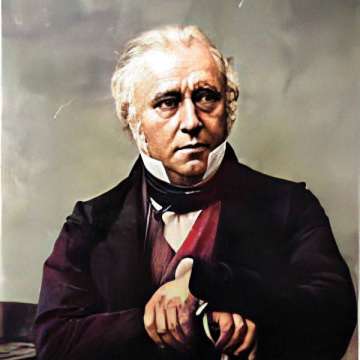
There is only one historical analogy worth using when discussing Pakistan “rejoining” India: the Act of Union of 1707 between Scotland and England. Not Rome and Greece. Not Yugoslavia. Not German reunification. And certainly not civilizational nostalgia. The reason is simple. The 1707 Union was not about love, memory, or reconciliation. It was about bankruptcy, security, elite survival, and managed loss of sovereignty without humiliation. That is the only way such a union could ever happen.

Union Is an Elite Exit, Not a Popular Dream

Scotland did not join England because it felt British. It joined because it was broke. The Darien Scheme collapsed. The Scottish state was insolvent. The elite faced personal ruin. England controlled capital, markets, and trade. The Act of Union absorbed Scottish debt, protected elite property, preserved law and church, dissolved sovereignty while preserving status. The public opposed it. It passed anyway. Unions are not plebiscites. They are elite exits under pressure.

Pakistan’s Position Is Structurally Similar

Pakistan today is not Scotland in 1707. But the resemblance is close enough to matter. Pakistan is chronically indebted, permanently IMF-dependent, over-militarised by design, economically capped by scale and FX limits. It is run by elites whose lives are already offshore, Like Scotland, the state is failing faster than rents can be extracted, sovereignty has become expensive, security dominates fiscal policy and there is no credible independent growth path. This is not ideology. It is arithmetic.

Why India Is England in This Analogy Continue reading Pakistan and the Act of Union

Brown Venezuela to be Invaded

Excerpts from an Article on NakedCapitalism

Donald, you just wrote the most honest colonial confession of the 21st century. When you say Venezuela must “return” its oil, land, and assets to the United States, you are not talking about law. You are talking about ownership. You are saying, out loud, what empire has always believed in private: What lies under Venezuelan soil belongs to Washington.

The money quote: “you know the old days, when you had a war, it was ‘to the victor the spoils.’”

Venezuela has the largest proven reserves of heavy crude in the world, with an estimated 303 billion barrels, as well as the largest reserves of light crude oil in the Western Hemisphere. But it’s not just that Venezuela is home to the largest oil reserves on the planet, it’s that those reserves are sitting “right next door” to the US, as Trump himself said in 2023:

President Trump’s obsession with seizing other countries’ oil goes back a ways, to even before he entered politics. Here he is explaining in 2011 why the US should seize half or more of Libya’s oil after murdering its leader, Muammar Muhammad Abu Minyar al-Gaddafi, and plunging what was arguably the richest country in Africa (on a per-capita basis) into total chaos.

There are, of course, a plethora of other reasons for the US’ aggressive moves against Venezuela that we’ve discussed before, including the country’s large deposits of gold, rare earth minerals and freshwater; the opportunity to open up a mid-sized country’s market to rampant privatisation and liberalisation.

It is, after all, the US, mainly during Trump’s two presidencies, that has been stealing all kinds of Venezuelan assets, from the country’s gold reserves to the oil tanker seized in the Caribbean last week, to the president’s official plane, to Venezuelan oil company Citgo.

Exxon has a long, rich history in Venezuela dating back over a century. Its predecessor, Standard Oil, was one of the first companies to explore for oil in the South American country in the 1910s

But that all came to a halt in 2005, when Hugo Chávez ordered all existing “operating agreements” with foreign oil companies to be converted into joint ventures in which the state oil company, Petróleos de Venezuela (PDVSA), held a mandatory majority stake (over 50% ownership and operational control). Exxon refused to sign while most other companies, including BP, Total and Chevron, took the deal.

That high-intensity conflict is now closer than ever. But it needs to be packaged and sold to US lawmakers, media, members of the armed forces, and Trump’s war-weary MAGA base. And that is where CSIS’ “experts” come in. And they appear to be marketing this war on behalf of a company (Exxon) that has much to gain from a military intervention, and which bears the biggest grudge against Venezuela’s Bolivarian movement.

https://www.nakedcapitalism.com/2025/12/shining-a-light-on-how-exxon-mobil-bankrolls-think-tank-experts-pushing-for-regime-change-war-in-venezuela.html

India Is No Longer Legible to Pakistani Liberals

There is a persistent habit among Pakistani liberals, especially those from elite backgrounds or with deep emotional ties to pre-1947 North India, of speaking about India as if it were still legible to them. It is not. India has moved on. So has Pakistan. But only one side seems unable to accept that.

The Mirage of Patrimony

Many Pakistanis of Muhajir or North Indian lineage carry an inherited sense of ownership over India. They speak as if India is a shared cultural estate, temporarily misplaced. This is a fantasy. The India of 2025 is not the India of 1947. It is not even the India of 1991. It has changed demographically, economically, politically, and, most importantly, civilizationally. Pakistanis who have not travelled to India in decades, who rely on English-language media and nostalgic family memory, do not “understand” India. They are projecting onto it. Projection is not insight. It is displacement.

Code-Switching as Evasion Continue reading India Is No Longer Legible to Pakistani Liberals

Macaulay, English, and the Myth of Colonial Liberation

Rebuttal to When RSS-Modi Attack Macaulay and English, They Attack Upward Mobility of Dalits, Shudras, Adivasis

Follow-Up to Macaulay, Macaulayputras, and their discontents

A new orthodoxy has taken hold. It claims that criticising Macaulay or colonial education is an attack on Dalit, Shudra, and Adivasi mobility. English, we are told, was not a colonial instrument but a liberatory gift. Macaulay is recast as an unintended ally of social justice. This view is wrong. More than that, it is historically careless and civilisationally corrosive.

The Core Error

The mistake is simple: confusing survival within a system with vindication of that system. No serious person denies that English became a tool of mobility in modern India. No serious person denies Ambedkar’s mastery of English or its role in courts and constitutional politics. But to leap from this fact to the claim that Macaulay was therefore justified is a category error. People adapt to power structures to survive them. That does not sanctify those structures. To argue otherwise is like saying famine roads liberated peasants because some learned masonry while starving. Adaptation is not endorsement.

Macaulay Was Explicit

There is no need to guess Macaulay’s intentions. He stated them plainly. He dismissed Indian knowledge as inferior. He wanted to create a small class: Continue reading Macaulay, English, and the Myth of Colonial Liberation

Open Thread (Birthday)

Imran Khan’s sons speak out: “Our father’s prison conditions aren’t bad, they’re awful.” Whatever one thinks of Pakistani politics, the treatment of a former prime minister is a measure of a state’s institutional health.

“Pakistanis and Indians are like distant cousins.”

Is the Paknationalism or Indophilia; the strange twist of Pakistan is that both can be true at the same time.

It was my birthday two days ago on the 15th. The official celebration will be later this month in Sri Lanka, but the last few weeks have been unusually hectic with travel and work. Continue reading Open Thread (Birthday)

Pakistani review of Dhurandhar

Came across this review of Dhurandhar and thought it was worth sharing. Especially given the repeated comments on “bias and anti-Pakistan” from folks who haven’t even watched it.

I watched it this past weekend, and will try and find time to compile my thoughts on it as a comment on this post.

Should Babri Masjid have been moved to Pakistan?

This deliberately provocative piece draws on Kabir’s recent comments, Arkacanda’s excellent essay, Musings on & Answers, and Nikhil’s profound piece in “Urdu: An Indian Language.”

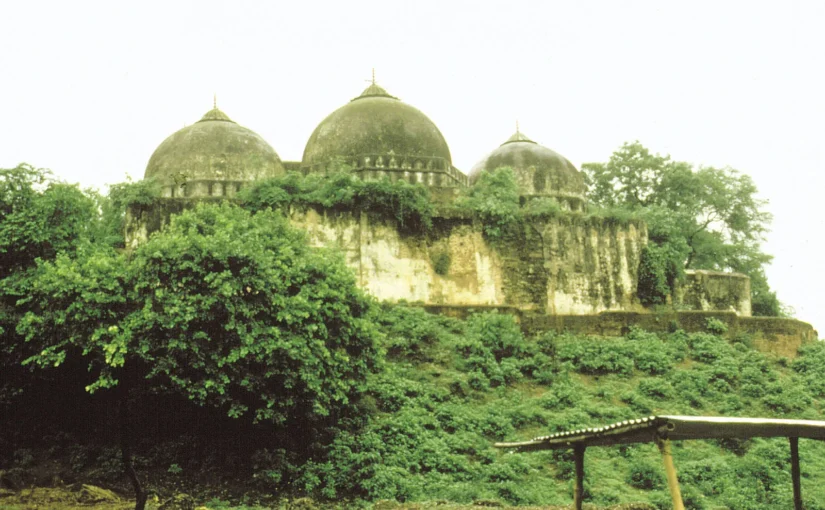
If India wants to avoid future Babri Masjids, it needs a clearer, more orderly doctrine for handling irreconcilable sacred disputes. Excavation, relocation, and compensation should be formalised as the default tools, rather than allowing conflicts to metastasise into civilisational crises. Geography matters. Some sites carry layered sanctity for multiple traditions; others do not. Al-Aqsa, for instance, is both the site of the Jewish Temple and central to Islamic sacred history through the Isra and MiÊżraj. Babri Masjid was not comparable. It had no unique pan-Islamic significance, while the site was widely regarded within Hindu tradition as the birthplace of Lord Ram. The same logic applies to Mathura, associated with Lord Krishna. Recognising asymmetry of sacred weight is not prejudice; it is common sense. A rules-based system—full archaeological excavation, dignified relocation of structures where necessary, and generous compensation—would allow India to preserve heritage without endlessly reopening civilisational wounds.

Urdu is not an Indian language but Hindu nationalists made it one

It is a Muslim-inspired language that emerged in India. That distinction matters. Blurring it creates confusion, not harmony. There was an early misstep in North Indian language politics. Modern Hindi was deliberately standardised on Khari Boli rather than on Braj Bhasha or Awadhi, both of which possessed far richer literary lineages. This decision, shaped by colonial administrative needs and North Indian elite nationalism, flattened a complex linguistic ecology and hardened later divides. One unintended consequence was the permanent preservation of Urdu within the Indian subcontinent. Because Khari Boli Hindi remained structurally interchangeable with Urdu, Urdu survived as a parallel high language. Had Braj or Awadhi become the standard instead, that mutual intelligibility would have collapsed, and Urdu would likely have been pushed entirely outside the Indian linguistic sphere.

Persian Linguistic Pride

Today, a similar impulse is at work. There is a growing tendency, often well intentioned, to Indianise the Mughals and Urdu, to fold them into a seamless civilisational story. This misunderstands both history and the settlement that Partition produced. Partition did not merely redraw borders. It separated elites, languages, and political destinies. Urdu crossed that line with Muslim nationalism. It cannot now be reclaimed without ignoring that choice. I say this as someone with both an Urdu-speaking and Persian-speaking inheritance. When I chose which tradition to consciously relearn and deepen, I chose Persian. Not out of sentiment, but judgment. Persian language nationalism remains rigorous, self-confident, and civilisationally anchored. Persian survived empire, exile, and modernity without losing coherence. It carries philosophy, poetry, statecraft, and metaphysics as a single, continuous tradition. Shi‘ism, Persianate culture, and Persian literature remain intertwined. They preserve depth rather than dilute it. As a Bahá’í, that continuity has personal resonance. But the argument does not depend on belief. It stands on history.

Urdu as the “Muslim tongue” Continue reading Should Babri Masjid have been moved to Pakistan?

Dhurandhar showcases Bollywood’s New Obsession: The Sexy Pakistani Villain

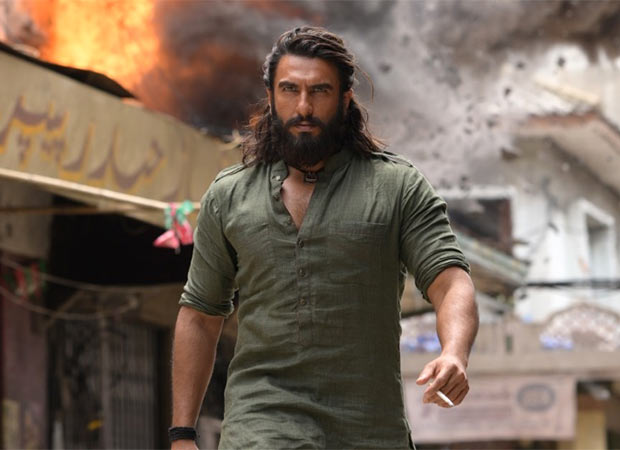
We watched Dhurandhar last night at Apple Cinemas (the last time we went to see Ishaan Khatter’s Homebound). It is the best mass-market Bollywood film I’ve seen since Animal, and far more immersive. What struck me most was not the action, nor the plot, but Bollywood’s new formula: a full-scale fetishisation of Pakistan.

Kabir keeps claiming that Bollywood casts Pakistanis as villains. This misses the point. The villain is always the sexiest figure in any film. Bollywood has finally realised this. Raazi hinted at it. Animal stumbled on it with Bobby Deol’s star stealing turn. Dhurandhar perfects it.

For the first time, Hindu actors are not performing cartoon versions of Pakistan. They are cosplaying Pakistanis with forensic precision; the clothes, the diction, the swagger, the social codes. In earlier decades the attempt was clumsy. Now the calibration is exact. Pakistan, in these films, becomes the Wild West of the subcontinent: familiar enough to feel intimate, distant enough to feel dangerous. Continue reading Dhurandhar showcases Bollywood’s New Obsession: The Sexy Pakistani Villain

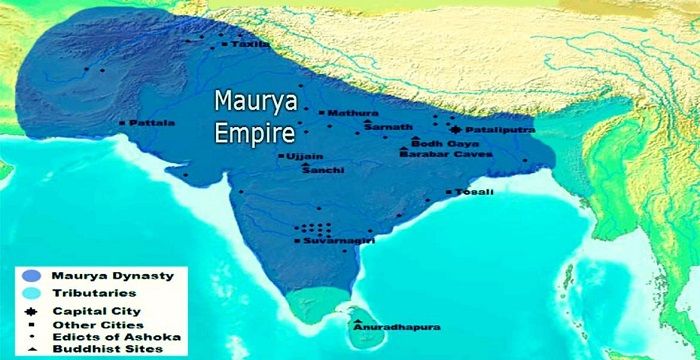
When was India’s Golden Age?

When people claim that India and Pakistan are “equally artificial,” they erase the long, uneven civilisational trajectories that produced both. Kabir, who is generally more courteous than the average Saffroniate imagines, still falls into this conceptual trap. But the question this raises is larger than contemporary geopolitics:

When was India’s Golden Age, and for whom?

A Golden Age can be political, cultural, philosophical, or civilisational. The answer depends on what we measure: scale, radiance, confidence, or continuity. Asking it forces us to examine whether India is a recent invention or a very old organism repeatedly broken and reconstituted.

Pakistan complicates this picture. As the Indus zone, it has deep civilisational roots of its own; older than Islam, perhaps as a geographic expression even older than the Vedic world. This is why, despite its ideological volatility, Pakistan will likely persist: it sits on a basin that has generated coherent cultures for five millennia. Its anti-India posture gives it political definition, but its underlying geography gives it durability. Continue reading When was India’s Golden Age?

Where Do Brahmins Come From?

The Historical, Genetic, and Mythic Answer

The idea that “all Brahmins come from Kannauj” is neat, flattering, and wrong. Kannauj is one important node in a much older, wider story. Brahmins do not descend from a single tribe or city. But they do share ancestry. That ancestry is older than Kannauj, older than caste, and visible in both texts and genes. To understand it, we must keep two truths in view at once: Brahmins have many regional origins, yet they descend—paternally—from a small circle of Vedic founders whose lineages spread across India.

This is the cleanest way to explain it without euphemism or ideology.

1. What the Kannauj Narrative Actually Refers To

When groups claim origin from Kānyakubja (Kannauj), they refer to the medieval centre that produced, housed, and exported Brahmins—especially after the Ghaznavid and Ghurid invasions pushed scribal and priestly families south and west. These migrants seeded communities in Maharashtra, Gujarat, the Konkan, Karnataka, Tamil Nadu, and Andhra. Their prestige shaped memory: “coming from Kannauj” became a shorthand for ritual pedigree. But Kannauj was only one centre among many. It cannot explain the full map of Brahmin origins.

2. The Real Landscape: Many Independent Lineages Continue reading Where Do Brahmins Come From?

Brown Pundits