Not All Our Ancestors Were “Just Hindu”

Pakistanis never HinduIslam destroyed everything? |Pakistanis were Hindu

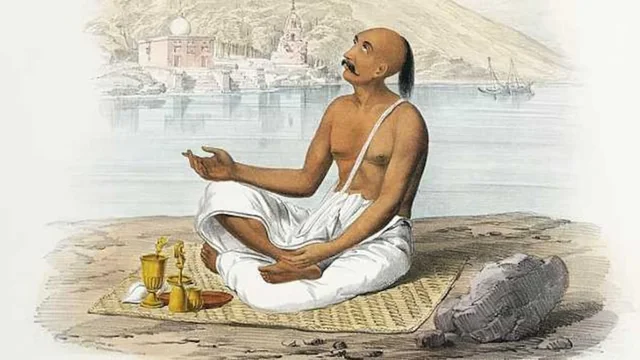
Aslan Pahari’s videos are linked to the top where he essentially argues that the Indus region, before Islam, was a seamless Hindu civilisational block. It makes for neat storytelling. It is also historically careless.

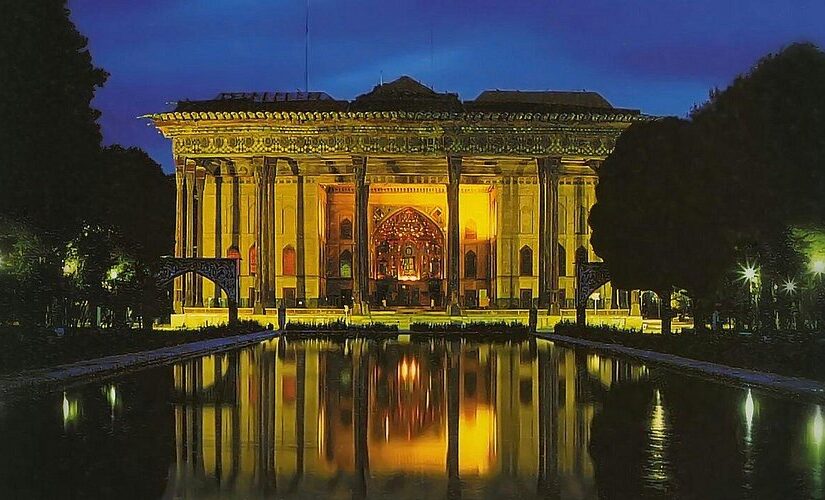
Sun Temple of Multan

The subcontinent before the 8th century was not a flat religious plain. It was layered, regional, and politically fragmented. Yes, there was a broad Brahmanical tradition stretching across north India. Yes, temples like the great Sun temple at Multan testify to the strength of that religious order in what is now South Punjab. But to move from that to “all ancestors were Hindu” is to mistake dominance for uniformity.

Sindh

Take Sindh. When Muhammad bin Qasim entered the region in the early 8th century, he did not conquer a purely Brahmanical kingdom. The ruling Brahmin elite he defeated, had previously overthrown a Buddhist polity, and the religious landscape of Sindh included Buddhists, various Hindu sects, and local traditions. The frontier between Indic religions was not rigid. It was porous, competitive, and regionally specific.

It goes without saying that Buddhists emerged from a broader Brahmanical milieu, but I am referring specifically to the religious landscape immediately preceding the arrival of Islam.

Punjab Continue reading Not All Our Ancestors Were “Just Hindu”

The Importance of Grace

Kabir has resigned. I truly hope he reconsiders. But his impending departure forces a larger point. Online forums need grace. Not agreement. Not deference. Grace.

I have noticed that some of the Saffroniate express themselves bluntly. I saw this years ago in Cambridge as well. They are not always fluent in the soft, coded language of the liberal consensus. They do not always wrap their arguments in silk. That does not mean they should be silenced. Allowing people to articulate their emotions — without crudity, but without stylistic policing — expands the conversation. A forum that only rewards one rhetorical style becomes sterile. At the same time, no single voice defines BP. Not Kabir. Not BB. Not RNJ. Not myself. The site is larger than any one temperament.

What makes BP valuable is that it attempts something rare: a space where Desis can argue without collapsing into communal silos. That is fragile. It requires reflection from all sides. Grace does not mean surrender. It means refusing to reduce opponents to caricature. It means recognising that patriotism, even when misplaced in our view, is not insanity. It means remembering that tone can wound as easily as content. If BP is to survive as a broad church, it will not do so through factional victory. It will do so through a culture where disagreement does not require humiliation. That is harder than winning an argument.

India Has Sacred Land. Pakistan Has Sacred Purpose. The Comment Section Needs Neither.

Everyone; please do not violate our rules egregiously. If moderation collapses, I will stop doing it. And if that happens, the comment boards will descend into noise very quickly. That helps no one.

The comments are growing again after a lull, which is a good sign. But it also puts real strain on time. I would rather focus on writing and commissioning strong posts than constantly firefighting threads. If you value the quality of this space, help maintain it.

If anyone would like to volunteer as a balanced and fair moderator, step forward. Not a partisan enforcer. Not a factional referee. Someone steady. I have given BB authorship privileges because Kabir, while diligent, is beginning to police too aggressively, and BB, when restrained, can bring levity without venom. That balance matters.

On a separate note, a thought. Bharat, that is, India in her most sublime and civilizational sense, possesses something like sacred geography. Rivers, mountains, pilgrimage circuits. The land itself carries immense metaphysical weight as both the home and centre of Dharma.

Pakistan, by contrast, was founded less on geography than on mission. It has an animating purpose, often framed as unifying or protecting the Ummah,  but that is not the same thing as sacred land. One is spatial and civilizational; the other is ideological and directional. They are not equivalents, and confusion between them produces bad arguments.

Keep the debates sharp. Keep them serious. But keep them civil. If moderation fails, everyone loses.

Epstein in Peshawar: Not a Financier, Not Just a Predator

The email is dated 1 May 2013. Jeffrey Epstein writes that he has “finally left Peshawar,” describes the city as under bombing turbulence ahead of elections, and details meetings with tribal representatives, provincial health officials, and federal authorities. He claims to have spoken, via a fixer, to a “senior Taliban guy” about polio vaccination resistance. He references funding from the UAE government and suggests granular political intelligence was obtained.

This is not gossip. It is a field report. In 2013, Peshawar and the Federally Administered Tribal Areas were among the most volatile zones in the world. Polio workers were being assassinated. After the CIA’s fake vaccination campaign during the Bin Laden operation, vaccination drives had become politically radioactive. Negotiating access required tribal intermediaries, security assurances, and tacit accommodation with insurgent actors.

May be an image of text that says "From: Boris Nikolic To: Jeffrey Epstein Subject: RE: jeffrey Date: Wed, May 2013 15:14:29 +0000 Thank you! Can Even imagine with your mechanism? From: Epstein Sent: Wednesday, May 2013 5:36 town. Hotel had times Sunday security about, meetings constant bombings bombings past. successful meetings who FATA Health, who disarmed publõic health specialist vere together organized aware tactics, and Wednesday ay, reps. Even were about vast amount fjobs sign MOU next money involved. Some UAE Govt, which give information huge grant covering communication addressee. Epstein property disclosure part communication copying strictly prohibited please e-mail this immediately and copies thereof, rights"

A “hedge fund manager” does not casually insert himself into that ecosystem. Continue reading Epstein in Peshawar: Not a Financier, Not Just a Predator

On Breakup Fantasies and Basic Geopolitical Decency

Following my conversation with Kabir; I mulled on the difference between criticising a state and fantasising about its dismemberment.

What should be the type of Critique?

Criticising a political party, a military institution, or a government’s failures is normal. It is necessary. Democracies depend on it. Even flawed democracies depend on it. Pakistan’s military can be criticised. India’s ruling party can be criticised. Iran’s clerical establishment can be criticised. No state is beyond scrutiny. But imagining the territorial breakup of a country, and doing so with visible satisfaction, is something else entirely.

Sacred States?

States are not debating societies. They are containers of memory, trauma, and blood. They are “almost” sacred spaces. For Pakistanis, 1971 is not an abstract lesson in federalism. It is a civilisational rupture. It was war, humiliation, loss of half the country, and a wound that still shapes the national psyche. For Indians, similar fantasies about Tamil Nadu, Punjab, or Kashmir breaking away would be equally triggering. Every nation has red lines embedded in its historical trauma.

Ex-USSR Continue reading On Breakup Fantasies and Basic Geopolitical Decency

Germany Is Rearming. Japan Is Shifting. And Desis Are Arguing Like Teenagers.

Running a platform is not the same as winning an argument. It is about tone, trajectory, and whether the conversation rises or sinks. I edit out BB’s comments not because I fear disagreement, and not because I am fragile about India or Pakistan. I edit them because they are crude. Crudeness is not courage.

Between Critique and Provocation

There is a difference between sharp critique and coarse provocation. Kabir and I disagree deeply about India. He defends the fake term “South Asia” as necessary. It’s a neocolonialist invention designed to dissolve the world’s oldest and most prominent civilisation (the Indian Subcontinent) into a compass direction. We argue. We contest premises. We clash over legitimacy, sovereignty, and naming. But the disagreement is structured. It is intelligible. It is civil. It forces clarity.

BB’s interventions, by contrast, tend to flatten everything into sneer and insinuation. That degrades the space. A forum that tolerates permanent coarseness slowly becomes defined by it. Readers do not return for noise. They return for thought. There are, to be fair, strong exceptions; for instance when he analysed the cricketing economy to illustrate how much weaker the Pakistani consumer-tax base is compared to its Indian counterpart.

Japan & Germany wake up

Continue reading Germany Is Rearming. Japan Is Shifting. And Desis Are Arguing Like Teenagers.

Pan-Sindhi Cross-Border Virality


A Pakistani Sindhi song, Paiso Aa, has crossed the border and gone viral among Indian Sindhis. It is light, playful, and unselfconscious. And it exposes something we repeatedly forget.

Sindh has been Muslim for over thirteen centuries.

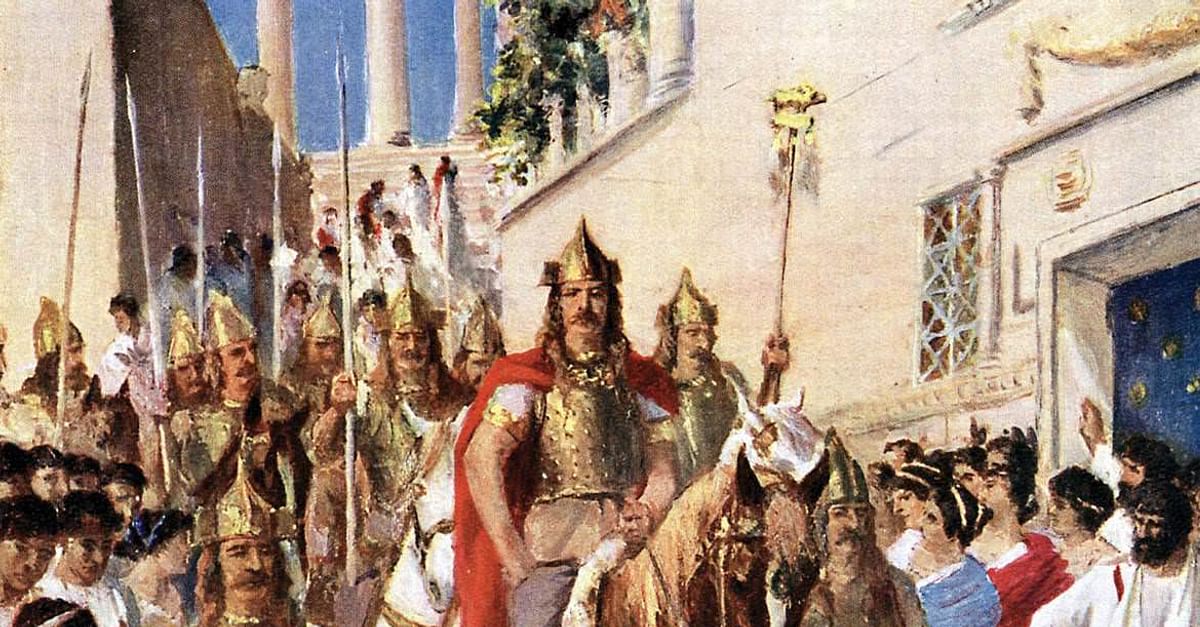
The region was conquered in 711 CE by Muhammad bin Qasim, the teenage governor of Fars—thirteen when he entered Sindh, dead by nineteen. Almost an Alexander figure in miniature. Since then, Sindh and Multan have known uninterrupted Muslim rule longer than many parts of the Islamic world itself.

That matters, because it complicates a habit of thought that treats Islam in the Indian Subcontinent as permanently “foreign.”

In Sindh, it is not. Continue reading Pan-Sindhi Cross-Border Virality

Brown Pundits