Double Standards, Modi’s Gamble, and Why Ramadan Gets It Right

Two comments overnight exposed different sides of the the same problem.

You Can’t Weaponise Islamophobia and Then Kneecap Hinduism

Kabir tried to circulate a link around Manu Pillai’s Gods, Guns and Missionaries, a serious book, framed around whether Hinduism was, in some sense, constructed. The question is legitimate. All traditions are constructed. All identities consolidate under pressure.

Top 10 Muslim Inventions in History - The Muslim Vibe

But Hinduism and Islam are pari passu in this respect. The nineteenth century shaped both. Colonial enumeration shaped both. Reform movements reshaped both. Romila Thapar, Wendy Doniger, Sheldon Pollock; the literature on Hindu consolidation is vast. So is the literature on Islamic reform: Wahhabism emerging from Najd in the 1740s, Deoband crystallising in 1867 directly in response to 1857, Barelvism as counter-movement to both. All traditions have formation moments. All traditions modernise under pressure.
To apply the deconstructive lens to Hinduism while leaving Islamic historiography untouched is not intellectual rigour. It is asymmetry. Kabir, who deploys “Islamophobia” as a first-strike weapon with the hair-trigger of a seasoned litigator, has never shown the slightest inclination to subject his own tradition to equivalent scrutiny. If the lens is universal, use it universally. If it is selective, say so.

Anything else is prosecution dressed up as scholarship.

Pakistan’s Literacy Problem Is Real. The Comparison to India Is Useless. Continue reading Double Standards, Modi’s Gamble, and Why Ramadan Gets It Right
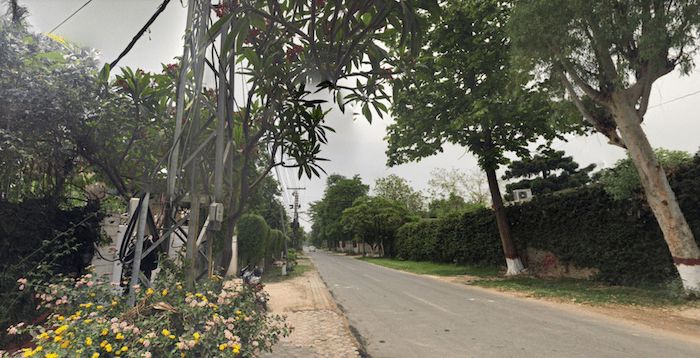
The Cantonment and the Clean Street: Why Pakistan’s Punjab Looks More Ordered Than India’s

A dispatch from a quieter Brown Pundits

The Observation

My Urdu teacher said something that lodged itself in my brain. India is vastly richer than Pakistan; and yet Pakistan’s Punjab, in his experience, feels cleaner. More ordered. Less like South Asia. I pushed back. Then I stopped.

The Numbers

In 2024, India’s GDP per capita was $2,695 against Pakistan’s $1,479; roughly 1.8 times higher on a nominal basis, and India’s total economy at $3.9 trillion is approximately ten times Pakistan’s $372 billion. Until 2008, Pakistan was actually richer per person; India led that measure for only 14 of the 60 years after independence. The divergence is real but recent and accelerating.

The sanitation data cuts against the perception: 81% of Indians have access to basic sanitation versus 72% of Pakistanis (WHO/UNICEF, 2024). On paper, India leads. So the paradox isn’t statistical. It is visual. The question isn’t who has more toilets. It is why certain Pakistani streets feel more governed.

The Answer: 41 Cantonments Continue reading The Cantonment and the Clean Street: Why Pakistan’s Punjab Looks More Ordered Than India’s

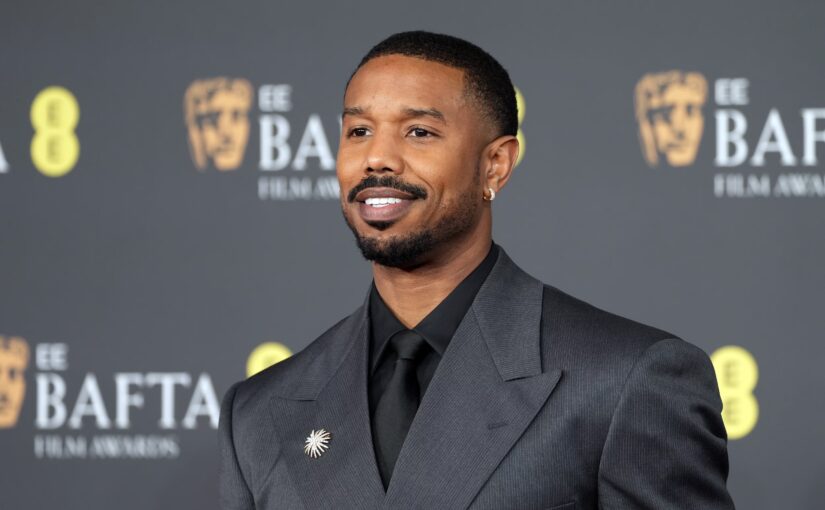
According to BAFTA, ‘Free Palestine’ is the slur. Not the N-word.

The Man, Not the Scandal

John Davidson has Tourette’s. He did not mean it. His tics are involuntary — the condition is neurological, not moral. The audience was warned before the ceremony began. Davidson left the room when he realised what was happening. He has spent his life teaching the public what Tourette’s actually is. None of what happened Sunday night was his fault.

Now the second thing. The BBC broadcast it anyway.

The Edit Suite Had Two Hours Continue reading According to BAFTA, ‘Free Palestine’ is the slur. Not the N-word.

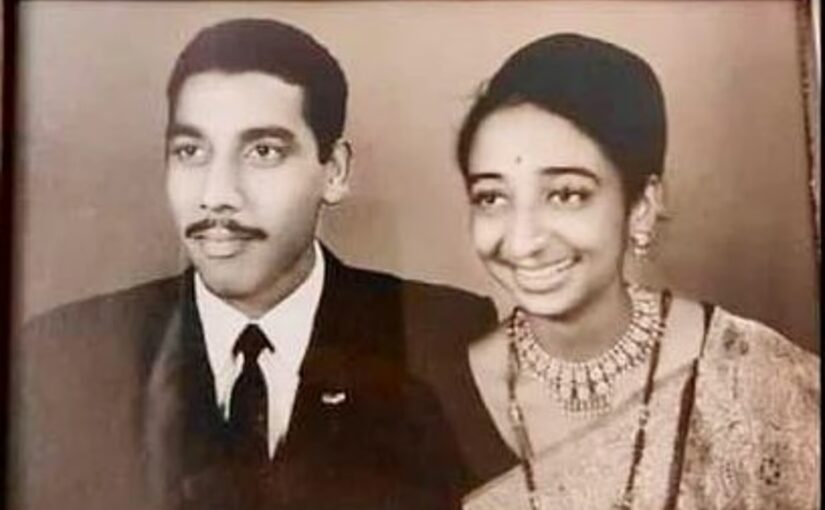
She Parked a Car With Her Husband. Fifty Years Later, She Is Still Waiting.

Before anything about this blog, its standards, or its arguments, I want to begin with a story; because sometimes a single human life cuts through every debate and reminds us what any of this is actually for.

Damayanti Tambay was 21 years old, a three-time national badminton champion, when she married Flight Lieutenant Vijay Tambay in April 1970. Twenty months later, war broke out. On 3 December 1971, they drove together to a garage in Ambala cantonment to park their bottle-green Fiat. That was the last time she saw him.

On 5 December, flying a strike mission over Shorkot Airbase in West Pakistan, Vijay was hit by anti-aircraft fire and ejected. Radio Pakistan later broadcast his name among those captured. Damayanti heard it alone. She felt relief. A prisoner of war comes home eventually, she thought.

He never did.

A Loving Wife’s Unending Search Continue reading She Parked a Car With Her Husband. Fifty Years Later, She Is Still Waiting.

Brown Pundits Is Not a Cesspit. Keep It That Way.

Brown Pundits exists to test ideas against evidence. That is not happening consistently. Four contributors have split into two camps. Threads are filling with video links and recycled assertions. Serious readers are leaving. This post explains what changes and why.

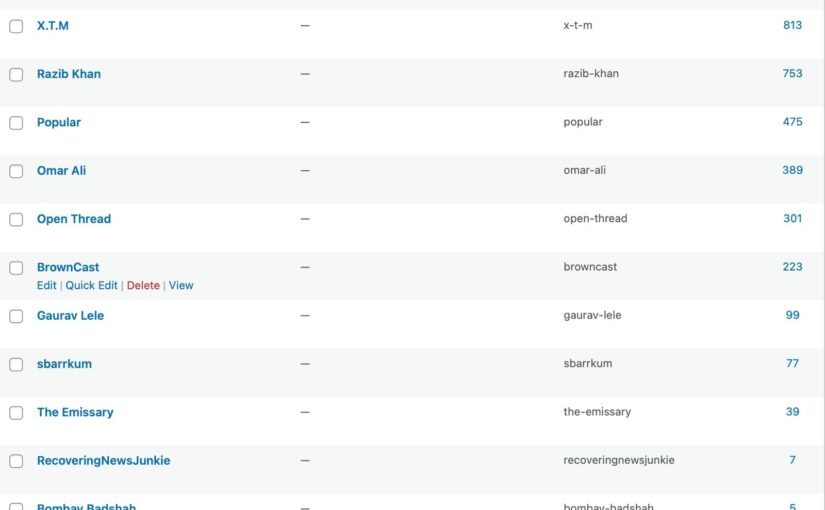
Effective immediately, all four authors have been moved to commentator status until each individually promises they can maintain the same standard in comments as in posts; high signal, evidence-based, no exceptions.

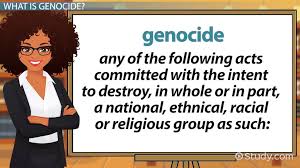
On genocide specifically Continue reading Brown Pundits Is Not a Cesspit. Keep It That Way.

3,920 | Building out the Archive

A small administrative note that matters more than it sounds. Brown Pundits now has 3,920 posts. Every single one is categorised. There are no uncategorised posts left. The entire archive is structured.

That is not glamorous work. It does not trend. It does not go viral. But it is the difference between a website and a timeline. Writing is not just producing new content. It is tending an intellectual garden. Adding categories, refining tags, standardising slugs, back-tagging fifteen years of material; this is not clerical labour. It is editorial discipline. It forces you to reread your own history. It reveals patterns. It exposes gaps. It shows where the site has been narrow and where it has been expansive.

Substack has made everyone an author. It has not made everyone an editor. Most platforms reward velocity and outrage. The incentive is to post faster and louder than the next person. Community becomes an audience. Conversation becomes branding. Writers become marketers. We are structured differently.

Different Eras of the Internet Continue reading 3,920 | Building out the Archive

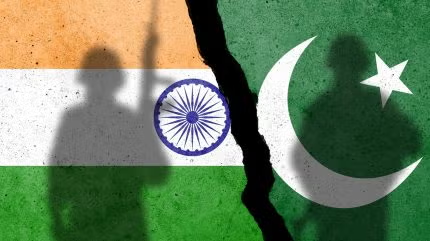
Poorer Pakistan OutFoxes Richer India?

“No one wants a strong India. But PM Modi opened doors. He strengthened the military, advanced the economy, maintained balanced relations with the West, Russia, and China. That is serious statecraft” –Aleksandar Vučić, President of Serbia

India is richer

Strip away the noise and a simple asymmetry remains. India will almost certainly remain richer than Pakistan for the foreseeable future. The gap in GDP, fiscal depth, technology, and demographic scale is widening, not narrowing. On material indicators, India has the advantage. Yet material advantage does not always translate into strategic dominance.

India is louder

India is a mass democracy. It is electorally accountable, media-saturated, and sensitive to public opinion. Governments must justify escalation. Markets react to instability. Voters punish miscalculation. This imposes restraint.

Pakistan is tighter

Pakistan is structured differently. Power is narrower. Decision-making is concentrated within a smaller elite, with the military as the central institution. That creates rigidity in some domains but flexibility in others. Strategic continuity does not reset every five years. Public opinion matters, but it does not directly determine policy in the same way it does across the border.

Structural Differences

This structural difference shapes behaviour. India must think about global markets, coalition politics, and reputational cost. Pakistan can absorb economic stress more easily because its political system is already insulated from full electoral volatility. That insulation produces durability, even under strain.

The list gets smaller. There are six countries who sent the head of state/government to all three: 1) Beijing military parade 2) Davos Board of Peace launch 3) Washington BOP 1st meeting They are: Armenia | Azerbaijan | Indonesia | Kazakhstan | Pakistan | Uzbekistan

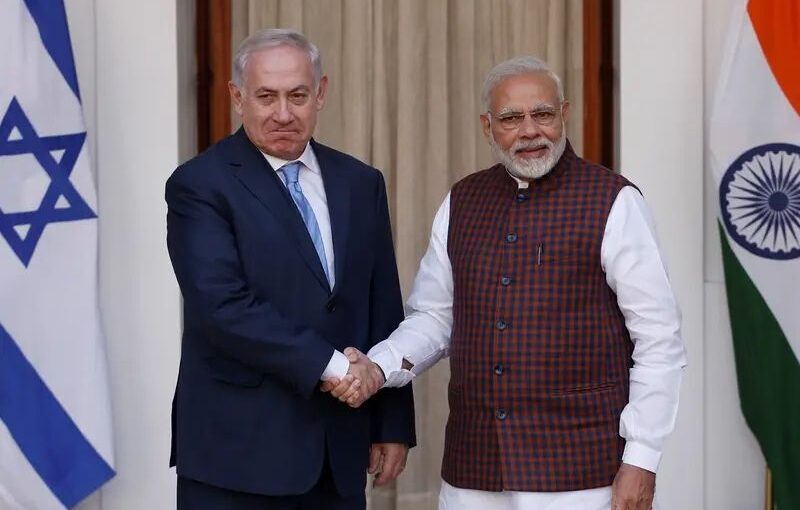
Like Israel Continue reading Poorer Pakistan OutFoxes Richer India?

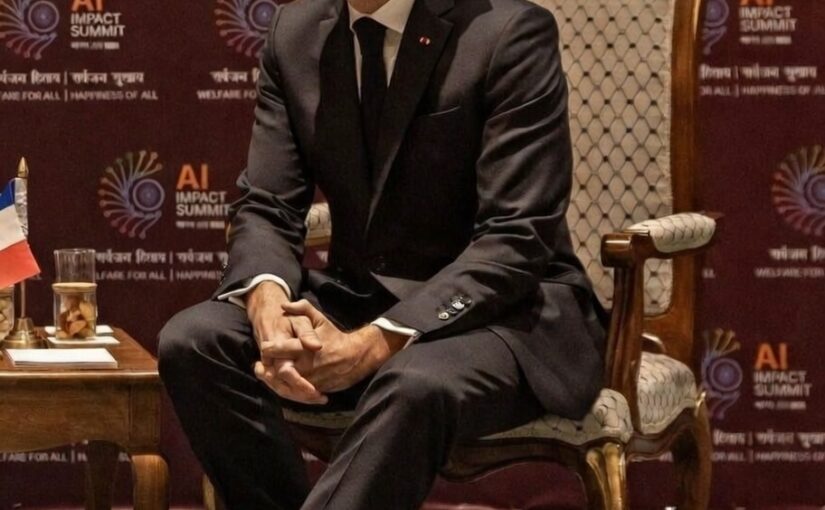
Open Thread: Bharat overawes France

Five billionaires have as much wealth as half of humanity ~ Vandana Shiva

Thank you India!

President Macron about India

Prime Minister of Uzbekistan, Singing Raj Kapoor’s Song.

Seems LV also stole its TM design from India.🇮🇳 Continue reading Open Thread: Bharat overawes France

Back from Vermont

Dr. V and I spent Valentine’s week in the Green Mountains. Clean slopes, functioning lifts, small towns organised around winter.

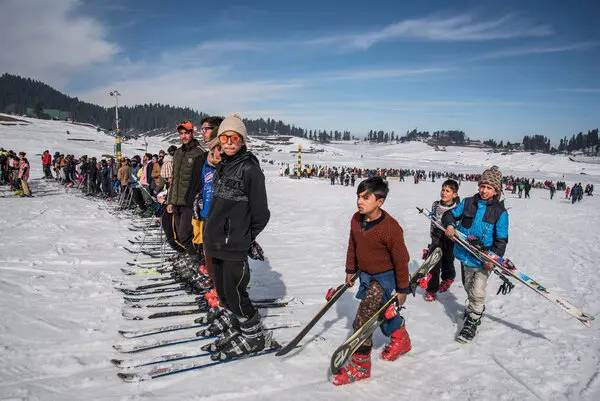
It is hard not to compare that with the Himalaya–Hindu Kush arc. The Karakoram, western Himalayas and Hindu Kush contain some of the highest and most snow-reliable terrain in the world. Peaks above 7,000–8,000 metres. Glaciated valleys. Long vertical drops that exceed most Alpine resorts. Gulmarg in Kashmir already has one of the highest gondolas on earth, reaching nearly 4,000 metres. Parts of northern Pakistan and Ladakh receive heavy winter snowfall and have multi-month seasons.

In purely geographic terms, the region has the ingredients for a major winter sports economy. Yet large stretches of this highland are militarised or politically contested. Infrastructure is thin. Insurance is expensive. Foreign tourism is episodic. Investment flows elsewhere; to the Alps, to the Rockies, to Japan. The comparison is not moral; it is structural. Geography offers potential. Institutions determine whether that potential becomes an industry. That contrast stayed with me on the drive back.

Brown Pundits