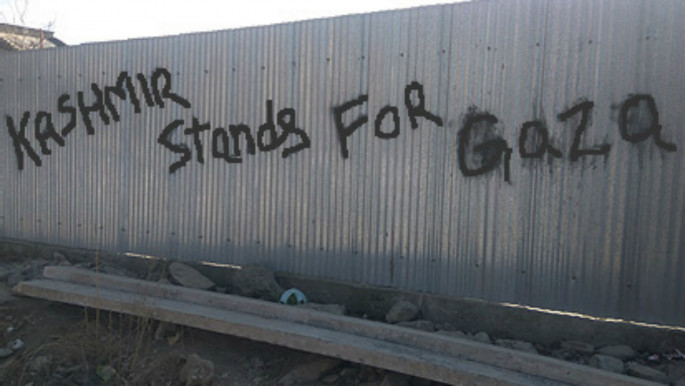
Kashmir is not Palestine.

It seems apparently that Kashmir is Palestine. That India is Israel. That Kashmiri Muslims are Palestinians.

Why the Return of Kashmiri Pandits Is Still a Distant Dream - The New York  Times
Displaced from their Vatan

First The Pandits were actually displaced. 100,000-200,000 people (estimates vary) fled the Valley in 1990 under explicit death threats, targeted assassinations, mosque loudspeakers announcing their departure was required. This is the closest thing to actual ethnic cleansing the Valley has seen in living memory, and it was directed at Hindus, by militants operating with Pakistani ISI support.

We are not arguing that everything is fine in the Valley. It is not that Delhi’s approach to Kashmir has been faultless, or that the revocation of Article 370 was without consequence for Kashmiri identity. Nor can it be denied that there is genuine anguish among Kashmiri Muslims.

Kashmiri Muslim Women Pray Relic Displayed Editorial Stock Photo - Stock  Image | Shutterstock Editorial
Kashmiri Muslim Women Pray

However the analogy to Palestine is not merely imprecise, for instance the Abdullah family chose India over Pakistan, whereas no Palestinian chose Israel. However this argument is increasingly offensive.

The Gaza Test

Start with the simplest possible question: what is actually happening to the Palestinians?

Gaza before

Continue reading Kashmir is not Palestine.

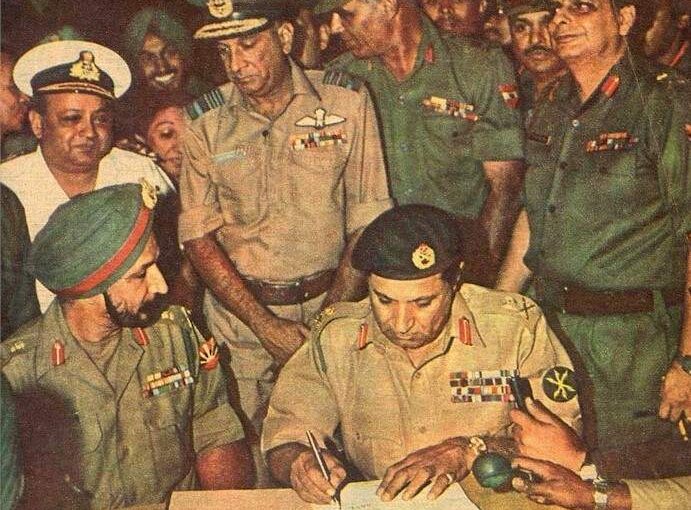
Pakistan, 1971, and the Misuse of the Holocaust Analogy

“Pakistan army remains the only one after WW2 to have carried out a large scale genocide. The comparison to the Nazis is a fact-based one. Mentioning this simple historical fact isn’t “anti-Pakistan”. RNJ

The events of 1971 in East Pakistan involved large-scale violence, mass civilian deaths, displacement, and grave violations of humanitarian norms. These facts are not contested. What remains contested is classification. Continue reading Pakistan, 1971, and the Misuse of the Holocaust Analogy

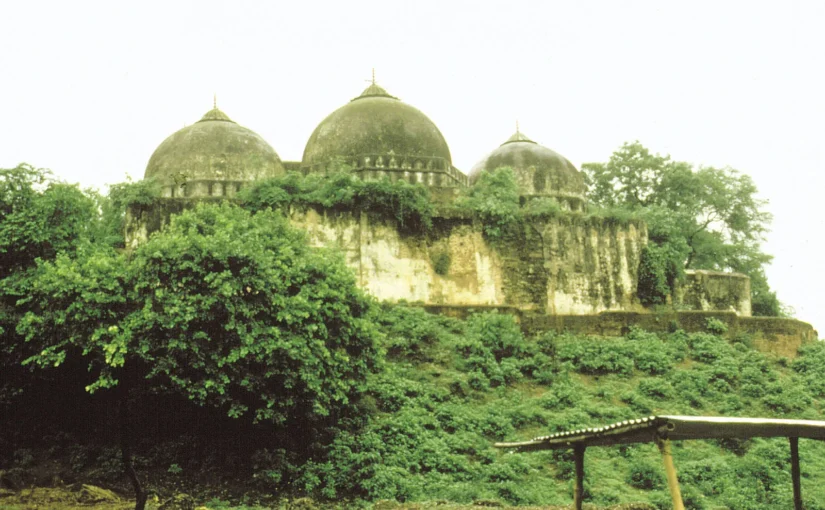
Should Babri Masjid have been moved to Pakistan?

This deliberately provocative piece draws on Kabir’s recent comments, Arkacanda’s excellent essay, Musings on & Answers, and Nikhil’s profound piece in “Urdu: An Indian Language.”

If India wants to avoid future Babri Masjids, it needs a clearer, more orderly doctrine for handling irreconcilable sacred disputes. Excavation, relocation, and compensation should be formalised as the default tools, rather than allowing conflicts to metastasise into civilisational crises. Geography matters. Some sites carry layered sanctity for multiple traditions; others do not. Al-Aqsa, for instance, is both the site of the Jewish Temple and central to Islamic sacred history through the Isra and MiÊżraj. Babri Masjid was not comparable. It had no unique pan-Islamic significance, while the site was widely regarded within Hindu tradition as the birthplace of Lord Ram. The same logic applies to Mathura, associated with Lord Krishna. Recognising asymmetry of sacred weight is not prejudice; it is common sense. A rules-based system—full archaeological excavation, dignified relocation of structures where necessary, and generous compensation—would allow India to preserve heritage without endlessly reopening civilisational wounds.

Urdu is not an Indian language but Hindu nationalists made it one

It is a Muslim-inspired language that emerged in India. That distinction matters. Blurring it creates confusion, not harmony. There was an early misstep in North Indian language politics. Modern Hindi was deliberately standardised on Khari Boli rather than on Braj Bhasha or Awadhi, both of which possessed far richer literary lineages. This decision, shaped by colonial administrative needs and North Indian elite nationalism, flattened a complex linguistic ecology and hardened later divides. One unintended consequence was the permanent preservation of Urdu within the Indian subcontinent. Because Khari Boli Hindi remained structurally interchangeable with Urdu, Urdu survived as a parallel high language. Had Braj or Awadhi become the standard instead, that mutual intelligibility would have collapsed, and Urdu would likely have been pushed entirely outside the Indian linguistic sphere.

Persian Linguistic Pride

Today, a similar impulse is at work. There is a growing tendency, often well intentioned, to Indianise the Mughals and Urdu, to fold them into a seamless civilisational story. This misunderstands both history and the settlement that Partition produced. Partition did not merely redraw borders. It separated elites, languages, and political destinies. Urdu crossed that line with Muslim nationalism. It cannot now be reclaimed without ignoring that choice. I say this as someone with both an Urdu-speaking and Persian-speaking inheritance. When I chose which tradition to consciously relearn and deepen, I chose Persian. Not out of sentiment, but judgment. Persian language nationalism remains rigorous, self-confident, and civilisationally anchored. Persian survived empire, exile, and modernity without losing coherence. It carries philosophy, poetry, statecraft, and metaphysics as a single, continuous tradition. Shi‘ism, Persianate culture, and Persian literature remain intertwined. They preserve depth rather than dilute it. As a Bahá’í, that continuity has personal resonance. But the argument does not depend on belief. It stands on history.

Urdu as the “Muslim tongue” Continue reading Should Babri Masjid have been moved to Pakistan?

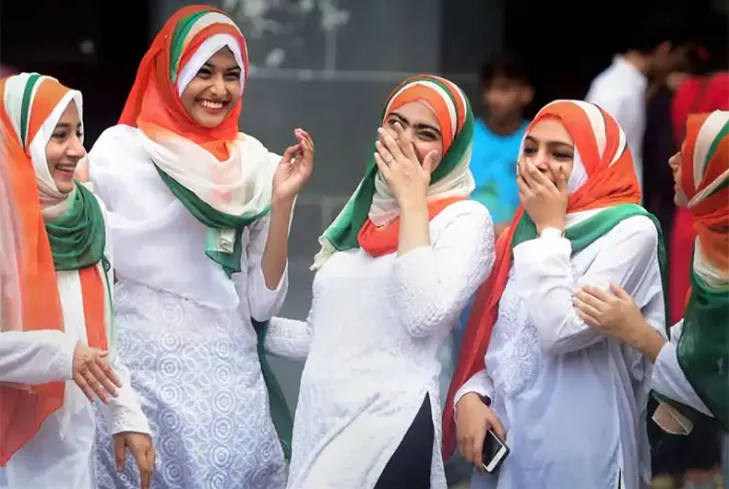
Who can speak for the “Muslim minority” of India?

Public debates on Indian Muslims often make one basic mistake: they collapse all minorities into a single category and then declare that “everyone is thriving because a few individuals have done well”. This flattens history, erases structure, and turns civilisational questions into census arithmetic.

1. Minorities Are Not Interchangeable

Jains, Sikhs, and Buddhists offer no meaningful analogy to Indian Muslims.

  • Jains were never politically central to the subcontinent.

  • Sikhs built a regional power, not a pan-subcontinental order.

  • Buddhists have been demographically marginal for a thousand years.

Indian Muslims were different. For centuries they formed the civilisational elite of North India; shaping courts, languages, music, etiquette, food, architecture, and the ways Indian states understood power. Delhi, Agra, Lucknow, Hyderabad were not enclaves. They were the centre of the political and aesthetic world of the Indo-Gangetic plain. A fall from centrality is not comparable to never having been central at all.

2. Individual Success Is Not Structural Health Continue reading Who can speak for the “Muslim minority” of India?

On the Question of Who “Owns” the Indo-Muslim Legacy

Reading Sophia Khan’s superb piece on the lost Muslim cities of Hindustan, and then watching the BP comment-thread unfold, a few thoughts crystallised for me; less about “ownership,” and more about the intellectual pattern that keeps resurfacing whenever Indo-Muslim history is discussed.

First: I genuinely did not know that Khan was originally pronounced with a silent n, nor that paan had such a deep Islamicate turn in its social history. Much like music, I had long assumed paan to be a largely Hindu-coded practice. The article forces a re-examination of how intertwined everything actually was. The same goes for Hindustani music: I once thought of it as essentially a Hindu, temple-rooted tradition. Then you realise how much of the courtly synthesis, Persian, Hindavi, Turko-Central Asian, was shaped by Muslims, even if the Vedic lattice underneath remained foundational.

This is partly why I found Bombay Badshah’s objection (“Pakistan cannot claim any of this”) an odd line to draw. One can, of course, make the territorial argument; but it collapses immediately once you observe what India itself is doing: aggressively appropriating the Indo-Muslim aesthetic while deracinating its historical context. If Bollywood, tourism, cuisine, and the Indian cultural machine can freely claim Delhi, Lucknow, Agra, and Hyderabad as national inheritances, then Pakistanis whose families actually come from those cities are hardly crossing an intellectual red line by acknowledging lineage, memory, or loss. Continue reading On the Question of Who “Owns” the Indo-Muslim Legacy

Hinduphobia Exists, But Pakistan Was Not Born from It

I was riffling through the comments and my jaw dropped when Kabir claimed Hinduphobia doesn’t exist. It struck me as both historically and emotionally tone-deaf. I didn’t respond at the time, but I’ve been reflecting on it since.

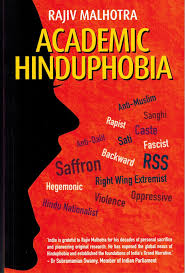
Let me say upfront: Hinduphobia does exist. It may not always manifest in overt violence or systemic persecution (at least not today, and not in most places globally), but it does appear in more insidious, ideological forms; especially in academic and diasporic discourse.

Take, for instance, the backlash against H1B visa recipients. Much of that criticism is coded; targeting upper-caste Indians, especially Hindus, who are the primary beneficiaries of this brain-drain dynamic. It’s not just about class or meritocracy; there’s an unspoken discomfort with their presence and success, often couched in progressive rhetoric.

On the intellectual front, academics like Audrey Truschke and others within the left-liberal Western consensus have regularly challenged or dismissed Hindu identity altogether; reducing it to political nationalism or caste oppression. This refusal to acknowledge Hinduism as a living, plural, and spiritual tradition creates an environment where Hindu self-articulation is delegitimized. That too is a form of Hinduphobia.

Now, is this Hinduphobia the same as the systemic anti-Muslim, anti-Black, or anti-immigrant hatred we see elsewhere? No. Hinduphobia today is more dismissive than violent, more erasure than exclusion, but it is real and it needs to be acknowledged.

Pakistan Was Not Born from Hinduphobia Continue reading Hinduphobia Exists, But Pakistan Was Not Born from It

Brown Pundits: Broad Church or Narrow Canon?

Brown Pundits Must Stay a Broad Church

Reading Kabir’s thoughtful post on the “soft Hindutva” bias at Brown Pundits, I found myself both agreeing with parts of his argument and diverging from its framing. My own journey with BP goes back to its inception. The blog was born in Twixmas December 2010; 10 days after I had met Dr. Lalchand, whose presence has profoundly shaped my civilizational views.

I say this not as a biographical aside but because BP, at its best, is where the personal and civilizational collide. We bring who we are; our marriages, our migrations, our contradictions, into this messy, brilliant conversation.

At the time, like many Pakistanis, I held a deep-seated assumption: that Hindus were fundamentally “other.” It wasn’t overt hatred; just a civilizational distance, internalized from birth. But Dr. V & Brown Pundits challenged that.

A Forum With Bias? Yes. But Which One?

The heart of BP is not neutrality; it’s the willingness to host contradiction. That is its genius, and it must be protected.

Continue reading Brown Pundits: Broad Church or Narrow Canon?

Brown Pundits