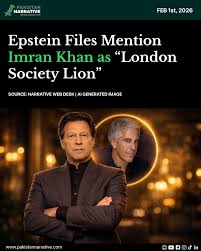
Epstein in Peshawar: Not a Financier, Not Just a Predator

The email is dated 1 May 2013. Jeffrey Epstein writes that he has “finally left Peshawar,” describes the city as under bombing turbulence ahead of elections, and details meetings with tribal representatives, provincial health officials, and federal authorities. He claims to have spoken, via a fixer, to a “senior Taliban guy” about polio vaccination resistance. He references funding from the UAE government and suggests granular political intelligence was obtained.

This is not gossip. It is a field report. In 2013, Peshawar and the Federally Administered Tribal Areas were among the most volatile zones in the world. Polio workers were being assassinated. After the CIA’s fake vaccination campaign during the Bin Laden operation, vaccination drives had become politically radioactive. Negotiating access required tribal intermediaries, security assurances, and tacit accommodation with insurgent actors.

May be an image of text that says "From: Boris Nikolic To: Jeffrey Epstein Subject: RE: jeffrey Date: Wed, May 2013 15:14:29 +0000 Thank you! Can Even imagine with your mechanism? From: Epstein Sent: Wednesday, May 2013 5:36 town. Hotel had times Sunday security about, meetings constant bombings bombings past. successful meetings who FATA Health, who disarmed publÔic health specialist vere together organized aware tactics, and Wednesday ay, reps. Even were about vast amount fjobs sign MOU next money involved. Some UAE Govt, which give information huge grant covering communication addressee. Epstein property disclosure part communication copying strictly prohibited please e-mail this immediately and copies thereof, rights"

A “hedge fund manager” does not casually insert himself into that ecosystem. Continue reading Epstein in Peshawar: Not a Financier, Not Just a Predator
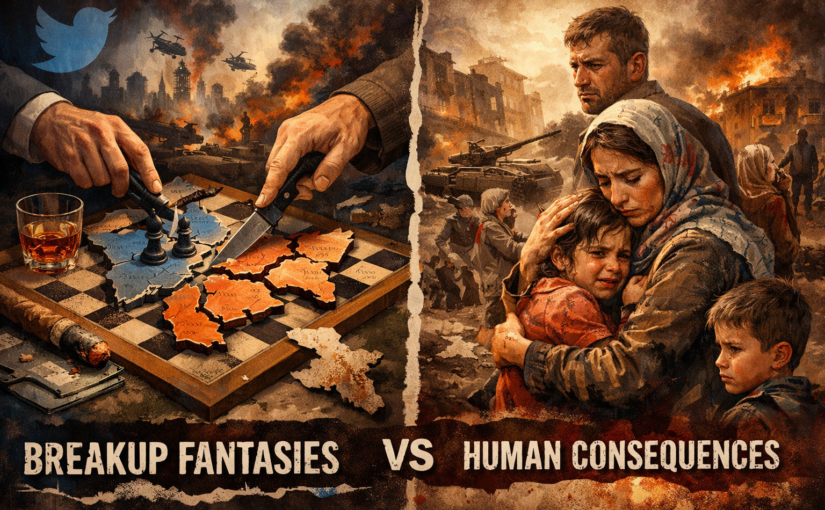
On Breakup Fantasies and Basic Geopolitical Decency

Following my conversation with Kabir; I mulled on the difference between criticising a state and fantasising about its dismemberment.

What should be the type of Critique?

Criticising a political party, a military institution, or a government’s failures is normal. It is necessary. Democracies depend on it. Even flawed democracies depend on it. Pakistan’s military can be criticised. India’s ruling party can be criticised. Iran’s clerical establishment can be criticised. No state is beyond scrutiny. But imagining the territorial breakup of a country, and doing so with visible satisfaction, is something else entirely.

Sacred States?

States are not debating societies. They are containers of memory, trauma, and blood. They are “almost” sacred spaces. For Pakistanis, 1971 is not an abstract lesson in federalism. It is a civilisational rupture. It was war, humiliation, loss of half the country, and a wound that still shapes the national psyche. For Indians, similar fantasies about Tamil Nadu, Punjab, or Kashmir breaking away would be equally triggering. Every nation has red lines embedded in its historical trauma.

Ex-USSR Continue reading On Breakup Fantasies and Basic Geopolitical Decency

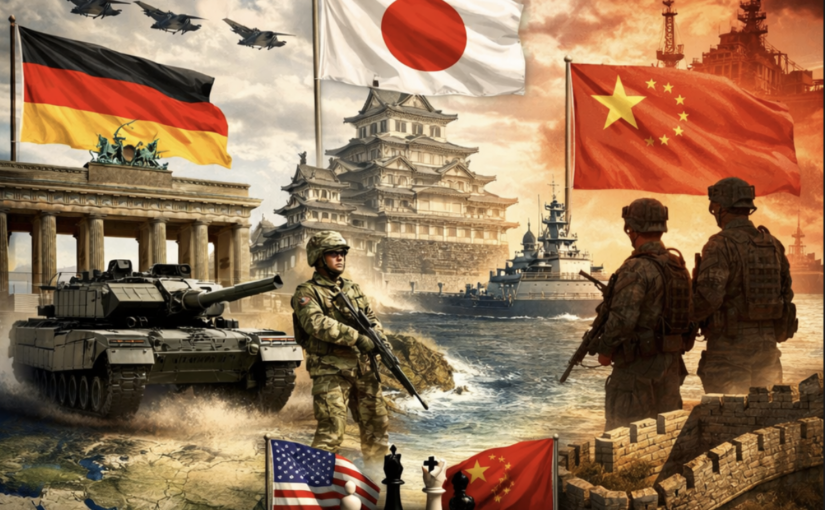
Germany Is Rearming. Japan Is Shifting. And Desis Are Arguing Like Teenagers.

Running a platform is not the same as winning an argument. It is about tone, trajectory, and whether the conversation rises or sinks. I edit out BB’s comments not because I fear disagreement, and not because I am fragile about India or Pakistan. I edit them because they are crude. Crudeness is not courage.

Between Critique and Provocation

There is a difference between sharp critique and coarse provocation. Kabir and I disagree deeply about India. He defends the fake term “South Asia” as necessary. It’s a neocolonialist invention designed to dissolve the world’s oldest and most prominent civilisation (the Indian Subcontinent) into a compass direction. We argue. We contest premises. We clash over legitimacy, sovereignty, and naming. But the disagreement is structured. It is intelligible. It is civil. It forces clarity.

BB’s interventions, by contrast, tend to flatten everything into sneer and insinuation. That degrades the space. A forum that tolerates permanent coarseness slowly becomes defined by it. Readers do not return for noise. They return for thought. There are, to be fair, strong exceptions; for instance when he analysed the cricketing economy to illustrate how much weaker the Pakistani consumer-tax base is compared to its Indian counterpart.

Japan & Germany wake up

Continue reading Germany Is Rearming. Japan Is Shifting. And Desis Are Arguing Like Teenagers.

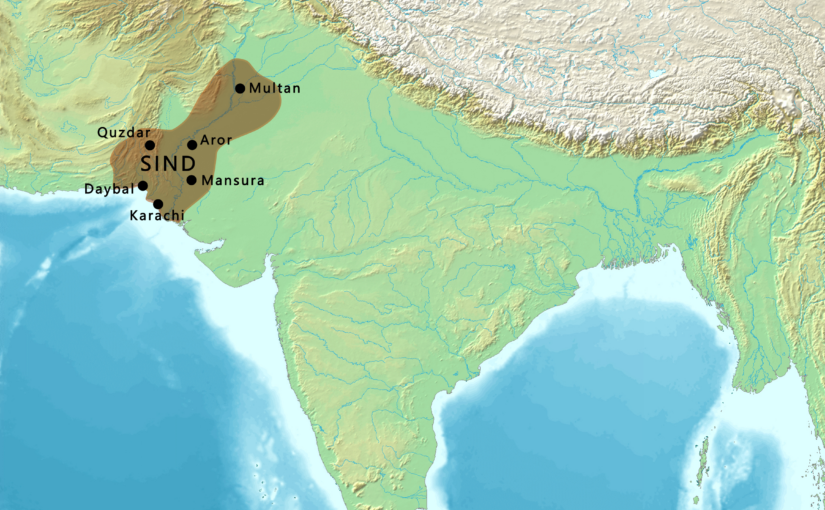
Pan-Sindhi Cross-Border Virality


A Pakistani Sindhi song, Paiso Aa, has crossed the border and gone viral among Indian Sindhis. It is light, playful, and unselfconscious. And it exposes something we repeatedly forget.

Sindh has been Muslim for over thirteen centuries.

The region was conquered in 711 CE by Muhammad bin Qasim, the teenage governor of Fars—thirteen when he entered Sindh, dead by nineteen. Almost an Alexander figure in miniature. Since then, Sindh and Multan have known uninterrupted Muslim rule longer than many parts of the Islamic world itself.

That matters, because it complicates a habit of thought that treats Islam in the Indian Subcontinent as permanently “foreign.”

In Sindh, it is not. Continue reading Pan-Sindhi Cross-Border Virality

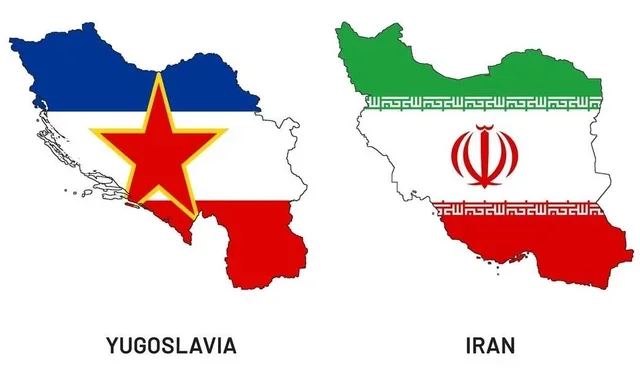
Pakistan Is Not Yugoslavia

There is a recurring Saffroniate habit, when it comes to Pakistan, that deserves to be named plainly. It assumes collapse. It treats Pakistan as a Yugoslavia-in-waiting, a state held together only by force and denial. This is not analysis. It is projection, reinforced by confirmation bias.

Pakistan is not Yugoslavia. It is, in many ways, the opposite.

Yugoslavia fractured once the external logic binding it disappeared. Pakistan was born under siege and continues to organise itself around that fact. Whatever one thinks of this psychology, it has consequences. States that internalise permanent vulnerability do not casually dissolve. They centralise, harden, and adapt. That is not a moral defence. It is an empirical observation.

Continue reading Pakistan Is Not Yugoslavia

Open Thread: the Epstein Files

the Epstein files are really very very disturbing.. i mean #nowords..

Browns tend to focus on internecine Indo-Pak conflicts instead of the real news alas.

When Even Jainism Becomes a Hack

And so, some students I know claim to be devout members of the Jain faith, which rejects any food that may cause harm to all living creatures — including small insects and root vegetables. The students I know who claim to be Jain (but aren’t) spend their meal money at Whole Foods instead and enjoy freshly made salads and other yummy dishes, while the rest of us are stuck with college meals, like burgers made partly from “mushroom mix”.

I was reading about Stanford’s accommodation culture when one detail stopped me cold. Some students, the article noted, claim to be devout Jains in order to escape the mandatory meal plan. Jainism, one of India’s oldest religions, forbids harm to living beings. That includes insects. In many traditions it excludes root vegetables, because uprooting a plant kills it. It is an ethic of extreme restraint, discipline, and care. The students claiming it, by the author’s own admission, are not Jain. They are optimisers. This is not a small lie. It is a revealing one. Continue reading When Even Jainism Becomes a Hack

Brown Pundits