The Myth of the “Average Pakistani”

Dave’s comment:

“I have in fact met some. In person. Ran into a lovely couple while on vacay in Guatemala. Excellent conversation along a 2 hour shared shuttle ride. Shia muslims from Baltistan – he took great pains to indicate that his community is not like the average Pakistani, and that in his biradari they are proud to educate their daughters and wives, have them take the lead in public lives. Both his daughters were young med students.

The tragedy for Pakistan is that such actual liberals with modern outlooks wisely avoid taking public positions. They don’t want to get lynched. Hence the domination by the nutters and fringe on the right continues. Leading to mis-categorization of the right-wing as “the center”.”

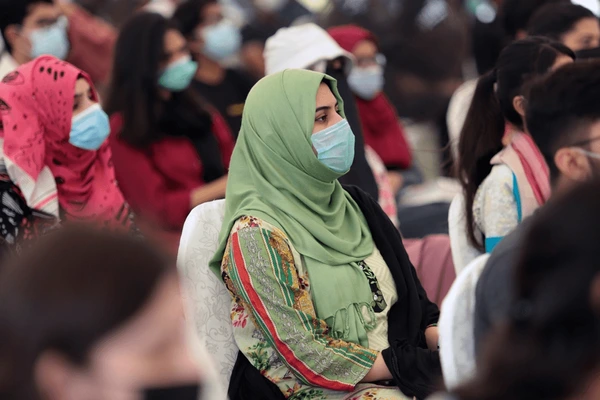
The above praises a “liberal” Shia couple from Baltistan for educating their daughters and living modern lives, contrasting them with “the average Pakistani,” portrayed as a backward, anti-education fanatic. This framing is not just lazy; it’s offensive.

It reflects a deeply colonial hangover: the idea that modernity is rare in Pakistan, that deviation from presumed fanaticism is a revelation. But let’s be clear, Pakistanis, like people anywhere else, are ambitious, aspirational, and complex. Medical colleges are oversubscribed. Education is highly prized. And many people, devout or not, are navigating life with dignity, values, and a deep desire to move forward; not just materially, but spiritually and ethically.

Politics of Projection

Just because a population is not obsessed with hyper-capitalism doesn’t mean it is “backward.” It may simply mean it has not surrendered entirely to the logic that everything must be monetized. That’s not regression; it might be restraint. In a world where the only metric that seems to matter is money, resisting that tide is itself a kind of wisdom.

This kind of patronizing liberalism, one that exoticizes progressive Muslims as rare exceptions, isn’t harmless. It feeds into a narrative that justifies erasure: of language, culture, self-rule, and civilizational continuity. South Asians speaking in English, debating one another with colonial grammars, is not a mark of modernity, it is a symptom of displacement. The Global South doesn’t need to be saved. We need to be seen, on our own terms.

If You Have a Side, You Don’t Care for the Other Side

In a world increasingly defined by sides, partisanship often masquerades as empathy. Whether it’s Pakistanis performing concern for Indian liberalism, or Indians invoking the plight of Muslim minorities to score points against their ideological rivals, the truth is simple: if you already have a side, you’re not truly invested in the fate of the other.

This isn’t cynicism; it’s structure. Sides, by their nature, demand loyalty. And loyalty comes at the expense of dispassion. You can mourn injustice selectively, but don’t pretend it’s universalism. More often than not, tribalism puts on the mask of principle.

As a Bahá’í, I’ve been shaped by a millenarian vision that urges global unity; yet I’m also deeply influenced by Hindu pluralism and pagan elasticity. Nicholas Nassim Taleb once said the more pagan a mind, the more brilliant it might be (excellent article) because it can hold many contradictions without demanding resolution. That capaciousness allows one to see that not every question needs a single answer. Hinduism, with its deep pluralism, contrasts radically with Islam’s (and Judaism’s) uncompromising monotheism. And yet, these two traditions are bound together—enmeshed across centuries of history, thought, and blood. Their tension is real, but so is their shared life.

That’s the point: opposites don’t just coexist, they form a whole. But when we prescribe change for the “other side,” we ignore our own capacity for reform. It’s always easier to critique outward than to renovate inward. Especially in a world run by oligarchic elites and managed emotions, where empathy is choreographed and outrage monetized.

So no, the Dalit Muslims of Dharavi aren’t the problem. Nor are the marginalized Hindus of East UP and Biharis. The problem is that a single family can build a private skyscraper in Mumbai while the city gasps beneath it. It’s the system that rewards power accumulation, not its occasional victims, that should concern us.

I don’t offer neat solutions. Maybe it’s taxation. Maybe it’s redistribution. Maybe it’s noblesse oblige. But the first step is this: stop pretending your critique of the other side is altruism. It’s not. It’s strategy. And perhaps the more honest work begins at home—with your own side, your own people, your own self.

Let Hindus Decide for India

There’s a quiet but persistent coalition, inside and outside India, that seems intent on denying Hindus the right to define their own future. It includes unreformed Islamists who refuse to reckon with modernity, English-speaking liberal elites still shadowboxing for Nehru, minorities with veto power but no stake in cohesion, and a chorus of Western (and increasingly Chinese) voices, eager to manage India’s trajectory from afar. What unites them? A shared discomfort with Hindu political consolidation.

Let’s be clear: Hindu identity is not a new construct. Whether you place its roots 3,000 or 5,000 years ago, it’s one of the world’s oldest living civilizational continuities. That identity has always been plural, regional, and evolving. But it has also always been there; visible in memory, ritual, geography, and language. Today, that identity is waking up to its political form. And it will not be put back to sleep.

Hindutva is not going anywhere. Nor is the Indian Union. Those who hoped Kashmir would stay outside this arc have already seen the direction of travel. Pakistan’s decision to opt out of Hindustan, and then build an identity against it, has led not to strength but to strategic stasis. Bangladesh, too, for all its cultural richness, now stands as a separate civilizational lane. And so we arrive at the core truth: Hinduism and India are coterminous.

This isn’t a call for exclusion. But it is a reminder that those who opted out do not get to dictate terms to those who stayed in. That includes foreign commentators and diasporic gatekeepers alike. There is a difference between pluralism and paralysis. There is a difference between nationalism and denial. And if majoritarianism is the anxiety; perhaps the deeper fear is that Hindus are no longer apologizing for being the majority. Let India decide. Let Hindus decide. Let the world, finally, learn to listen.

What Is Brown Pundits For?

Brown Pundits has always been an open tent—not a monolith, not a movement, and certainly not a megaphone. A forum. A space where ideas, arguments, and identities from across the Brown world are aired, examined, and sometimes clashed over—with the hope that we all leave a little sharper than we arrived. But with that openness comes tension. How do we balance quality and quantity? Principle and pluralism? Coherence and contradiction?

It’s something I’ve reflected on often in other matters of my life (like party-planning for instance). When I’m in the UK, time is tight. When I’m in the US, there’s more room for Brown Pundits. In that ebb, others—like Kabir—have stepped in, contributing with energy and range. And I’m grateful.

Some of Kabir’s posts may align politically with The Wire. That’s fine. Other Pundits lean toward a down-low Hindu Right. Also fine. This was never a place for orthodoxy. We aren’t here to gatekeep belief—we’re here to grow through encounter. The real question isn’t what side are you on? It’s why are you here?

If you’re here to dunk, to declare, to dominate—maybe this isn’t the right space. But if you’re here to engage, to learn, to argue in good faith—welcome. As authors, we don’t always agree. We shouldn’t. But how we disagree matters. To that end, I’d like to lay out four standing principles—not as commandments, but as shared norms that keep our house in order:

Brown Pundits Continue reading What Is Brown Pundits For?

Did the Muslim League and RSS Want the Same Thing?

Let’s just ask it plainly: if the Muslim League got what it wanted—a Muslim-majority Pakistan—then what, exactly, is the problem with the RSS wanting a Hindu-majority India? This isn’t a provocation. It’s a genuine question.

The Muslim League, by the end, wasn’t fighting for shared rule. It wanted partition. It wanted sovereignty. It wanted to exit the Hindu-majority consensus that the Congress represented. And it succeeded—through law, politics, and eventually blood.

The RSS, for its part, never pretended to want pluralism. It’s been consistent for nearly a century: it wants India to have a Hindu character, spine, and center. If the League could ask for a state that reflects Muslim political interests, why is it unthinkable for the RSS to want the same, flipped?

This is where I struggle with a certain kind of liberal-istan logic—found across both India and Pakistan. You’ll hear:

“India must stay secular! Modi is destroying Nehru’s dream!”

But what was Q.E.A-Jinnah’s dream? Was Pakistan built as a pluralist utopia? Or was it built—openly, unapologetically—as a Muslim homeland?

If Pakistan’s existence is predicated on Muslim majoritarianism, then India’s tilt toward Hindu majoritarianism isn’t an anomaly. It’s symmetry. Maybe even inevitability.

So either we all agree that majoritarianism won in the subcontinent—and everyone adjusts accordingly. Or we all agree that the Congress secular ideal was the better one—and try, equally, to hold both India and Pakistan to it.

But it can’t be:

  • Muslim nationalism is liberation

  • Hindu nationalism is fascism

That math doesn’t work. And yes, the Muslim League had more polish. Jinnah smoked, drank, defended pork eaters in court. The RSS wore khaki and read Manu Smriti. But don’t be fooled by aesthetics. At the core, both movements rejected the idea of a shared national project. They just took different exits off the same imperial highway.

So pick one: Either Nehru and Gandhi were right—and so was Maulana Azad. Or everyone else was right—and we all now live in our chosen majorities. But don’t demand secularism from Delhi while praying for Muslim unity in Lahore. That’s not secularism. That’s selective memory.

Resistance, Realignment, and the Roads Not Taken

First, a brief acknowledgment: Kabir remains one of the pillars of this blog. His consistency, depth, and willingness to engage with the hardest questions are invaluable. I don’t always agree with him—but the conversation would be much poorer without his voice. The post is a series of reflections—stitched together from the comment threads.

I. Gaza: Beyond the Pale of Language

The death of a 19-year-old TikToker, Medo Halimy, in South Gaza this week caught my eye—not because it was the most horrific (foetuses are sliced in two in Gaza as Dr. Feroze Sidwa* attests). But because having seen his video, it just made the death so immediate (yes that is a cognitive bias).

At this point, to debate whether what is happening is a genocide feels grotesque. It clearly is. The scale, the intent, the targeting of civilians and children—it’s all there. The legal frame collapses under the moral weight. We are witnessing something darker than war: ethnocultural suffocation & demographic extinction, broadcast live and met with diplomatic shrugs. But the world is watching inspired by the very brave Bob Vylan duo (UK punk-rap duo opposing imperialism, recently denied US visas):

Something stirs and pricks beneath the rubble.

II. The Huma Moment: A Civilizational Reversal? Continue reading Resistance, Realignment, and the Roads Not Taken

The Mughals Were Not an Indian Dynasty — They Were a Dynasty in India

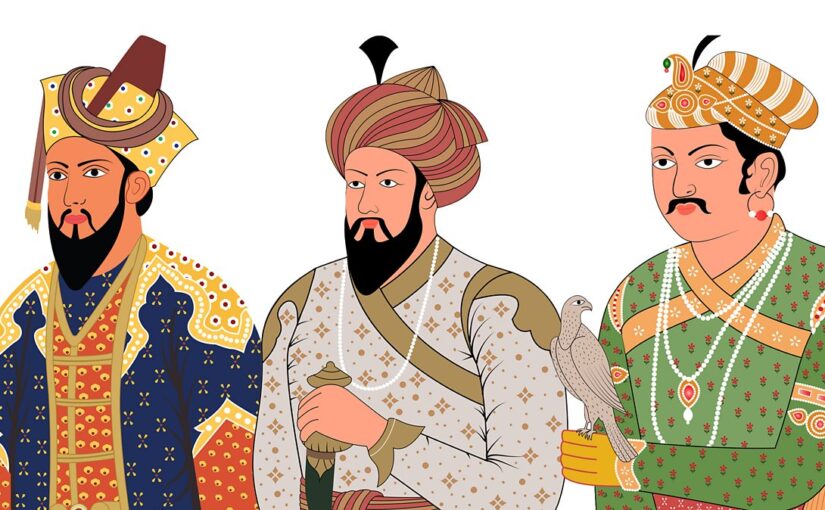
The Mughals were not an Indian dynasty in the civilizational sense. They were a dynasty in India — rooted in the Persianate ecumene that stretched from Anatolia to Bengal, but distinct from the indigenous Indic civilizational framework.

Richard Eaton’s India in the Persianate Age captures this well. The Mughal elite, like other Turko-Mongol polities across the Islamic world, operated through a tri-layered framework: Arabic religion, Persianate high culture, and Turko-Mongolian kingship. This pattern held from Egypt to Samarkand — and India was no exception.

But here’s the distinction: while in places like Iran, Central Asia, and even parts of Anatolia, the ruling elite and the subject populations often shared linguistic, religious, or cultural proximity, in India the Mughal court sat atop a society whose foundational worldview — Dharma, Sanskritic cosmology, ritual plurality — was wholly different.

Yes, the Mughals were cosmopolitan. Yes, Akbar attempted synthesis. But at their core, the Mughal dynasty retained its sense of separateness — not just politically, but civilizationally. Persian remained the language of court and culture, their aesthetics leaned West, and their ethos remained imperially aloof. Their legitimacy was not drawn from Indian sacred geography but from Turanic, Persian, and Islamic claims of kingship.

Contrast this with the Suri dynasty, which, despite being devoutly Muslim, left a remarkably grounded imprint. Sher Shah Suri ruled in Hindavi. His administrative and infrastructural legacy felt local, even national. In some ways, paradoxically, he felt more Indian than the Mughals did.

This isn’t about Islam being foreign to India. Islam has deep roots in the subcontinent — from Kerala to Bengal to Kashmir. It has been deeply indigenized across regions. But when Islam arrives twinned with Persianate high culture, it becomes something else: a hybrid elite formation, distinct both from Sanskritic Hinduism and from vernacular Islam.

The British Raj, too, was alien — but ironically, its later administrators localized many elements of their rule. The Mughals, by contrast, represented a more refined foreignness: imperial, hybrid, and between worlds.

It’s telling that the most influential women of the Mughal court—Noor Jahan, Mumtaz Mahal, and Hamida Banu Begum—were all of Persian origin. They wielded real power: issuing firmans, shaping court politics, commissioning architecture. In contrast, the Hindu-indigenous consorts—Jodha Bai, Anarkali, even Aurangzeb’s Hindu Rajput lover—were celebrated in romance, not governance. They were symbols, not strategists. Influence, in the Mughal world, came not with local integration but with Persian pedigree. That, in itself, says a great deal.

So no — the Mughals were not an Indian dynasty. They were a dynasty in India. That distinction matters.

Zohran Mamdani and the Question of Civilizational Belonging

Kabir:

I would question how one defines “Indian” culture vs “Hindu” culture (this is a real question, I’m not being snarky). Zohran speaks Urdu/Hindi, wears shalwar kameez and uses Bollywood references in his campaign. So clearly, he has no issues with Indian culture. He’s not a Hindu so he doesn’t go to temples etc. I’m not sure exactly what you expect him to do?

While Zohran Mamdani expresses outward familiarity with “Indian” culture — speaking Hindi/Urdu, referencing Bollywood, wearing traditional attire — these are surface markers. They do not, on their own, constitute rootedness in Indian civilizational identity. Indian culture, especially post-Partition, is not simply a composite of languages and aesthetics. It is anchored in Dharma — a diffuse but pervasive civilisational ethos shaped over millennia by Hindu, Buddhist, Sikh and Jain worldviews.

Despite being born to a Hindu mother, Zohran’s public identity is strongly framed within a Muslim, Middle Eastern, and postcolonial activist context. His political and cultural instincts appear more aligned with pan-Islamic and Western progressive causes than with any articulation of Indian philosophical or spiritual heritage. His Syrian Muslim spouse, activist framing, and lack of visible engagement with Indic traditions contribute to this perception.

This is not a religious critique but a civilizational one. Just as Israel defines its national identity through a broadly Jewish character — irrespective of belief — India’s cultural self-understanding is inseparable from its Hindu roots. To be Indian, in this view, is not to perform cultural familiarity but to resonate with the metaphysical and historical rhythms of the civilization.

By that measure, Zohran — despite South Asian ancestry — does not code as civilizationally Indian, but rather as an American progressive of South Asian Muslim extraction. The distinction is subtle but important.

What Was the Point of Israel’s Iran Strike?

The Limits of Provocation

At some point, the world will have to ask: what exactly was Israel hoping to achieve?

In the days following the dramatic escalation between Tel Aviv and Tehran, we are left not with clarity but with a deepening sense of confusion. If the intention was to disrupt Iran’s nuclear program, there is little to show for it—centrifuges still spin, scientists remain in place, and the infrastructure of Iran’s deterrent capability stands unshaken. If the aim was to trigger chaos within the Iranian regime, then that too has failed—Tehran did not descend into disarray; it retaliated, measured and intact. And if the goal was symbolic, to remind the world of Israel’s reach and resolve, then the moment has already passed, clouded by questions of proportionality, legality, and consequence.

For all the fire and fury, the strike landed with the strategic weight of a gesture. Continue reading What Was the Point of Israel’s Iran Strike?

Satyajit Das: Middle East Trajectories – Implications for the Region and Energy Markets

This excerpts of the above titled article. Full article at
https://www.nakedcapitalism.com/2025/06/satyajit-das-middle-east-trajectories-implications-for-the-region-and-energy-markets.html

A little intro

When I first got hired to a small Wall Street startup I had low opinion of Traders and the like. Had to change my mind in a month or two. It was impressive to see how successful Traders could reduce different information from politics to medicine into one common Denominator: MONEY. This was the holy grail that Enron was pursuing, to have different markets, eg Water and Weather Futures to Credit Defauls Swaps all in one Porrfolio and integrated Pricing and Risk Management. Got wined and dined by Enron but was woefully lacking in knowledge.

Anyway  was never interested in Finance etc, so was somewhat clueless. The Traders gave me a grounding, but to get a more formal background worked my way thru about 30% of Risk Management and Financial Derivatives: A Guide to the Mathematics by Satyajit Das. Been impressed by him ever since. So when he writes I read very carefully

Later was very disillusioned, Wall Street as it was full of schemes to scam the middle classes and poor out of their money directly or indirectly.  The best example being Sub Prime Mortgages which led to Financial Crash in 2008 (Quite hypocritical of me because I made some decent moolah as well, even though a very small minion)
——————-

Some excerpts
Complacent financial markets and policymakers are playing out a theatre of the absurd based on little detail and propaganda– as the old trope states truth is the first casualty of war.

Caution is warranted. There is no certainty that Iran’s nuclear capabilities have been destroyed or significantly degraded. The fate of Iran’s highly enriched Uranium is unknown. Iran, which has extensive nuclear expertise despite the targeted killings of its scientists, has not indicated abandonment of its programs.

In effect, Iran is being forced to choose between becoming Libya (where Colonel Gaddafi gave up his nuclear ambition and was removed then murdered) or North Korea.

Its campaign against the abandoned Palestinians and attacks on Lebanon and Syria have not ceased. The Iranian action was in part to distract the world’s attention from its continuing genocidal atrocities. These will come back into focus.

Despite its undoubted military capabilities, the Islamic Republic will have noted that the Jewish state is not invulnerable to its missiles and needed extensive US support and intervention in the “12-day war”.

Oil Matters
Western focus on the Middle East is because of Israel, to expiate its own Holocaust guilt, and energy

Currently the world consumes around 100 million barrels of oil daily (around 50 percent for transport and 20 percent for petrochemicals). While energy intensity (usually measured as the tonnes of oil needed to create $1,000 of GDP) has declined from 0.12 in 1975 to 0.05 in 2022, no significant decline in demand is forecast due to limited alternatives for heavy transportation and as a chemical feedstock. Natural gas is around 23 percent of the world’s total energy consumption and provides a quarter of global electricity.

Saudi Arabia’s objectives remain unchanged: generate revenue at necessary levels, maintain its market share as low prices make US shale oil and gas uncompetitive and accelerate use of a potentially stranded resource.

The ruling dynasties can be displaced at the whim of the West. Given the volatile foreign policies of the US and its allies including their short-lived and disastrous backing of the ill-fated Arab Spring, this possibility is non-trivial. As Hosni Mubarak discovered, US support for its ‘allies’ exists until it doesn’t. Subsequently, the Muslim Brotherhood found that Western belief in democracy was highly selective.

In a curious twist which would have been unwelcome in Israel, following the announcement of the ceasefire, President Trump announced that China would be allowed to buy oil from Iran, reversing a policy of sanctioning Chinese refineries for these purchases.

While they may not acknowledge the reality, failure to act strategically now undermines the ruling dynasties of the Gulf states and Jordan. They become little more than rich puppets who serve their American, Israeli and allied masters and whose policies are chosen for them. Their standing and wealth is dependent on a dwindling finite resource with an uncertain future.

For many, MAGA has morphed into MIGA – Make Israel Great Again. The US appears to have been coerced into intervening on behalf of the Jewish state. One X denizen tweeted that “America so deindustrialized we don’t even manufacture our own consent”.

Conflict, most worthwhile military strategists agree, is like opening a door into a dark room where no one knows what is hidden in the darkness. The only certainty is that a new most likely tragic and violent chapter in the history of the region is under way.

The US, Israel and its allies would do well to remember Thucydides’ Melian Dialogue which records Athens’ conquest of Melos. The Melians unsuccessfully resisted suffering horrific losses. Athens believed that “the strong do what they can and the weak suffer what they must”. They believed that they could act with impunity because their power was complete. Less than three years later Athens suffered a military disaster in Sicily from which they never recovered.

Brown Pundits