

That’s a sharp observation, and worth expanding. The truth is, in the West, all immigrants eventually become “white”—not in phenotype, but in assimilation, in aesthetic, in aspiration. Continue reading Everyone Western Becomes White Eventually
🕯️ Saving Adam
I don’t often comment on the Israel–Palestine conflict, and I try not to be reactive. But there comes a point where neutrality becomes its own kind of indulgence.
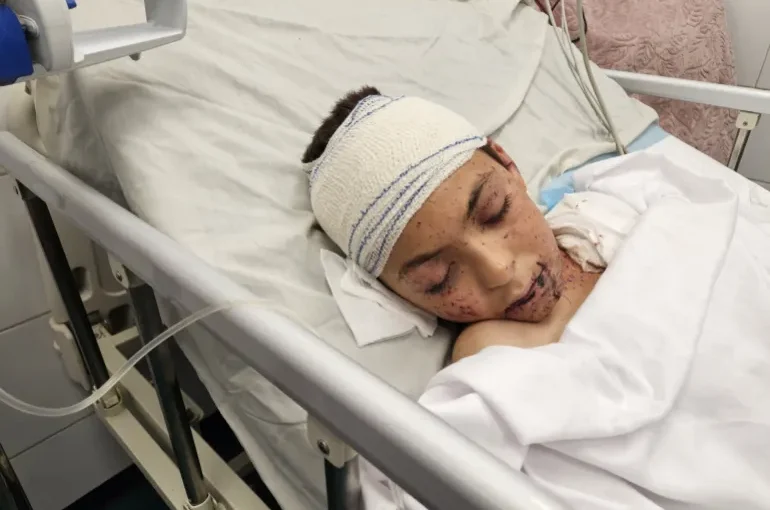
Alaa al-Najjar, a pediatrician, lost nine of her ten children, and her husband, in an airstrike on their home in Khan Younis. Her surviving son, Adam, 11, had his hand amputated and was flown out of Gaza to Italy, where he says he hopes to live in “a beautiful place… where houses are not broken and nobody dies.”
The children killed were: Sidar (7 months), Luqman (2), Sadeen (3), Rifan (5), Raslan (7), Jubran (8), Eve (9), Rakan (10), and Yahya (12). May they rest in the Highest Heaven. Continue reading 🕯️ Saving Adam

🧵Quick Moderation Note
Just a heads-up for everyone:
-
India–Pakistan threads are totally fine when the post is about India–Pakistan, or if it’s an Open Thread. Let the sparks fly there.
-
But on other posts—please avoid steering every conversation back to India–Pakistan. It’s not always relevant and derails useful discussion.
I won’t be actively moderating every thread. If something is genuinely offensive or disruptive, feel free to flag it—I’ll step in only if needed. Continue reading 🧵Quick Moderation Note
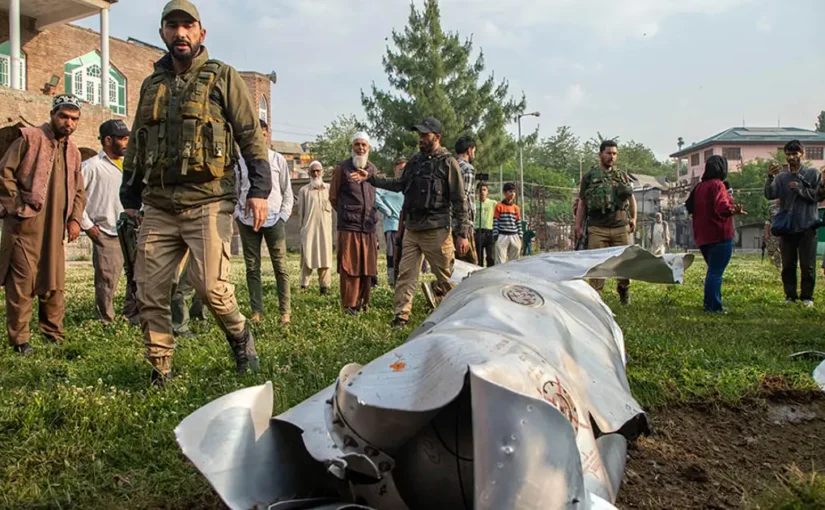
🇮🇳Op Sindoor: A Podcast on Pahalgam, Pakistan, and the Limits of Peace
I’ve just listened to the first half-hour of Op Sindoor, the latest Brown Pundits Browncast featuring Amey, Poulasta, and Omar. The full episode runs over 90 minutes; I’ll be reflecting on the rest in due course. For now, some thoughts on the opening segment, which focuses on the recent terror attack in Pahalgam and its aftermath.
🧨 The Attack Itself: Pahalgam as a National Trauma
The episode begins by recounting the massacre in Pahalgam, Kashmir—a tourist meadow turned execution ground. Twenty-six people, most of them honeymooning Hindus, were murdered after being identified through religious markers: circumcision, Kalma recitations, names. The hosts don’t shy away from calling it what it is: a targeted Islamist attack. The group responsible, the TRF (The Resistance Front), is introduced as a Lashkar-e-Taiba cutout, designed to launder Pakistan-backed militancy through a local Kashmiri lens.
There is a palpable sense of cumulative fatigue in how the Indian speakers describe it—not as an aberration, but as part of a 30-year continuum of such violence. The emotional register is high, but justified. The use of plain terms like terrorists over euphemisms such as militants or gunmen reflects a long-standing frustration with how such attacks are framed in international discourse.
🤝 Modi, Nawaz, and the Civ-Mil Waltz Continue reading 🇮🇳Op Sindoor: A Podcast on Pahalgam, Pakistan, and the Limits of Peace

On Moderation, Minoritization, and the Elite
Pulse: The Threads We Weave —
Lately I’ve wondered whether I over-curated the threads. Things feel quieter. Maybe too quiet. But perhaps that’s the cost of raising the bar—of asking for dialogue instead of dopamine. Still, this lull has me reflecting not just on moderation but on why some arguments no longer move me.
Take the Indo-Pak conflict: once electric, now strangely inert. That shift reflects my own evolution over two decades. I no longer inhabit that binary. I carry a layered identity—a South Asian Bahá’í sensibility shaped by Persian aesthetics, grounded in British institutions, and fluently navigated through English. That complexity is my compass. It’s why I care less about flags and more about forces.
And the real force that shapes our lives? The elite. Not as a pejorative, but as a structural reality. I see it as nested tiers: Continue reading On Moderation, Minoritization, and the Elite
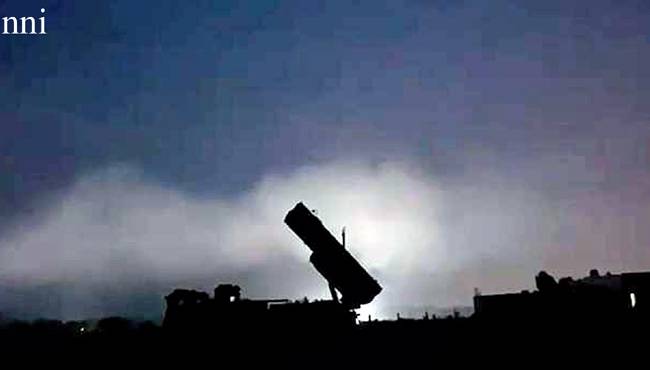
Belated Podcast: Operation Sindoor (and Bunyan al Marsoos)
Another Browncast is up. You can listen on Libsyn, Apple, Spotify, and Stitcher (and a variety of other platforms). Probably the easiest way to keep up the podcast since we don’t have a regular schedule is to subscribe to one of the links above!
In this episode Amey hosts myself (omar) and Poulasta (our resident Bengali expert) to talk about the recent India-Pakistan kerfuffle. Amey was ready for war, but we found common ground 😉 (as usual with India and Pakistan, a lot of the discussion is about partition and related misunderstandings)
US Economics and Theory of Collapse
A Theory of Collapse (After a US Economic Synopsis)
Note: Italicized comments are from another Brown Pundits contributor
Unless the US falls hopelessly behind in tech, they are “built” to retain a perpetual competitive edge.
I don’t think you’ve looked closely enough at the economic fundamentals. Off the top of my head:
- National Debt: $30+ trillion
- Interest on Debt: $1 trillion
- Budget Deficit (2024): $1.8 trillion
- Trade Deficit: $140.5 billion (heavy reliance on imports)
- Defense Budget: $1 trillion
Moody’s recently downgraded US debt from Aaa to Aa1, citing worsening risk indicators. This downgrade was hard to avoid—US sovereign CDS spreads are now wider than those of China and Greece, suggesting higher default risk. Continue reading US Economics and Theory of Collapse
Request for Calm and Civility
Dear Punditeers,
A gentle reminder to take a breath and step back. Kabir is entitled to his views—there’s no obligation to counter every provocation point-by-point.
What’s troubling isn’t disagreement—it’s the sheer volume of rage replies. This doesn’t reflect the standard we aspire to. It’s neither civil nor intellectual. The only reason I’m stepping in is because, while I generally prefer light-touch moderation, the tone of these threads now reflects poorly on the broader community. It lowers the quality of both the commentariat and the platform.
We’ve seen this play out before—Sepia Mutiny is a cautionary tale. Let’s not replicate it.
So please: engage with ideas, not just identities. Let’s not derail into yet another endless Indo-Pak back-and-forth. We’re capable of better.
Warmly,
X.T.M
✉️ [Addendum]
On Nivedita’s query, I’ve finally re-created the Brown Pundits email account. It’s hosted on Gmail, but I’ve deliberately avoided posting the full address here to prevent spam harvesters. If you’d like to get in touch privately or share something offline, feel free to reach out via:
📧 brownpundits19 [@g]
🪙 What’s in a Name? Mukesh, Not Mukash.
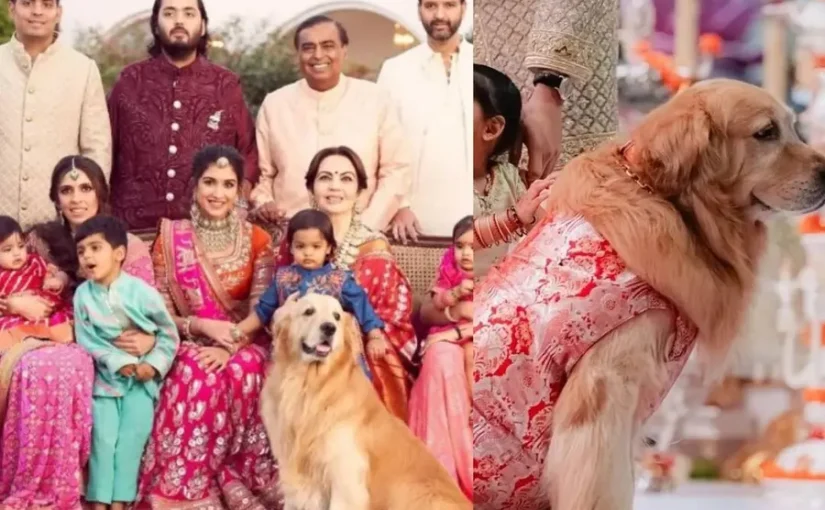
While reading Brad DeLong’s fascinating newsletter on centi-billionaires and political power (I’m going to ignore Elon’s self-imploding stunt), I noticed something that jarred me more than it should have: Mukesh Ambani’s name was misspelled as “Mukash.” A minor slip, perhaps. But it was the only error in a list that included Bernard Arnault, Warren Buffett, and Michael Bloomberg—men whose names command a certain global familiarity.
What does it say that even after spending nearly half a billion dollars on a wedding for his son, India’s wealthiest man doesn’t merit a spellcheck? It says a lot.
🧠 The Chimera of Respect via Capital Continue reading 🪙 What’s in a Name? Mukesh, Not Mukash.

💔Sana Yusuf Did Not Have to Die
The Pakistani Crisis Is Not Just Legal—It’s Civilizational
By X.T.M
As I write this, the news of Sana Yusuf’s murder is barely 48 hours old. A 17-year-old TikTok creator with over a million followers, she was gunned down in Karachi by a 22-year-old stalker. She was a rising star—funny, expressive, beloved. And now, she is dead.
We’ve been here before. Qandeel Baloch. Noor Mukadam. Khadija Siddiqui. Now Sana.
Every few years, Pakistan reels in collective shock at the killing of yet another woman by a man convinced of his right to possess, control, or erase her. And every time, some voices insist “this is not our culture.” But what if it is?

📍Not an Anomaly—But an Outcome
Sana’s murder is not an aberration. It is the predictable consequence of a society structured around honor, control, and male entitlement. Patriarchy in Pakistan isn’t just cultural—it’s systemic, generational, and fiercely defended. Continue reading 💔Sana Yusuf Did Not Have to Die