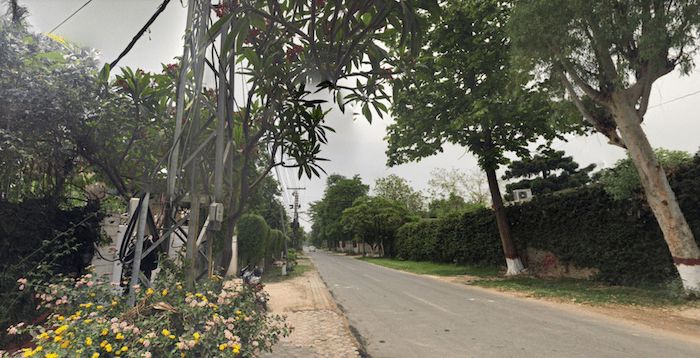
The Cantonment and the Clean Street: Why Pakistan’s Punjab Looks More Ordered Than India’s

A dispatch from a quieter Brown Pundits

The Observation

My Urdu teacher said something that lodged itself in my brain. India is vastly richer than Pakistan; and yet Pakistan’s Punjab, in his experience, feels cleaner. More ordered. Less like South Asia. I pushed back. Then I stopped.

The Numbers

In 2024, India’s GDP per capita was $2,695 against Pakistan’s $1,479; roughly 1.8 times higher on a nominal basis, and India’s total economy at $3.9 trillion is approximately ten times Pakistan’s $372 billion. Until 2008, Pakistan was actually richer per person; India led that measure for only 14 of the 60 years after independence. The divergence is real but recent and accelerating.

The sanitation data cuts against the perception: 81% of Indians have access to basic sanitation versus 72% of Pakistanis (WHO/UNICEF, 2024). On paper, India leads. So the paradox isn’t statistical. It is visual. The question isn’t who has more toilets. It is why certain Pakistani streets feel more governed.

The Answer: 41 Cantonments Continue reading The Cantonment and the Clean Street: Why Pakistan’s Punjab Looks More Ordered Than India’s


According to BAFTA, ‘Free Palestine’ is the slur. Not the N-word.

The Man, Not the Scandal

John Davidson has Tourette’s. He did not mean it. His tics are involuntary — the condition is neurological, not moral. The audience was warned before the ceremony began. Davidson left the room when he realised what was happening. He has spent his life teaching the public what Tourette’s actually is. None of what happened Sunday night was his fault.

Now the second thing. The BBC broadcast it anyway.

The Edit Suite Had Two Hours Continue reading According to BAFTA, ‘Free Palestine’ is the slur. Not the N-word.

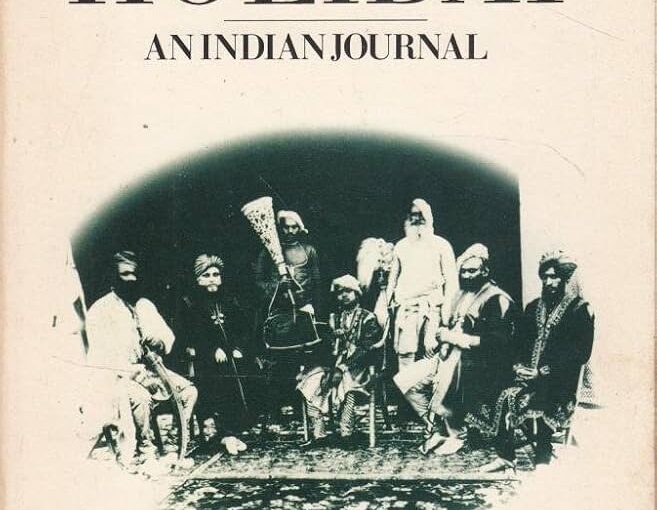
Review: Hindoo Holiday by J.R. Ackerley

I am cross posting this review here because Hindoo Holiday is a fascinating work of literature describing one man’s experience in a princely state during late colonial rule.  Ackerley is a well-regarded British author. 

J.R. Ackerley’s Hindoo Holiday–originally published in 1932–tells the story of the five months (December 1923-May 1924) he spent as secretary to Maharaja Vishwanath Singh of Chhaturpur (called “Chhokrapur” in the book). In his “Explanation”, Ackerley describes the Maharaja’s motivations for hiring a private secretary from England. He writes:

He wanted someone to love him–His Highness, I mean; that was his real need, I think. He alleged other reasons, of course–an English private secretary, a tutor for his son; for he wasn’t really a bit like the Roman Emperors, and had to make excuses.

As a matter of fact, he had a private secretary already, though an Indian one, and his son was only two years old; but no doubt he felt that the British Raj, in the person of the Political Agent who kept an eye on the State expenditure and other things, would prefer a label–any of the tidy buff labels that the official mind is trained to recognize and understand–to being told ‘I want someone to love me.’ But that, I believe, was his real reason nevertheless.

Continue reading Review: Hindoo Holiday by J.R. Ackerley

Thumri and Social Change

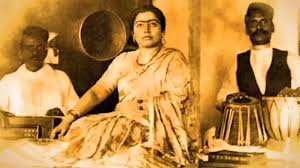
Since there has been some discussion about “Indian” and “Pakistani” music recently– and in the spirit of being “high signal”– I am cross posting this essay I wrote about thumri and social change. The essay was originally submitted as part of my M.Mus coursework at SOAS, University of London. 

Thumri is a semi-classical genre of Hindustani vocal music, associated primarily with the emotional expression of romantic longing. It is said to have originated in the 18th century from a mixture of folk and art music. The genre reached its height in the 19th century at the court of Wajid Ali Shah, the last nawab of Avadh, who was an enthusiastic patron and even composed several thumris.

Since the 19th century, thumri repertoire and performance style have undergone several changes. These include the de-linking of the genre from the courtesan tradition, the separation of music and dance, and a re-interpretation of lyrics in a devotional, rather than erotic, framework. These changes were linked to the impact of British colonialism, particularly social reform movements such as the Anti-Nautch Campaign. In addition, the shift in patronage from royal courts to concert halls led to the emergence of non-hereditary female performers. In order for performing thumri to be considered acceptable for “respectable” women and to avoid offending the new middle-class audience, the genre was de-eroticized and reinterpreted in a spiritual fashion. This often entailed the sanitization of lyrics. Continue reading Thumri and Social Change

She Parked a Car With Her Husband. Fifty Years Later, She Is Still Waiting.

Before anything about this blog, its standards, or its arguments, I want to begin with a story; because sometimes a single human life cuts through every debate and reminds us what any of this is actually for.

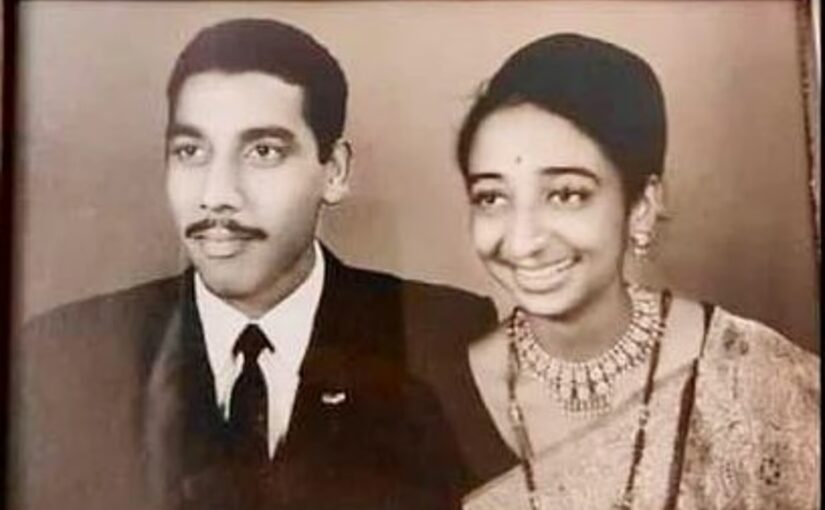
Damayanti Tambay was 21 years old, a three-time national badminton champion, when she married Flight Lieutenant Vijay Tambay in April 1970. Twenty months later, war broke out. On 3 December 1971, they drove together to a garage in Ambala cantonment to park their bottle-green Fiat. That was the last time she saw him.

On 5 December, flying a strike mission over Shorkot Airbase in West Pakistan, Vijay was hit by anti-aircraft fire and ejected. Radio Pakistan later broadcast his name among those captured. Damayanti heard it alone. She felt relief. A prisoner of war comes home eventually, she thought.

He never did.

A Loving Wife’s Unending Search Continue reading She Parked a Car With Her Husband. Fifty Years Later, She Is Still Waiting.

Brown Pundits Is Not a Cesspit. Keep It That Way.

Brown Pundits exists to test ideas against evidence. That is not happening consistently. Four contributors have split into two camps. Threads are filling with video links and recycled assertions. Serious readers are leaving. This post explains what changes and why.

Effective immediately, all four authors have been moved to commentator status until each individually promises they can maintain the same standard in comments as in posts; high signal, evidence-based, no exceptions.

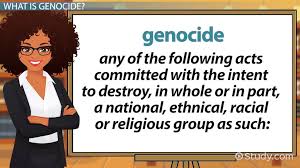
On genocide specifically Continue reading Brown Pundits Is Not a Cesspit. Keep It That Way.

Indian Music Spotlight – Kazinama – Ahista Ahista

I am a big fan of neo-soul/neo-funk, so good to see Indian artists also doing something in that style.

A remix of an old Pakistani* song.

*XTM edit; I do not condone intellectual theft. The original version was sung in Pakistan in the late 80’s.


Please note to all I’m now going to be far less tolerant of tricks & provocations on ALL sides.

It’s in very poor taste to appropriate the hard & beautiful work of a now deceased female artist.

Dhaka-Delhi Eye Reset, AI Summit Chaos,|The Wire Wrap

Eighteen months after the youth uprising that resulted in former Prime Minister Sheikh Hasina’s fleeing to India, Bangladesh has a new government headed by the BNP’s Tarique Rahman who is looking to reset ties with India. A US court has accepted the guilty plea of Nikhil Gupta, the Indian charged in the trans national plot to kill Sikh separatist Gurpatwant Singh Pannun. AI Summit in Delhi made headlines for chaos, mismanagement and Chinese robot being passed off as India. Impact of the Epstein Files meanwhile has reached the British monarchy with former Prince Andrew Mountbatten-Windsor, the younger brother of King Charles III arrested. The Wire’s Sravasti Dasgupta is joined by Siddharth Varadarajan, founding editor, The Wire and Sreeradha Datta, professor, international affairs at the O.P. Jindal Global University.

*XTM edit what does India have to do with the Epstein files? Hence why I edited the subject. Also I don’t know what this post adds per se?

Brown Pundits