The Honey Trap of the Ummah:

šŸ•Œ Reflections on Kabir, Afridi, and the Compact of Coexistence

The recent incident involving KabirĀ / Bombay Badshah / Honey Singh, and the orchestrated drama around his entrapment has, quite unexpectedly, become a catalyst for deeper discussion on Brown Pundits. While none have chosen to focus on analytics (ā€œ2,000 daily visitorsā€ā€”thank you very much:-), the real story lies in how this drama has exposed, yet again, the deep ideological fissures within South Asian identity; especially in the India-Pakistan-Muslim triad.

Let’s begin by being honest: Brown Pundits, for all its digressions into Sri Lanka, Nepal, or Bangladesh, is still primarily a blog about India and Pakistan, and more crucially, about Indian and Pakistani Muslims. This is a feature, not a bug. The origins of the blog lie in the Sepia Mutiny, a scattered band of intellectually independent thinkers questioning dogma from every direction (which started in 2004 and if we are a “daughter blog” that we means have 20+yrs of intellectual antecedents on the Brownet), and it has now matured into one of the few platforms willing to wrestle with the ideological ambiguities at the heart of the subcontinent.

šŸ§• Kabir’s Point: Brotherhood, Boundaries, and the Big Choice

Kabir made an astute, if difficult, observation: that he views Indian Muslims as ā€œbrothersā€, but does not feel the same about Pakistani non-Muslims.

This sounds contradictory until one understands the emotional exhaustion of watching Muslims oscillate between claiming ummah-hood when convenient, and weaponizing liberal values when needed. It’s a cognitive dissonance that creates what I can only call the moral coexistence trap: the idea that Muslims, especially in India, demand maximum accommodation, of their food (their nauseating right to murder Gau Mata on Bharat’s sacred soil itself), Faith, festivals, and foreign affiliations, while rarely extending the same pluralistic courtesy in return.

And then there’s that infamous Shahid Afridi clip, the one where he smashed his television after watching an Aarti, being performed. To many of us, that wasn’t just a cringe-inducing moment of bigotry; it begged a real question: Why do Indian cricketers continue to shake hands with Hinduphobes Hindu-hating men like Afridi and his ilk (the Pakistan cricket team)? At what point does tolerance become indulgence?

🚩 The Compact of Indian Minorities: Understand It or Leave It

Continue reading The Honey Trap of the Ummah:

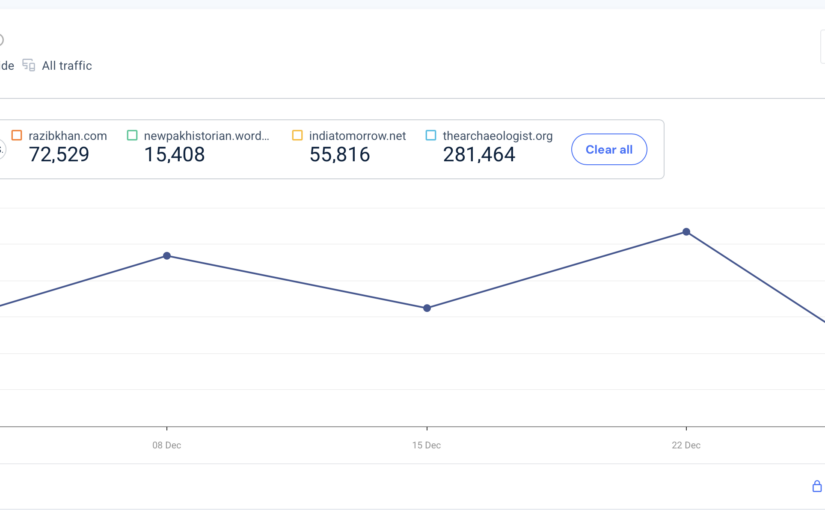
šŸ“Š Brown Pundits Hits 63,094 Visits in August (+156% Surge)

That’s more than 2,000 visitors a day. What’s driving it?

āœ… Open Threads

āœ… Honest takes

āœ… And yes — argumentation.

But arguments only work if they spark thought, not just heat. Take Kabir; he’s a regular, and I’ve given him free rein. But his tendency to argue without reflection rubs people the wrong way. He blames his relative unpopularity on identity, but it’s more about tone than religion;Ā highhandedness vs humility.

In my own recent disagreement: I paused, thought, reflected deeply. That’s the spirit of BP; a messy, open-minded search for truth.

šŸŽ­ Meanwhile, the real tamasha isn’t cricket šŸ (India did trounce Pakistan) — it’s on X, and on the BP comment section.

X 🧵:

Image

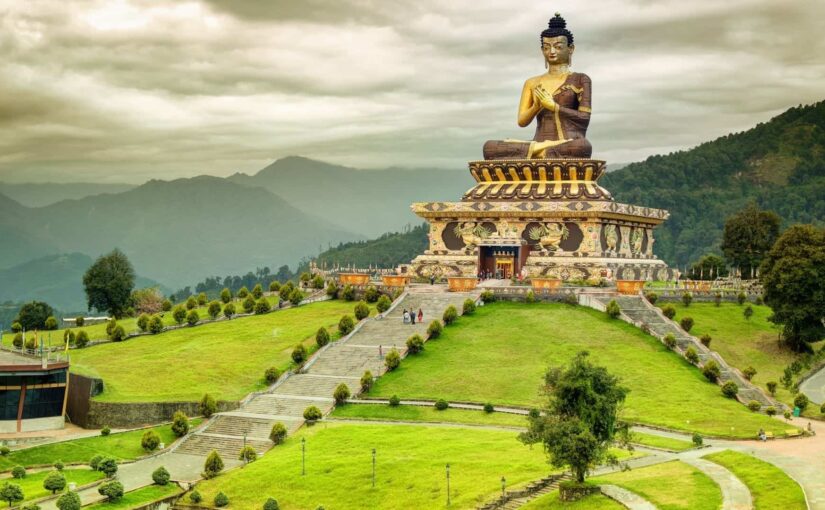
The stupas raises a deeper question:

How central was Buddhism to the Indian subcontinent — and how total was its erasure? In the heartlands, Brahmanism absorbed and displaced it; in the frontier zones, Islam swept away what remained. What we see today are ruins — but once, this was the dominant civilizational framework of the region.

Was its disappearance a slow assimilation, or a deliberate effacement?

When the Commentariat lies

I’ve updated this post (Brown Pundits is not an echo chamber) after realising something important.

What began as a spirited disagreement veered into something darker. It turns out that bombay_badshah, a voice I initially assumed to be new, may not be who he claims to be (I had a hunch but so did Kabir, that BB was HS reincarnated). The posting style, the fixations, the timing; all too familiar. My suspicion is that BB may be a derivative or proxy of HS, previously banned. If true, this was not a genuine disagreement; it was entrapment, bait-and-switch.

In that light, I owe Kabir an apology. He was provoked in bad faith by someone who may be operating behind a mask. And that matters, because here on Brown Pundits, identity isn’t incidental; it shapes perspective, and we respect that. We excavate worldviews, not just opinions.

While I cannot definitively prove that BB is HS, the circumstantial evidence is strong. I will allow BB to remain but if the commentary returns obsessively to Kabir or Pakistan, I will intervene. Everyone is welcome to engage on substance. But this space will not be hijacked.

The original post remains below the jump, unedited but its context has now changed.

Continue reading When the Commentariat lies

The Pakistani Inferiority Complex

These excellent tweets exhibit a painful pattern that many of us see but few want to name.

Pakistanis, particularly its establishment and elite classes, exhibit a deep inferiority complex towards white (light) Muslims; Arabs, Turks, Persians, and Afghans. These groups are valorized, romanticized, and used as benchmarks for identity and belonging. Meanwhile, other Asian groups, especially within South Asia and Southeast Asia, are seen as lesser. This manifests not only in foreign policy but in pop culture, education, and internalized social hierarchies.

This is why, even if Partition had to happen (and it was undeniably disastrous), Pakistan still could have been something else. It could’ve been a GCC meets Pahlavi Iran construct—a sleek, semi-modernist, high-income Asian Muslim republic with cultural gravitas and economic depth.

Instead, as others have rightly pointed out, Pakistan today has one of the lowest HDIs in its region. Karachi didn’t become Dubai. Lahore didn’t become Paris. Islamabad remains a ghost town of beautiful boulevards and hollow institutions. The promise wasn’t just broken; it was never even understood.

In some ways, Pakistan inherited the worst of both its imagined lineages: neither the intellectual cosmopolitanism of Persianate high culture, nor the industrious civic ambition of Indian civilizational continuity.

This is why tweets like those from @MrFreeFighter land so hard. They expose the psychic dissonance at the heart of the Pakistani state’s anxieties; its hatred of Pashtuns, its paranoia about ā€œAfghanism,ā€ and its inability to deal with its own peripheral ethnic groups as anything but threats.

Meanwhile, Indian Muslims like bombaybadshah, though deeply patriotic to India, often voice critiques of Pakistan with a clarity born of disappointment. They represent what Pakistan could have cultivated: a civic Islam, grounded in identity but untethered to ethnic obsession.

The final irony? South East Asia, Thailand, Cambodia, even Bali, retains more civilizational Dharma than most of Pakistan. Religion is irrespective of that elusive civilisational quality of Dharma, thus the true borders of Bharat lie eastward, not northwest.

Pakistan is not the enemy of India. It is the shattered mirror. And what it reflects, feudalism, insecurity, bigotry, and colonial hangover, is what the entire subcontinent must transcend. Again anyone who reads this can see I’m not saying this from a place of hate but love.


The Long Defeat: How Hinduphobia Hollowed Out Pakistan

I lost an entire post earlier, but perhaps it’s for the best. I’ve had the time now to clarify my thoughts and this is better to make clear the new policy of just junking comments that don’t “smell right.”

What prompted me to write again was a small but telling excerpt from a recent Dawn article. It wasn’t just that they misspelled ā€œBrahmanā€; they wrote ā€œBarhaman,ā€ a word that doesn’t exist in any linguistic tradition. It was also the order in which they listed religions. They wrote:

ā€œā€¦revered for not only the followers of the world’s three major religions — Buddhism, Sikhism and Hinduismā€¦ā€

Hinduism, the oldest and most foundational of the three, was placed last. This is not trivial. Both Buddhism and Sikhism evolved from Hinduism. Yet in Pakistani discourse, so marked by dislocation and disavowal, Hinduism is routinely treated as a junior or fringe faith. This is what endemic Hinduphobia looks like: not explicit violence, but civilizational misordering, semantic erasure, and the subtle, continuous downgrading of Hindu memory.

It’s barely recognized. And that’s the point. Continue reading The Long Defeat: How Hinduphobia Hollowed Out Pakistan

Come Fly with me to Far Bombay

I. Bombay: Between Beauty and Brutality
I’m writing from Bombay, where the monsoon floods are overwhelming; visually and viscerally. The rain hammers the city with a kind of sublime fury. From certain vantage points, it’s breathtaking. But it’s also undeniably brutal for those without scenic surroundings or structural shelter. It’s a reminder that Indian beauty is often doubled with burden.

II. Burden Burst: The Commentariat Awakens
Lately on Brown Pundits, I’ve noticed a revival. Old voices returning, new ones emerging, and many ideas worth engaging. But some themes have worn thin; for instance I’m in broad agreement with Indosaurus & I don’t want to waste too much breath on Audrey Truschke. And frankly, Aurangzeb is not a hill I want to die on. In fact, perhaps one of the key misreadings by Muslims in the subcontinent was turning every ideological disagreement into a hill to die on. Maybe it began with QeA-Jinnah and the Great Allama but it ossified into a pattern. Everything became a matter of principle, rather than pragmatism.

III. Concession Is Not Compromise
Compromise is seen as weakness, but I’m more interested in the capacity to concede especially when history clearly shows you’re wrong. The Mughals installed a two-tier system, subordinating Hindus and even native Muslims. Contrast that with the Suri dynasty, particularly Sher Shah Suri, who in just two decades built the Grand Trunk Road and reshaped governance without the alienation that marked the Mughals. If Hindutva attacked the Suri legacy, I’d call it pure bigotry. Sher Shah ruled with the land, not over it. Continue reading Come Fly with me to Far Bombay

Madhuri is stronger than the Ambanis

In the name of Pakistan, which is a beautiful poetic name, ā€œLand of the Pureā€, lies the tragedy of pathological purity. It is an addendum to the desire to stay pure. To remain untainted. But purity, when pursued absolutely, becomes brittle.

Madhuri Mahadevi

The Ambanis recently relocated Elephant Madhuri from Kolhapur’s Jain Math to the Vantara rehab centre, citing health concerns. But the move, though framed as rescue, triggered emotional protests, political pushback, and a national debate over animal welfare vs. sacred tradition.

Why did it explode? Because Madhuri wasn’t just a creature in need of savin; she was a living deity to those who loved her. Her departure wasn’t a routine animal welfare decision. It was a rupture in India’s civilizational relationship to the divine in nature. One of the most remarkable aspects of Hinduism is its seamless veneration of the natural world. The river is a mother. The cow, a guardian. The elephant, divine.

Few religions integrate reverence for nature into daily life with such tenderness and theological consistency. This story, of an elephant, a corporate empire, and a temple, speaks to a larger tension in India today: Who gets to define care? And when does ā€œrescueā€ become removal? Continue reading Madhuri is stronger than the Ambanis

🧵 Open Thread: Hate Speech, Travel Notes, and Diplomatic Surprises

I just saw a comment that genuinely crossed the line; not just a misstep, but something hateful, dehumanizing, and deeply communal. It invoked Partition violence in a way that glorified massacre. That’s not just a dogwhistle, that’s a foghorn.

As most of you know, I’m a light-touch moderator. I tolerate a lot. I believe in messy dialogue. I’ve been fair on my WhatsApp groups, fair on BP, and generally try to err on the side of letting things play out. But this? This wasn’t a close call. It was a clear failure of moral language.

Even if the commenter didn’t ā€œmean it,ā€ this kind of rhetoric has consequences. When you’re speaking about events like 1947, where entire families were destroyed, you need to speak with care, not contempt. There’s no room for casual violence, coded language, or historical gloating. None. Zero.

Before this commenter contributes further to the blog, he will need to fully retract and apologise for the communal language he used. Criticism is fair game. But hate speech is not. Kabir can be theatrical, yes but he does not traffic in dehumanization. The standards must be consistent, and that comment clearly crossed the line.

Please observe this on the thread. I’m traveling, and this is an open post. I’ll be back with more soon. I’ve written a bit in my newsletter but I will expand on those.

In the meantime:

āž”ļø Yes, it appears Pakistan is running smart diplomacy — both with Iran and the U.S.

āž”ļø  I don’t have time to share the links (plane about to take off); they’re all Google-able.

āž”ļø But credit where it’s due. There is no infallibility in foreign affairs. But when someone cannot stand to see Pakistan get anything right, it reveals more about their own biases than about geopolitics.

This isn’t about defending states or “sides”; it’s about defending basic decency in discourse.

šŸŽ¶ Bravo, Kabir | Artists Across Borders

This Sunday, something quietly powerful is taking place: Indian and Pakistani artists will share a virtual stage, and among them is our very own Kabir Altaf, performing as a Hindustani classical vocalist and ethnomusicologist based in Pakistan.

Kabir shared that Sheema ji personally invited him to sing, and he’s planning to perform the Kabir bhajan already available on Spotify. A simple act but a potent one. Rooted in shared heritage, offered in public.

It’s easy to be cynical about India–Pakistan relations. But these moments matter. When musicians from Sindh and Delhi, translators from Karachi, and filmmakers from Mumbai come together, even on Zoom, they create a space that politics cannot reach. A space where memory, performance, and shared roots do the work diplomacy cannot.

This is the kind of initiative we need more of: not policy, but presence; not diplomacy, but dialogue. These exchanges don’t dilute identity; they deepen it.

Bravo and huzzah to Kabir, and to all involved.


šŸ—“ Event:

Indian–Pakistani Artists in Dialogue

šŸ“… Saturday, 3rd August 2025

ā° 7:30 PM Pakistan time / 8:00 PM India time

šŸ‘©ā€šŸŽ¤ Moderator:

Sheema Kermani – Bharatanatyam dancer, theatre personality, Karachi

šŸŽ™ Featured Speakers & Performers:

  1. Dr. Syeda Saiyidain Hameed – Writer, former Member of India’s Planning Commission

  2. Dr. Ghazala Irfan – Philosopher and Chair, Department of Humanities, LUMS; affiliated with All Pakistan Music Conference

  3. Anand Patwardhan – Documentary filmmaker, Mumbai

  4. Saleema J. Khawaja – Vocalist of Punjabi Kafi and Guru Nanak verses, Lahore

  5. Neela Bhagwat – Hindustani vocalist (Gwalior Gharana), Mumbai

  6. Azhar Shan – Folk musician from Sindh

  7. Dhruv Sangari – Hindustani classical and Sufi vocalist, Delhi

  8. Zainub J. Khawaja – Musician, member of Harsukhiyaan, Pakistan

  9. Yousuf Saeed – Documentary filmmaker, known for work on classical music in Pakistan, Delhi

  10. Kabir Altaf – Hindustani classical vocalist and ethnomusicologist, Pakistan

  11. Nishtha Jain – Documentary filmmaker, Mumbai

  12. Zahra Sabri – Lecturer and translator, Karachi

  13. Zulaikha Jabeen – Independent scholar, India


šŸ”— Join via Zoom

Click here to join

Meeting ID: 897 8701 6742

šŸ“Æ Back at Peak: 22,453 Monthly Readers and Rising

Even the stats now confirm it: we’re back at our highest readership in our ~15 years.

22,453 monthly readersĀ and rising. 100+ comments on most new posts.

No ads. No algorithm. No social media amplification. Just a small, steady core of thinkers, returners, and writers keeping the conversation alive. This isn’t mass media — it’s a deliberately narrow beam.

A place for:

  • Tight but Broad Church curation

  • Long-form thinking

  • Commentary that draws blood when needed but never aims cheap

The current moment feels like a return, not just of older names, but of why BP was built in the first place: a public space for Brown(ish) minds to work through power, faith, identity, language, and sometimes just the week’s news Ā on our own terms.


Related: Brown Pundits, big in India!

Brown Pundits