The Bahá’í Position on Palestine: A Note for the Record

Comments of late have drifted, as they sometimes do here, into territory where the Bahá’ís are invoked as a rhetorical chess piece by people who know very little about them. We believe in free speech, and on this blog more than most, in authorial autonomy; contributors and commenters speak for themselves, and we are not in the business of policing opinion. But because the question of Palestine sits adjacent to much of what has been said, we thought it worth setting down what the actual position is.
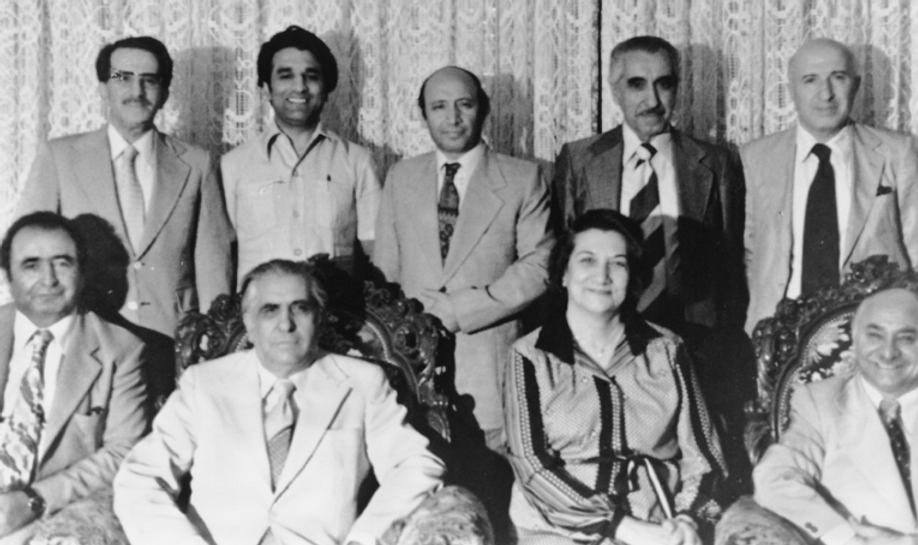
“Members of the National Spiritual Assembly who disappeared in August in 1980. All are presumed to have been killed” by Bahá’í Media Bank.

One caveat first. When we write or administer here, we do not speak for our Faith in any official capacity. We are members of it. That is the limit of our standing.

The clearest statement of the Bahá’í position comes from the pen of the Beloved Guardian of the Faith, Shoghi Effendi, who in July 1947 was asked directly by the United Nations Special Committee on Palestine to clarify the relationship of the Bahá’í community to the country and its political future. His reply, written from Haifa and reproduced in The Bahá’í World, Volume 11, is as close to a foundational text on this question as exists. We quote it at length, because paraphrase would not do it justice.

Letter to the United Nations Special Committee on Palestine

On July 9, 1947, Shoghi Effendi received a letter from the chairman of the United Nations Special Committee on Palestine requesting a statement on the relationship, which the Baha’i­ Faith has to Palestine and the Baha’i­ attitude toward any future changes in the status of the country. From Shoghi Effendi’s reply, the following paragraphs are quoted in The Baha’i­ World, Volume 11 (1946-1950), pp.43-44.1

HAIFA, ISRAEL—15 July 1947

“The position of the Baha’i­s in this country is in a certain measure unique: Whereas Jerusalem is the spiritual center of Christendom it is not the administrative center of either the Church of Rome or any other Christian denomination. Likewise although it is regarded as the second most sacred shrine of Islam, the most Holy site of the Muhammadan Faith, and the center of its pilgrimages, are to be found in Arabia, not in Palestine. The Jews alone offer somewhat of a parallel to the attachment which the Baha’i­s have for this country, inasmuch as Jerusalem holds the remains of their Holy Temple and was the seat of both the religious and political institutions associated with their past history. But even their case differs in one respect from that of the Baha’i­s for it is in the soil of Palestine that the three central Figures of our Religion are buried and it is not only the center of Baha’i­’ pilgrimages from all over the world but also the permanent seat of our Administrative Order, of which I have the honor to be the Head.”

“The Baha’i­ Faith is entirely nonpolitical and we neither take sides in the present tragic dispute going on over the future of the Holy Land and its people nor have we any statement to make or advice to give as to what the nature of the political future of this country should be. Our aim is the establishment of universal peace in this world and our desire to see justice prevail in every domain of human society, including the domain of politics. As many of the adherents of our Faith are of both Jewish and Moslem extraction, we have no prejudice towards either of these groups and are most anxious to reconcile them for their mutual good and for the good of the country.”

“What does concern us, however, in any decisions made affecting the future of Palestine, is that the fact be recognized by whoever exercises sovereignty over Haifa and Acre, that within this area exists the spiritual and administrative world center of a world Faith, and that the independence of that Faith, its right to manage its affairs from this source, the right of Baha’i­s from any and every country of the globe to visit it as pilgrims (enjoying the same privilege in this respect as Jews, Moslems and Christians do in regard to visiting Jerusalem), be acknowledged and permanently safeguarded.”

Three things are worth drawing out.

Continue reading The Bahá’í Position on Palestine: A Note for the Record

The saffron and the crescent – why BP matters

I have often noticed something distinctive that Brown pundits—especially Pakistani Muslim commentators—bring to the table.

I will highlight two or three comments from previous posts that shed light on an important aspect often missing from Indian discourse.

One comment by Kabir from about 25 days ago stated:

“Muslims tend to be more intransigent vis-à-vis conversion of a spouse.” Sharia is very clear on this point. A Muslim man may marry a Christian or Jewish woman without her converting. A Muslim woman, however, cannot marry a non‑Muslim man; there are no exceptions for women. Of course, Kareena Kapoor married Saif Ali Khan without converting to Islam, but that was not a nikaah. Under Islamic law, they are not considered married—though I doubt either of them is concerned about that.

Another important comment by Kabir was:

Continue reading The saffron and the crescent – why BP matters

The Brahmins behind April’s Traffic

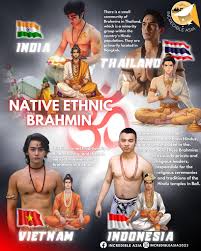
One post earns sixteen percent of all our organic traffic. Written in February 2019. Titled The Five Great Brahmin Castes and Their Proclivities. Seven years on, still the engine.

That is the centre of the site, whether we planned it or not.

What people are searching for

top 5 caste in india. brahman caste. brahmin last names. aryan indians. pakistani hindu. is hinduism pagan.

People are searching caste, ancestry, and religious lineage. We rank for it. Some readers are working out what they are. Some are arguing with relatives. Some are looking up a surname before a marriage call. We do not need to romanticise them. The search bar tells the truth.

The 2019 post answered a question hundreds of thousands of people have asked since. It still answers it.

What sits below it

Four other posts share the next 22% of organic traffic between them.

Continue reading The Brahmins behind April’s Traffic

Pakistani Centrists, Not Muslim Extremists

A Precedent note

The most important thing to understand about the Pakistani voices on this site is that they are centrists, not extremists. Kabir, El Khawaja, S Qureishi: none of them is a fringe figure in Pakistani society. They are roughly where a literate, urban, employed Pakistani sits, and that fact deserves attention.

It deserves attention because India, over the last decade, has stopped engaging with Pakistanis altogether. Visas have collapsed. Cricket is gone. Cinema is gone. Academic exchange is gone. The everyday oxidation of one society against another, the slow correction by which extreme positions get rounded down through exposure to people who hold different ones, has been switched off. What is left is each side talking to itself about the other.

Brown Pundits is one of the few places where that has not happened.

The thread that prompted this note will illustrate. A week ago, S Qureishi observed that the only downside of the Islamic Revolution was that “there is no OnlyFans.” We were deeply offended by this line seriously enough to write the next piece on counterfactual analysis of Iranian society. Q then returned, under another post, with a fuller thesis: female sexuality must be controlled to sustain a civilisation. Pressed on enforcement, he listed disownment, violence, lawsuits, vandalism. Finally when pressed on honour killing, he admitted it was “horrible” and “immoral.”

Three voices took shape on the thread. The most salient asked that the comment be deleted as misogynist.

We are not deleting it.

We disagree with Q on almost every line he wrote. The thesis that female autonomy is the load-bearing crack in civilisation is one we reject in full. The post on Virginity Policing that triggered this thread was our own. But Q is not a Taliban spokesman. He is a Pakistani who, when challenged in writing by other commenters, was forced to articulate his position, defend it under hostile examination, and concede that violence is wrong. That is not platforming. That is engagement. It is the slow work India has decided it no longer needs to do.

Continue reading Pakistani Centrists, Not Muslim Extremists

Kabir, the Anchor of the Crescent

Dissent Must Have a Home

The parent post set out why the house speaks in the plural and why pruning widens the room. This post sets out the harder discipline. A plural voice that cannot bind itself is not a voice. It is a whip. And a forum that cannot bind its Founders is not a forum. It is their salon.

The Crescent anchor.

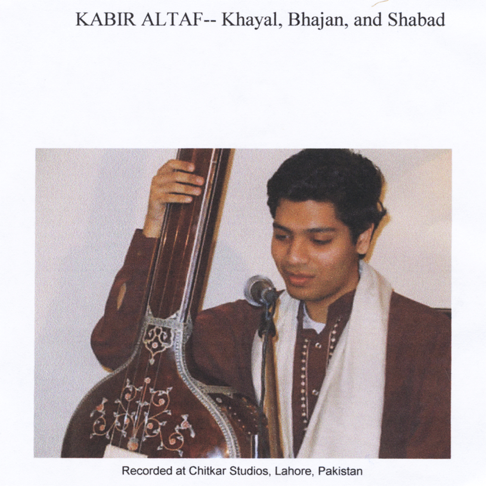
When Brown Pundits was revived, two commentators returned before anyone else. Kabir was one of them. sbarrkum was the other. That mattered more than any traffic number. A forum lives by the return of people willing to argue in public, under their own names or their settled masks, on a schedule that does not flinch.

Kabir matters for a second reason. The Centre gathers quietly and often overlaps with the Saffron bench in instinct or historical frame. The Crescent bloc on this site is essentially held together by Kabir. Remove him and the others do not regroup under a new flag. They drift.

Without Kabir, Brown Pundits will become a site where Muslims are written about more than they are written by.

Continue reading Kabir, the Anchor of the Crescent

Men of State, and the Great Mahatma

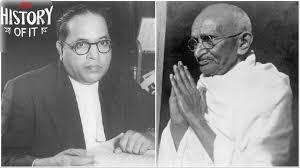
A Precedent Post on Gandhi, Ambedkar, and the Authority to Speak

Kabir is right to push back on the deliberately provocative, “pure evil.” It misses what QeA & Nehru were and what Gandhi & Ambedkar were.

This post sets four Precedents.

One. QeA and Nehru were men of state. Neither evil, neither saint. To be evaluated by the standards appropriate to men who build and run states.

Two. Gandhi was a man of Dharma. He is a saint. Comparing him with QeA and Nehru on their terms is a category error.

Three. Ambedkar is the fourth figure. Not a man of state in the QeA or Nehru sense; not a man of Dharma in the Gandhian sense. He is a constitutional saint, in the Mahatma’s register.

Nehru and QeA may be criticised. They may not be disrespected. Gandhi and Ambedkar are a different order. Discussion of them on this blog proceeds from profound respect for their achievement: the redemption of the soul of India after a thousand years of slavery.

*Thousand years of slavery is not Precedent but rhetorical flourish. It is worth noting that all of the Pakistani commentators on BP would be subordinated “Hindustani Muslims” in the hierarchical world of the Mughals, who explicitly favoured foreign-born Turani and Irani nobles over the converted Indian majority.

Four. SD is not to be quoted on this blog. Initials only where strictly necessary. Reasons at section XII.

Part I. The Distinction

I. The Man of State

The modern state is a Westphalian inheritance: territory, a monopoly of violence, legal personality. A man of state operates inside that frame. He does not step outside it.

QeA was a man of state. He was perhaps the finest constitutional negotiator the subcontinent produced in the twentieth century. He read the Government of India Act the way a master reads a score. In his Fourteen Points of 1929, drafted in response to the Nehru Report’s dismissal of the Muslim minority, he foresaw with brutal clarity that a Westminster majority in a plural society could become a permanent tyranny once the demographic count was fixed.

According to Mohammad Ali Jinnah, “The Committee has adopted a narrow minded policy to ruin the political future of the Muslims. I regret to declare that the report is extremely ambiguous and does not deserve to be implemented.”

There is a reason Pakistanis venerate him to the extent they do. Without QeA, the Muslims of the subcontinent would have remained a set of regional identities & class interests: Punjabi, United Provinces aristocrats, Bengali. He forged a single Islamicate identity out of them and politicised it into a state. In the history of the Ummah, and indeed the world, this is almost unique.

The Two Nation Theory was not his starting point. In 1916, at Lucknow, Sarojini Naidu called him the Ambassador of Hindu-Muslim Unity, and the phrase was earned. He reached for the Two Nation Theory two decades later, when the softer constitutional instruments had been closed off by Congress intransigence and Viceregal haste.

The tragedy of QeA is that the state he called into being never settled its founding question. A secular Muslim who ate pork and drank whisky summoned an Islamic state and then, on 11 August 1947, tried to unsummon it in a speech that Pakistan has spent the rest of its history editing out of its school curriculum. The confusion was structural from day one. It is structural still.

II. The Architect and the Scaffold

Nehru was a man of state of a different temperament. Harrow, Cambridge, Inner Temple. Fabian socialist. Scientific temper. Where QeA built a state around a community, Nehru built one around an idea: that a civilisation as old as India could be poured into a parliamentary republic and would accept the mould. It largely did. We owe him this.

Continue reading Men of State, and the Great Mahatma

The Chess Masters Who Weren’t

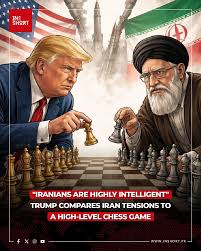
The presumption behind the grand-strategist mythos is always the same. Trump, Milei, Netanyahu, Modi and Orbán are playing three moves ahead, and the other side is stupid. Strip the second half of that sentence and the first collapses.

Look at the scoreboard.

Op Sindoor. India’s post-operation strategic environment does not favour India. Whatever the tactical ledger reads, the diplomatic map around South Asia has tightened against Delhi, not loosened. Delhi has learned. The region has taken notes.

Pakistan. The surprise winner of Op Sindoor is not India. Rawalpindi has played the post-operation hand better than anyone expected and is now cashing cheques in Washington, the Persian Gulf and Beijing in the same quarter. On the current scoreboard, Pakistan is the diplomatic champion of the world.

Iran.* Tehran has pushed back harder than the MAGA-Likud axis priced in. Hormuz did not close on Washington’s schedule. The Islamic Republic has not folded on Washington’s terms. The deterrence calculus is running the wrong way.

Lebanon. Netanyahu was ordered to stop. Not persuaded, not incentivised. Ordered. That is a tell about who holds the leash, and it is not Jerusalem.

Hungary. Orbán conceded on 12 April 2026. Sixteen years, gone in a single parliamentary cycle, to Péter Magyar’s Tisza on a two-thirds supermajority. Some say it was thanks to JD’s Kiss of Death. The flagship of illiberal democracy in Europe was voted out by the electorate it was supposed to have captured.

Continue reading The Chess Masters Who Weren’t

Moderation Notice

A brief note to all commentators on standards going forward.

We prefer ten comments from ten commentators rather than a hundred comments from three commentators.

Capacity for unmoderated commenting has run out. Known authors will be held to a materially higher bar than anonymous readers, because name recognition carries responsibility.

Kabir has set the template. He has moved his argumentation out of comment threads and into original posts (India is Not a “Muslim Power” & Overzealous Pemra), which is exactly the trajectory we want to see from regular contributors.

Direct warning to BB: stop fanning thread fires. The metric this year is not comment density, it is commenter diversity. Low-quality threads drive high-quality voices off the platform, and we have watched it happen in real time. One dominant voice churning out heat costs us three or four signal contributors who quietly stop showing up.

If you have a substantive argument, write a post. If you have a reaction, keep it tight and keep it clean. Threads are not a venue for serial combat.

This applies to everyone, but authors especially. You set the tone whether you mean to or not.

– Moderation, Brown Pundits

Pakistanis = Indian Muslims With Sovereignty?

Part 1: Who Can Speak for the Muslims of India

Part 2

BB has made a comment calling Pakistanis “strayed Muslim Indians“; which does not quite make sense, because Pakistanis are both Indic & Islamic, uniquely so. One cannot deny the highly syncretic and distinct Muslim subculture that has come about from a very long and deep history in India. It cannot be subsumed into an Indian identity in any meaningful way without acknowledging that distinctiveness.

But the phrasing opens a useful equation.

Pakistanis = Indian Muslims with sovereignty.

Continue reading Pakistanis = Indian Muslims With Sovereignty?

Brown Pundits