The Earth’s Lost Industrial Heart

After our discussion on industrialisation in India, I began to wonder: if the Earth were one country, one government, one infrastructure grid, one economy, where would its industrial heart lie?

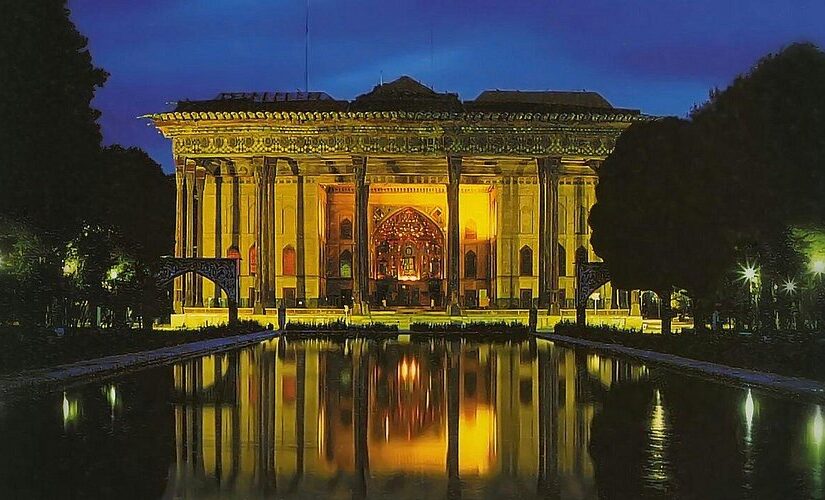
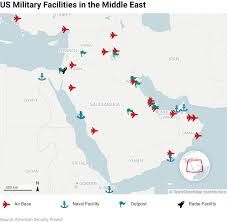
Geographically, the answer is obvious. The natural centre of the world, for energy, labour, and trade routes, isn’t London, New York, or Beijing. It’s the triangle between the Persian Gulf, the Indo-Gangetic plain, and the Red Sea.

Deserts rich in hydrocarbons. River basins dense with labour, water, and grain. Seas that touch every continent. If the world were united, this belt, Arabia to India to the Nile, would be the Ruhr, the Great Lakes, and the Pearl River Delta combined.

The Natural Order of Geography

Before empire, this region was the planet’s connective tissue. Spices, silk, horses, and steel moved from India to Arabia to Africa. Energy, grain, and knowledge flowed through the Red Sea and the Persian Gulf like the arteries of the Earth. It was not the “Middle East”; it was Middle Earth. Continue reading The Earth’s Lost Industrial Heart

Pakistan’s Diplomatic Triumph (Trump?)

United States President Donald Trump especially thanked Prime Minister Shehbaz Sharif and “my favourite” Field Marshal Asim Munir on Monday for their efforts in achieving peace in Gaza, among many other world leaders.

Trump thanks PM Shehbaz and ‘my favourite’ Field Marshal Asim Munir for Gaza peace efforts

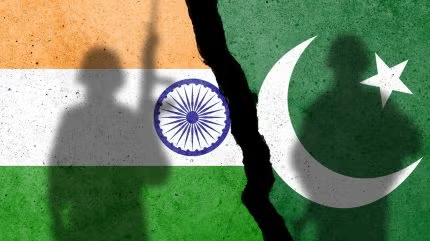
I might expand on this tomorrow, but it’s telling that Dr. Lalchand finds all this quite amusing—Pakistan back again with a begging bowl. I, on the other hand, see it as something closer to a post-Pahalgam pivot. Perhaps India is underestimating Pakistan’s deep instinct for adaptation, especially as the region continues to drift in unpredictable directions.

Brown Pundits and the Echo Chamber Problem

The Echo Chamber of the Commentariat

It has been on my mind that Brown Pundits, for all its liveliness, risks drifting into an echo chamber. The commentariat is our lifeblood: their activity sustains the blog far more than page views alone. And yet, the very strength of that community can also be its blind spot.

I do not want Kabir to end up being the Cassandra of BP, always warning of decline, and being proved right in the end. If we are not careful, we could slide into a right-wing echo chamber where challenging voices fade, and the capacity for deep interrogation, the core of what makes BP unique, is diminished.


Pahalgam and the Question of Narrative Continue reading Brown Pundits and the Echo Chamber Problem

Homebound with Ishaan Khatter

Last night Dr. Lalchand & I watched Homebound, India’s submission to the Oscars, at Apple Cinemas in Cambridge, Mass. This sad film follows a Dalit (Chandan Kumar) and a Muslim (Mohammed Shoaib Ali) struggling against the odds during the pandemic, their solidarity fictionalized as a fragile bridge across India’s deepest divides.

On the surface, it is a familiar story: the disenfranchised facing systemic barriers. But what struck me was how privilege itself performed disenfranchisement. Ishaan Khatter, brother to Shahid Kapoor, plays the marginalized Muslim. Janhvi Kapoor, descended from Bollywood royalty, embodies a Dalit woman. Vishal Jethwa, a bright-eyed Gujarati, portrays the Bhojpuri Dalit lead. This is not unique to India; Hollywood, too, casts elites as workers. Yet it raises the question: when poverty is performed rather than lived, is it “Dalit-washing”?


Poverty, Emotion, and Representation

Watching the film, I reflected on poverty’s emotional landscape. For elites, emotions can be expansive, indulgent, aestheticized into art. For the working poor, emotions are often constrained by survival — narrowed into necessity. Homebound tried to humanize its characters, but I wondered whether it romanticized what in practice is a relentless narrowing of possibility.

The West rewards this narrative. Parasite in Korea, Iranian cinema, Slumdog Millionaire — poverty & Global South tribulations as spectacle becomes “poverty porn.” The Guardian gave Homebound four stars. Great art often tilts melancholic, yes, but here the melancholia is curated for Western consumption.


Identity, Vectors, and Islamicate Selfhood

More unexpectedly, the film stirred something personal. I realized how much I have vacated my own Islamic identity. It was not traumatic. As a Bahá’í with Persian cultural roots, I found overlap — even comfort — in Hindu traditions. Dalits, in their rapid Hinduization, represent one vector of assimilation; Muslims and scheduled-caste Muslims, often in tension, another. Homebound imagines solidarity, but in life these vectors pull unequally. Continue reading Homebound with Ishaan Khatter

Roman Palestine and the Crusades

I am quite familiar with History of England and Europe since even before my teens. That was because my father had beautifully illustrated school History text books from England. Plus many historical novels eg Walter Scotts The Talisman which is set in Palestine during the Crusades. I read them all many times over as nothing better to do as no TV then in SL till 1977.

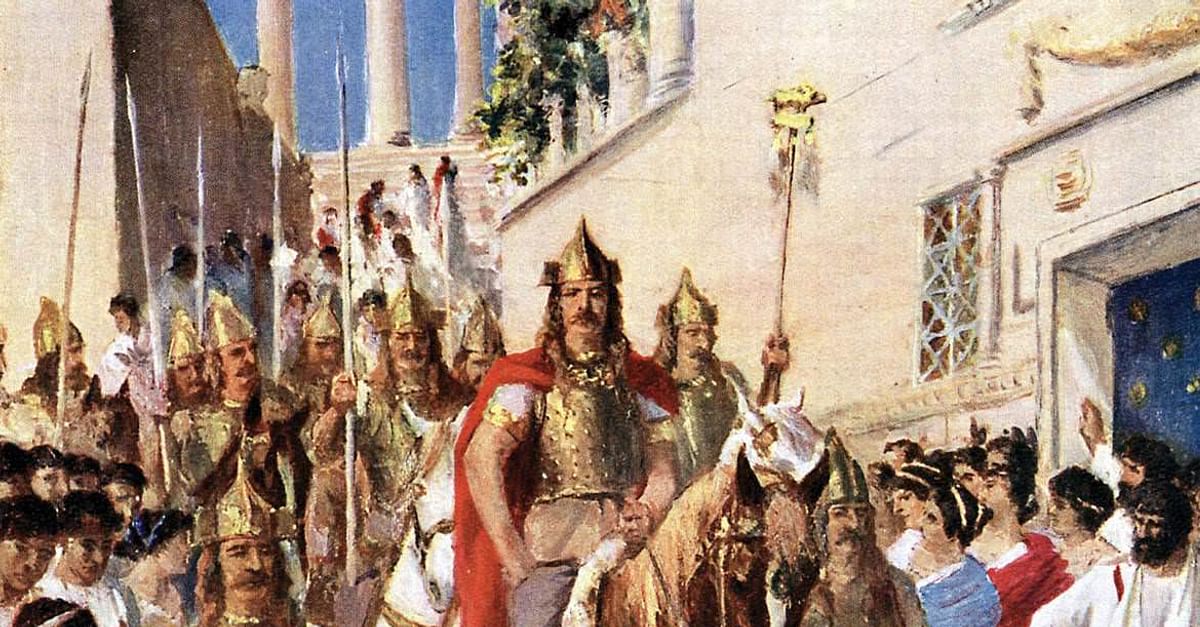
Let us start with the historical Jewish Diaspora. Historical as verified from sources other than the Bible. The Romans controlled the middle east around 1 BC. (Think Julius Caesar and Cleopatra an Egyptian Queen of Greek Origin)

To quote
Asia Minor after the Macedonian Wars (214–148 B.C.). In 63 B.C. The defeat of the Carthaginians gave Rome almost complete control of the Mediterranean. Romans conquered most of Asia Minor in 188 B.C., Syria and Palestine in 64 and 63 B.C.

In 70 C.E. (a few years after the purported passing of Jesus Christ the Romans Destroyed the Judaism Temple in Jerusalem. Apparently this ended the ability to make animal sacrifices to God (Yahweh). Plus the Roman persecution of the Jews and Judaism led to their disperal from Palestine, i.e. the Diaspora

Note: There is no evidence of a Kingdom or Country called Israel in any of the Historical or Pre-historical records of the Babylonians and Assyrians. There was region called Palestine (Palaistinê, Παλαιστῑ́νη) since at least since the Greek times. The word Israel became considered “Fact” when Europe became Christian and the Bible an accepted source of fact given by the Divine. The Jews became notable and rich because they were money lenders. Christians (and Muslims) are forbidden to lend money on interest (usury). Think Merchant of Venice and Shylock the Jew

Continue reading Roman Palestine and the Crusades

Travelling – Open Thread

🔗 Links shared from the comments


💬 Keep the links and thoughts coming — BP works best when the Commentariat bring their own sources into the mix.

The Ilhan Omar of Brown Pundits

Every movement has its lightning rods. In American politics, Ilhan Omar is one: progressive, unyielding, often correct in substance but polarizing in style. She calls out genuine injustices, but her timing and tone can sometimes drown out the very points she is trying to make.

I’ve begun to realize that Kabir plays a similar role on Brown Pundits. Like Ilhan, he often raises necessary truths (for instance Israel has just killed an American family in Lebanon). Like Ilhan, he brings traffic, visibility, and energy. But also like Ilhan, he has a way of inflaming rather than persuading.

Charlie Kirk’s remarks illustrate why Ilhan Omar’s critiques resonate, even if her tone divides. When Kirk sneers that there are “no tall buildings left in Gaza,” or jokes that Palestinians are “stupid Muslims” for resisting, he is not just making political commentary. He is engaging in dog-whistling — racialized, sexist, Islamophobic rhetoric that devalues human life. Combined with his earlier comments about the supposed lack of “brain processing power” among prominent Black women, the pattern is unmistakable. One does not have to be a progressive to see that such speech corrodes the civic space. At the same time, none of this justifies violence: the murders of Charlie Kirk and Irina Zarutska are deplorable and must be condemned without qualification.


The Progressive Dilemma Continue reading The Ilhan Omar of Brown Pundits

Pakistan: The Realpolitik State

In a recent exchange, Kabir suggested that Pakistanis often feel unwelcome in our discussions on Brown Pundits, and that constant criticism of their country creates a sense of unease. It is worth pausing to reflect on this. Pakistanis, like all of us, are shaped by history and circumstance. And yet, there is something in the cultural tenor of Pakistan that makes open engagement difficult.

I say this not to provoke but to observe. Pakistan, as a society, often leans heavily on hierarchism, patronage, and a culture of deference. To borrow an old saying about the Somalis, that every man thinks himself a Sulṭán, one might say that Pakistanis often view themselves through the prism of status and validation. This instinct is hardly unique; Indians, too, have their caste-bound privileges and invisible hierarchies. But in India, these structures are embedded in a dense cultural fabric; family, caste, neighbourhood, ritual, that, for all their flaws, anchor society. Pakistan, by contrast, feels less rooted. It is a younger country (with old traditions), with fewer inherited cultural layers to draw on.

This is not simply an abstract point. When I married, we drew freely from Hindu rituals (dual ceremonies, Bahá’í incl.), Persian customs, and Sindhi traditions, blending them into something whole. But I realised there was nothing distinctly “Pakistani” to contribute; no cultural motif that stood outside India or Iran (we didn’t do a Walima, which is Muslim). Pakistan is, in many ways, a derivation: a state forged through separation, rather than a civilization with deep roots of its own. The cultural space it occupies has been overlaid with militant nationalism and, too often, Hindu-phobia (Kabir is so inured to it that he isn’t able to recognise that but on the flipside so is the Commentariat towards Islam).

To acknowledge this is not to deny the prejudices of Indians toward Muslims, which are very real and enduring. Nor is it to ignore the deracinated, secular archetype embodied by figures like Benazir Bhutto, who seemed neither fully Muslim nor fully Western, suspended between worlds and who are the cultural elite of Pakistan (what they give up on their bridge is their Hindu origins; more than being half-Persian, Benazir’s nani was Hindu). It is simply to note that Pakistan’s cultural story remains unsettled & thus interesting.


Validation and Audience Continue reading Pakistan: The Realpolitik State

Links on My Browser Right Now – Open Thread

A few pieces I’ve been reading this week:


Reflections

On the Ummah: Muslims have often failed to concede ground in internal debates, which has left them politically boxed in. One reform across all denominations would be to return directly to the Quran as the primary authority. That alone would dissolve many cultural accretions, halal (animals should be stunned before slaughter), hijab (a Sassanian trait), and other practices, into something more adaptive.

And here’s a more speculative question: if the “Satanic Verses” were reconsidered if Al-Lat, Al-Uzzah, and Al-Manat were understood as sacred divinities at the threshold of the Lote Tree, would that make Islam more fluid, especially for minority-majority dynamics?

On Kabir: I’m not moderating him out, but readers should be aware that he frames everything through Muslim-rights activism. Engage, but don’t get gaslit into endless provocations. Everyone is entitled to their nationalisms — but they can’t claim liberalism at the same time. That tension makes it worth examining how plurality is treated within the Hindu fold itself. Dharma, unlike the Abrahamic Faiths, tends to all for multiple truths co-existing with each other (Buddhism and indigenous East Asian religions).


👉 Over to you. I’m retreating from heavy moderation — I see BP’s strength in letting the commentariat lead. Biases are fine. Gratuitous abuse is not.

Image

“In March 1998 the Indian PM Gujral, told … “Pakistan was not capable of making atomic bombs.” he had been convinced by Indian Intelligence and Dr Raja Raman, the head of Indian Atomic Energy Commission, who had publicly claimed that nuclear weapon were beyond Pakistan’s reach.”
Brown Pundits