Did the Muslim League and RSS Want the Same Thing?

Let’s just ask it plainly: if the Muslim League got what it wanted—a Muslim-majority Pakistan—then what, exactly, is the problem with the RSS wanting a Hindu-majority India? This isn’t a provocation. It’s a genuine question.

The Muslim League, by the end, wasn’t fighting for shared rule. It wanted partition. It wanted sovereignty. It wanted to exit the Hindu-majority consensus that the Congress represented. And it succeeded—through law, politics, and eventually blood.

The RSS, for its part, never pretended to want pluralism. It’s been consistent for nearly a century: it wants India to have a Hindu character, spine, and center. If the League could ask for a state that reflects Muslim political interests, why is it unthinkable for the RSS to want the same, flipped?

This is where I struggle with a certain kind of liberal-istan logic—found across both India and Pakistan. You’ll hear:

“India must stay secular! Modi is destroying Nehru’s dream!”

But what was Q.E.A-Jinnah’s dream? Was Pakistan built as a pluralist utopia? Or was it built—openly, unapologetically—as a Muslim homeland?

If Pakistan’s existence is predicated on Muslim majoritarianism, then India’s tilt toward Hindu majoritarianism isn’t an anomaly. It’s symmetry. Maybe even inevitability.

So either we all agree that majoritarianism won in the subcontinent—and everyone adjusts accordingly. Or we all agree that the Congress secular ideal was the better one—and try, equally, to hold both India and Pakistan to it.

But it can’t be:

  • Muslim nationalism is liberation

  • Hindu nationalism is fascism

That math doesn’t work. And yes, the Muslim League had more polish. Jinnah smoked, drank, defended pork eaters in court. The RSS wore khaki and read Manu Smriti. But don’t be fooled by aesthetics. At the core, both movements rejected the idea of a shared national project. They just took different exits off the same imperial highway.

So pick one: Either Nehru and Gandhi were right—and so was Maulana Azad. Or everyone else was right—and we all now live in our chosen majorities. But don’t demand secularism from Delhi while praying for Muslim unity in Lahore. That’s not secularism. That’s selective memory.

Resistance, Realignment, and the Roads Not Taken

First, a brief acknowledgment: Kabir remains one of the pillars of this blog. His consistency, depth, and willingness to engage with the hardest questions are invaluable. I don’t always agree with him—but the conversation would be much poorer without his voice. The post is a series of reflections—stitched together from the comment threads.

I. Gaza: Beyond the Pale of Language

The death of a 19-year-old TikToker, Medo Halimy, in South Gaza this week caught my eye—not because it was the most horrific (foetuses are sliced in two in Gaza as Dr. Feroze Sidwa* attests). But because having seen his video, it just made the death so immediate (yes that is a cognitive bias).

At this point, to debate whether what is happening is a genocide feels grotesque. It clearly is. The scale, the intent, the targeting of civilians and children—it’s all there. The legal frame collapses under the moral weight. We are witnessing something darker than war: ethnocultural suffocation & demographic extinction, broadcast live and met with diplomatic shrugs. But the world is watching inspired by the very brave Bob Vylan duo (UK punk-rap duo opposing imperialism, recently denied US visas):

Something stirs and pricks beneath the rubble.

II. The Huma Moment: A Civilizational Reversal? Continue reading Resistance, Realignment, and the Roads Not Taken

Belated Podcast: Operation Sindoor (and Bunyan al Marsoos)

Another Browncast is up. You can listen on Libsyn, Apple, Spotify, and Stitcher (and a variety of other platforms). Probably the easiest way to keep up the podcast since we don’t have a regular schedule is to subscribe to one of the links above!

In this episode Amey hosts myself (omar) and Poulasta (our resident Bengali expert) to talk about the recent India-Pakistan kerfuffle. Amey was ready for war, but we found common ground 😉 (as usual with India and Pakistan, a lot of the discussion is about partition and related misunderstandings)

South India Makes British India Hindu?

TNT Saved Hinduism; Dravidia preserved Aryavarta?

S. Qureshi: “Muslims are today a majority of the population >50% of North British India. If peninsular south was made into its own country in 1947, India would be a Muslim majority country today. Many Muslims actually wanted South India to be a separate country and North India (including Pakistan/Bengal) to be one unit. To say that Indian Muslims who lived in the historical centre of Muslim power for centuries would just get up and leave for Pakistan is just farcical and delusional. These types of ideas were only proposed by extreme right-wing Hindu organizations after partition, and these ideas seem to become mainstream today with BJP. Historical reality, like always, is very different.”

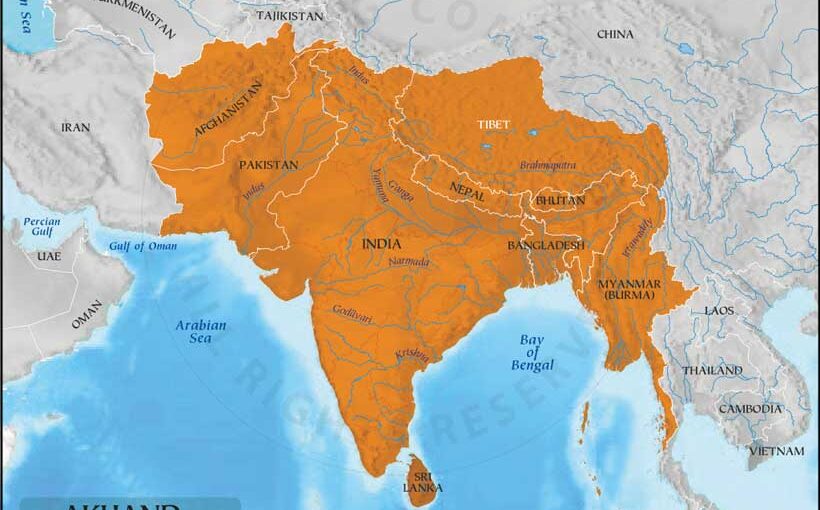
The demographic map of the subcontinent tells a startling story. If South India had formed a separate state in 1947, the rest of British India — encompassing Pakistan, Bangladesh, and the northern Hindi belt — would today constitute a Muslim-majority civilizational bloc. This isn’t conjecture. It’s arithmetic.


The Numbers That Reorder the Narrative

Here’s what the Indo-Gangetic arc looks like today (please fact check me): Continue reading South India Makes British India Hindu?

Southasia Is One Word

Reflections on Pervez Hoodbhoy at MIT

Zachary L. Zavidé | Brown Pundits | May 2025

Pervez Hoodbhoy needs no introduction. As one of Pakistan’s leading physicists and public intellectuals, he has long stood at the uneasy crossroads of science, nationalism, and conscience. He spoke this week at MIT’s Graduate Tower — the final stop on a grueling five-city U.S. tour, a new city every two days — in support of The Black Hole Initiative, a cultural and intellectual space he’s building in Pakistan. Despite its ominous name, the initiative is a wormhole, not a void: a cross-disciplinary bridge connecting physics, literature, art, and civic life.

What followed was less a lecture, more an exposition — sober, lucid, and grounded in decades of hard-won clarity.


The Logic of Annihilation

Dr. Hoodbhoy walked us through Pakistan’s nuclear doctrine: under long-standing military assumptions, if the north–south arterial route is severed, a tactical nuclear strike becomes viable. But the calculus is disturbingly abstract. Hiroshima’s 20-kiloton bomb killed 200,000. India and Pakistan each possess an estimated 200 warheads. One general once told him that, by crude arithmetic — obscene as it sounds — “only” 80 million would die in the event of a full exchange. Continue reading Southasia Is One Word

Sunny Narang in Conversation with Dr. Omar Ali.


Another Browncast is up. You can listen on Libsyn, Apple, Spotify, and Stitcher (and a variety of other platforms). Probably the easiest way to keep up the podcast since we don’t have a regular schedule is to subscribe to one of the links above!


Sunny Narang, a Punjabi born and brought up in Delhi with ancestral roots in Pakistan, speaks with Dr. Ali on post partition Punjabis in Delhi; they also talk about culture and people who have and continue to shape the history of the sub-continent, from Jain bankers in Mughal India to the business clans of modern India.


Some of the books talked about on the episode.

Indiraji Through my Eyes: Usha Bhagat
The City of Hope The Faridabad Story L.C. Jain
The South Asian Papers” , a collection of 16 papers by Stephen Philip Cohen
All These Years: A Memoir by Raj Thapar
Civilization and Capitalism: 15th-18th Century by Fernand Braudel
Punjabi Century by Prakash Tandon


Pakistan and India: Why Did They Diverge?

@FrankBullit67 is a well-read Rajput from India, and an active presence on Twitter. He composed a thread on partition and his view of why India and Pakistan have diverged in many ways since independence. I tweeted it with the comment that it was interesting, but I may not agree with all of it. Which led to several people asking me “what do you disagree with?”. I had not really thought it through, but here is what I came up with; Frank’s tweets are combined into paragraphs and any comment I may have is under the tweet in red. (1. that India and Pakistan have not diverged as advertised here is another possible argument, I skipped that for now, and 2. everybody forgets Bangladesh, which fact was nicely summarized by @shivamsethi01 and i have attached a screenshot at the end of this post).

Frank: I was going to do a thread on Partition in the form of a historical chronology – I think that can wait. I’ve decided to do a thread which is more “philosophical” and on “principles” about Partition. So here goes. As we know, “partition” carved two countries out of one in 1947. One with a Hindu majority (~85% Hindu in 1947 but now 79%). The other with a Muslim majority (over 90% Muslim in 1947 – even more skewed now).

The process was extremely bloody resulting in over a million deaths (some think the figure could be two million).

For those who are unfamiliar with the scale of the carnage, it is worth Googling Margaret Burke-White’s pictures of partition for LIFE Magazine (see here).

Indians, Pakistanis and Brits can keep arguing for centuries about who was responsible for what but that’s another subject. The purpose of this thread is to concentrate on what I think is the key philosophical divergence between Hinduism and Islam which made violent conflict or a “partition” unavoidable. Although one can write an encyclopaedia on the theological differences between the two Faiths, the key difference to me is on the question of “Blasphemy”. Broadly, Hinduism has had atheists in the mix for millennia (or those with a weak adherence to faith or those who have created new sects). This was never punished. As a result, Hinduism, Jainism, Buddhism and later Sikhism lived next to each other for millennia or centuries despite enormous theological differences. Continue reading Pakistan and India: Why Did They Diverge?

Partition story, part 1

My father, Nadir Ali, writes short stories and poetry in Punjabi. He is in his mid-eighties now and has been writing his autobiography in Punjabi and my sister translated a segment that deals with his memories of partition. He was a little over 11 years old at that time. My grandfather was a lawyer in Gujrat city. There are more stories from that time that I hope we can translate at some point. For example, my grandfather rescued some Hindu/Sikh women who had been kidnapped by the rioters and my father was the go-between who was young enough to go into the women’s quarters during those negotiations; I hope to get that story written down someday.
Anyway, my grandfather never really reconciled with partition. He wrote to his Hindu friend Hari Singh regularly until 1965 and I  remember hearing that he once lamented in a letter to his friend (they both wrote in Urdu) “what a tragedy and a travesty that you, who are more Muslim than me, are in India, and I, who am more Hindu than you, am in Pakistan”. He would also use Indian time (30 minutes ahead of Pakistan standard time) as his own “standard time” for decades after partition.

Memories of Partition. Nadir Ali Continue reading Partition story, part 1

National Register of Citizens (NRC) and Citizenship Amendment Act(CAA)

Brown Pundits favorite Kushal Mehra explains the National Register of Citizens (NRC) and Citizenship Amendment Act (CAA).

I don’t understand why the NRC and CAA are controversial among some. Can anyone explain this to me?

Browncast 72: Conversation with Salman Rashid

Another BP Podcast is up. You can listen on Libsyn, iTunes, Spotify,  and Stitcher. Probably the easiest way to keep up the podcast since we don’t have a regular schedule is to subscribe at one of the links above.

You can also support the podcast as a patron. The primary benefit now is that you get the podcasts considerably earlier than everyone else.

Would appreciate more positive reviews! It’s been a really really long time that we’ve been on 30 iTunes positive reviews. I notice that Alton Brown’s Browncast has 30 reviews on Stitcher alone! Help make us the biggest browncast there is!

In this episode we talk to Salman Rashid. Salman is an ex-army man who left the army to become a travel writer. He has written 10 books and countless articles, most of which can be found at his blog odysseuslahori.  We talk about partition, Pakistan, history, Alexander the Great and whatever else comes up..

\


Brown Pundits