Musings on & Answers to “The Partition of Elites: India, Pakistan, and the Unfinished Trauma of 1947” (Part 1)

This post by X.T.M has brought up some important points that Indians (and, by extension, Hindus) need to wrestle with. The author’s foundational hypothesis is that “India’s central trauma is not diversity. It is Partition.”

I don’t think I’ve ever read such a succinct diagnosis trying to get to the root of India’s issues, much less such a novel one (at least to me). For these reasons, if nothing else, I think X.T.M’s idea merits a deeper look.

I am largely in agreement with the author that diversity in and of itself is not at the heart of India’s troubles if only because it seems to have always been a factor in Indian society for as far back as we have history. Indeed, “diversity” and differentiation seem to me to be a mark of the continuity of Indian civilization from the earliest days of our forefathers. If this, our patrimonial diversity, has become a bane to India, it is to the India that plays at being a modern nation-state, democracy, and republic — not to the India of uncountable Gods, saints, and heroes, each at the heart of their world, ruling over the innumerable hamlets that dot the country and the uncountable kindreds that dwell within them. As Diana Eck (2012) puts it: “The profusion of divine manifestation is played in multiple keys as the natural counterpart of divine infinity, incapable of being limited to any name or form, and therefore expressible only through multiplication and plurality.” (India: A Sacred Geography, p. 48).

It is the second half of the author’s initial hypothesis that I think is the most important bit to dissect. Something about this diagnosis does not strike me as entirely accurate.

It is true that Partition split the Indian folk, namely, Hindus and Muslims, but the shape that this split took is a rather curious and, at least for me, unexpected one. According to the Pew Research Center’s June 29, 2021 report titled Religion in India: Tolerance and Segregation (Sahgal et al.), when asked whether Partition was a good or a bad thing for Hindu-Muslim relations in a 2019 survey, 43% of Indian Hindus saw it as good while 37% of them saw it as bad. Indian Muslims? Quite the opposite. Only a third (30%) of them saw it as helping communal relations while almost half (48%) saw it as actually harmful.

While Partition may have been the bloody birth pangs of the Indian State and been a very real source of deep pain to the actual humans affected by it, what ails the folks of India is, I think, altogether something else. As to what exactly this is, I will come back to it towards the end of this essay.

X.T.M’s second hypothesis is something I actually agree with. such as the idea that the “two peoples” (Hindus and Muslims) could have lived together. We have seen time and time again that incomers to India have, over time, flowed into the great folksea that ebbs and flows upon our lands like trickles of glacial melt joining with the ocean, at once both one and sundry.

There is data to support this as well. In the same Pew report I cited above (Sehgal et al., 2021), the researchers found that while both Hindus and Muslims wish for segregation in their personal lives, as can be seen in the high percentage (over two-thirds) of both groups who want to stop intermarriage, the fact that most Indians’ friends tend to be from their own religious communities, and 45% of Hindus would not want a neighbour from at least one of the other major religions (Hindu, Sikh, Jain, Buddhist, Muslim, & Christian) — a figure matched by 36% of Muslims, when it comes to what folks believe, there seems to be a surprising degree of similarity that crosses religious lines. The report revealed that an equal percentage of Indian Muslims believed in karma as did Indian Hindus (77%), along with over half of Indian Christians (54%), two-thirds of Buddhists and Sikhs, and 75% of Jains. Around one-third of Muslims and Christians said they believed in reincarnation as opposed to (and I found this very weird) only 40% of Hindus, 18% of Buddhists and Sikhs, and 23% of Jains). A similar level of belief in the purifying power of the Ganga was found among the two Abrahamic faiths. Needless to say that none of these ideas could be considered orthodox doctrine in any tradition of Islam or Christianity, and any adherence to them by followers of those religions in India immediately opens up a flood of questions one could ask.

Could it be the result of a superimposition of a Muslim or Christian layer onto a Hindu-Buddhist base such as happens when a linguistic superstrate is built atop a conquered population leading to the adoption of vocabulary and grammatical features from the linguistic substrate? Or, could it be like the speculated spread of retroflex consonants, which, while found in languages in many parts of the world, are particularly concentrated in India? Perhaps it’s a consequence of Hindu demographic domination over the last several decades causing it to serve as a sort of ‘prestige dialect’ among Indian religions? In any case, I don’t think we can discount the probability that a generally convivial attitude between Hindus and Muslims could have been maintained prior to Partition.

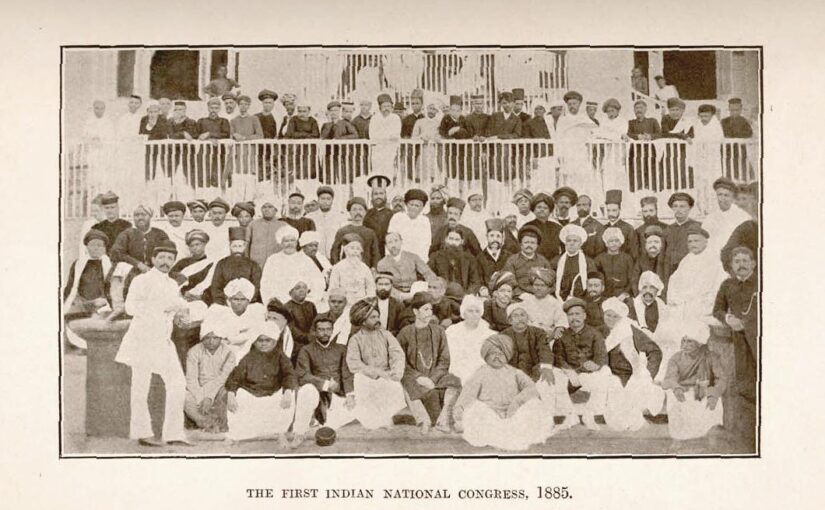
As such, I am generally in agreement with X.T.M’s argument that what happened was largely because of the will of the political elite. What I do take issue with is the rather ludicrous oversimplification of the so-called ‘Hindu’ side as the “Brahminical–Congress elite”, not only because it is patently untrue in terms of the actual people who led the Congress. Let’s take a look at some of the founding and early members. There are:

Bengali Brahmins

  • S. Banerjee (Rarhi Kulin)
  • W.C. Bonnerjee (Rarhi Kulin)

Bengali Kayasthas

  • A.M. Bose
  • B.C. Pal
  • R.C. Dutt
  • Sri Aurobindo

Western Indian Brahmins

  • B.G. Tilak (Chitpavan)
  • G.K. Gokhale (Chitpavan)
  • K.T. Telang (Gaud Saraswat)
  • M.G. Ranade (Chitpavan)

Muslims

  • B. Tyabji (Sulaimani Bohra, of Arab descent),

Parsis:

  • D. Naoroji
  • D.E. Wacha
  • P. Mehta

Southern Indian Brahmins

  • C. Vijayaraghavachariar (Iyengar)
  • G.D.S Iyer
  • P. Anandacharlu (Telugu, adopted by a Tamil Brahmin in Madras)
  • S.S. Iyer

Others

  • L.L. Rai (Agrawal Jain, Punjab)
  • S.R. Mudaliar (Sengunthar, Chola vassals & merchant guilders, Tamil)
  • V.O.C. Pillai (Vellalar, powerful tribe in society & politics, Tamil)

By focusing on the ‘Brahminical’ nature of the Indian National Congress, X.T.M papers over the very real internal differences between these Brahmins — for example, the fact that Gaud Saraswat Brahmins have historically had their status contested by their neighbors to the north in Marathi lands and to the south in Malayali ones, or the sectarian distinctions between Iyers and Iyengars. This sort of ‘unionism’ is as pernicious when applied by outsiders as it is by insiders to the Hindu fold because it flattens out the differences given to us by the Gods and our Fathers. Worse, such oneness only makes us easier to be understood, governed, and thus, captured.

Elites often do whatever they can to stay in power, even if comes at the cost of honour, legacy, or tradition, a phenomenon we can see at work in the way that the Godrej India Culture Lab, which has, among other things, become “one of the most LGBTQIA+ inclusive companies”, helping to produce A Manifesto for Trans Inclusion at Workplace, and hosted a ‘transgender’ dance performance in 2015 which just so “happens to fall within Transgender Awareness Week in the US”.

In the words of Mencius Moldbug (2007),“A nation is genuinely independent of America if its domestic politics are not correlated at all with American domestic politics.”

The Godrej Group was founded by a Bombay Parsi, Ardeshir Godrej, who was influenced by Naoroji’s ‘drain theory’, or the idea that British rule was but a system of economic exploitation enriching England at the cost of India. In response, he built a major industrial powerhouse at the dawn of India’s ‘independence’. It’s quite sad, then, when we see what has become of the name he built.

What’s more, Godrej is just one example of a Parsi success story in post-British India. Indeed, one could just as easily paint a picture of the foundation of the Indian National Congress as a scheme engineered by wealthy and powerful Bombayites, Parsis, and Bengalis with the aid of southern Indians to maintain their supremacy — were one inclined to such speculation. Oddly enough, it is these same regions (the old Bombay and Madras Presidencies) and communities that seem to have maintained much of an economic advantage down to the present day. The Tata Group, for example, was founded in 1868 by Jamsetji Tata, a Gujurati Parsi born into a Zoroastrian ‘Brahmin’ family who took up business instead. We regularly see Tamil and Malayali sophists online crowing about how great and advanced their states are, especially compared to those in the North, and Bengali chauvinists sneer at their ‘BIMARU’ neighbours. Maybe they all have good reason to. I can’t say for sure. But what I can say is that from a certain point of view, it looks like northern Indians have consistently been on the lower rungs of the Indian social ladder since even before Partition.

Instead of intangible and shaky concepts like ‘caste identity’ perhaps we can find observable material factors that underscore possible similarities between the founding members of the INC. What, if anything, united the 72 (and isn’t that a curious number?) founding members of the Congress? Perhaps it was the fact that most of them were lawyers, and of the remaining, several were journalists. Pretty much all of them were British-educated and conversant in English, as well as many being polyglots and highly skilled in other areas of life, suggesting high intelligence and capability. Of course, these factors were not merely coincidental, but a feature of the founding. Naturally, when forming any institution, you would want the best and the brightest — and probably the wealthiest too. These would all have been factors that drew them to Allan Octavian Hume, a key member in the foundation of the INC and of whom I think we all should learn more. He seems to be a singularly fascinating figure from that period, both for his seemingly genuine pro-Indian feelings and occultist leanings. Perhaps I will write more about him later.

In any case, laying the blame at the feet of the “Brahminical–Congress elite” as though they, for whatever faults they did have, are equally as responsible for what followed in 1947 as their Pakistani counterparts is simply slander.

Meltdown BhāáčŁya: Verse 1.1.1 (Part 1.3)

The philosophy of Land and the idea of God: The Cathedral of physicalism, A protestant materialism

Originally Published: February 03, 2025

Part 1.2

The philosophy of Land and the idea of God

The nirīƛvaravādi ādi-accelerationists no doubt consider our usage of the word ‘God’ and countless references to ancient myths and texts a serious breach of the philosophy and a perversion of its ideas. Though we are not interested in soothing their fears, the objections they will raise must nevertheless be wrestled with, as Landian Accelerationism portrays itself a purely materialist philosophical system, which, although not often talked about at present, is properly referred to as ‘libidinal materialism’. Thus, we must descend into the ‘sublime basement’ of Land’s philosophy before we may return once more to the heady poetics of Meltdown. His system of thought is most comprehensively laid out in the opus The Thirst for Annihilation (Land, 1992b), which makes it clear that his philosophy follows in the wake of the Nietzschean ‘death of God’, something he explicitly states when he assembles a theoretical machine linking Kant, Schopenhauer, Nietzsche, Freud, and, most importantly, Bataille to himself. As Mackay and Brassier put it in the ‘Editors’ Introduction’ of Fanged Noumena (Land, 2012): “Land allied himself to a line of renegade thinkers – Schopenhauer, Nietzsche, Bataille – who mocked and disparaged academicism and wielded philosophy as an implement for exacerbating enigma, disrupting orthodoxy, and transforming existence” (p. 2-3). Continue reading Meltdown BhāáčŁya: Verse 1.1.1 (Part 1.3)

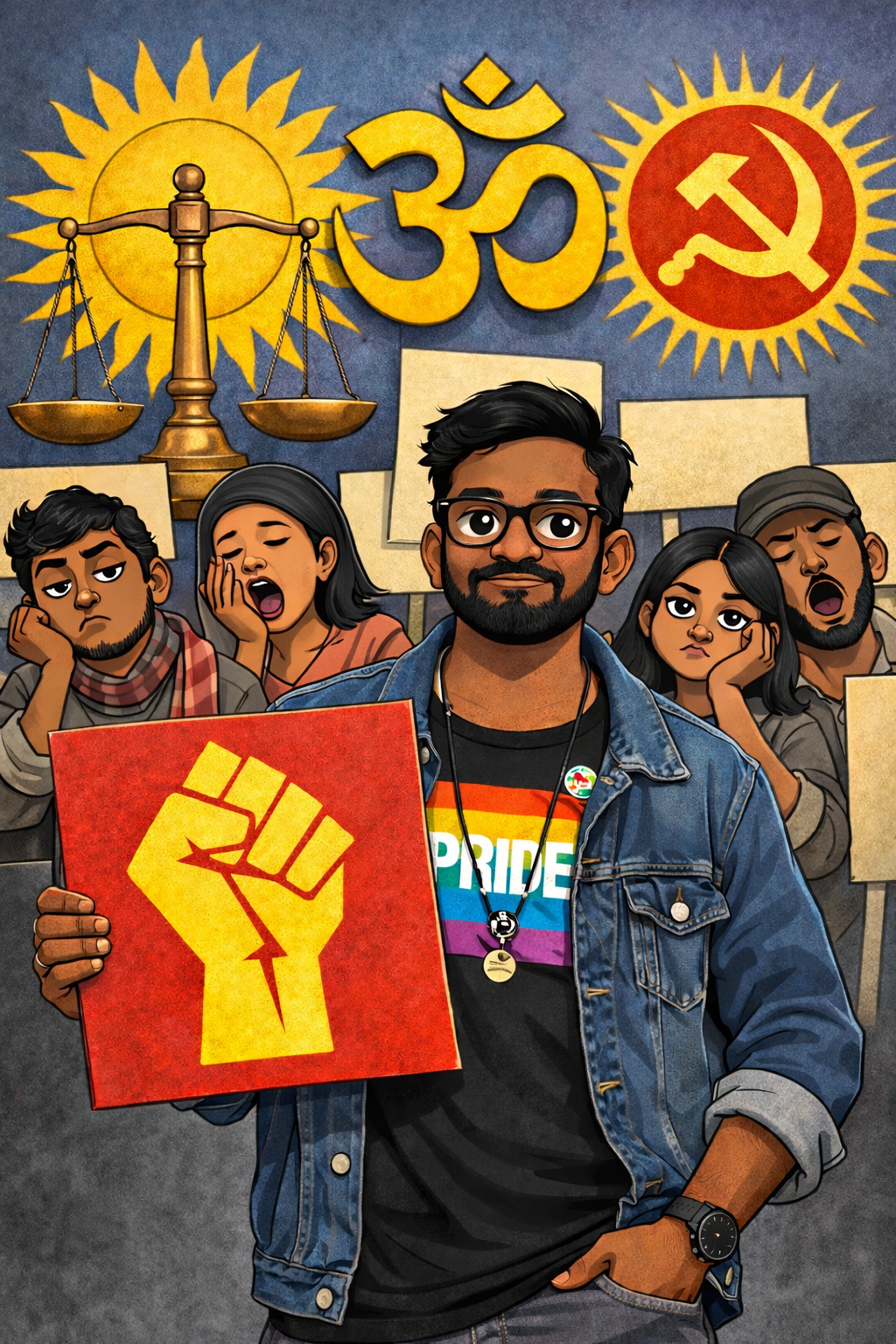
Hinduttva (b)

The fourth article in this series will focus on why so many in global academia, global establishment, global media, global entertainment, global culture and the global public are so scared of and opposed to eastern philosophy, Swami Vivekananda and Ramakrishna while simultaneously appropriating much of eastern philosophy encoded in new language without attribution.

Part of the attack against eastern philosphy and Hinduttva derives from a hatred of the West and the fact that Western philosophy draws heavily from the east in four periods. Ancient Arya history or more than 3,000 years ago. During exchange from Alexander the Great through the Roman period. During European Enlightenment Classical liberalism [in many ways a derivative of Arya Hindu Chaarvaaka Darshana], and what is now called Post Modernism [which derives from Karl Marx’s study of India]. Much of it derives from many other causes which I am trying to understand.

Note that a stand alone post is planned to discuss the above presentations by Professor Jeffery D. Long, Professor Makarand Paranjape, Professor Anantanand Rambachan, andPprofessor Sharada Sugirtharaja. Brown Cast plans to interview Professor Jeffrey D Long with respect to Sanathana Dharma and Indology. If you have any questions for him, please leave it in the comments.

The below discussion between the San Francisco academic Vamsee Juluri and Hinduism’s great atheist Kushal Mehra discusses the Hinduphobia in global academia:

[Add summary of above video]

In the above video discussion Anjali George discusses why the Indian supreme court has forced the shut down of the ancient Sabarimala temple. Sabaramila is a brain therapy facility where woman and girls send their dysfunctional boys and men to–in order to fix them. To join the program and visit Sabaramila temple boys and men had to practice a very rigorous difficult 40 day regiment. Because most males are stupid fools, their woman and girls would:

  • gently persuade them to join [who are we kidding, in some cases girls aren’t that gentle and intimidate their men and boys into joining]
  • help them complete the regiment [in eastern philosophy and Toaism intelligence (medha) is female and males aren’t that bright, which is why they needed the help of their girls and woman]
  • keep a much more luxurious temple for themselves, a woman’s Sabrimala if you will.

Eastern philosophy is a matriarchal system of the divine feminine. Woman and girls run things. Woman and girls set up a brahmacharya Ayyapa tantra (technology) facility to help improve males. Pre pubescent girls and post menopause females can conduct the 40 day regiment and visit the brain therapy facility too.

However the supreme court of India appears to have mandated that females of child bearing age, pre-pubescent girls and post menopause woman and males need to be able to visit any part of the temple they wish at will, without completing a difficult 40 day sadhana. Naturally India’s females are furious at the Indian supreme court. Many of India’s woman see this as a me too attempt to harass Ayyapa, a celibate young male. Many of India’s females also see this as an attempt to let males be lazy and not complete their 40 day Sadhana. India’s woman are also furious that the global press, global entertainment and global academia are using this incident to demonize eastern philosophy. Which is rich, considering that the east has been feminist for thousands of years before Christ. Indian females who oppose the global “woke” narrative are being demonized as proto Nazis or proto fascists or proto male misogynist supporters of the patriarchy. One eastern female being so demonized is Anjali George. Anjali George defends eastern woman from the post modernist and caucasian intelligentsia (baizuo) critique.


Here is another perspective on Hindutva:

This appears to attribute Hindutva to a backlash against “secularism” where secularism appears to be defined as cultural marxist post modernist woke SJW.


Continue reading Hinduttva (b)

Pakistan’s Inner Logic

On Nivedita & Archer’s joint request (Mamnoon/Tashakor/Merci for the kind words); I’m going to expand on my comment:

“Kabir is definitely right. Ethnicity in Pakistan is complex; there are three tiers of society. The English speaking elite (Imran is part of that so is Kabir), who are “Pakistanis” and ethnicity isn’t really reflected on…”

This comment, which the BP archives have tons of similar posts on (BP was venerable even in 2014), sketches the bones of Pakistan’s sociological map. But what lies beneath the skin?

Pakistan is feudal; India is not.

That one statement alone explains much. Landholding elites dominate politics, rural economies still function on patronage, and class mobility is rare. Caste, though “denied,” is real and sharper, in some ways, than it could ever be in India (the reservation system does not really exist in Pakistan except for religious minorities but not for socio-economic castes). Pakistanis can sniff out class in one another with a dexterity that’s probably only matched in the United Kingdom, which is the home of class stratification (I remember reading Dorian Gray in Karachi in the early millennium and shocked how similar late Victorian early Edwardian England was).

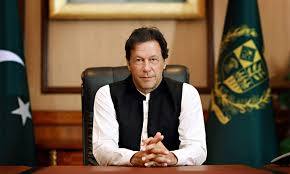
The postcolonial state froze itself in amber. There has never been a serious leftist rupture, excepting 1971’s successful Bengali revolution. Even Imran Khan, who styled himself a reformist, is a product of elite schools, Aitchison College, Oxford, and aristocratic lineage. His “Islamic socialism” was only ever viable because Pakistanis still believe in myths of the benevolent landlord.

And yet, Pakistanis sometimes seem happier than their Indian counterparts, even if not remotely successful. Why? Continue reading Pakistan’s Inner Logic

Roman Palestine and the Crusades

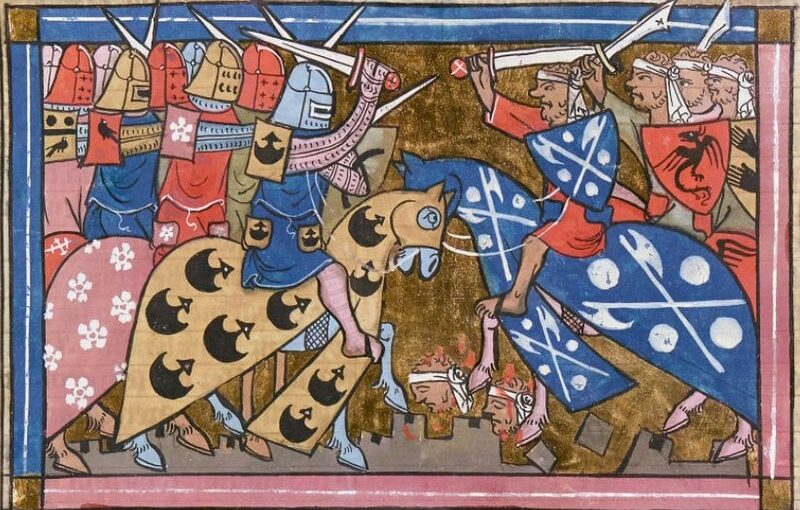
I am quite familiar with History of England and Europe since even before my teens. That was because my father had beautifully illustrated school History text books from England. Plus many historical novels eg Walter Scotts The Talisman which is set in Palestine during the Crusades. I read them all many times over as nothing better to do as no TV then in SL till 1977.

Let us start with the historical Jewish Diaspora. Historical as verified from sources other than the Bible. The Romans controlled the middle east around 1 BC. (Think Julius Caesar and Cleopatra an Egyptian Queen of Greek Origin)

To quote
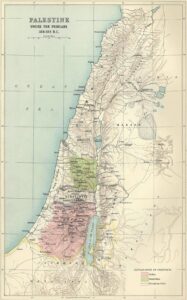
Asia Minor after the Macedonian Wars (214–148 B.C.). In 63 B.C. The defeat of the Carthaginians gave Rome almost complete control of the Mediterranean. Romans conquered most of Asia Minor in 188 B.C., Syria and Palestine in 64 and 63 B.C.

In 70 C.E. (a few years after the purported passing of Jesus Christ the Romans Destroyed the Judaism Temple in Jerusalem. Apparently this ended the ability to make animal sacrifices to God (Yahweh). Plus the Roman persecution of the Jews and Judaism led to their disperal from Palestine, i.e. the Diaspora

Note: There is no evidence of a Kingdom or Country called Israel in any of the Historical or Pre-historical records of the Babylonians and Assyrians. There was region called Palestine (PalaistinĂȘ, ΠαλαÎčÏƒÏ„áż‘ÌÎœÎ·) since at least since the Greek times. The word Israel became considered “Fact” when Europe became Christian and the Bible an accepted source of fact given by the Divine. The Jews became notable and rich because they were money lenders. Christians (and Muslims) are forbidden to lend money on interest (usury). Think Merchant of Venice and Shylock the Jew

Continue reading Roman Palestine and the Crusades

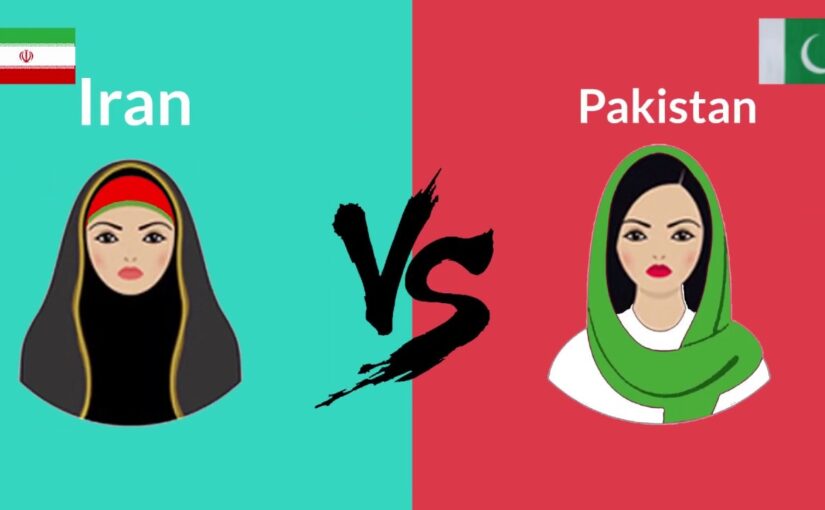
Why Pakistan Won’t Go the Way of Iran

I’ve been enjoying the new direction Brown Pundits has taken since the recent shake-up. Posts are now generating 100+ comments, and that kind of engagement creates a virtuous cycle. You want to write more, think more, respond more. I’m leaning into that.

For now, a lot of the content burden rests on me and that’s okay. It’s been encouraging to see older names return: Girmit, for instance. It feels like a slow reconsolidation of the original readership. Letting people return on their own terms.

Meanwhile, BRAHM, my newsletter, has taken on a different role; a home for more composed writing, life pieces, and the slow launchpad for my business. I just posted something there recently, which I’ll link to for now and follow up on soon. But here, on BP, is where I let myself think in public. Where I go long. Where thoughts breathe.

Continue reading Why Pakistan Won’t Go the Way of Iran

Brown Pundits: Broad Church or Narrow Canon?

Brown Pundits Must Stay a Broad Church

Reading Kabir’s thoughtful post on the “soft Hindutva” bias at Brown Pundits, I found myself both agreeing with parts of his argument and diverging from its framing. My own journey with BP goes back to its inception. The blog was born in Twixmas December 2010; 10 days after I had met Dr. Lalchand, whose presence has profoundly shaped my civilizational views.

I say this not as a biographical aside but because BP, at its best, is where the personal and civilizational collide. We bring who we are; our marriages, our migrations, our contradictions, into this messy, brilliant conversation.

At the time, like many Pakistanis, I held a deep-seated assumption: that Hindus were fundamentally “other.” It wasn’t overt hatred; just a civilizational distance, internalized from birth. But Dr. V & Brown Pundits challenged that.

A Forum With Bias? Yes. But Which One?

The heart of BP is not neutrality; it’s the willingness to host contradiction. That is its genius, and it must be protected.

Continue reading Brown Pundits: Broad Church or Narrow Canon?

Pakistaniat & Urdu from Qasim to Quaid

UP’s very long shadow:

As I board my flight back to the UK after a brief but productive trip, I find myself reflecting on a language that continues to haunt and inspire me: Urdu.

It is a tongue caught between paradoxes. The language of courtesans and qawwals, of sacred supplication and sly seduction. It carries within it the scent of jasmine and blood, of Delhi’s dusk and Lahore’s lingering grief.

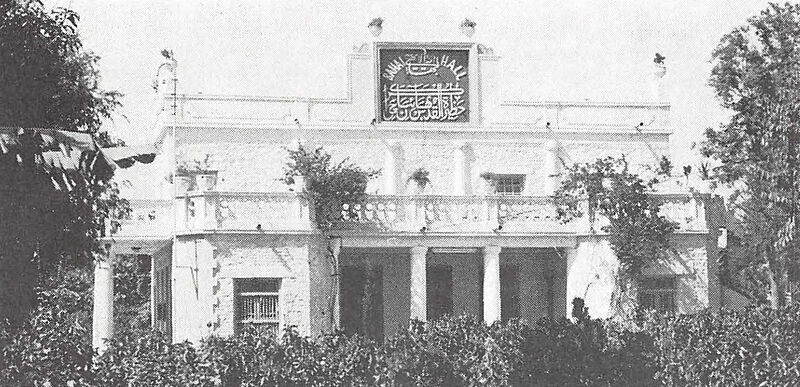
The Beloved Guardian of the Baha’i Faith once noted that while most Baha’i texts should be translated from English, Urdu alone is trusted for direct translation from Persian and Arabic. That proximity, that spiritual siblinghood with Persian, the language of kings, and Arabic, the language of God, renders Urdu magical.

Sanskrit, of course, is the language of gods, but Urdu, its stepdaughter of sorts, captures the longing of poet to partisan.

There’s a reason the Bahá’í prayer I share below is so piercing in Urdu. So here, before I cross back into another timezone, I offer this prayer—without commentary, without translation. Just Urdu, as it was meant to be heard.

And I wonder: perhaps this is what Pakistan truly is—a project in transcending the local. Not rooted in soil, but in sentiment. A place where Punjabis, Pathans, and Muhajirs are asked to shed skin and commune in Urdu. Where Pakistaniyat, for all its fractures, has succeeded in producing a common idiom: of piety, pride, and pain. Continue reading Pakistaniat & Urdu from Qasim to Quaid

The Myth of the “Average Pakistani”

Dave’s comment:

“I have in fact met some. In person. Ran into a lovely couple while on vacay in Guatemala. Excellent conversation along a 2 hour shared shuttle ride. Shia muslims from Baltistan – he took great pains to indicate that his community is not like the average Pakistani, and that in his biradari they are proud to educate their daughters and wives, have them take the lead in public lives. Both his daughters were young med students.

The tragedy for Pakistan is that such actual liberals with modern outlooks wisely avoid taking public positions. They don’t want to get lynched. Hence the domination by the nutters and fringe on the right continues. Leading to mis-categorization of the right-wing as “the center”.”

The above praises a “liberal” Shia couple from Baltistan for educating their daughters and living modern lives, contrasting them with “the average Pakistani,” portrayed as a backward, anti-education fanatic. This framing is not just lazy; it’s offensive.

It reflects a deeply colonial hangover: the idea that modernity is rare in Pakistan, that deviation from presumed fanaticism is a revelation. But let’s be clear, Pakistanis, like people anywhere else, are ambitious, aspirational, and complex. Medical colleges are oversubscribed. Education is highly prized. And many people, devout or not, are navigating life with dignity, values, and a deep desire to move forward; not just materially, but spiritually and ethically.

Politics of Projection

Just because a population is not obsessed with hyper-capitalism doesn’t mean it is “backward.” It may simply mean it has not surrendered entirely to the logic that everything must be monetized. That’s not regression; it might be restraint. In a world where the only metric that seems to matter is money, resisting that tide is itself a kind of wisdom.

This kind of patronizing liberalism, one that exoticizes progressive Muslims as rare exceptions, isn’t harmless. It feeds into a narrative that justifies erasure: of language, culture, self-rule, and civilizational continuity. South Asians speaking in English, debating one another with colonial grammars, is not a mark of modernity, it is a symptom of displacement. The Global South doesn’t need to be saved. We need to be seen, on our own terms.

What Was the Point of Israel’s Iran Strike?

The Limits of Provocation

At some point, the world will have to ask: what exactly was Israel hoping to achieve?

In the days following the dramatic escalation between Tel Aviv and Tehran, we are left not with clarity but with a deepening sense of confusion. If the intention was to disrupt Iran’s nuclear program, there is little to show for it—centrifuges still spin, scientists remain in place, and the infrastructure of Iran’s deterrent capability stands unshaken. If the aim was to trigger chaos within the Iranian regime, then that too has failed—Tehran did not descend into disarray; it retaliated, measured and intact. And if the goal was symbolic, to remind the world of Israel’s reach and resolve, then the moment has already passed, clouded by questions of proportionality, legality, and consequence.

For all the fire and fury, the strike landed with the strategic weight of a gesture. Continue reading What Was the Point of Israel’s Iran Strike?

Brown Pundits