Why Balochistan Is Not Kashmir

Also, wanted to add – Its arguably quite morally lazy to simply sweep the multi-generational struggle of the Baloch for self-determination – if not outright secession, that has repeatedly and consistently raised its voice in speech and in blood over the last 7-8 decades.

Nobody on BP outright denies or pretends that there disaffected secessionist tendencies do not exist in the Sunni Valley. Why then, are we going to pretend that the ‘troubles’ in Balochistan are somehow
 inconsequential?

This growing tendency to treat every internal conflict in South Asia as if it were interchangeable with Kashmir (the “Sunni Valley“). This is a mistake, and in the case of Balochistan, a very serious one.

The distinction was once put very clearly to me by Benazir Bhutto herself. In the 1990s, while seeking international advocacy on Kashmir, she was asked by Saddam Hussein a blunt question: If we support Kashmir, why should the world not support Kurdistan? Her reply was immediate and precise. Kashmir, she said, is an international dispute. Kurdistan is not.

That distinction matters, and it still holds.

Kashmir is internationalized by design. It is anchored in UN resolutions, formal bilateral agreements, wars between recognized states, and sustained global diplomatic engagement. It belongs to the same narrow category as Palestine or Cyprus; flashpoints where sovereignty itself is contested between states and therefore cannot be reduced to a domestic matter. Continue reading Why Balochistan Is Not Kashmir

Pakistan Is Not About to Break Apart

There is a persistent habit, especially among our soi-disant commentators, of predicting Pakistan’s imminent disintegration. The arguments are familiar: Baloch insurgency, Pashtun irredentism, low Kashmiri fertility, economic weakness, and analogies to 1971. They are also, taken together, wrong.

To begin with, most people discussing Pakistan do not understand its internal sociology. They begin with a conclusion, “Pakistan is artificial and unstable”, and then select facts to confirm it. This is confirmation bias dressed up as analysis.

Consider the Pashtuns. The claim that they are natural irredentists misunderstands who they are and how they live. Pashtuns in Pakistan are not a marginal population looking across the border for salvation. They are deeply integrated into the Pakistani state, economy, and military. They dominate transport, logistics, security, and large parts of urban informal commerce. Large numbers have moved permanently into Karachi, Lahore, and Islamabad. Assimilation is not failing; it is proceeding at scale. Continue reading Pakistan Is Not About to Break Apart

Nehru Was a Global Statesman and the Current Prime Minister Has a Deep Complex About That

“There is an attempt to erase Nehru from history,” said Aditya Mukherjee, a former professor of contemporary history at JNU and author of a book on Nehru. “The idea is to minimise his presence. There are text books in Rajasthan on the contemporary period that do not mention him,” he said in a podcast conversation with Sidharth Bhatia. Mukherjee said that Nehru was the antithesis of all that the Sangh Parivar stands for and he created the structure to understand communalism. In the conversation, Mukherjee lays out the many reasons why Nehru’s view of what India should be is totally against what the communalists believe in. He also points out the ways in which Mahatma Gandhi is sought to be undermined, by reducing him to be “just a pair of spectacles and a jhadu.” “The real target is Gandhiji. “He is the real enemy, he even took religion away from them.”

A Republic Cannot Deport, Humiliate or “Outbreed” Its Own People

“We are not from Bangladesh. We are Indian. Why did they do this to us?”

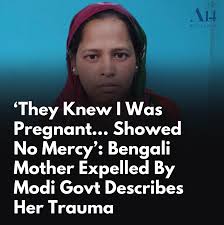
That question should shame the Indian state. On the facts as currently established, Sunali Khatun, a pregnant Indian woman, her husband, and their child were detained in Delhi, deported across an international border without due process, imprisoned in a foreign country, separated, and left to survive on charity and court orders. Their crime was not illegal entry. It was speaking Bengali, being Muslim, and being poor. This was not a mistake or overreach. It was state violence carried out through paperwork and silence.

India has procedures for suspected illegal migrants

They exist to prevent this outcome. They were ignored. There was no verification with the home state, no due process, no public record, and no accountability. A family was pushed across a border, reportedly beaten when they tried to return, and abandoned. That is not law enforcement. It is expulsion by force. When a state confuses language with nationality and religion with foreignness, it stops governing and starts hunting.

Citizenship is not a favour

It is a legal fact. India is not meant to be a blood, language, or religious state. Citizenship is defined by law, not accent or poverty. When the weakest are forced to prove citizenship under duress while the powerful are never asked, law collapses into power. This is how republics rot: not through coups, but through habits.

This is not an isolated lapse of manners towards the Muslim minority

It is the same logic in a smaller, more public form. When a Chief Minister can pull down a Muslim woman’s veil at a government appointment ceremony, and senior ministers can defend it as “show your face” patriotism, the message is clear: Muslim dignity is conditional, and visibility is enforced, not consented to. The argument is always the same. It is dressed up as procedure, security, or “rule of law,” but it operates as dominance.

Muslim Identity is seen as a National Threat

Today it is a veil tugged down in a room of officials. Yesterday it was a Bengali-speaking family pushed across a border. In both cases, the state treats Muslim identity as an offence to be corrected in public, and citizenship as something that can be suspended by suspicion. This is how discrimination becomes policy: first through humiliation, then through paperwork, then through expulsion.

Bengal, like Kashmir, is not a border zone to be cleansed Continue reading A Republic Cannot Deport, Humiliate or “Outbreed” Its Own People

Pakistan and the Act of Union

A Cold Comparison, Not a Romantic One

There is only one historical analogy worth using when discussing Pakistan “rejoining” India: the Act of Union of 1707 between Scotland and England. Not Rome and Greece. Not Yugoslavia. Not German reunification. And certainly not civilizational nostalgia. The reason is simple. The 1707 Union was not about love, memory, or reconciliation. It was about bankruptcy, security, elite survival, and managed loss of sovereignty without humiliation. That is the only way such a union could ever happen.

Union Is an Elite Exit, Not a Popular Dream

Scotland did not join England because it felt British. It joined because it was broke. The Darien Scheme collapsed. The Scottish state was insolvent. The elite faced personal ruin. England controlled capital, markets, and trade. The Act of Union absorbed Scottish debt, protected elite property, preserved law and church, dissolved sovereignty while preserving status. The public opposed it. It passed anyway. Unions are not plebiscites. They are elite exits under pressure.

Pakistan’s Position Is Structurally Similar

Pakistan today is not Scotland in 1707. But the resemblance is close enough to matter. Pakistan is chronically indebted, permanently IMF-dependent, over-militarised by design, economically capped by scale and FX limits. It is run by elites whose lives are already offshore, Like Scotland, the state is failing faster than rents can be extracted, sovereignty has become expensive, security dominates fiscal policy and there is no credible independent growth path. This is not ideology. It is arithmetic.

Why India Is England in This Analogy Continue reading Pakistan and the Act of Union

Brown Venezuela to be Invaded

Excerpts from an Article on NakedCapitalism

Donald, you just wrote the most honest colonial confession of the 21st century. When you say Venezuela must “return” its oil, land, and assets to the United States, you are not talking about law. You are talking about ownership. You are saying, out loud, what empire has always believed in private: What lies under Venezuelan soil belongs to Washington.

The money quote: “you know the old days, when you had a war, it was ‘to the victor the spoils.’”

Venezuela has the largest proven reserves of heavy crude in the world, with an estimated 303 billion barrels, as well as the largest reserves of light crude oil in the Western Hemisphere. But it’s not just that Venezuela is home to the largest oil reserves on the planet, it’s that those reserves are sitting “right next door” to the US, as Trump himself said in 2023:

President Trump’s obsession with seizing other countries’ oil goes back a ways, to even before he entered politics. Here he is explaining in 2011 why the US should seize half or more of Libya’s oil after murdering its leader, Muammar Muhammad Abu Minyar al-Gaddafi, and plunging what was arguably the richest country in Africa (on a per-capita basis) into total chaos.

There are, of course, a plethora of other reasons for the US’ aggressive moves against Venezuela that we’ve discussed before, including the country’s large deposits of gold, rare earth minerals and freshwater; the opportunity to open up a mid-sized country’s market to rampant privatisation and liberalisation.

It is, after all, the US, mainly during Trump’s two presidencies, that has been stealing all kinds of Venezuelan assets, from the country’s gold reserves to the oil tanker seized in the Caribbean last week, to the president’s official plane, to Venezuelan oil company Citgo.

Exxon has a long, rich history in Venezuela dating back over a century. Its predecessor, Standard Oil, was one of the first companies to explore for oil in the South American country in the 1910s

But that all came to a halt in 2005, when Hugo Chávez ordered all existing “operating agreements” with foreign oil companies to be converted into joint ventures in which the state oil company, Petróleos de Venezuela (PDVSA), held a mandatory majority stake (over 50% ownership and operational control). Exxon refused to sign while most other companies, including BP, Total and Chevron, took the deal.

That high-intensity conflict is now closer than ever. But it needs to be packaged and sold to US lawmakers, media, members of the armed forces, and Trump’s war-weary MAGA base. And that is where CSIS’ “experts” come in. And they appear to be marketing this war on behalf of a company (Exxon) that has much to gain from a military intervention, and which bears the biggest grudge against Venezuela’s Bolivarian movement.

https://www.nakedcapitalism.com/2025/12/shining-a-light-on-how-exxon-mobil-bankrolls-think-tank-experts-pushing-for-regime-change-war-in-venezuela.html

India Is No Longer Legible to Pakistani Liberals

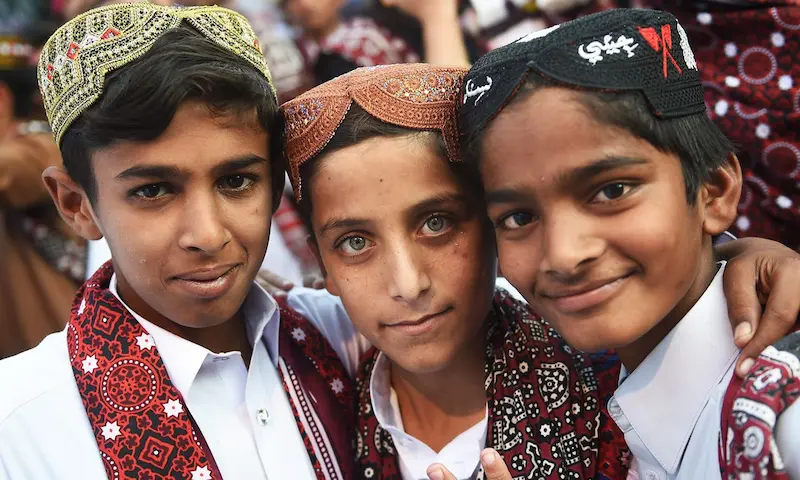
There is a persistent habit among Pakistani liberals, especially those from elite backgrounds or with deep emotional ties to pre-1947 North India, of speaking about India as if it were still legible to them. It is not. India has moved on. So has Pakistan. But only one side seems unable to accept that.

The Mirage of Patrimony

Many Pakistanis of Muhajir or North Indian lineage carry an inherited sense of ownership over India. They speak as if India is a shared cultural estate, temporarily misplaced. This is a fantasy. The India of 2025 is not the India of 1947. It is not even the India of 1991. It has changed demographically, economically, politically, and, most importantly, civilizationally. Pakistanis who have not travelled to India in decades, who rely on English-language media and nostalgic family memory, do not “understand” India. They are projecting onto it. Projection is not insight. It is displacement.

Code-Switching as Evasion Continue reading India Is No Longer Legible to Pakistani Liberals

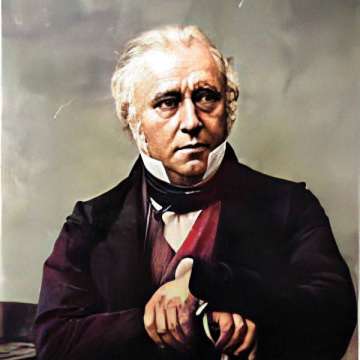
Macaulay, English, and the Myth of Colonial Liberation

Rebuttal to When RSS-Modi Attack Macaulay and English, They Attack Upward Mobility of Dalits, Shudras, Adivasis

Follow-Up to Macaulay, Macaulayputras, and their discontents

A new orthodoxy has taken hold. It claims that criticising Macaulay or colonial education is an attack on Dalit, Shudra, and Adivasi mobility. English, we are told, was not a colonial instrument but a liberatory gift. Macaulay is recast as an unintended ally of social justice. This view is wrong. More than that, it is historically careless and civilisationally corrosive.

The Core Error

The mistake is simple: confusing survival within a system with vindication of that system. No serious person denies that English became a tool of mobility in modern India. No serious person denies Ambedkar’s mastery of English or its role in courts and constitutional politics. But to leap from this fact to the claim that Macaulay was therefore justified is a category error. People adapt to power structures to survive them. That does not sanctify those structures. To argue otherwise is like saying famine roads liberated peasants because some learned masonry while starving. Adaptation is not endorsement.

Macaulay Was Explicit

There is no need to guess Macaulay’s intentions. He stated them plainly. He dismissed Indian knowledge as inferior. He wanted to create a small class: Continue reading Macaulay, English, and the Myth of Colonial Liberation

Doha Debates: Is the nation-state still a meaningful foundation of who we are?

In the context of the discussions on BP about the nation-states  of India and Pakistan, this is a very important debate.

For more than a century, the nation-state has shaped how we organise the world, offering unity for some and division for others. In this Doha Debates Town Hall, filmed live in partnership with the Bradford Literature Festival, we ask: Where does national belonging come from? Is it defined by culture and citizenship? Or does it go beyond the nation-state? Moderated by Malika Bilal, this live debate brings together guests Shashi Tharoor, Wael Hallaq and David Engels, along with university students from Qatar Foundation’s Education City and beyond, to discuss the future of the nation-state on the same stage, in front of a live audience.


Open Thread (Birthday)

Imran Khan’s sons speak out: “Our father’s prison conditions aren’t bad, they’re awful.” Whatever one thinks of Pakistani politics, the treatment of a former prime minister is a measure of a state’s institutional health.

“Pakistanis and Indians are like distant cousins.”

Is the Paknationalism or Indophilia; the strange twist of Pakistan is that both can be true at the same time.

It was my birthday two days ago on the 15th. The official celebration will be later this month in Sri Lanka, but the last few weeks have been unusually hectic with travel and work. Continue reading Open Thread (Birthday)

Brown Pundits