Why Brown Pundits Needs a Spine, Not a Consensus

As Brown Pundits returns to a steadier rhythm, I want to clarify a few things that have come up during the recent arguments, walkouts, and personal attacks. The charge that the blog “leans” one way or another has become common: some say it is too Saffron, others say it is anti-Indian. This is predictable. It is also wrong.

My decisions as Admin have never been based on political alignment. They come from something deeper:

the civilizational context of the speaker.

There is a difference between criticism that comes from within a tradition, and criticism that comes from outside it. A Dharmic voice attacking India or Hindu society is part of an internal quarrel; a family fight inside a civilizational frame. I treat that as internal dissent, even when I disagree with most of it.

A critique that comes from an Abrahamic frame reads very differently. I know that worldview well. I know its instincts, its myths of moral supremacy, its rhetorical tricks, and its hostility to plural traditions. So I scrutinize it more closely.

That is not bias. That is context.

This also explains why some people were frustrated about moderation choices. But the real problem was simpler: for several months, the editors were not doing their job. Delegation failed. Moderation failed. Oversight failed. This strained the entire comment ecosystem and created the conditions for an outrage cycle.

The recent Sri Lanka post is a perfect example of what the blog should highlight. It captured the psychological cost of a civil war that most South Asians ignore. It cut through nationalist posturing and forced readers to confront a real tragedy. That is the purpose of this space. BP is not only a place for endless India–Pakistan sparring. Those fights bring traffic, but they do not deepen understanding.

The blow-up around caste revealed the same problem. The people who claim caste “does not matter” often reveal how central it is to their worldview. When the conversation touched anything sensitive, the same voices who lecture others on “free speech” vanished into a hartal. The moment you discuss caste honestly, you become their enemy.

That was the real trigger; not any one commenter.

The worst part of this episode was the personal abuse I received. One email in particular was dehumanizing in a way that should be unacceptable anywhere, let alone here. The fact that it came from someone inducted onto the blog without proper vetting only made it worse. I was disappointed that this happened at all, and I have made it clear that it will not happen again. Going forward, I alone will approve new authors, aside from Razib, who I see as an ultimate authority. No exceptions.

This is not about ego, control, or insecurity. I am at peace with who I am, what I have built, and where I stand.

This is about responsibility. The person who carries the daily load of the site must also have control over who participates in shaping it. Authority without accountability is chaos; accountability without authority is impossible.

Brown Pundits works only when people argue honestly, write fearlessly, and disagree without turning each other into caricatures. We will get things wrong. We will over-moderate or under-moderate. But the only thing worse than imperfection is paralysis.

Silence is death for a blog. Engagement, messy, uneven, contentious, is life.

BP is alive again. Let’s keep it that way.

The Weight of Memory: A Sri Lankan Reminder

By Sbarrkum

Every country carries its wounds, but some of us carry them in our bodies. I rarely speak about Sri Lanka’s civil war on this blog, because most of us have learned, painfully, to move on. But sometimes a comment or a casual reference to the LTTE pulls open a door that many of us have spent decades trying to close gently.

For me, this is not rhetoric. It is family history.

Two of my cousins were killed in the late 1980s; one by the LTTE, the other by the Army. Two more relatives were tortured. During the worst years, mobs came to burn down our home because they suspected we were Tamil. My mother stood outside, spoke to them calmly in Sinhalese, and convinced them to leave. That is how close violence came to us; literally to our doorstep.

I myself was arrested twice on suspicion of being an LTTE operative. I spent two days in police remand and was beaten with a belt. Friends who happened to witness the arrest intervened and contacted someone who could get me out. Had I remained until Monday, I would have been taken before a judge and sent to the notorious Boosa Prison. Many never returned from there.

I also lost people I cared about deeply. My late partner’s parents were among the sixty villagers killed in a single LTTE attack. In the area where I live, nearly every family lost someone; a brother, a father, a cousin, a neighbour.

Most Sri Lankans have made their peace with the past. We have had to. The country could not function otherwise. But when the conflict is invoked lightly or abstractly, without awareness of the cost paid by ordinary people, it reminds me how easily those of us outside the centre of global conversation are forgotten.

This is not a demand for silence. It is simply a reminder:

For many of us, this history is not theoretical. It is personal, lived, and unbearably real.

Clearing the Augean Stables

I removed a few disruptive authors from the BP roster recently, primarily because some interactions had crossed into personal abuse. That’s not something I’m willing to absorb or normalise.

What continues to surprise me is how quickly discussions become ideological flashpoints, even when my own approach has consistently been one of congeniality and openness.

That said, the overall atmosphere on the blog already feels lighter and more functional with fewer volatile personalities in the mix. It’s a reminder that BP only works when the space is manageable and not dominated by ego or hostility.

Also to the current Commentariat; stick to the facts, not inflammation please. So reflect on whether your comment is adding more light or heat beforehand.

Racism Is Wrong. So Is Calling People Sub-Human.

It is wrong to dehumanise anyone. One of the recurring issues on BP is this histrionic insistence that individuals “own” the truth. The truth is broad, multi-layered, and something we all approach imperfectly. No single person has a monopoly on it.

I obviously reject racism in every form; that should go without saying. But I also find it nonsensical to claim that it is a moral imperative to call a racist “sub-human.” That is a classic moral slippery slope. Once you begin dehumanising others, even for views you find repugnant, you simply replicate the logic you oppose.

What I’ve noticed recently is that people are increasingly confusing ego with ideology. That never ends well. This is a blog. Nothing here is existential. We should be able to disagree fiercely without crossing into territory that strips others of their humanity.

I am back

I am now going to manage the blog more actively.

Everyone please behave. I have restored all deleted comments (I haven’t read them).

I’ve also realised that the Commentariat are actually manifestly ungrateful.

I expect everyone to adhere to civility; if I don’t like the tone of a comment, I will simply trash it. This is a no-nonsense policy that applies to ALL.

Also to all authors, contributors and editors please make sure you are above board; don’t descend into the pettiness.

An internal note I sent earlier to all authors/contributors/editors: Continue reading I am back

BP may have just jumped the shark

In the never-ending saga of BP, we may have just hit one of the more outlandish claims:

“Like I said, I’m not defending his comments. I wouldn’t have made them.

Regardless of any provocation, calling someone ‘subhuman’ and ‘neanderthal’ is not on—especially when those words are used by a Brahmin. It’s casteist.”

I’m fully in favour of interrogating caste. But the idea that the twice-born must exercise an extra layer of self-censorship before using a generic insult is excessive. An insult is an insult; attaching caste-specific moral disclaimers to ordinary online behaviour doesn’t clarify anything. It just adds ritual guilt where none is needed.

I support the critique of caste bias, but my fundamental sympathies are with Dharmic civilisation; precisely because Dharma is pluralistic enough to allow a hundred flowers to bloom. That pluralism should extend to how we discuss caste, not collapse into moral policing tied to someone’s birth category.

Mid-Nov Circular

Dear all,

With everything going on in the last 48 hours, we wanted to send a short note to everyone directly. BP has sputtered back to life in the past year, and with that revival comes all the familiar subcontinental pathologies: everyone believes they’re right, everyone believes moderation is biased, and everyone believes someone else is being unfair. In that sense, BP is working exactly as it always has.

We want to restate something very clearly: we’re not going to run a hyper-moderated blog. It takes too much time, too much energy, and, crucially, it’s an unfunded mandate. Nothing is more dispiriting than a dead space. Our approach has been simple and consistent:

1. Authors control their own threads.

If things escalate on your post, you shut it down when and where you see fit. That’s the cleanest system and the only one we can realistically sustain.

2. No bans, shadow bans, or entrapment games.

Once we go down the path of micro-policing, BP loses its character. That’s not the direction we want to take.

3. We do not manufacture controversy.

If anything, the only thing we are biased toward is what the audience reads and engages with. That’s it. Everything else is noise.

Reflections:

Some of you will have seen the recent exchanges where accusations were thrown in both directions, and where intentions were questioned. Without going into details: this is exactly how online political communities melt down; by assuming the worst in each other and by escalating minor provocations into existential battles. It’s the same pattern we saw a couple of years ago at a public talk by Rahul Gandhi in Cambridge: someone asked a loaded, “gotcha” question, the out of context reply went viral, people got outraged, and the whole thing became a cycle of reaction and overreaction. We’re drifting into the same dynamic.

Let’s not.

BP works only when people post, comment, disagree, and move on. If that stops, the blog dies. And as Omar’s recent post highlighted, we want authors to write more, not less.

So our simple request is this: Calm down, carry on, manage your own threads, and do not fall prey to the outrage factory.

If you feel strongly about a situation, reach out; if you want more balance, we’re happy to add an additional admin to offset the load (BP’s editorial board already functions with more factions than the Lebanese Parliament); if something crosses a line, handle it on your post. But let’s not turn BP into a miniature Whitehall where everything becomes bureaucratised. We’ve done extremely well this past year. Let’s keep the energy without burning down the house.

Warmly.

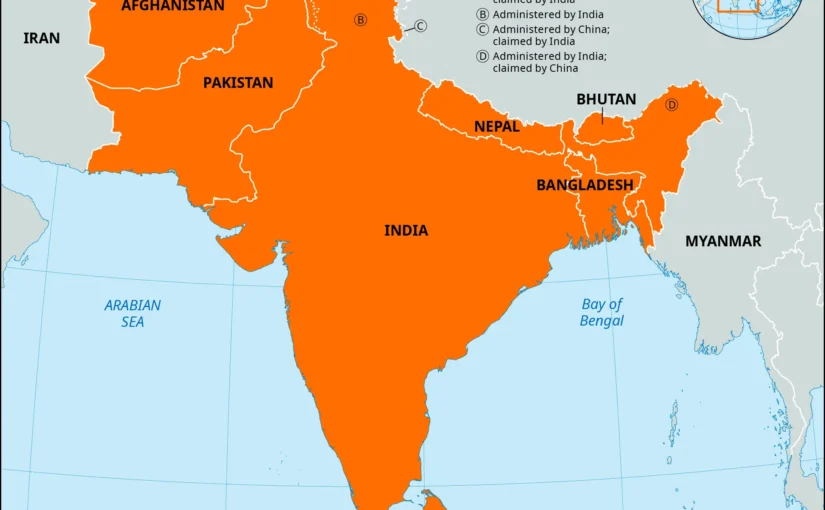
What Is Not India Is Pakistan

As Dave mentioned, there is a lively WhatsApp group of BP authors and editors, and it inevitably shapes the comment ecosystem. But one comment on the blog stood out:

“The very foundation of Pakistan is an anti-position. What is not India is Pakistan. So isn’t it obvious?”

It’s an extraordinarily crisp description of Pakistani identity-building. What is not India is Pakistan. That is not a slur; it is, in many ways, a psychologically accurate frame for how the state narrates itself.

What I increasingly find misplaced on this blog is the recurring assumption that Pakistanis are somehow “Indians-in-waiting,” or that Punjab is “West Punjab,” Pakistan “Northwest India,” or Bangladesh “East Bengal.” These are irredentist projections that simply do not match lived identities. This is not “North Korea” or “East Germany,” where both sides continue to imagine themselves as fragments of one common nation.

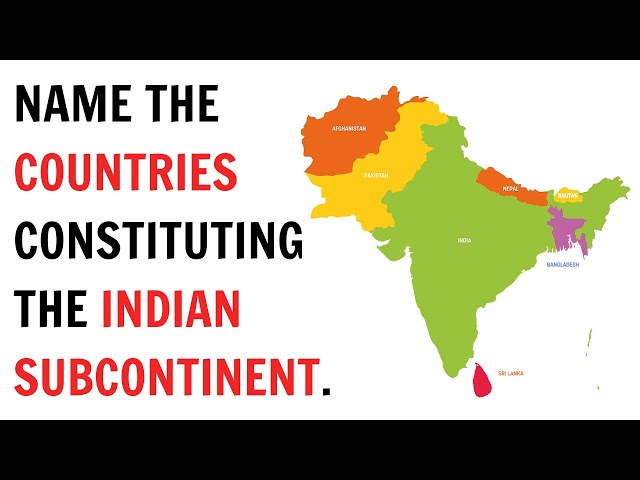
Yes, Pakistan consumes Bollywood and Hindi music, which themselves derive from Mughal and Indo-Persian syncretic traditions. Yes, Pakistan is culturally embedded in the greater Indo-Islamic civilizational sphere. But emotionally, Pakistan has severed itself from the Indian Subcontinent as a cohesive landscape. It has constructed a hybrid identity; part Turko-Persian, part Islamic internationalist, part anti-India.

I don’t personally agree with this move, and my own trajectory has been toward a strong Hinducised, Dharmic identification. But my view is irrelevant here. What matters is that Pakistani identity is defined negatively; as the commentator put it, “What is not India is Pakistan.”

Whether that is healthy or sustainable is another matter. But identities can persist in unhealthy configurations for a very long time; the stock market can be irrational longer than your liquidity can survive.

Why we must talk about caste

Every few months (years?), Brown Pundits goes through its own small earthquake. A post lands wrong, a comment thread ignites, and the whole Commentariat erupts.

The latest rupture began with a mild jibe on caste. I pointed out, in passing, that caste shapes political instincts far more than many admit. The backlash was instant. A section of the readers declared a quiet boycott. The threads went cold. No one wanted to break ranks. The more one claims to have transcended caste, the clearer its caste blind-spots become. Silence itself becomes a shibboleth.

And when the silence hit, the blog froze. Continue reading Why we must talk about caste

Brown Pundits