Was Madhya Pradesh Designed to Dilute Muslim Concentration?

A Post-Partition Theory of State Formation in the Hindi Belt

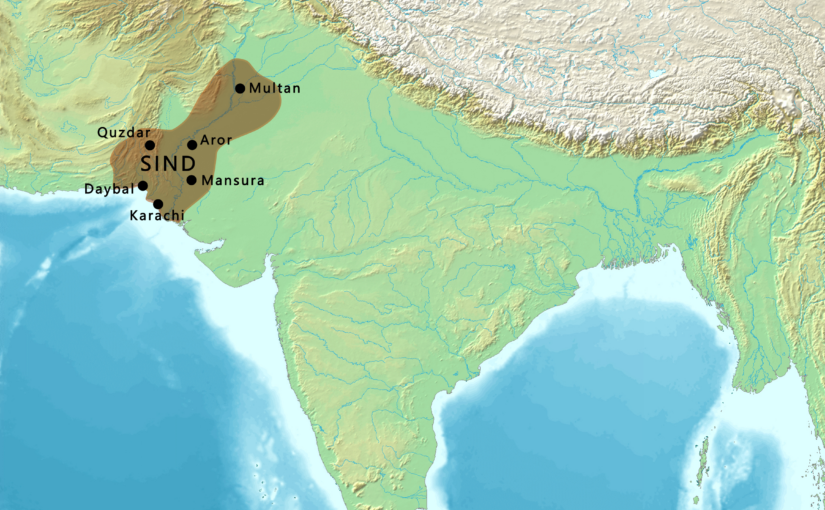
India’s state formations have often been explained as products of linguistic reorganization (1956), administrative convenience, or colonial inheritance—but what if there was an unspoken demographic dimension shaping the boundaries of certain states?

Madhya Pradesh, the so-called *heart of India*, presents an interesting case: it was deliberately constructed to dilute the political and demographic influence of its historically significant Muslim populations, particularly in Bhopal, Malwa, and Nimar. If this theory holds for MP, could the same logic apply to the entire Hindi belt?

As a side note, this idea originally stemmed from a Brown Pundit commentator many moons ago, who suggested that Uttar Pradesh was structured to dilute Muslim concentrations around Delhi and Rohilkhand.

Continue reading Was Madhya Pradesh Designed to Dilute Muslim Concentration?

April 21st: Flowers, Flags, and the Fight for Names

Saadi, Riḏván, Azizam, and the Architecture of Memory


Today marked a strange and layered convergence: the 1st Day of Riḏván, Saadi Day in Iran, Easter Vigil, and the release of Ed Sheeran’s Persian-coded “Azizam”.

Each moment—spiritual, literary, liturgical, and algorithmic—carries its own weight. But taken together, they tell a deeper story:

A story about naming, memory, and the silent wars over cultural survival in a world addicted to erasure.

Three Gardens


For Bahá’ís, Riḏván commemorates Bahá’u’lláh’s divine declaration in the Garden of Najibiyyih—truth revealed under the shade of roses.

In Iran, thousands gather around the tomb of Saadi Shirazi, who composed the Gulistān in 1256—a literary garden of parables, ethics, and eternal couplets.

And then, in a third garden—Instagram—Ed Sheeran drops the word Azizam, surrounded by Googoosh, Andy, and the digital applause of a million exiles.

Three gardens.

Three registers of meaning.

All still blooming.


Team Jesus, Westminster, and the Persian Schism


That night, I found myself at Easter Vigil in Westminster Cathedral—an accident of scheduling, but also a moment of clarity.

One of the baptisms was a name I recognized: Mahyar Tousi, a conservative Iranian YouTuber, publicly announcing:

“Team Jesus assemble for Easter Vigil ✝️ I’m getting officially baptised tonight with the very sound @andrejpwalker as my Godfather.”

The incense hadn’t faded. The Latin still echoed. And yet this moment felt unmistakably Persian—a spiritual pivot made visible under the vaulted English sky.

Meanwhile, back in Iran, the pendulum swings harder:

Gharbzadegi—Westoxification—pulls one half of the diaspora toward performative Westernization. The homeland, meanwhile, is doubling down on Shi‘ism.

There is no “middle way.”

Just a widening chasm between the aesthetic and the absolute.

Memory Isn’t the Problem. Misnaming Is.

A viral tweet this week sneered at a Tajik child reciting the Qur’an by heart:

“This is our intellectual culture: just memorization, no critical thought. And we wonder why we fall behind.”

But this critique misunderstands what’s happening.

The problem isn’t memory.

The problem is dislocated memory.

Not rote—but rootless.

Not repetition—but removal.

A child reciting scripture is not a failure of pedagogy—it’s a civilizational act.

What fails us is when memory becomes performance, and performance becomes currency.


The Dupatta, Rebranded


This week, a Nordic fashion label released pastel “Scandinavian shawls.”

They’re clearly dupattas—drained of history, rebranded without context.

A thing is renamed.

The origin is erased.

The prestige is reassigned.

It’s not homage.

It’s aesthetic laundering.

Civilizations like India and China can survive this.

Smaller ones disappear.

Naming is power.

When you lose your name, you lose your story.


The Iranian Line Holds


Here’s something I’ve always noticed:

Iranians don’t venerate their conquerors.

Hazrat ‘Umar is not a hero in Iran.

Hazrat ‘Ali is exalted. Yá ‘Aliyyu’l-A‘lá is whispered in every corner of the soul.

This matters.

It means Iran has retained civilizational self-respect in a way many post-colonial nations—especially Pakistan—have not.

Pakistan’s endless identity crisis can be suffocating.

But it also allows a kind of flexibility—a permeability I benefit from, writing this from a Pakistani-owned dessert café, scrolling through Persian-coded reels on Instagram.

I’m not confused.

I’m multilingual in civilizational memory.


Ed Sheeran and the Algorithmic Garden


Let’s be honest: Ed Sheeran is strategic.

He didn’t just throw in a Persian word for fun.

By invoking Azizam and featuring Googoosh and Andy, he tapped directly into nostalgic Persianate elite longing. The pop version of Persian soft power.

What the Shah once wanted for Iran—recognition through elegance—Sheeran delivers via a viral reel.

It’s not appropriation.

It’s diplomacy, dressed as a duet.

But still:

Is it possible to be seen without being renamed?


The Long Decline and the Rejected Prophet


Sometimes I wonder:

Had colonization not derailed the Islamic world, how far would Islam have gone?

Manila was a Muslim sultanate. Islam reached the Balkans, sub-Saharan Africa, India’s courts.

Would salāt have matched the cross in global scope?

We’ll never know.

What we do know is that Islamic decline has been swift. And for those of us in the Bahá’í Faith, there’s an explanation:

The rejection of the Báb and Bahá’u’lláh wasn’t just religious.

It was civilizational.

And decline often follows refusal.


A Juxtaposition on Persian Identity


In the wake of my co-writer’s piece on the Pakistani bourgeoisie, I’ve been struck by how much Iran has held the center. Not just geopolitically—but culturally.

Persian identity today splinters into three visible currents:

  1. Reform Shi‘ism – Grounded in Iran, adapting slowly.

  2. The Western Converts – Catholics, exiles, seekers of Rome and respectability.

  3. The Azizam Crowd – Secular, stylish, steeped in Googoosh-era nostalgia.


I straddle none of these cleanly.

Bahá’í by faith, Persian by blood, Hindu by philosophy—my life has become a braid of paths.

Not a crisis.

A choice.


As Anandamayi Ma once said:


“Everyone is right from his own standpoint.”

“All paths are my paths. I have no particular path.”

There is freedom in that.

But also responsibility.

Because to walk a path, you must name it.

And to name it, you must remember where it began.


The Day of Gardens, and the Naming of Things


So today, we honor:

  • RiḏvĂĄn: the divine garden of truth revealed

  • Gulistān: the literary garden of ethical beauty

  • Instagram: the algorithmic garden of cultural remix


And we ask:

Can memory survive translation?

Can identity survive remix?

Can sacred names remain sacred when said by strangers?


The Persianate world hasn’t answered these questions.


But it’s asking them—urgently, beautifully, painfully.

And sometimes, the most radical act is simply this:

To grow new roots, in soil of your choosing.

The Skyborne Castes

Power, Race, and the Architecture of Global Inequality

I pulled down my last piece owing to a a streak of bad luck. I was on verge of being denied boarding owing to the airline’s administrative error. At any rate once I got over that hurdle, the experience made me reflective again. Transiting through Cairo, an even harder metaphor hit me:

The world isn’t a battleground, a marketplace, or even a village. It’s a plane. A giant 300-seater Airbus. Maybe even a cruise ship in the sky (imagine a sky ship of sorts). Always moving. Never arriving. Continue reading The Skyborne Castes

Partition Never Ended — We Just Stopped Talking About It

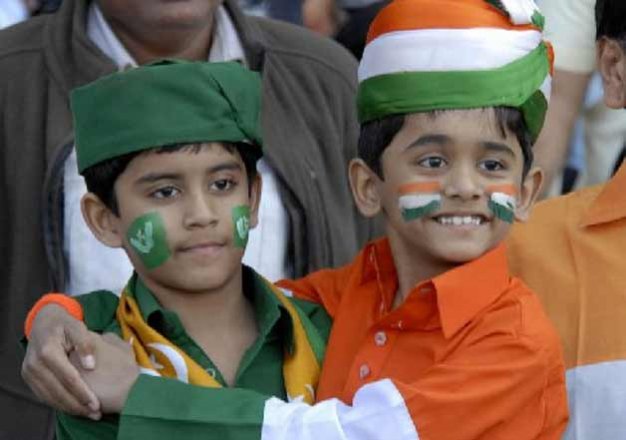
One of the quiet themes emerging from our internal Brown Pundits conversations is this: the India–Pakistan conflict is no longer just geopolitical. It’s deeply civilizational. And we carry its wounds in our media, in our misperceptions, and even in our silences.

We often say “both sides need to talk.” But the truth is: both sides need to understand how little they actually know about one another.

Indian popular culture, especially Bollywood, reduces Pakistani or Muslim characters to fanatics or ghosts of Partition. Meanwhile, Pakistani state narratives portray Hindus — especially the Brahmin-Bania stereotype — as schemers or enemies of the state. It’s not a dialogue. It’s parallel theatre.

But what emerges when actual people talk — across borders, across belief systems — is not animosity. It’s bewilderment. Pakistanis assume all Indians hate them. Indians think all Pakistanis are Islamist or anti-India. And when you scratch the surface, both sides are shocked by the layer of nuance beneath the noise.

A Pakistani auto driver in Peshawar may not have a single Hindu friend — but he harbors no hatred. A young Indian may have never read Dawn — but she doesn’t wish ill on Lahore. And in drawing rooms across Delhi and Karachi, you’ll hear admiration for each other’s food, cinema, even women — wrapped in the fog of mistrust and distance.

So where does the anger live?

It lives in the wounds of Partition — passed down like family heirlooms. It lives in the state textbooks that still preach ideology over complexity. It lives in university syllabi that teach “the ideology of Pakistan” as doctrine, or in Indian political discourse that now sees Muslims as permanent outsiders.

Some argue: “But there are no Hindus left in Peshawar.” Others reply: “Trains arrived in Lahore full of corpses.” And both are right. The violence was mutual, traumatic, and absolute. But it was also unfinished — not in military terms, but in memory.

We’ve never truly confronted the psychological aftermath of 1947. And so we carry it. In our jokes. In our distrust. In our schoolbooks. In our nostalgia for a wholeness that may never return — or for some, was never real.

So what can a space like Brown Pundits offer?

Not solutions — but space. To admit how little we know about one another. To ask: Why don’t Indians read The Friday Times? Why do Pakistanis assume “Bharat” is Hindutva code? Why can’t we discuss partition without defending our side like it’s a football match?

When goods don’t cross borders, soldiers do. But when ideas don’t cross, suspicion does. And that’s far harder to undo.

So let’s host the real conversations. Not the ones that affirm our pain — but the ones that gently probe it. Not to forget Partition. But to understand how deeply it still lives in us.

and What Is a Civilizational State?


This isn’t about censorship. It’s about moderation with intent; not to control voices, but to preserve conditions for honest discourse. Liberalism doesn’t mean indulging in trolling. Open spaces need guardrails to stay open; otherwise they corrode into noise. This leads naturally to one of the most charged terms in our recent conversations: civilizational state.

What does that mean and who gets to define it? At its core, a civilizational state is not just a modern political unit. It is a nation that sees itself as the living continuation of an ancient, layered cultural memory; one that predates colonial borders, constitutions, and electoral math. It’s not about exclusion. It’s about historical anchoring.

By this definition, India that is Bharat is a civilizational state. That doesn’t make it Hindutva. The two are not synonymous. One is a heritage; the other is a reaction. India’s civilizational foundations are undoubtedly rooted in Hindu cosmology but they’ve also been shaped by Buddhist, Jain, Sikh, Islamic, and modern secular traditions. There is no contradiction in this unless one insists on one.

Phrases like Akhand Bharat make some contributors uncomfortable — and that’s a valid response. For some, the term evokes imperial nostalgia. For others, it reflects a cultural continuum that was artificially partitioned. The point is: these ideas aren’t threats. They’re memories, and like all memories, they deserve discussion not erasure.

If Pakistan today imagines itself entirely severed from India, from Hinduism, from the subcontinent’s deeper history then it loses not just proximity, but part of its own cultural self. Just as India cannot be fully understood without the Islamic, Persianate, and colonial legacies that shaped it in turn.

This is the kind of conversation Brown Pundits is built to host not to resolve, but to hold. Not to homogenize, but to sharpen. We’re not a publication. We’re a forum. And forums require not just writers, but editors, moderators, readers, and some institutional backbone. It’s fair to discuss paying contributors, building a sustainable budget, and clarifying rules of discourse.

Above all, it’s fair to say that ideology should not be a litmus test. Honest disagreement sharpens thought; dogma dulls it.

📊 Estimated Audience Size & Profile

    • WordPress dashboard data noted roughly 20,000 monthly readers circa mid-2020  .

    • Updated trends confirm continued modest growth, with India-based IPs making up a rising share  .Monthly Unique Users

  1. Comment Engagement

    • Recent posts regularly attract 100+ comments, indicating strong reader engagement and active discourse.

    • An average reading time on site is 4+ minutes, suggesting high dwell and thoughtful consumption  .


  2. Reader Geography (2018 Data)

    • Estimated by mid-2018:

      • United States: ~35%

      • India: ~29%

      • Followed by UK, Canada, Pakistan, and others  .


    • Likely similar or more skewed toward India today, given recent commentary.


🔎 Summary Table


Metric

Estimate / Insight

Monthly Readers

~20,000 (unique visitors)

Engagement per Post

~100+ comments; high dwell time (~4 min+)

Geographic Spread

USA ~35%, India ~29%, UK ~6%, Pakistan ~5%

Engagement Quality

Active discussions, reflections, back-and-forth

Growth Trend

Steady rise; India traffic accelerating


✅ Takeaway

  • Readership is modest in scale (~20K/month), but engagement is high, with active comments and deep platform dwell.

  • Most traction likely comes from Indian-origin and South Asia-adjacent readers, especially online communities aligned with diaspora and intellectual South Asian discourse.

  • This audience profile aligns with Brown Pundits’ ethos — curated intellectual conversation, not mass media reach.

Brown Pundits