The Honey Trap of the Ummah:

šŸ•Œ Reflections on Kabir, Afridi, and the Compact of Coexistence

The recent incident involving KabirĀ / Bombay Badshah / Honey Singh, and the orchestrated drama around his entrapment has, quite unexpectedly, become a catalyst for deeper discussion on Brown Pundits. While none have chosen to focus on analytics (ā€œ2,000 daily visitorsā€ā€”thank you very much:-), the real story lies in how this drama has exposed, yet again, the deep ideological fissures within South Asian identity; especially in the India-Pakistan-Muslim triad.

Let’s begin by being honest: Brown Pundits, for all its digressions into Sri Lanka, Nepal, or Bangladesh, is still primarily a blog about India and Pakistan, and more crucially, about Indian and Pakistani Muslims. This is a feature, not a bug. The origins of the blog lie in the Sepia Mutiny, a scattered band of intellectually independent thinkers questioning dogma from every direction (which started in 2004 and if we are a “daughter blog” that we means have 20+yrs of intellectual antecedents on the Brownet), and it has now matured into one of the few platforms willing to wrestle with the ideological ambiguities at the heart of the subcontinent.

šŸ§• Kabir’s Point: Brotherhood, Boundaries, and the Big Choice

Kabir made an astute, if difficult, observation: that he views Indian Muslims as ā€œbrothersā€, but does not feel the same about Pakistani non-Muslims.

This sounds contradictory until one understands the emotional exhaustion of watching Muslims oscillate between claiming ummah-hood when convenient, and weaponizing liberal values when needed. It’s a cognitive dissonance that creates what I can only call the moral coexistence trap: the idea that Muslims, especially in India, demand maximum accommodation, of their food (their nauseating right to murder Gau Mata on Bharat’s sacred soil itself), Faith, festivals, and foreign affiliations, while rarely extending the same pluralistic courtesy in return.

And then there’s that infamous Shahid Afridi clip, the one where he smashed his television after watching an Aarti, being performed. To many of us, that wasn’t just a cringe-inducing moment of bigotry; it begged a real question: Why do Indian cricketers continue to shake hands with Hinduphobes Hindu-hating men like Afridi and his ilk (the Pakistan cricket team)? At what point does tolerance become indulgence?

🚩 The Compact of Indian Minorities: Understand It or Leave It

Continue reading The Honey Trap of the Ummah:

When the Commentariat lies

I’ve updated this post (Brown Pundits is not an echo chamber) after realising something important.

What began as a spirited disagreement veered into something darker. It turns out that bombay_badshah, a voice I initially assumed to be new, may not be who he claims to be (I had a hunch but so did Kabir, that BB was HS reincarnated). The posting style, the fixations, the timing; all too familiar. My suspicion is that BB may be a derivative or proxy of HS, previously banned. If true, this was not a genuine disagreement; it was entrapment, bait-and-switch.

In that light, I owe Kabir an apology. He was provoked in bad faith by someone who may be operating behind a mask. And that matters, because here on Brown Pundits, identity isn’t incidental; it shapes perspective, and we respect that. We excavate worldviews, not just opinions.

While I cannot definitively prove that BB is HS, the circumstantial evidence is strong. I will allow BB to remain but if the commentary returns obsessively to Kabir or Pakistan, I will intervene. Everyone is welcome to engage on substance. But this space will not be hijacked.

The original post remains below the jump, unedited but its context has now changed.

Continue reading When the Commentariat lies

Bharat Needs No Validation

I’ve been following the usual commentary, the BP quadrant: Indosauras, Nivedita, Kabir. And I read Kabir’s offhand remark that the Ramayana ā€œdidn’t resonateā€ the way the Iliad or Odyssey did. That casual dismissal is telling.

The Ramayana is not just literature, Ā it is scripture, memory, and civilization encoded in verse. It has shaped the moral and cultural landscape of over a billion people for millennia. To compare it, then downplay it and to do so so glibly reveals less about the text and more about one’s own civilizational estrangement.

Let’s be honest: that kind of language would never be used for the Quran or Islamic texts. And the fact that it is used for Hindu epics by brown intellectuals raised in the shadows of colonial categories says everything about how deeply colonized the Pakistani mind remains. Pakistan is, in truth, an Urdufied Punjab insufficiently imagined, a fragment that lost its civilizational compass in the act of imagining itself apart. The fact that the Ramayan being Pakistani heritage is such a novelty speaks volumes.

Today I sat at Stratford Westfield, eating Dubai Hot Chocolate ice cream, and the man next to me clearly Pakistani asked me, in Urdu, ā€œif I was in the queue?ā€ His wife spoke Punjabi-inflected Urdu. It struck me how London has become the real unifying Punjab. Ten percent of Britain is now Desi. And outside of the subcontinent, the fractures of 1947 heal in ways that remain impossible back home.

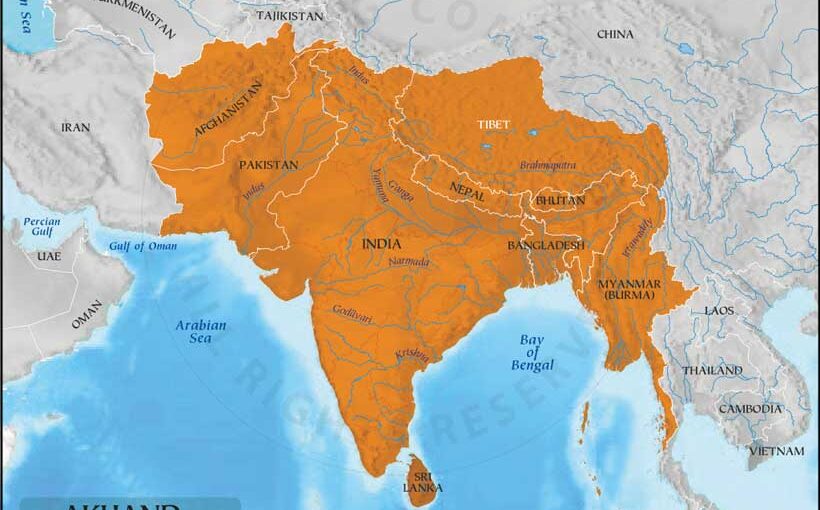
We speak of South Asia. But the term is bureaucratic; no one identifies with it. India is real. Bharat is civilizational. Aryavarta stretches from the Hindu Kush to the Indian Ocean — just as France is the Hexagon, Bharat is the Triangle. Partition clipped its wings, but its soul remains intact.

And look at the reality today: Indian Muslims are thriving in the mainstream. The title song of the upcoming film Sarai — written, composed, and directed by three Muslims: Ishaq, Fahim, and Arsalan. The leading lyricist is Javed Akhtar. This is a country that refused bitterness. A country whose largest minority chose Partition, and yet was never cast out, a unique precedent and testament the pluralism of Dharma.

Bharat needs no validation. It doesn’t need the approval of its neighbours or the heirs of partitioned imagination. It only needs to walk — and it is flying. Toward its own authenticity, on its own terms. And the world is watching.

The Myth of the ā€œAverage Pakistaniā€

Dave’s comment:

“I have in fact met some. In person. Ran into a lovely couple while on vacay in Guatemala. Excellent conversation along a 2 hour shared shuttle ride. Shia muslims from Baltistan – he took great pains to indicate that his community is not like the average Pakistani, and that in his biradari they are proud to educate their daughters and wives, have them take the lead in public lives. Both his daughters were young med students.

The tragedy for Pakistan is that such actual liberals with modern outlooks wisely avoid taking public positions. They don’t want to get lynched. Hence the domination by the nutters and fringe on the right continues. Leading to mis-categorization of the right-wing as ā€œthe centerā€.”

The above praises a “liberal” Shia couple from Baltistan for educating their daughters and living modern lives, contrasting them with ā€œthe average Pakistani,ā€ portrayed as a backward, anti-education fanatic. This framing is not just lazy; it’s offensive.

It reflects a deeply colonial hangover: the idea that modernity is rare in Pakistan, that deviation from presumed fanaticism is a revelation. But let’s be clear, Pakistanis, like people anywhere else, are ambitious, aspirational, and complex. Medical colleges are oversubscribed. Education is highly prized. And many people, devout or not, are navigating life with dignity, values, and a deep desire to move forward; not just materially, but spiritually and ethically.

Politics of Projection

Just because a population is not obsessed with hyper-capitalism doesn’t mean it is ā€œbackward.ā€ It may simply mean it has not surrendered entirely to the logic that everything must be monetized. That’s not regression; it might be restraint. In a world where the only metric that seems to matter is money, resisting that tide is itself a kind of wisdom.

This kind of patronizing liberalism, one that exoticizes progressive Muslims as rare exceptions, isn’t harmless. It feeds into a narrative that justifies erasure: of language, culture, self-rule, and civilizational continuity. South Asians speaking in English, debating one another with colonial grammars, is not a mark of modernity, it is a symptom of displacement. The Global South doesn’t need to be saved. We need to be seen, on our own terms.

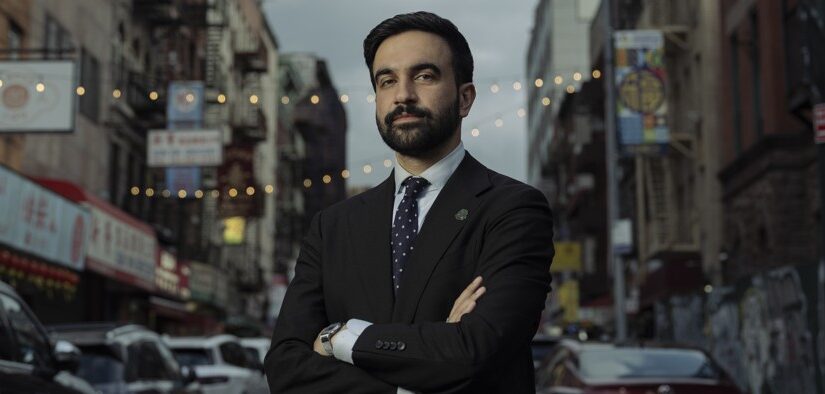
Zohran Mamdani and the Question of Civilizational Belonging

Kabir:

I would question how one defines ā€œIndianā€ culture vs ā€œHinduā€ culture (this is a real question, I’m not being snarky). Zohran speaks Urdu/Hindi, wears shalwar kameez and uses Bollywood references in his campaign. So clearly, he has no issues with Indian culture. He’s not a Hindu so he doesn’t go to temples etc. I’m not sure exactly what you expect him to do?

While Zohran Mamdani expresses outward familiarity with ā€œIndianā€ culture — speaking Hindi/Urdu, referencing Bollywood, wearing traditional attire — these are surface markers. They do not, on their own, constitute rootedness in Indian civilizational identity. Indian culture, especially post-Partition, is not simply a composite of languages and aesthetics. It is anchored in Dharma — a diffuse but pervasive civilisational ethos shaped over millennia by Hindu, Buddhist, Sikh and Jain worldviews.

Despite being born to a Hindu mother, Zohran’s public identity is strongly framed within a Muslim, Middle Eastern, and postcolonial activist context. His political and cultural instincts appear more aligned with pan-Islamic and Western progressive causes than with any articulation of Indian philosophical or spiritual heritage. His Syrian Muslim spouse, activist framing, and lack of visible engagement with Indic traditions contribute to this perception.

This is not a religious critique but a civilizational one. Just as Israel defines its national identity through a broadly Jewish character — irrespective of belief — India’s cultural self-understanding is inseparable from its Hindu roots. To be Indian, in this view, is not to perform cultural familiarity but to resonate with the metaphysical and historical rhythms of the civilization.

By that measure, Zohran — despite South Asian ancestry — does not code as civilizationally Indian, but rather as an American progressive of South Asian Muslim extraction. The distinction is subtle but important.

Brown Pundits