RecoveringNewsJunkie · March 17, 2026 · 3 comments
A brief respite from war, death and bombings. Some encouraging news from South East Asia.
I have had the privilege to visit the Angkor Wat Complex in Siem Reap, Cambodia. The ASI has done some decent work there in restoring some of the buildings within. The Prambanan temple complex dates back to the 10th century and after Angkor, its the largest one in SE Asia. I would love to visit someday.
I did visit Bali briefly a couple of decades ago, which was a wonderful rabbithole to fall down into, in terms of Indic influence and syncretic culture in SE Asia. Balinese Hinduism is a fascinating fusion of what we Indians think of as ‘core’ Hinduism, along with local animist influences. What superficially can feel slightly alien and almost jarring – in terms of pooja thalis adorned with whole skinned chickens, is in fact, incredibly typical of how the Dharmic faith has spread all over the Indian sub-continent and beyond, absorbing local totems and figures into its mythology as manifestations and ‘Avtaars’ of its primary dieties.
Has anybody on BP or the commentariat visited Yogyakarta or any other Indonesian sites with Buddhist/Hindu influence?
Two comments overnight exposed different sides of the the same problem.
You Can’t Weaponise Islamophobia and Then Kneecap Hinduism
Kabir tried to circulate a link around Manu Pillai’s Gods, Guns and Missionaries, a serious book, framed around whether Hinduism was, in some sense, constructed. The question is legitimate. All traditions are constructed. All identities consolidate under pressure.
But Hinduism and Islam are pari passu in this respect. The nineteenth century shaped both. Colonial enumeration shaped both. Reform movements reshaped both. Romila Thapar, Wendy Doniger, Sheldon Pollock; the literature on Hindu consolidation is vast. So is the literature on Islamic reform: Wahhabism emerging from Najd in the 1740s, Deoband crystallising in 1867 directly in response to 1857, Barelvism as counter-movement to both. All traditions have formation moments. All traditions modernise under pressure.
To apply the deconstructive lens to Hinduism while leaving Islamic historiography untouched is not intellectual rigour. It is asymmetry. Kabir, who deploys “Islamophobia” as a first-strike weapon with the hair-trigger of a seasoned litigator, has never shown the slightest inclination to subject his own tradition to equivalent scrutiny. If the lens is universal, use it universally. If it is selective, say so.
Anything else is prosecution dressed up as scholarship.
Aslan Pahari’s videos are linked to the top where he essentially argues that the Indus region, before Islam, was a seamless Hindu civilisational block. It makes for neat storytelling. It is also historically careless.
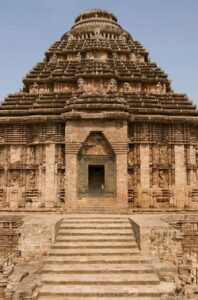
Sun Temple of Multan
The subcontinent before the 8th century was not a flat religious plain. It was layered, regional, and politically fragmented. Yes, there was a broad Brahmanical tradition stretching across north India. Yes, temples like the great Sun temple at Multan testify to the strength of that religious order in what is now South Punjab. But to move from that to “all ancestors were Hindu” is to mistake dominance for uniformity.
Sindh
Take Sindh. When Muhammad bin Qasim entered the region in the early 8th century, he did not conquer a purely Brahmanical kingdom. The ruling Brahmin elite he defeated, had previously overthrown a Buddhist polity, and the religious landscape of Sindh included Buddhists, various Hindu sects, and local traditions. The frontier between Indic religions was not rigid. It was porous, competitive, and regionally specific.
It goes without saying that Buddhists emerged from a broader Brahmanical milieu, but I am referring specifically to the religious landscape immediately preceding the arrival of Islam.
Chennai, without any doubt, is one of the better cities in the country. I agree with many of the issues raised by XTM here. Along with Hyderabad, Ahmedabad, and Bangalore, Chennai continues to fare better in many aspects of life compared to Mumbai, Delhi, Kolkata, and even Pune.
My Experience
While I appreciated the cleanliness and infrastructure of Chennai, I cannot say I came away with the same impression as XTM. Of all the Indian cities I have visited, I found Chennai less hospitable than Ahmedabad, Hyderabad, or Delhi. Even as a fluent English speaker, I struggled to hail autos or get directions. Surprisingly, I did not face this issue in the rest of Tamil Nadu. For older Hindi speakers with limited English, the experience is even worse. The issue is not simply language, but linguistic chauvinism (also present in Karnataka and Maharashtra, though to a lesser extent). A non-Tamil speaker often looks for Muslim individuals to ask for help in Chennai.
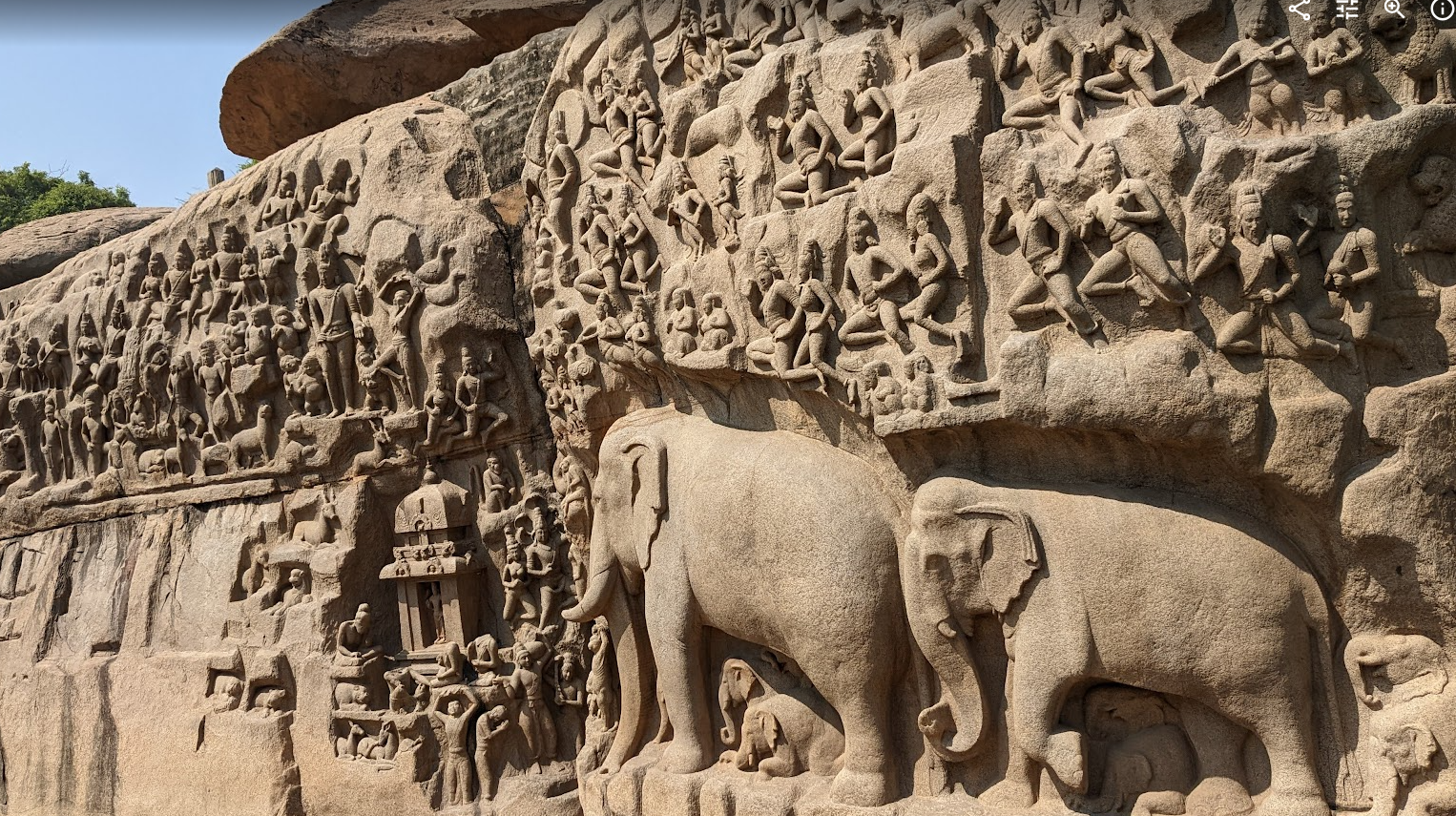
I had a wonderful time in Mamallapuram, enjoying the Pallava ruins and the beach, thanks to a very helpful Muslim auto driver. But enough of auto-wala stories.
Culture and Politics
Without comparing cities directly, it is important to recognize that culture may play a role in Chennai’s successes. However, correlation should not be confused with causation, and credit should not be misplaced. Any link between Chennai’s well-being and Dravidianism is tenuous or purely incidental at best. While successive Tamil Nadu governments aligned with Dravidianism have been relatively successful (especially compared to the North) in providing welfare nets, what direct connection do these well-run policies have with Dravidianism?
Let us compare Tamil Nadu with the rest of India on the metric that Dravidian progressivism claims to address: CASTE
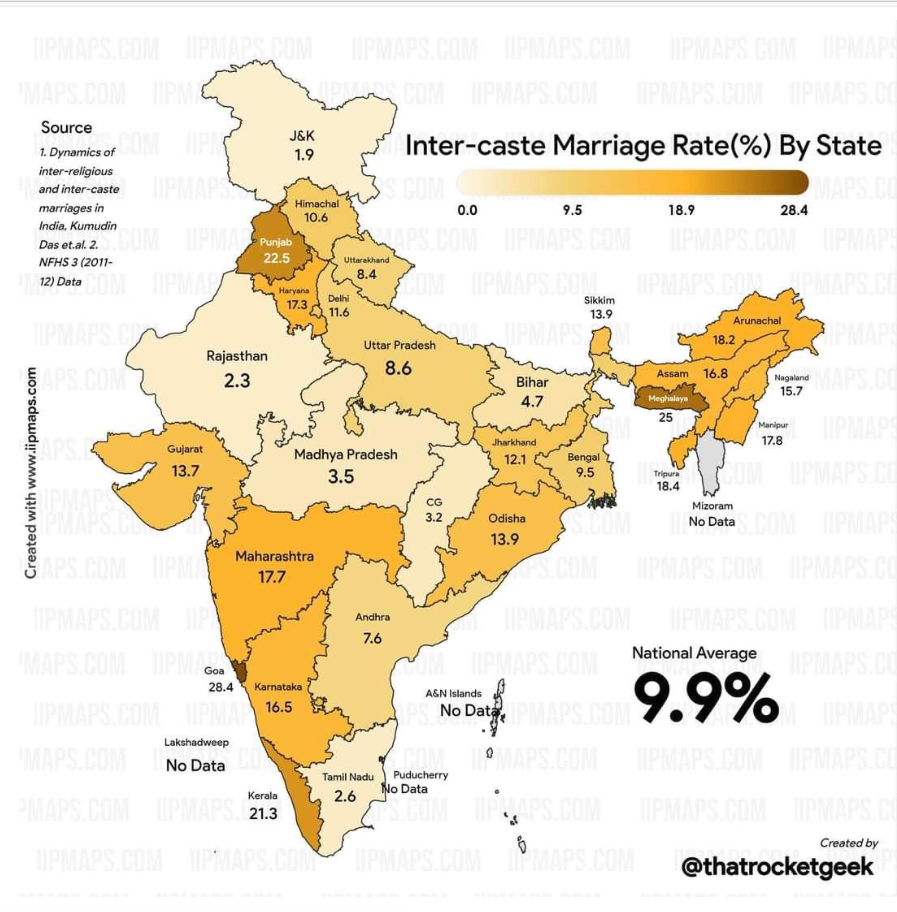
Scroll piece : Caste endogamy is also unaffected by how developed or industrialised a particular state is, even though Indian states differ widely in this aspect. Tamil Nadu, while relatively industrialised, has a caste endogamy rate of 97% while underdeveloped Odisha’s is 88%, as per a study by researchers Kumudini Das, Kailash Chandra Das, Tarun Kumar Roy and Pradeep Kumar Tripathy.
Put differently: caste endogamy seems unaffected by how anti-Brahminical or “progressive” a state claims to be. Tamil Nadu, the heart of the Dravidian movement, remains at below 3%, while Gujarat—often seen as Brahmanical and vegetarian—stands around 10% (15% in a 2010 study, though possibly overstated). However one frames it, Gujarat has more inter-caste marriages than Tamil Nadu.
Surprisingly, even Haryana and Punjab—traditionally associated with Khap Panchayats and honor culture—show significant inter-caste marriages, along with Gujarat, Maharashtra, Karnataka, and Kerala.
While data on Haryana, Punjab, and Goa is contested, Tamil Nadu consistently lags, whereas its neighbor Kerala consistently leads, along with Maharashtra.
Crossing from Kerala into Tamil Nadu, the difference is stark: one in five marriages in Kerala are inter-caste, compared to fewer than one in thirty in Tamil Nadu. Would it be fair to blame Dravidian politics for this? That claim has more merit than attributing Tamil Nadu’s successes to Dravidianism. Tamil Nadu ranks alongside Madhya Pradesh, Rajasthan, and Kashmir, while Karnataka, Kerala, and even Andhra/Telangana are far ahead.
Even Kashmir, with a 65% Muslim population, has an inter-caste marriage rate just below 2%, lower than Dravidian-ruled Tamil Nadu. So, after 500 years under a “casteless” religion and 100 years of “progressive” Dravidianism, both Kashmir and Tamil Nadu lag behind Gujarat, Bihar, and Uttar Pradesh.
This data does not fit neat narratives. I was surprised to see higher percentages of rural inter-caste marriages. Rates are negatively correlated with wealth and income (more strongly with assets such as land). Landed communities show stronger caste endogamy, for historically and pragmatically clear reasons. That Brahmins, as a group, have the highest inter-caste marriage rates is unsurprising, given how progressive (some might say deracinated) Brahmins have become in India.
One social metric where Tamil Nadu performs well is female foeticide. Tamil Nadu and Kerala are among the leading states less affected by sex-selective abortions compared to the rest of India.
Tamil Brahmins have generally been more socially aloof compared to Brahmins elsewhere in India (both anecdotally and objectively) and disproportionately occupied government posts in the late 19th and early 20th centuries. The Justice Party movement, which arose in response, was initially a elite-feudal project, though Periyar’s early movement (also virulently anti-Brahmin) was more inclusive of Dalits and non-dominant castes. Over time, while retaining its anti-Brahmin rhetoric, the movement became a proxy for domination by landed and wealthy communities. Dravidianism today (or perhaps always) resembles what it claimed to oppose—Brahmanism. The dominant elites have simply shifted from Brahmins and the British to others who hold power today. Hatred alone does not create positive change.
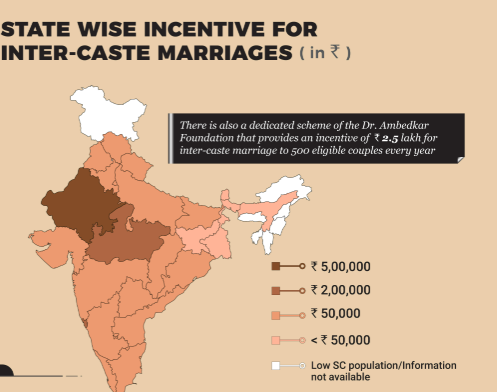
It seems Rajasthan and Madhya Pradesh understood the incentives for reform, while Tamil Nadu did not.
Anecdotes or caste violence are often dismissed when praising the Dravidian model of social progressivism. Comparative caste violence data is brushed aside under claims of underreporting or lack of Dalit assertion in other regions. But caste endogamy cannot be ignored. If anything that truly encapsulates Caste is endogamy.
Post Script:
Tamil politicians, both DMK and AIADMK, have run better governments in terms of welfare, industrialization, and infrastructure, and they deserve credit for that. However, linking these achievements to culture may not be wise. Geography is a more convincing explanation.
This post is triggered by some posts from XTM in the past and some discussions on the BP whatsapp group.
This is not a referenced essay but more of a summary of my evolving position on the history jAti and varNa. I am neither a history or genomics scholar and this is an essay of a reasonably well informed layperson who has gone deep in the speculative prehistory of Indian subcontinent.
The first thing to note is the difference between jAti and VarNa.
jAti is a endogamous population – maps on to English word Caste. Identity into a jAti is a lived reality for billion Indians.
varNa is a hierarchical abstraction which is presented in Vaidik texts which does and doesn’t always map neatly on to thousands of jAti groups. I would wager that varNa mattered for the Brahmanas and at times to the Kshatriyas as their jAtis map neatly on respective varNas.
This post will focus on varNa, I will cover jAti in some other post briefly.
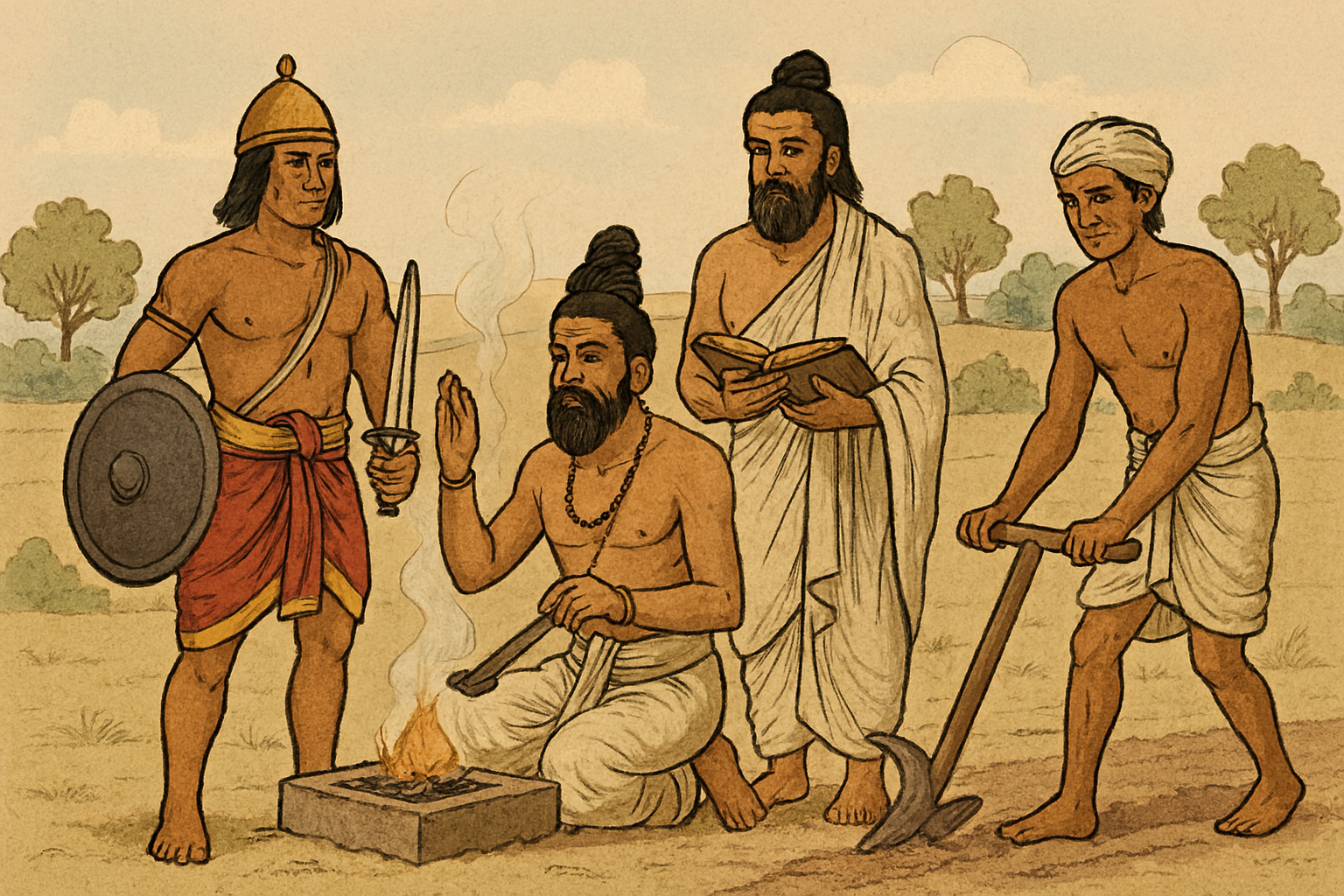
During the composition of the ṛgvedathe priests and the warriors were the prime movers of the Arya society hence designated Brahmanas and Rajanyas. This bifurcation is common among a lot of society where the physical and spiritual power is owned by different elites who in a sense rule the society. These two communities were to become two Arya varNAs. The third varNa called the Vaishyas were originally the remaining people. The word Vaisya comes from Vish which means people. So all farmers, craftsman, artisans etc would come under the word Vaisya initially. This much can be asserted with certain degree of confidence.
The origin is the fourth varNa – Shudras is not as crystal clear but its safe to bet that initially the outsiders (non Arya) were called Shudras. The word is used to denote someone who doesn’t follow the proper Arya rituals at places or someone who is a defeated enemy or someone who is a labourer. So as Arya communities were forming during the early Vaidik period after the collapse of Harappan civilization, the outsiders who were defeated and assimilated were termed Shudras. This label also applied to populations outside the core Vaidik area who were kings and rulers in their own right in complex pastoral and farming societies. The cultures of Deccan and Peninsular India at this time would also fall in this bracket (precursors to speakers of Dravidian languages of today).
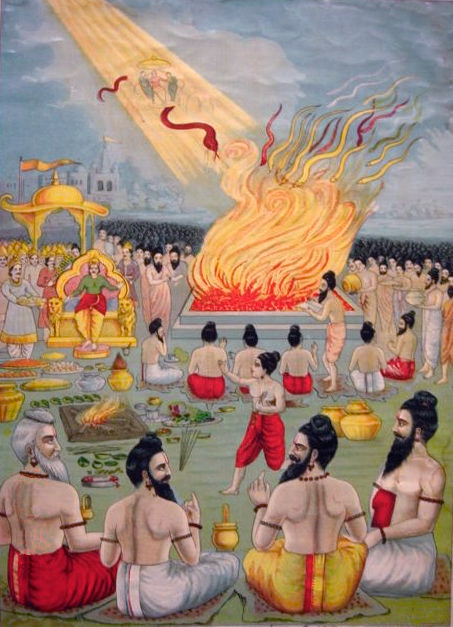
Aryavarta (Land of the Aryas) expanded mimetically through lavish sacrifices and tall poetic tales (later Epics). Instead of building complex structures, the Rajanya class (later Kshatriyas) from the core Indo-Gangetic region (Aryavarta), focussed their wealth on conducting extravagant sacrifices (Yajnas) like Asvamedha and Rajasuya to assert their strength. The template was set by Vaidik Rajanyas and slowly people outside the core Vaidik area began to emulate their peers. Non Arya rulers invited priests to conduct spectacular sacrifices to rival the Rajanyas. These Non Aryas were gradually assigned the Kshatriya varNa along with the original Rajanyas. I would wager that priests from non Arya cultures were assimilated into the Brahmanas. Those from outside who didn’t keep their power became the Shudras. But this designation also was by no means settled.
Every now and then we have Shudra monarchs especially in the Eastern and Southern part of the subcontinent. Its worth noting that even thought a dynasty may be of Shudra origins, they likely re-wrote their histories once they attained power. Some of these rulers claim to have conducted even grander sacrifices than the Kshatriyas 1.0 and 2.0. Conversely, Kshatriyas and Vaishyas who lost their power or wealth might have lost their varNa.
a-varNa
(Co-Pilot wouldn’t help me with a representative image as its termed offensive)
Even now a vast number of people were outside this matrix of abstract varNa and secular Kshatra. As AryaVarta continued to expand it encountered the people on the margins. The template of absorbing the elites into the elite varNas would slow down eventually. Every now and then the outsiders would not be integrated into the varNas but remain outside as a-varNas. When this became happening is debatable but its safe to assume that around the time of Manu smriti, Arya-Varta had a significant proportion of a-Varna population. Over time ritual status was assigned to the outsiders and they became the untouchables.
I think this practice evolved like slavery as suppling an eternal supply of low cost labor (especially for dirty tasks). The a-varNa need to be distinguished from the Shudras who could accumulate wealth and status. So it could be a combination of (a) tribes whose professions were deemed unclean (b) defeated people forced to do unclean professions or probably a combination of both.
Another group of people were to remain outside the Arya social system, the tribals. But it would be unfair to club the tribal communities with a-varNa. Tribal people had wide range of experience of interactions with the mainstream from domination and competition to servitude. Some tribes may have been absorbed into the a-varNa groups but that is not a generic template.
The varNa fluidity:
As Merchant guilds began becoming powerful around the times of Mahajanapadas, the Vaishya Varna began to become more associated with the Merchant class. Artisans, farmers and ordinary soldiers began to be associated with Shudra varNa. Today its quite common to associate the Vaishya varNa with traders and merchants but it wasn’t always so.
Similarly its quite possible that some a-varNa clans could lose their shackles but its fair to assume that this fluidity kept reducing in the common era. Last thousand years the varNas have not been fluid – especially for the a-varNas.
The Ossification:
I have written an entire blogpost on why the jAti-varNa matrix began to ossify and when.
Co-Pilot summary of this post:
The essay explores how early Hinduism’s caste stratification evolved through interactions between Vedic Brahmanical traditions and Sramana schools like Buddhism and Jainism. It argues that concepts of karma, rebirth, and dharma—emphasized by Sramanas—helped justify and ossify the Varna hierarchy, linking birth to karmic retribution. Over time, this moral dimension reinforced endogamy and rigid social divisions, especially during the Gupta era. The author speculates that pre-Aryan tribal endogamy combined with Vedic ritual purity and karmic philosophy created the uniquely enduring Jati-Varna system in India
The Kaliyug cope:
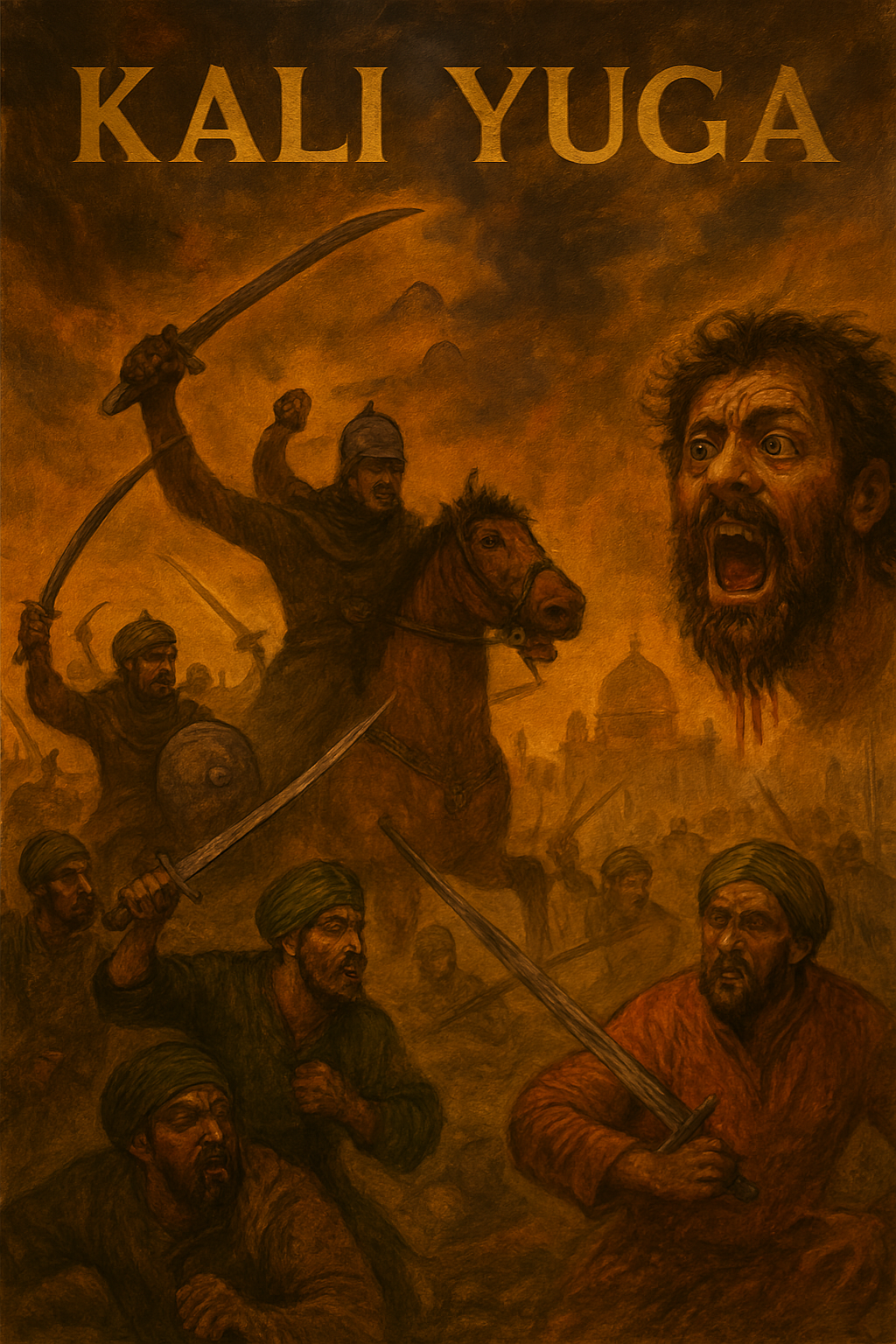
From the turn of the century, the subcontinent was always under attack from North West, Yavanas, Shakas, Kushanas, Hunas and final Arab and Turks. It is my belief (and also of some scholars) that the ideas of Kali-yug were a response to these invasions. A Yug when idealised Vaidik society was destroyed.
Islamic conquests of India began in the 7th century itself but it wasn’t till the 13th century that the entire subcontinent was touched by the crescent scimitar. While the concept of Kali-yug might be older than Islamic incursions into the subcontinent, I think they were imagined sufficiently during the Islamicate age. Some of the Brahamanas who survived (entire Shakhas of Vaidik learnings have been wiped out) saw Kaliyuga as the yuga where only 2 varNas exist – Brahmanas and Shudras. While some Kshatriya clans retained the memory of their ancestry during the Islamic time and reformulated as Rajputs, a lot of Kshatriyas and Vaishya lost the touch with their ancestry. While most of these groups have myths of their descent from Yadus or Ikshvakus, these claims did not get Brahmana (and Kshatriya) stamp of approval in the medieval times.
On psychological level one can understand this statement – Kali-yug contains only Brahmanas and Shudras as a coping mechanism opted under the yoke of Barbarians. Naturally wealthy landed castes who may have descended from Kshatriyas or Vaishyas were seen as Shudras. The Kadambas, Rashtrakutas, Yadavas, Chalukyas, Cholas, Gangas, Pandyas and Cheras all claimed Kshatriya descent. If this is assumed to have some merit, its not logical to assume that all the descendants of these dynasties and their power structures went extinct. Its more likely that the elites from medieval times became the wealthy landed and mercantile elites without some deviation (on the coattails of the brits).
Brits and modernity:
The Europeans began documenting varNa with the arrival of Portuguese (Casta). But the modern understanding began to truly take shape under the British rule. I will only quote the Co-pilot summary of Nicolas Dirk’s fantastic book here.
Nicholas Dirks’ Castes of Mind argues that the modern idea of caste as India’s defining social system was largely shaped by British colonial rule. While caste existed earlier, it was more fluid and intertwined with local, regional, and occupational identities. Colonial administrators, obsessed with classification, codified caste through censuses, ethnographic surveys, and legal frameworks, turning it into a rigid hierarchy. Dirks shows how this “ethnographic state” reified caste as the central lens for understanding Indian society, overshadowing other identities. The book highlights how colonial policies and scholarship created enduring structures that continue to influence politics and social life today.
In essence, varNa and social stratification is surely older than even the Roman colonisation of Britain, what we understand today as Caste is significantly shaped by the British intervention into India. The emerging economies have offered upward mobility for some while relegating others to medieval times. In many cases, artisan communities continue to see their economic status significantly degrade with mechanisation. Present Caste identities and economical realities are much more downstream of the economic exploitation and changing economy due to industrialization than abstractions like of Dharma-Shastras.
In the theatre of Indian democracy, the first-past-the-post script ensures caste takes center stage — louder, sharper, more enduring than ever before. And as present-day passions spill backward into history, they stir the ancient pot with fresh fervor, adding new tadka to a saga already simmering with spice and strife.
Post Script:
I am generally liberal with comments, but i will exercise moderation for repeated stupidity on this post.
There is a persistent habit among Pakistani liberals, especially those from elite backgrounds or with deep emotional ties to pre-1947 North India, of speaking about India as if it were still legible to them. It is not. India has moved on. So has Pakistan. But only one side seems unable to accept that.
The Mirage of Patrimony
Many Pakistanis of Muhajir or North Indian lineage carry an inherited sense of ownership over India. They speak as if India is a shared cultural estate, temporarily misplaced. This is a fantasy. The India of 2025 is not the India of 1947. It is not even the India of 1991. It has changed demographically, economically, politically, and, most importantly, civilizationally. Pakistanis who have not travelled to India in decades, who rely on English-language media and nostalgic family memory, do not “understand” India. They are projecting onto it. Projection is not insight. It is displacement.
Kabir suggested that I apologise but for what, exactly? Why should Saffroniate be considered offensive? Own it. I don’t see anything inherently wrong with the idea of Akhand Bharat; the concept of a broader Dharmic civilisation makes eminent sense to me.
Likewise, I don’t understand why questioning caste identities provokes such sensitivity. Again, own it because the more caste is repressed, the more likely it is to resurface.
At heart, I’m a reformist, not a revolutionary. I believe in improving and refining what exists, not erasing it. Cultural features should only be abolished when they are truly harmful or deleterious, not simply because they make us uncomfortable.
Disclaimer: As this post deals with an academic discussion on the Swastika symbol, I have included various images containing Swastika below. If you are repulsed by the symbol or do not like to look at it, please consider yourself warned. Also, for the same reason, this post is NSFW.
Growing up in India, I had developed this habit of drawing symbols of auspiciousness and good luck on my exam answer sheets. I have no recollection of who taught me to do that or when I started doing it but I can clearly remember even during my bachelor studies, I would collect the answer sheet from the invigilator and immediately proceed to draw an ‘ॐ’ (Om), a ‘श्री’ (Shree) and a ‘卐’ (Swastika, albeit with 4 dots in the middle as one would draw in India) at the top of the first sheet of the answer paper. This rather innocent practice wasn’t unique to me. Apparently many other students used to do this until the universities started cracking down on this ‘malpractice’ for ‘displaying symbols of faith on answer sheets’ and ’emotionally appealing to the evaluators’. In a religiously polarized India of the 2010’s, I don’t expect any less ham-handed response from our University VCs. But, personally, what prompted me to stop this practice was my move to Germany for my master’s.
In the first few weeks of the semester, all international students took part in an orientation program at the university. One of the most shocking things I learnt that day was that any public display of Swastika was BANNED in Germany. I was not ignorant of Germany’s sordid past. Watching ‘Schindler’s list’ beamed onto the wall of a dark classroom with my fellow drama club members in high school is one of the most vivid memories I have. I was just 15 then and the movie shocked me to my core. It was one of those instances of loss of innocence in my life when cruelty, inhumanity, Germany, Hitler, Jews and hate took on a whole other meaning in my psyche. In spite of that, discovering Swastika, an omnipresent sign in India that I had grown up seeing everywhere and that which is considered good and auspicious by everyone around me, could be a banned symbol of hate in the country I had just moved to, was another instance of loss of innocence.
Just like me, many Indians who have moved to the west have discovered this in their own way. The subreddit r/AITA (no connection with raitas 😛 ) has quite a few posts from hindus who have been mistaken for a white-supremacist (Oh! The irony!) for displaying Swastikas as a pendant gifted by grandmother, in the form of a rangoli/kolam in their frontyard, a tattoo on the arm they got while in India, having portraits of hindu gods at home, etc. All these instances happened in the US. From my personal experience, I have found the germans to have better awareness about Swastika; it’s use as the Nazi party symbol, a hate symbol of neo-Nazis and also as the auspicious symbol for many asian religions and cultures. This is because of two reasons:
1. The curriculum at schools explore all aspects of Germany’s sordid past with a level of frankness that I can only describe as ‘very German’. The curriculum makes the differentiation between the two symbols very clear as you can see from this children’s website that takes them on a german historical journey of the last 100 years.
2. The germans use two different words for this symbol. The symbol of hate used by Hitler and the neo-Nazis is called ‘Hakenkreuz’ while the auspicious symbol of the orient is called ‘Swastika’. Just the existence of two different words makes it easy to differentiate the meaning of the two symbols.
Funnily enough, even though I lived in Germany for 5+ years, I was not aware of the existence of ‘Hakenkreuz’. I only came to know about it in the past year or so through twitter! It was probably through a thread by True Indology (lost when his account was suspended) that I became aware of the german word ‘Hakenkreuz’ that when translated to english means hooked cross and not Swastika. The problem lies with the current mistranslation of Hakenkreuz in English.
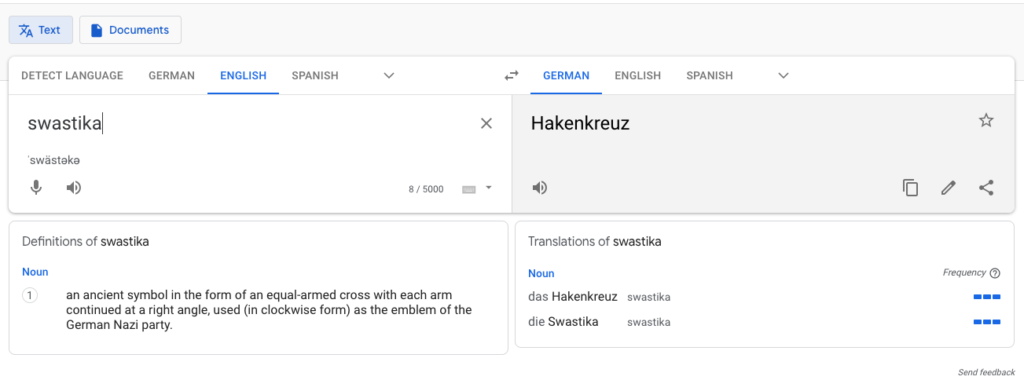
Google translate translates Swastika as Hekenkreuz in German. Notice the possible translations of the word – das Hakenkreuz and die Swastika. Also notice the definition of Swastika in english. It only defines the Hakenkreuz, the symbol used by Hitler.
Instead of translating into hooked cross, it is translated as Swastika, which is clearly wrong. So, why IS it mistranslated to Swastika? Who first translated Hakenkreuz to English as Swastika and how did that translation stick? More importantly, did Hitler adopt the eastern symbol Swastika as the anti-semitic symbol of his political party or did the inspiration come from elsewhere? These were some of the questions that recently led me to write a thread on twitter (you could also read it on the thread reader app here). I will summarize my findings below.
Colonialism and imperialism in the 18th and 19th century CE brought about a great deal of interest in the eastern cultures by the west which gave rise to the field of oriental studies and orientalism. All things east were considered exotic and the ‘popular’ phenomenon of cultural appropriation led to the adoption of various eastern symbols in the west. One among those was the Swastika. It shot up in popularity among the western academicians in the 1880’s and pretty soon entered the pop culture scene as a symbol of good luck, akin to today’s good luck charms like Maneki-neko (Japanese beckoning cat), Chinese fortune cookies or the Irish shamrock.
A report by Thomas Wilson titled ‘THE SWASTIKA, The earliest known symbol, and its migrations; with observations on the migration of certain industries in prehistoric times” for the US National museums in 1894 wonderfully compiled the then existing knowledge of Swastika. It is meticulous and very clearly written with almost no bias from Mr. Wilson. This also happens to be the first recorded instance where an English speaker tried to compile all the crooked cross like symbols and used the umbrella term of Swastika in English. Until then, the word Swastika did not exist in any english dictionary or encyclopedia. He writes in the preface:
An English gentleman, versed in prehistoric archæology, visited me in the summer of 1894, and during our conversation asked if we had the Swastika in America. I answered, “Yes,” and showed him two or three specimens of it. He demanded if we had any literature on the subject. I cited him De Mortillet, De Morgan, and Zmigrodzki, and he said, “No, I mean English or American.” I began a search which proved almost futile, as even the word Swastika did not appear in such works as Worcester’s or Webster’s dictionaries, the Encyclopædic Dictionary, the Encyclopædia Britannica, Johnson’s Universal Cyclopædia, the People’s Cyclopædia, nor Smith’s Dictionary of Greek and Roman Antiquities, his Greek and Roman Biography and Mythology, or his Classical Dictionary. I also searched, with the same results, Mollett’s Dictionary of Art and Archæology, Fairholt’s Dictionary of Terms in Art, “L’Art Gothique,” by Gonza, Perrot and Chipiez’s extensive histories of Art in Egypt, in Chaldea and Assyria, and in Phenicia; also “The Cross, Ancient and Modern,” by W. W. Blake, “The History of the Cross,” by John Ashton; and a reprint of a Dutch work by Wildener. In the American Encyclopædia the description is erroneous, while all the Century Dictionary says is, “Same as fylfot,” and “Compare Crux Ansata and Gammadion.” I thereupon concluded that this would be a good subject for presentation to the Smithsonian Institution for “diffusion of knowledge among men.”
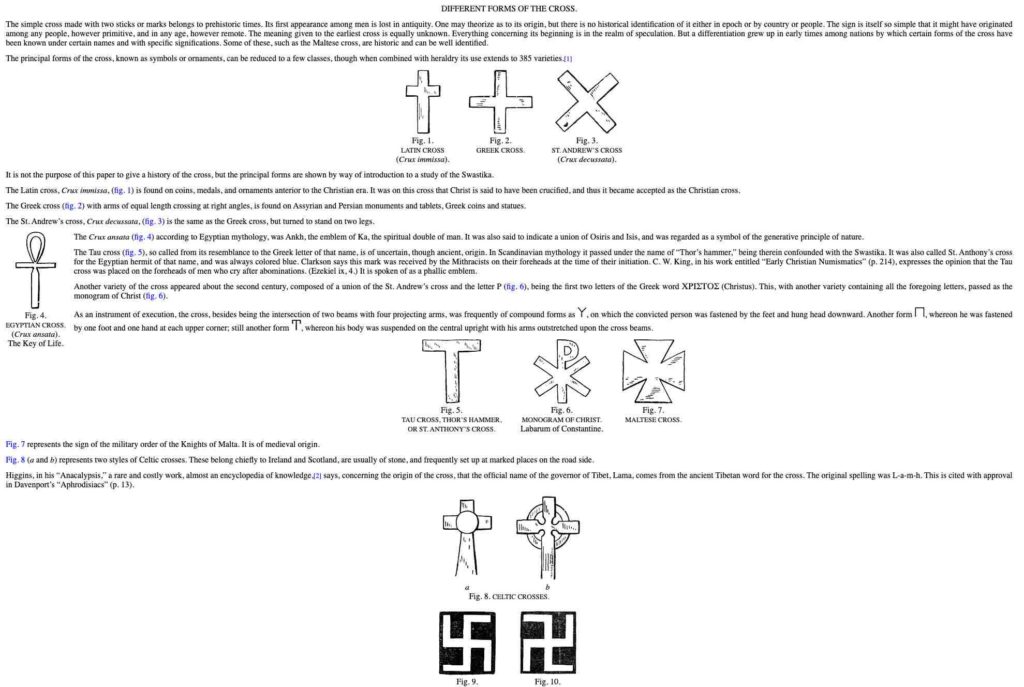
In this report, Wilson examined different forms of crosses that had been found all around the world and concluded that Swastika is the most ancient one of them all.
Different cross-like symbols examined by Thomas Wilson in THE SWASTIKA
He complied various definitions of Swastika as recorded by different researchers and it was commonly understood to mean ‘good being’ or ‘good fortune’ in Sanskrit. The symbology was interpreted by different academicians differently. Although mostly everyone agreed that it is an auspicious symbol for the hindus and buddhists, there was no consensus on how to interpret the symbology. He writes,
Many theories have been presented concerning the symbolism of the Swastika, its relation to ancient deities and its representation of certain qualities. In the estimation of certain writers it has been respectively the emblem of Zeus, of Baal, of the sun, of the sun-god, of the sun-chariot of Agni the fire-god, of Indra the rain-god, of the sky, the sky-god, and finally the deity of all deities, the great God, the Maker and Ruler of the Universe. It has also been held to symbolize light or the god of light, of the forked lightning, and of water. It is believed by some to have been the oldest Aryan symbol. In the estimation of others it represents Brahma, Vishnu, and Siva, Creator, Preserver, Destroyer. It appears in the footprints of Buddha, engraved upon the solid rock on the mountains of India. It stood for the Jupiter Tonans and Pluvius of the Latins, and the Thor of the Scandinavians. In the latter case it has been considered—erroneously, however—a variety of the Thor hammer. In the opinion of at least one author it had an intimate relation to the Lotus sign of Egypt and Persia. Some authors have attributed a phallic meaning to it. Others have recognized it as representing the generative principle of mankind, making it the symbol of the female. Its appearance on the person of certain goddesses, Artemis, Hera, Demeter, Astarte, and the Chaldean Nana, the leaden goddess from Hissarlik, has caused it to be claimed as a sign of fecundity.
Until then, Swastika, as a symbol was known by different names in different languages because the symbol existed almost everywhere in the world, in Asia, Europe, northern Africa and the Americas. Also in Great Britain. So, what did the English call the symbol? Fylfot. Wilson writes,
In Great Britain the common name given to the Swastika, from Anglo-Saxon times by those who apparently had no knowledge whence it came, or that it came from any other than their own country, was Fylfot, said to have been derived from the Anglo-Saxon fower fot, meaning four-footed, or many-footed.
So, there existed a word for the 卐(crooked cross) symbol in english but only for the 卐 found in and around great britain. Instead of using this word for all crooked crosses in English, Mr. Wilson instead chose to use the word Swastika since he found it to be the most ancient of them all. This was a ham-fisted move because the Indic name swastika corresponded to the 卐 that symbolized auspiciousness which the other crooked crosses did not. Even Wilson admits that by quoting a letter by the famous Indologist Prof. Max Müller,
I do not like the use of the word svastika outside of India. It is a word of Indian origin and has its history and definite meaning in India. * * * The occurrence of such crosses in different parts of the world may or may not point to a common origin, but if they are once called Svastika the vulgus profanum will at once jump to the conclusion that they all come from India, and it will take some time to weed out such prejudice.
So, in 1894, the word Swastika was proposed by Mr. Wilson to denote all crooked crosses in english language and we see that the practice stuck since the use of the word in english language increased since then. So, is this when the German word ‘Hakenkreuz’ started being called as Swastika? Interestingly, no! In fact, the report mentions finding variants of swastika in Germany but mentions no name in German. ‘Hakenkreuz’ was barely used until then and was relegated to 19th century vocabulary books like the Bailey-Fahrenkrüger’s Wörterbuch der englischen Sprache and the Deutsches Wörterbuch von Jacob Grimm und Wilhelm Grimm (yes, they are the Brothers Grimm of Grimm’s fairy tales). So, to answer one of the questions posed above, ‘Hakenkreuz’ wasn’t actually translated into English. By the time germans started using Hakenkreuz as the word for the infamous anti-semitic symbol, the English speaking world had already picked up on the word Swastika and called any crooked cross symbol as such.
So, when and why did the Nazis adopt the Hakenkreuz as their anti-semitic symbol? The reason goes all the way back to Troy, the location of the fabled trojan war (it’s an interesting story, you can read a detailed article here). When a german businessman and amateur archeologist Heinrich Schliemann found the remains of the mythical city of Troy in modern day Turkey in 1871, along with the ruins, he found the 卐 symbol on everything – pieces of pottery, ruins of buildings, marble carvings, etc. Being an amateur archaeologist he did not understand the significance of his find. So, he consulted his orientalist friends – Max Mueller(yes, the same guy who didn’t want to call ‘Swastika’ found outside India as Swastika) and Émile-Louis Burnouf, a leading expert of Sanskrit. Fun fact: Bernouf was also an anti-semite and a propounder of Aryan master race.
Burnouf made a bunch of dubious claims (debunked by Wilson in his monumental report on Swastika) which was covered in Schliemann’s book ‘Troy and its remains‘ and concluded that Suastika (that was the spelling he went with) is an essential symbol of the Aryan race. The popularization of this flawed idea led to its appropriation as the symbol by the German ‘Völkisch‘ national movement gaining steam at the juncture of 19th and 20th century. It was a nationalistic movement which propounded that Germans belong to the Aryan ‘master race’ and hence need to dominate the world. Poetically, the year Burnouf breathed his last, 1907, was also the year when the Swastika was first used as a symbol of Aryan dominance by a secret society called ‘Order of the New Templars’ (Ordo Novi Templi, or ONT) in Austria by Lanz von Liebenfels, an Austrian racialist. So, in early 20th century, as most of the west started embracing Swastika as a ‘cool’ motif, it was also being appropriated secretly by an anti-semitic and racist underground movement becoming a symbol of racial supremacy for various organizations until it was mainstreamed by Hitler in the Nazi flag in 1920.
Flag of the ‘Order of the new Templars’. This was the first instance of Swastika used as a symbol of Aryan dominance in 1907.
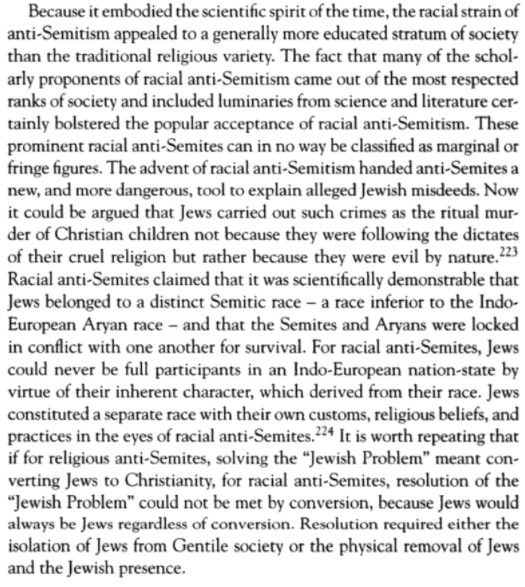
What inspired Hitler to choose this symbol for his political party? Was it just the connection to Aryan race or did the inspiration come from elsewhere? The anti-semitism displayed by the Nazis did not arise from a vacuum. Anti-semitism or anti-Judaism has existed in Europe since pre-Christian times but morphed into ‘religious anti-semitism’ due to the early christian belief that jews were collectively responsible for the death of Jesus Christ. This sentiment and the associated conflict intensified after Christianity spread as a state religion in Europe. However, the pseudo-scientific racial theories that became widespread in 19th century Europe threw up an additional strain of ‘racial anti-semitism’ where the basis of discrimination and persecution was the ‘scientific evidence’ that jews belongs to a separate lower ‘non-Aryan’ race. The combination of these two strains of anti-semitism, one historic and one modern, manifested politically in the form of Hitler’s Nazi party.
Professor William Brustein’s book, Roots of hate delves deep into pre-Holocaust anti-semitism in Europe
Adolf Hitler was a complicated man to understand. Forests have been felled to publish books speculating his inspirations and motives. Most scholars however agree that although Hitler distanced himself away from Christianity in his later years, he leaned heavily towards christianity in his early years. His catholic upbringing, his admiration for
The fourth article in this series will focus on why so many in global academia, global establishment, global media, global entertainment, global culture and the global public are so scared of and opposed to eastern philosophy, Swami Vivekananda and Ramakrishna while simultaneously appropriating much of eastern philosophy encoded in new language without attribution.
Part of the attack against eastern philosphy and Hinduttva derives from a hatred of the West and the fact that Western philosophy draws heavily from the east in four periods. Ancient Arya history or more than 3,000 years ago. During exchange from Alexander the Great through the Roman period. During European Enlightenment Classical liberalism [in many ways a derivative of Arya Hindu Chaarvaaka Darshana], and what is now called Post Modernism [which derives from Karl Marx’s study of India]. Much of it derives from many other causes which I am trying to understand.
Note that a stand alone post is planned to discuss the above presentations by Professor Jeffery D. Long, Professor Makarand Paranjape, Professor Anantanand Rambachan, andPprofessor Sharada Sugirtharaja. Brown Cast plans to interview Professor Jeffrey D Long with respect to Sanathana Dharma and Indology. If you have any questions for him, please leave it in the comments.
The below discussion between the San Francisco academic Vamsee Juluri and Hinduism’s great atheist Kushal Mehra discusses the Hinduphobia in global academia:
[Add summary of above video]
In the above video discussion Anjali George discusses why the Indian supreme court has forced the shut down of the ancient Sabarimala temple. Sabaramila is a brain therapy facility where woman and girls send their dysfunctional boys and men to–in order to fix them. To join the program and visit Sabaramila temple boys and men had to practice a very rigorous difficult 40 day regiment. Because most males are stupid fools, their woman and girls would:
gently persuade them to join [who are we kidding, in some cases girls aren’t that gentle and intimidate their men and boys into joining]
help them complete the regiment [in eastern philosophy and Toaism intelligence (medha) is female and males aren’t that bright, which is why they needed the help of their girls and woman]
keep a much more luxurious temple for themselves, a woman’s Sabrimala if you will.
Eastern philosophy is a matriarchal system of the divine feminine. Woman and girls run things. Woman and girls set up a brahmacharya Ayyapa tantra (technology) facility to help improve males. Pre pubescent girls and post menopause females can conduct the 40 day regiment and visit the brain therapy facility too.
However the supreme court of India appears to have mandated that females of child bearing age, pre-pubescent girls and post menopause woman and males need to be able to visit any part of the temple they wish at will, without completing a difficult 40 day sadhana. Naturally India’s females are furious at the Indian supreme court. Many of India’s woman see this as a me too attempt to harass Ayyapa, a celibate young male. Many of India’s females also see this as an attempt to let males be lazy and not complete their 40 day Sadhana. India’s woman are also furious that the global press, global entertainment and global academia are using this incident to demonize eastern philosophy. Which is rich, considering that the east has been feminist for thousands of years before Christ. Indian females who oppose the global “woke” narrative are being demonized as proto Nazis or proto fascists or proto male misogynist supporters of the patriarchy. One eastern female being so demonized is Anjali George. Anjali George defends eastern woman from the post modernist and caucasian intelligentsia (baizuo) critique.
Here is another perspective on Hindutva:
This appears to attribute Hindutva to a backlash against “secularism” where secularism appears to be defined as cultural marxist post modernist woke SJW.
I’ve found myself drifting further left than I expected this year. Much of that is circumstantial, being involved in local activism in the United States naturally places one within progressive coalitions. Yet even in this frame, my ideological compass is firmly rooted in some admiration for Brahminical continuity and Bharat Mata as civilizational anchor.
At times I speculate on where Bharat truly ends. Is it the Hindu Kush? The Iranian plateau? The Persian world has always seemed to me about 20–30% Indianise; its mythology, musicality, and memory bear the imprint of the Indo-Aryan stream more than the Indo-European one, no matter how insistently modern Iranians lean toward a Westward identification.
This brings me to a provocative thesis I’ve often floated: that Brahmins are the civilisational custodians of the Indian subcontinent, and that their displacement often signals a broader cultural erasure. The tragedy of the Kashmiri Panditsis not merely a community’s trauma, but a warning. Without Brahminical continuity, Vedic frameworks falter. Hinduism in Pakistan and Bangladesh remains vulnerable precisely because it lacks the embedded authority and supervisory function of Brahmin elites to anchor Vedic traditions and calibrate resistance to incessant Islamisation. Continue reading Caste in America