When the Commentariat lies

I’ve updated this post (Brown Pundits is not an echo chamber) after realising something important.

What began as a spirited disagreement veered into something darker. It turns out that bombay_badshah, a voice I initially assumed to be new, may not be who he claims to be (I had a hunch but so did Kabir, that BB was HS reincarnated). The posting style, the fixations, the timing; all too familiar. My suspicion is that BB may be a derivative or proxy of HS, previously banned. If true, this was not a genuine disagreement; it was entrapment, bait-and-switch.

In that light, I owe Kabir an apology. He was provoked in bad faith by someone who may be operating behind a mask. And that matters, because here on Brown Pundits, identity isn’t incidental; it shapes perspective, and we respect that. We excavate worldviews, not just opinions.

While I cannot definitively prove that BB is HS, the circumstantial evidence is strong. I will allow BB to remain but if the commentary returns obsessively to Kabir or Pakistan, I will intervene. Everyone is welcome to engage on substance. But this space will not be hijacked.

The original post remains below the jump, unedited but its context has now changed.

Continue reading When the Commentariat lies

Why Pakistan Won’t Go the Way of Iran

I’ve been enjoying the new direction Brown Pundits has taken since the recent shake-up. Posts are now generating 100+ comments, and that kind of engagement creates a virtuous cycle. You want to write more, think more, respond more. I’m leaning into that.

For now, a lot of the content burden rests on me and that’s okay. It’s been encouraging to see older names return: Girmit, for instance. It feels like a slow reconsolidation of the original readership. Letting people return on their own terms.

Meanwhile, BRAHM, my newsletter, has taken on a different role; a home for more composed writing, life pieces, and the slow launchpad for my business. I just posted something there recently, which I’ll link to for now and follow up on soon. But here, on BP, is where I let myself think in public. Where I go long. Where thoughts breathe.

Continue reading Why Pakistan Won’t Go the Way of Iran

Brown Pundits: Broad Church or Narrow Canon?

Brown Pundits Must Stay a Broad Church

Reading Kabir’s thoughtful post on the “soft Hindutva” bias at Brown Pundits, I found myself both agreeing with parts of his argument and diverging from its framing. My own journey with BP goes back to its inception. The blog was born in Twixmas December 2010; 10 days after I had met Dr. Lalchand, whose presence has profoundly shaped my civilizational views.

I say this not as a biographical aside but because BP, at its best, is where the personal and civilizational collide. We bring who we are; our marriages, our migrations, our contradictions, into this messy, brilliant conversation.

At the time, like many Pakistanis, I held a deep-seated assumption: that Hindus were fundamentally “other.” It wasn’t overt hatred; just a civilizational distance, internalized from birth. But Dr. V & Brown Pundits challenged that.

A Forum With Bias? Yes. But Which One?

The heart of BP is not neutrality; it’s the willingness to host contradiction. That is its genius, and it must be protected.

Continue reading Brown Pundits: Broad Church or Narrow Canon?

Pakistaniat & Urdu from Qasim to Quaid

UP’s very long shadow:

As I board my flight back to the UK after a brief but productive trip, I find myself reflecting on a language that continues to haunt and inspire me: Urdu.

It is a tongue caught between paradoxes. The language of courtesans and qawwals, of sacred supplication and sly seduction. It carries within it the scent of jasmine and blood, of Delhi’s dusk and Lahore’s lingering grief.

The Beloved Guardian of the Baha’i Faith once noted that while most Baha’i texts should be translated from English, Urdu alone is trusted for direct translation from Persian and Arabic. That proximity, that spiritual siblinghood with Persian, the language of kings, and Arabic, the language of God, renders Urdu magical.

Sanskrit, of course, is the language of gods, but Urdu, its stepdaughter of sorts, captures the longing of poet to partisan.

There’s a reason the Bahá’í prayer I share below is so piercing in Urdu. So here, before I cross back into another timezone, I offer this prayer—without commentary, without translation. Just Urdu, as it was meant to be heard.

And I wonder: perhaps this is what Pakistan truly is—a project in transcending the local. Not rooted in soil, but in sentiment. A place where Punjabis, Pathans, and Muhajirs are asked to shed skin and commune in Urdu. Where Pakistaniyat, for all its fractures, has succeeded in producing a common idiom: of piety, pride, and pain. Continue reading Pakistaniat & Urdu from Qasim to Quaid

Ta’arof & The Art of Flattery


Because Tarof isn’t about numerical formulae. It’s not just “no means yes after the third try.” It’s not a knock-knock joke.

Onunchi, Ta’arof, and High-Context Societies

Tarof is best understood as high-context negotiation within deeply hierarchical and emotionally attuned societies; a kind of cultural Onunchi (옚눈ìč˜), for those familiar with Korean sociolinguistics. It’s the art of reading the room before the room speaks. More than etiquette, Tarof is a performance of dignity through flattery, deferral, and intuition.
And that’s precisely what’s being lost; not just in Rainn’s version, but in the Westernisation of diasporic Persian culture more broadly.


Read More Here

đŸȘ™ What’s in a Name? Mukesh, Not Mukash.

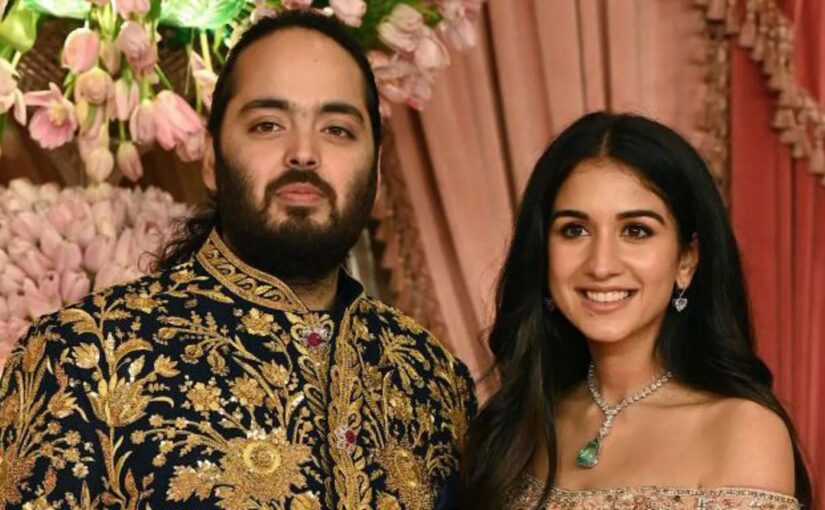
While reading Brad DeLong’s fascinating newsletter on centi-billionaires and political power (I’m going to ignore Elon’s self-imploding stunt), I noticed something that jarred me more than it should have: Mukesh Ambani’s name was misspelled as “Mukash.” A minor slip, perhaps. But it was the only error in a list that included Bernard Arnault, Warren Buffett, and Michael Bloomberg—men whose names command a certain global familiarity.

What does it say that even after spending nearly half a billion dollars on a wedding for his son, India’s wealthiest man doesn’t merit a spellcheck? It says a lot.

🧠 The Chimera of Respect via Capital Continue reading đŸȘ™ What’s in a Name? Mukesh, Not Mukash.

South India Makes British India Hindu?

TNT Saved Hinduism; Dravidia preserved Aryavarta?

S. Qureshi: “Muslims are today a majority of the population >50% of North British India. If peninsular south was made into its own country in 1947, India would be a Muslim majority country today. Many Muslims actually wanted South India to be a separate country and North India (including Pakistan/Bengal) to be one unit. To say that Indian Muslims who lived in the historical centre of Muslim power for centuries would just get up and leave for Pakistan is just farcical and delusional. These types of ideas were only proposed by extreme right-wing Hindu organizations after partition, and these ideas seem to become mainstream today with BJP. Historical reality, like always, is very different.”

The demographic map of the subcontinent tells a startling story. If South India had formed a separate state in 1947, the rest of British India — encompassing Pakistan, Bangladesh, and the northern Hindi belt — would today constitute a Muslim-majority civilizational bloc. This isn’t conjecture. It’s arithmetic.


The Numbers That Reorder the Narrative

Here’s what the Indo-Gangetic arc looks like today (please fact check me): Continue reading South India Makes British India Hindu?

Why did so many BAME (Black, Asian and Minority Ethnic) voted Tory? (a)

This is a follow up to:

Why did so many BAME (Black, Asian and Minority Ethnic) voted Tory?

It appears that Jews, Indian and African Britons abandoned Labour in droves and voted for other political parties. Would be curious to learn who they voted for. Suspect many voted for the Liberal Democrats.

As described by Veedu Vidz in the above previous Brown Pundit post, moderate muslims also appear to have abandoned Labour en mass. Who did moderate muslims vote for?

Are there any English exit polls? [Updated with this exit poll hat trip Ali Choudhury.] Do we know how Pakistani Britons, Bangladeshi Britons, Indian musiim Britons, muslim Britons in general voted?

In the above conversation it was implied that minorities and people of color in USA vote Democrat. My response is that in America Asian Americans and Latino Americans are “swing voters” not wedded to either party. Black African Americans vote overwhelmingly Democrat. However, I think President Trump will likely do a lot better with the Black African American vote in 2020 than he did in 2016.

From page 26 of the exit poll provided by Ali Choudhury, we can see the following:

  • Labour lost only nine percentage points of the BAME vote
  • Conservative Tories gained only one percentage point in additional BAME voters
  • Liberal Democrats gained only six percentage point in additional BAME voters
  • Other political parties gained two percentage points of additional BAME voters

Labour–if these exit polls are not contradicted by other exit polls–did FAR better in 2019 among BAME voters than I thought (and that many political commentators thought). To my surprise the Liberal Democrats only gained six percentage points of BAME voters (for 12% total) and the Conservative Tories only gained one percentage point in additional BAME voters.

My new question is why did the overwhelming vast majority of BAME Britons vote for Jeremy Corbyn? Why did so few BAME Britons vote Liberal Democrat?

Did the moderate muslim Britons almost universally vote for Jeremy Corbyn? If so, why? Would love to hear from Veedu Vidz and Rakib Ehsan.

Brown Pundits