Kabir says calling India, that is Bharat, a civilisational state is a “right-wing position.” We disagree; and the disagreement isn’t political, it’s archaeological.
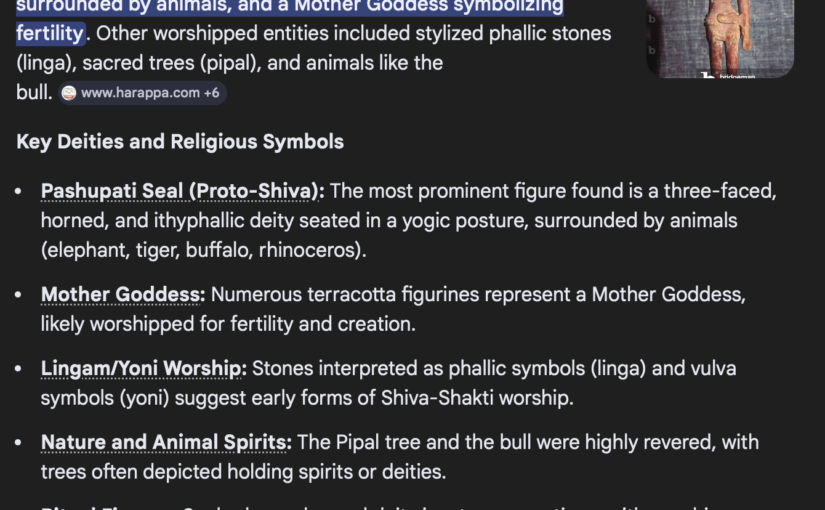
Look at what Mohenjo-daro actually gives us: the Pashupati Seal; three-faced, ithyphallic, seated in yogic posture, surrounded by elephant, tiger, buffalo, rhinoceros. Proto-Shiva. The Mother Goddess figurines. Linga and yoni stones. Pipal veneration. The sacred bull. Every single religious thread runs forward into the living Hindu tradition. Continue reading On Civilisational States and Who Gets to Claim the Indus
Two comments overnight exposed different sides of the the same problem.
You Can’t Weaponise Islamophobia and Then Kneecap Hinduism
Kabir tried to circulate a link around Manu Pillai’s Gods, Guns and Missionaries, a serious book, framed around whether Hinduism was, in some sense, constructed. The question is legitimate. All traditions are constructed. All identities consolidate under pressure.
But Hinduism and Islam are pari passu in this respect. The nineteenth century shaped both. Colonial enumeration shaped both. Reform movements reshaped both. Romila Thapar, Wendy Doniger, Sheldon Pollock; the literature on Hindu consolidation is vast. So is the literature on Islamic reform: Wahhabism emerging from Najd in the 1740s, Deoband crystallising in 1867 directly in response to 1857, Barelvism as counter-movement to both. All traditions have formation moments. All traditions modernise under pressure.
To apply the deconstructive lens to Hinduism while leaving Islamic historiography untouched is not intellectual rigour. It is asymmetry. Kabir, who deploys “Islamophobia” as a first-strike weapon with the hair-trigger of a seasoned litigator, has never shown the slightest inclination to subject his own tradition to equivalent scrutiny. If the lens is universal, use it universally. If it is selective, say so.
Anything else is prosecution dressed up as scholarship.
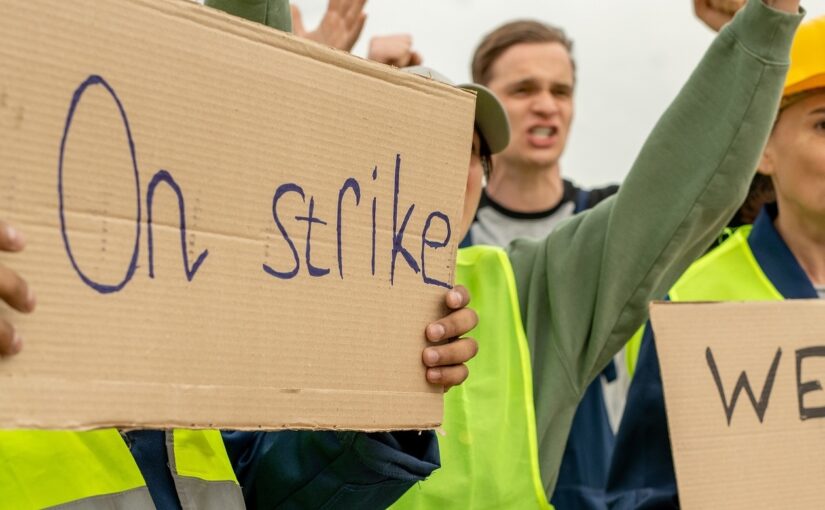
The silence on BP these past few days feels deliberate; a kind of Saffron Strike. If so, let it be known: this space was never meant to cater to ideological comfort.
It seems uncommonly quiet; I think I have been misunderstood. I do not care about the traffic and commentary of BP as much as I care about the integrity of the space.
For instance when I felt that Kabir had done wrong; interdiction was the answer. When I realised the narrative was being twisted so that I became his moderator (Kabir generally knows my red lines) then I realised I was wrong. Kabir’s recent postings and commentary have been very high-signal. Continue reading Saffron Strike
We had a quiet Diwali dinner with some South Asian literati here in Cambridge, Mass. No fireworks, but some useful clarity especially about the need for a unified South Asian voice, and where Brown Pundits fits in.
Threads, Fire, and a New Warrior Class
Kabir remains catnip for the Commentariat or as I’ll now call them, the Saffroniate (Brahmins or Brahminised). They pretend otherwise, but the numbers don’t lie. The threads light up when he’s around and yes, I’m aware of the layered joke: threads mean something else too, especially to our youngest Pundits-in-training. Continue reading Fire and the Saffroniate
A week ago, I imposed an interdiction on Kabir ; a move I felt was necessary at the time, not because of his views, but because of the manner in which they were expressed. His tone, his dismissal of this platform, and his tendency to escalate rather than de-escalate all contributed to that decision. But now, I find myself wondering: was Kabir right about Brown Pundits?
Since his departure, the commentariat has gone unusually quiet. Threads that once sparked with disagreement, energy, and engagement have gone still. There is a strange calm but it feels like the calm of a museum, not a marketplace of ideas. And what’s become increasingly clear is that the “peace” has come at a cost. That cost is vibrancy. That cost is friction. That cost is participation. Kabir, for all his faults, drew fire, and fire draws people.
This raises a more fundamental question: am I overestimating the commentariat’s interest in the core mission of Brown Pundits? Were people here for civilizational dialogue, or were they here for the masala of Indo-Pak antagonism? It’s disheartening to admit, but the numbers speak for themselves. Kabir had been blocked years before (not by me), and when I released Loki from his cage, well on his return, so did the attention. Continue reading Was Kabir Right?
I’ve made a decision: Kabir will no longer be allowed to comment on Brown Pundits.
This isn’t about silencing the only active Pakistani Muslim voice here. Nor is it about shutting down disagreement. It’s about something more basic: respect; for this space, for conversation, and for the people who show up in good faith.
Earlier today, I had to invoke the five-comment deletion rule after one of Sbarrkum’s replies crossed a line. He impliedgrotesque accusations. I’ve said it before: all life is sacred. That kind of slander won’t stand. Ever.
The admins have asked me for some time to be firmer. I’ve held back. I value openness. But Brown Pundits is not a free-for-all. We care about how people argue, not just what they argue.
I’d meant to write something calmer after yoga. Because I care about this project. I believe in it. BP must be a place of respect. That comes from a deeper idea; dharma, a commitment to plurality and balance. Even when we fall short, that’s the standard we aim for.
I’m not saying India, or the BP commentariat, always gets it right. Sometimes, on topics like caste, we speak from a place of blind privilege. And as the founder, I know my voice carries weight. That’s not always fair.
But this is the key: we must disagree with grace. And Kabir doesn’t. His tone is often scornful. He treats this space as beneath him.
Over the years, I’ve seen something: for many Pakistanis, the deepest value is ‘Izzat; honour and status. It often matters more than truth. But that ‘Izzat seems to vanish in the face of power—especially when that power is Western or Arab. Kabir speaks glowingly of “the West.” But when it comes to Dharma Asia, he sneers.
That sneer has been aimed at Brown Pundits. And I won’t allow that anymore. Kabir may see BP as “lesser,” unworthy of his respect. You don’t get to sneer and stay.
This isn’t a permanent ban. But it is an interdiction. Kabir is welcome to focus on his Substack. I wish him well. If he ever wants to return, he can contact me directly. But that will require real contrition; not performance.
Let me end with this: this is not about politics. People here hold strong views; on India, on Palestine, on religion. That’s not the problem. The problem is contempt. Mockery. Scorn. Brown Pundits will always welcome hard conversations. But only if they’re honest. And only if they’re respectful.
On Nivedita & Archer’s joint request (Mamnoon/Tashakor/Merci for the kind words); I’m going to expand on my comment:
“Kabir is definitely right. Ethnicity in Pakistan is complex; there are three tiers of society. The English speaking elite (Imran is part of that so is Kabir), who are “Pakistanis” and ethnicity isn’t really reflected on…”
This comment, which the BP archives have tons of similar posts on (BP was venerable even in 2014), sketches the bones of Pakistan’s sociological map. But what lies beneath the skin?
Pakistan is feudal; India is not.
That one statement alone explains much. Landholding elites dominate politics, rural economies still function on patronage, and class mobility is rare. Caste, though “denied,” is real and sharper, in some ways, than it could ever be in India (the reservation system does not really exist in Pakistan except for religious minorities but not for socio-economic castes). Pakistanis can sniff out class in one another with a dexterity that’s probably only matched in the United Kingdom, which is the home of class stratification (I remember reading Dorian Gray in Karachi in the early millennium and shocked how similar late Victorian early Edwardian England was).
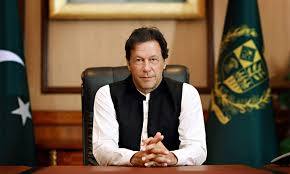
The postcolonial state froze itself in amber. There has never been a serious leftist rupture, excepting 1971’s successful Bengali revolution. Even Imran Khan, who styled himself a reformist, is a product of elite schools, Aitchison College, Oxford, and aristocratic lineage. His “Islamic socialism” was only ever viable because Pakistanis still believe in myths of the benevolent landlord.
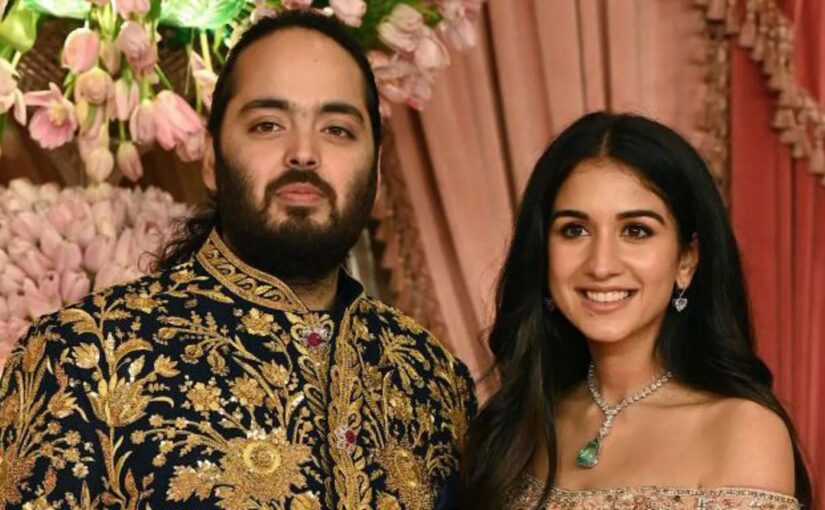
I was speaking with Dr. Lalchand about a number of things, from Anant Ambani’s wildlife project to the recent caste discourse on Brown Pundits. Both, strangely enough, converge around the theme of scrutiny; of who gets to build, who gets to critique, and who sets the rules of engagement.
Let’s start with Vantara. Anant Ambani’s wildlife refuge is coming under sustained criticism. But I ask: why shouldn’t Bharat, arguably the only major civilisation that views animals as divinely inspired, have a world-class zoo or rescue center? If done with sensitivity and vision, this could be a profound expression of India’s Hindu civilisational ethos.
Vantara houses over 200 elephants, 50 bears, 160 tigers, 200 lions, 250 leopards, and 900 crocodiles; albeit imported from across the world into the baking flatlands beside an oil refinery. The scale is staggering. Yes, there are questions: about captive animal welfare, about the case of Pratima the elephant, about transparency. But we should also be able to think of Indian megafauna conservation at global scale especially in a nation where sacred animals are part of dharmic memory.
America had its Gilded Age. The robber barons left behind libraries, parks, and museums. Can’t India do the same? Or do we reflexively dismiss anything built by wealth as vanity? Can there not be a deeper Dharma behind patronage?
Every movement has its lightning rods. In American politics, Ilhan Omar is one: progressive, unyielding, often correct in substance but polarizing in style. She calls out genuine injustices, but her timing and tone can sometimes drown out the very points she is trying to make.
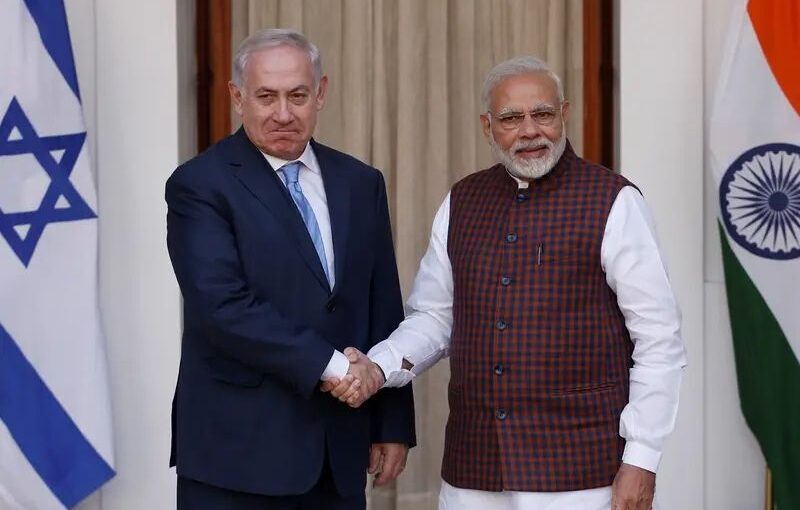
I’ve begun to realize that Kabir plays a similar role on Brown Pundits. Like Ilhan, he often raises necessary truths (for instance Israel has just killed an American family in Lebanon). Like Ilhan, he brings traffic, visibility, and energy. But also like Ilhan, he has a way of inflaming rather than persuading.
Charlie Kirk’s remarks illustrate why Ilhan Omar’s critiques resonate, even if her tone divides. When Kirk sneers that there are “no tall buildings left in Gaza,” or jokes that Palestinians are “stupid Muslims” for resisting, he is not just making political commentary. He is engaging in dog-whistling — racialized, sexist, Islamophobic rhetoric that devalues human life. Combined with his earlier comments about the supposed lack of “brain processing power” among prominent Black women, the pattern is unmistakable. One does not have to be a progressive to see that such speech corrodes the civic space. At the same time, none of this justifies violence: the murders of Charlie Kirk and Irina Zarutska are deplorable and must be condemned without qualification.