Caste and the Structure of Discourse

I’ve come to realise that it’s often more productive to write full posts than to engage in fragmented comment threads. The richness of thought requires a form that can hold tension, contradiction, and nuance but comments, by design, resist that.

The Upper-Caste Template of South Asian Dharmic Discourse

Take, for example, sbarrkum, who shares personal reflections and images from his life on the common board. While one might raise questions about permissions or boundaries, it’s also important to respect dialectical differences in how people choose to engage. There’s no single valid mode of expression.

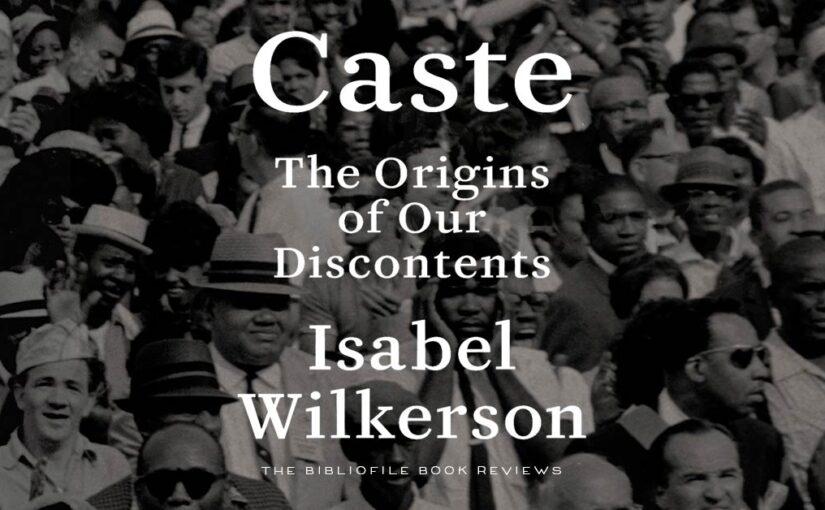
That brings me to a broader reflection: how the very structure of discourse in Dharmic South Asia has long been shaped by upper-caste templates; especially under Western influence. Over two centuries, upper castes have Brahmanised, Saffronised, Persianised, and then Westernised themselves, adopting and enforcing norms of discourse, authority, and ‘rationality.’

Why Intermarriage Doesn’t Erase Hierarchy Continue reading Caste and the Structure of Discourse

Brown Pundits and the Echo Chamber Problem

The Echo Chamber of the Commentariat

It has been on my mind that Brown Pundits, for all its liveliness, risks drifting into an echo chamber. The commentariat is our lifeblood: their activity sustains the blog far more than page views alone. And yet, the very strength of that community can also be its blind spot.

I do not want Kabir to end up being the Cassandra of BP, always warning of decline, and being proved right in the end. If we are not careful, we could slide into a right-wing echo chamber where challenging voices fade, and the capacity for deep interrogation, the core of what makes BP unique, is diminished.


Pahalgam and the Question of Narrative Continue reading Brown Pundits and the Echo Chamber Problem

The Honey Trap of the Ummah:

🕌 Reflections on Kabir, Afridi, and the Compact of Coexistence

The recent incident involving Kabir / Bombay Badshah / Honey Singh, and the orchestrated drama around his entrapment has, quite unexpectedly, become a catalyst for deeper discussion on Brown Pundits. While none have chosen to focus on analytics (“2,000 daily visitors”—thank you very much:-), the real story lies in how this drama has exposed, yet again, the deep ideological fissures within South Asian identity; especially in the India-Pakistan-Muslim triad.

Let’s begin by being honest: Brown Pundits, for all its digressions into Sri Lanka, Nepal, or Bangladesh, is still primarily a blog about India and Pakistan, and more crucially, about Indian and Pakistani Muslims. This is a feature, not a bug. The origins of the blog lie in the Sepia Mutiny, a scattered band of intellectually independent thinkers questioning dogma from every direction (which started in 2004 and if we are a “daughter blog” that we means have 20+yrs of intellectual antecedents on the Brownet), and it has now matured into one of the few platforms willing to wrestle with the ideological ambiguities at the heart of the subcontinent.

🧕 Kabir’s Point: Brotherhood, Boundaries, and the Big Choice

Kabir made an astute, if difficult, observation: that he views Indian Muslims as “brothers”, but does not feel the same about Pakistani non-Muslims.

This sounds contradictory until one understands the emotional exhaustion of watching Muslims oscillate between claiming ummah-hood when convenient, and weaponizing liberal values when needed. It’s a cognitive dissonance that creates what I can only call the moral coexistence trap: the idea that Muslims, especially in India, demand maximum accommodation, of their food (their nauseating right to murder Gau Mata on Bharat’s sacred soil itself), Faith, festivals, and foreign affiliations, while rarely extending the same pluralistic courtesy in return.

And then there’s that infamous Shahid Afridi clip, the one where he smashed his television after watching an Aarti, being performed. To many of us, that wasn’t just a cringe-inducing moment of bigotry; it begged a real question: Why do Indian cricketers continue to shake hands with Hinduphobes Hindu-hating men like Afridi and his ilk (the Pakistan cricket team)? At what point does tolerance become indulgence?

🚩 The Compact of Indian Minorities: Understand It or Leave It

Continue reading The Honey Trap of the Ummah:

Trump Has Birthed Eurasia

I’ve been busy, but I can’t shake the feeling that we’re living through the beginning of a new world.

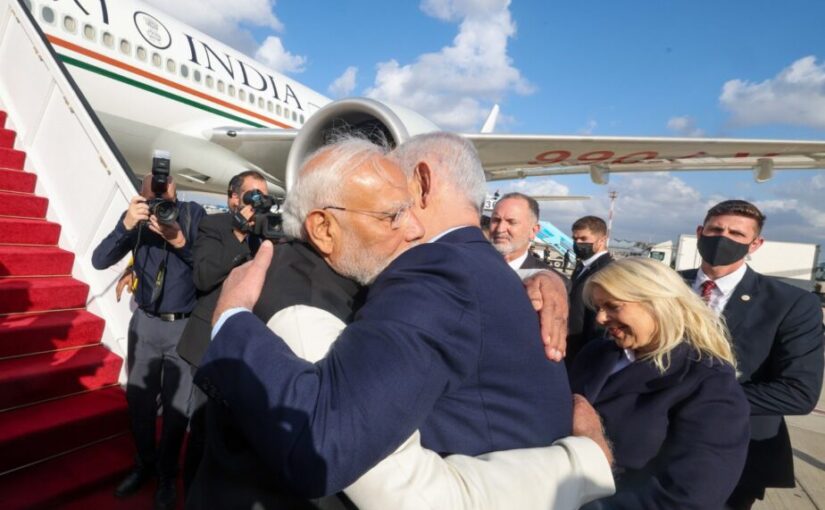
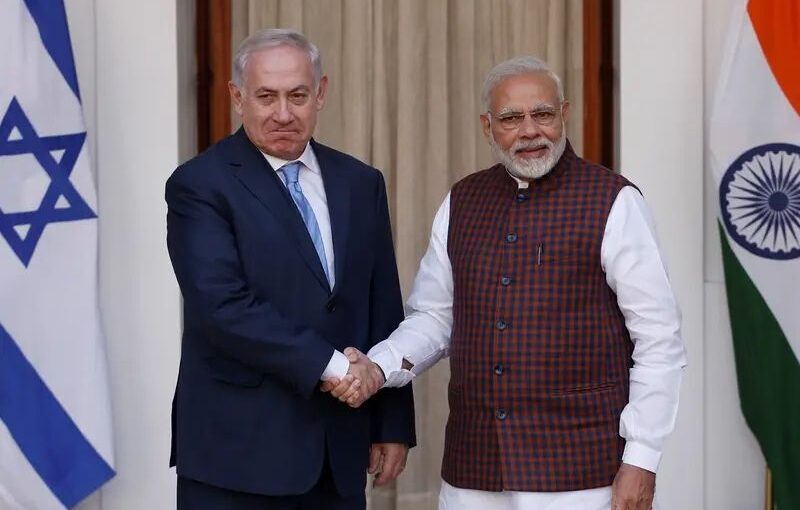
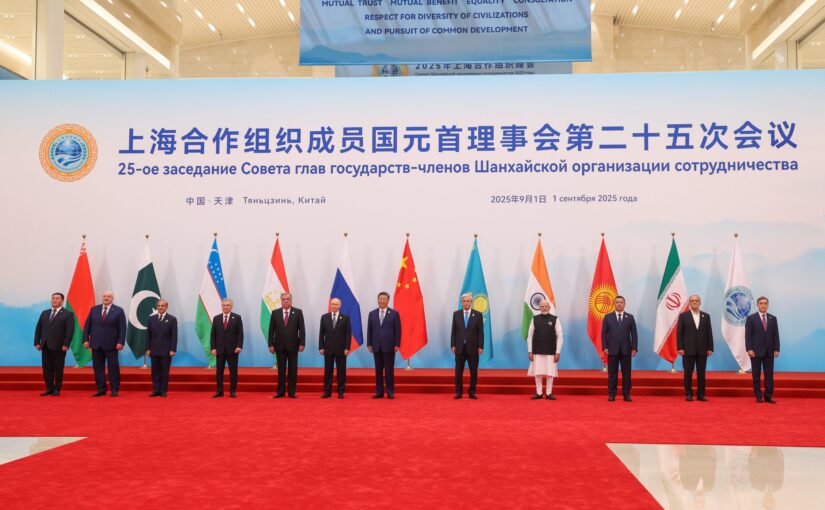
It was acute with the SCO summit; not just through the headlines, but the atmospherics. The handshakes, the body language, the ease. It’s the kind of thing that barely registered in Western media, but Modi’s presence, standing shoulder to shoulder with Xi, Putin, and Pezeshkian, felt like the curtain rising on a new geopolitical epoch.

And at the center of it all? Donald J. Trump. Not by design, of course. But by consequence.


🔥 The Modi Factor Continue reading Trump Has Birthed Eurasia

USA, India, Pakistan.. an eternal prickly braid

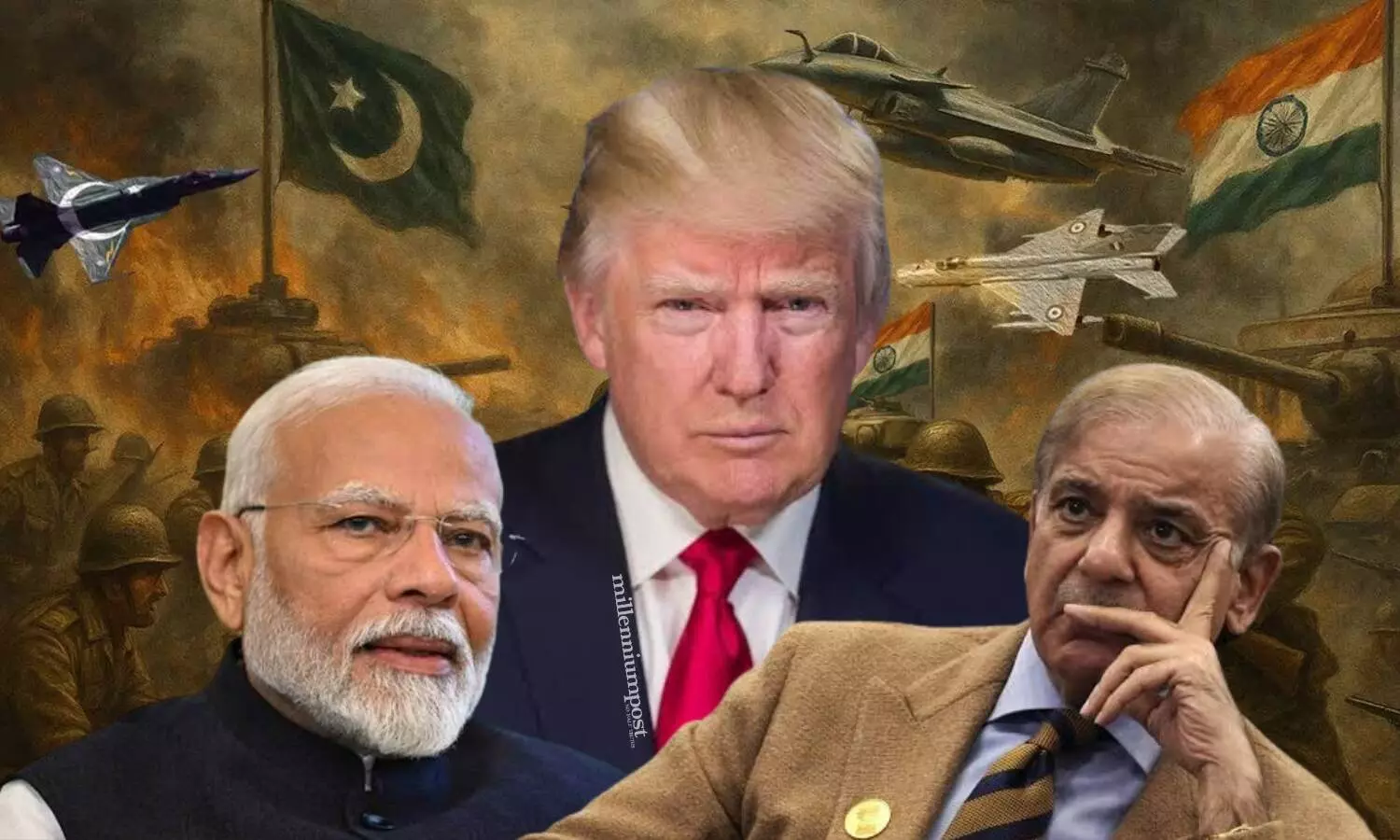
Trump makes U-turn, says 2 leaders of India-Pak 'decided' to stop conflict

Since the 1990s, Western powers (aka the USA and it’s vassals) have been building up a relationship with India that paints India as a fellow liberal Democracy (and a possible future partner against the new enemy bloc led by China). Beyond these propagandistic talking points, there is supposed to be real convergence on some big things: Demographics, slowly laid economic foundations and baseline cultural strengths combine to make India a rising economy; At a time when birth rates are below replacement in the first world, there is going to be no bigger source of labor or talent. If businesses have to “derisk” from china, they have southeast Asia and India as the natural targets. If other Asian countries are to resist total Chinese hegemony, there is no way to do that without Indian help. And so on.

Throughout this period there have been many prickly issues between the partners (eg a recurring complaint from India that the West supports Pakistan, which sends terrorists into India; on the other hand there is a recurring Pakistani complaint that the USA does not pay enough and (especially in the last decade) is too willing to accept India as the regional hegemon; and well justified complaints from everyone that India is too protectionist) but the public diplomacy has remained positive and feelgood for the most part. All that started to change somewhere in May 2025 and it has been rapidly downhill in the last one month as Trump has publicly attacked India for being protectionist, accused it of being a dead economy, and completely ignored Indian “sensitivities” about Pakistan.

Until now, Indian officialdom has tried to stay sober and avoid inflammatory responses, but they have also resisted the choice (already taken as the path of least resistance by UK, EU and Japan) of massaging Donald’s massive ego and nominating him for some Nobel prizes to get past any personal hurdles. But of course India’s social media army has no such hesitation and on that front the bonhomie of the last few years has completely evaporated, with Indian nationalists and White Nationalists (let us not be coy and recognize that MAGA is a White nationalist movement at heart) going at it hammer and tongs.

So what is going on? and why? and what happens next? I have no inside information, so I am perfectly placed to make some general comments and then ask better informed people to tell me why I am wrong. Here goes: Continue reading USA, India, Pakistan.. an eternal prickly braid

Browncast: Trump, Tariffs, Hurt Feelings, and India..

Another Browncast is up. You can listen on LibsynAppleSpotify, and Stitcher (and a variety of other platforms). Probably the easiest way to keep up the podcast since we don’t have a regular schedule is to subscribe to one of the links above!

In this episode I talk to Kushal Mehra (Host of the Carvaka podcast) and regular Brownpundit Amey Chaugle about the tariff kerfuffle… the public (and on Trump’s side, frequently intemperate) war of words between the USA and India that is partly about India’s protectionist tariff regime but maybe mostly about other things (such as Donald’s ego and his desire to get that Nobel Peace Prize)..
Dig in and add your comments. We too don’t know exactly why this is going on and where it will end..  🙂

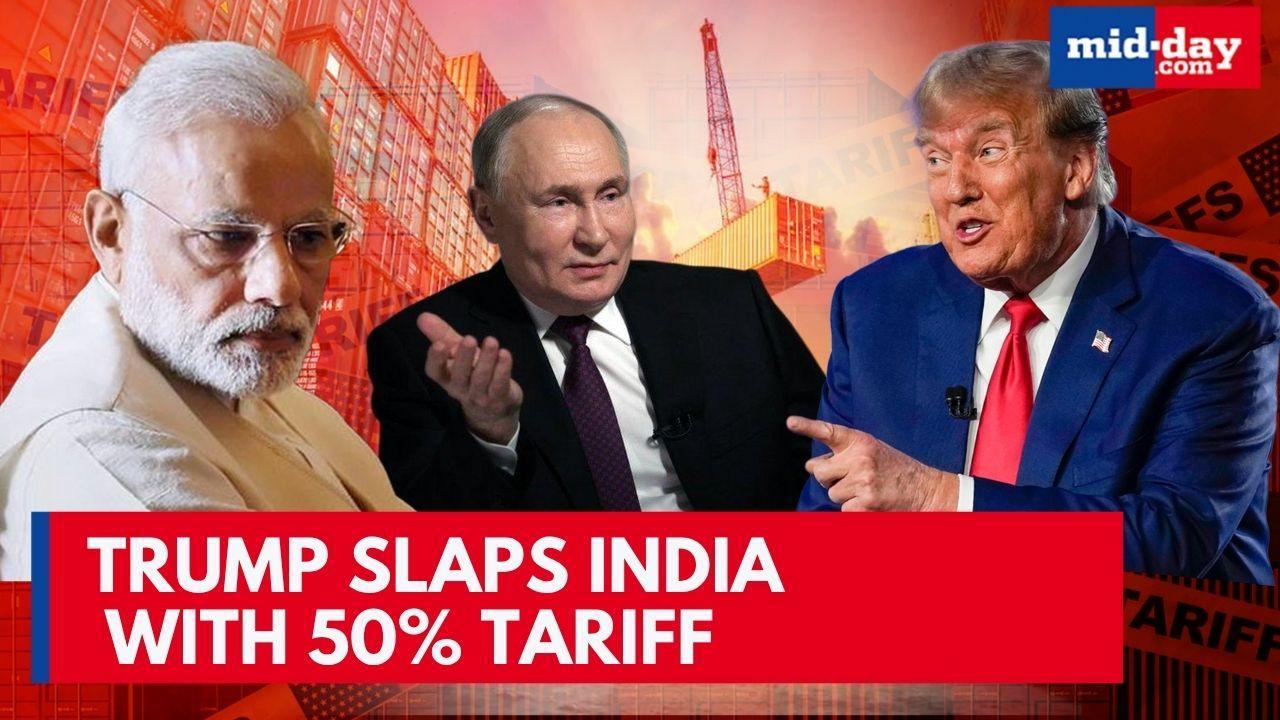
Trump Imposes Total 50% Tariff On Indian Goods, India Hits Back

One or other, both or neither?

Reposted from Zenpundit — Modi or Trump, special or chosen? — with thanks to The Emissary — and closing in on the shining suchness of the Tathagata
.

Modi of India, Trump of USA?

**

Trump of USA proclaims himself the Chosen One, while Modi of India’s supporters claim Modi is the Special One.

Who knew?

**

Sources:

  • The Emissary, The Special One
  • Giphy, I am the Chosen One
  • .
    **

    Buddhist logic from the beginning differs from its Aristotelian cousin, featuring the chatushkoti or tetralemma:

    India in the fifth century BCE, the age of the historical Buddha, and a rather peculiar principle of reasoning appears to be in general use. This principle is called the catuskoti, meaning ‘four corners’. It insists that there are four possibilities regarding any statement: it might be true (and true only), false (and false only), both true and false, or neither true nor false.

    Hence my title, One or other, both or neither?

    Oh ah:

    speaking of the Buddha, Nagarjuna states that the Buddha’s teaching is “emptiness is suchness, not suchness, both suchness and not suchness, and neither suchness nor not suchness.”

    Furthermore:

    The suchness of the Tathagata is the suchness of all phenomena.

    Rumor therefore has it that there’s a fifth possibility, a refuge from all dualities: the shining suchness of the Tathagata.

    **

    No, really — please comment!

    Kashmir, Analysis by Dr Hamid Husain

    From our regular contributor and well respected Military historian Dr Hamid Husain

    Following was outcome of exchanges with some informed individuals from both sides of the border about Kashmir.  I was educated & enlightened. It is just a glimpse on my part about possible scenarios.  It is first of a two part; second part deals with the legal aspect of the issue as Constitution bench of Indian Supreme Court has taken up the case.

    “Borders are scratched across the hearts of men

    By strangers with a calm, judicial pen

     And when the borders bleed we watch with dread

    The lines of ink along the map turn red”

                                                                   Marya Mannes

    Regards,

    Hamid

    Paradise Lost – Kashmir at Crossroads

    Hamid Hussain

    “Any intelligent fool can make things bigger, more complex and more violent; but it takes a touch of genius and lots of courage to move something in the opposite direction.”    Albert Einstein

    On 05 August 2019, newly elected government of India announced change in Kashmir status. President issued an order under Article 370 superseding a previous Presidential Order of 1954 thus removing restrictions on application of Constitution of India in the state of Jammu & Kashmir (J&K).  This also removed Article 35 A that gave special status to residents of J&K. In addition, J&K was divided into two Union territories with separation of Ladakh.

    Currently, three countries control parts of the territory that was once princely state of Kashmir during the Raj.  Indian Controlled Kashmir (ICK) is fifty five percent of the territory, Pakistan Controlled Kashmir (PCK) is thirty five percent and Chinese Controlled Kashmir (CCK) is fifteen percent. There is no conflict at Indian-Chinese border in Kashmir called Line of Actual Control (LAC) and there has been no border incident in the last fifty years.  I recall the only incident of military history several years ago when tempers escalated at that border, the soldiers simply threw stones at each other. The story of Line of Control (LOC) between India and Pakistan is totally different.

    Kashmir is more of an ideological element between two countries.  Both sides have a psychological entanglement where the raison d’etre of both countries is linked with it.  India views continued control of Kashmir as vindication of its stand that Hindus and Muslims are not two separate nations and that is why a Muslim majority state is part of Indian union.  Pakistan contests this narrative and see India’s control of Kashmir as challenging the very idea of Pakistan based on ‘two nation theory’.  Both sides are intelligent enough to recognize the old dictum that ‘possession is the nine-tenth of the law’. Rhetoric aside, in real politic, both countries are fully aware that LOC is now a de facto border, and no one can force a military solution of the problem.  When there is an interlude of peace between two countries, public opinion is in favor of compromise.  However, with every crisis, jingoism runs supreme on both sides of the border.

    India

    ‘Nationhood is rooted in rites of violence we all prefer to forget’.  Quoted in Karl Meyer & Shareen B. Brysac’s King Makers

    India’s recent efforts to remove special status of Kashmir is to fully integrate the state in Indian union with the hope that this will end separatism in ICK.  Unique circumstances of Kashmir at the time of partition in 1947 necessitated a compromise.  Article 270 of Indian constitution gave Kashmir a special status where Indian constitution was exempted from the state in governance of the state.  In the last seventy years, 94 of the 97 entries of the Union List and 260 of the 395 articles of the constitution were extended to Kashmir.  Ironically, it was all done through Article 370 as this was the only ‘tunnel’ through which center could act in Kashmir.  The result is that in practical terms Article 370 had ceased to provide any special concessions to Kashmiris.  More important is Article 35 A that was inserted by a Presidential Order in 1954 as a compromise between Indian Prime Minister Jawaharlal Nehru and Kashmiri leader Shaikh Abdullah.  This clause gave the authority to state government to define ‘permanent resident of the state’.  A Dogra rule era law of 1927 that prohibited acquisition of land in Kashmir by an outsider was incorporated in Constitution of J& K in 1956 that closed the door for acquisition of land by outsiders. Now only a permanent resident of the state was eligible for land acquisition, government jobs and scholarship in state educational institutions. Article 370 was a psychological and 35 A practical anchor of special status of Kashmir. Continue reading Kashmir, Analysis by Dr Hamid Husain

    Browncast Episode 43: Indian Elections, the Aftermath, with Kushal Mehra

    Another BP Podcast is up. You can listen on LibsynAppleSpotify, and Stitcher. Probably the easiest way to keep up the podcast since we don’t have a regular schedule is to subscribe at one of the links above.

    You can also support the podcast as a patron (the primary benefit now is that you get the podcasts considerably earlier than everyone else).

    In this episode we discuss the outcome of the Indian elections with Kushal Mehra, host of the Carvaka Podcast (and a BJP supporter, albeit not exactly a traditional one). Kushal thinks Modi’s sweeping victory had more to do with his ability to deliver real benefits to the poorest Indians. Feel free to disagree and post your opinions in the comments. We talk about the failure of the Left’s dream scenario of “dalit-Muslim unity” as a counterweight to Hindutvadi politics (at least in this election), what this means (or does not mean) for Indian democracy, the role of Indian Muslims, and so on.


    Triumph of the Gujarati

    Election 2019 reflects a victory of the Gujarat model. But not the model you are thinking of. Not even that other, more sinister model. It is something very fundamental, rooted deeply in economic ecologies.

    Human beings are shaped fundamentally by the networks they find themselves embedded in. In India, these networks overwhelmingly take the shape of caste groups marked by an occupational role, social status and marital rules.

    For the North Indian peasant, with an economy driven by land and service to an imperial power, caste identity emphasizes kinship and honor. Biradari literally means brotherhood, and membership is conditioned on izzat.

    For the Gujarati merchant, in a dry region of relatively unproductive land, caste identity emphasizes pooled resources, adherence to fiscal norms and shared interests. Even for the peasant Patels, caste is today fundamentally an economic union, channelized into farming and dairy cooperatives.

    2019 might well be the year that the North Indian peasant realizes the futility of imbibing a kinship and honor based caste identity. On the one hand, these networks simply do not provide the resources to grow and thrive in a post-agrarian world. And even if optimally politicized, the sheer number of caste groups makes the gains from achieving political power limited and concentrated.

    The North Indian does realize the need for new kinds of networks. And Modi’s opening up of North India to the world, via a liberal visa policy, river transport from the Bay of Bengal all the way upto Noida and big ticket global engagement platforms like the Mumbai-Ahmedabad Shinkansen would not have escaped the eye of the sharp Yadav and Jat, who realize that they will have to reach out to the world to grow.

    After all, previous engagements with foreigners in the recent past have given Indians globally important automobile and IT industries.

    India today is more open to the world than ever before. Everybody from Peru to Russia to Ghana to Indonesia can come in after submitting a simple electronic form. Less than 7 million people visited India in 2013, by 2016 that number more than doubled to 15 million. Modi’s Gujarati mind grasps the decisive role of networks in the growth of individual, and he might have well coaxed the North Indian to look beyond his caste tunnel.

    Brown Pundits