Why Pakistan Won’t Go the Way of Iran

I’ve been enjoying the new direction Brown Pundits has taken since the recent shake-up. Posts are now generating 100+ comments, and that kind of engagement creates a virtuous cycle. You want to write more, think more, respond more. I’m leaning into that.

For now, a lot of the content burden rests on me and that’s okay. It’s been encouraging to see older names return: Girmit, for instance. It feels like a slow reconsolidation of the original readership. Letting people return on their own terms.

Meanwhile, BRAHM, my newsletter, has taken on a different role; a home for more composed writing, life pieces, and the slow launchpad for my business. I just posted something there recently, which I’ll link to for now and follow up on soon. But here, on BP, is where I let myself think in public. Where I go long. Where thoughts breathe.

Continue reading Why Pakistan Won’t Go the Way of Iran

India, Pakistan & the Central Asian Dancefloor

India and Pakistan used to dance together; locked in step, even if offbeat. Now, they move in opposite directions, occasionally brushing shoulders, never quite facing each other.

Take this month. On one hand, India is set to join the Central Asian Football Association’s (CAFA) Nations Cup; a sporting signal of its growing diplomatic footprint across post-Soviet Asia. On the other hand, India pulled out of the WCL 2025 cricket semi-final against Pakistan, citing the tragic Pahalgam terror attack. The result? Pakistan walked into the final uncontested.

Two headlines. Two very different moods. One shows India gaining legitimacy in a new regional club. The other reflects how fragile the bilateral dance with Pakistan remains. Continue reading India, Pakistan & the Central Asian Dancefloor

Dead Poets of Pakistan

After Kabir exited the WhatsApp group, the conversation between the Manavs and Furqan (who I have made Editor to encourage more DPPs) drifted, inevitably, to poetry and Punjabi. Furqan has already made two excellent contributions, A flying peacock and Lord Ganesh in a confectionary mill. Kabir did a great job in diversifying the Authorial voices on BP.

As we shape the future of Brown Pundits, I keep returning to one submerged voice in the Persianate world, particularly in Pakistan. A voice that is Westernised, undercapitalised, and culturally adrift. These are not the clerics, generals, or capitalists. These are the middle-gentry, the in-betweeners; fluent in English, wired to the internet, but uncoupled from patronage and power.

Like much of the Muslim world, Pakistan remains profoundly hierarchical. And I suspect its creative pulse, its latent genius, lies in that Westernised fringe of the lower elite: the zone between the bourgeoisie and the establishment. The boundary class. Half-in, half-out.

In a strange way, Pakistan’s obscurity may be its shield. Unlike India, an excavated society with every civilizational layer being rapidly monetised (Saiyaara is breaking records), Pakistan is a half-formed splinter. It doesn’t face the same pressures of internal reckoning. That may be a blessing.

Across the Persianate world, from Anatolia to Delhi, we are witnessing a civilizational scatter. The old cosmopolis of the Gunpowder Empires (Ottoman, Safavid, Mughal) has collapsed, leaving behind cultural debris. The Persianate polity, once a unified Empire of the Mind, is now a broken archipelago.

India, by contrast, benefits from its post-colonial majority. Like Israel, it is 80% one faith; with all the confidence and coherence that brings. It has the numbers, the market, and a dominant civilizational script. The Sanskrit world, if not unified, is at least centrally anchored.

In this context, Kabir represents one pole of the Pakistani elite: articulate, English-speaking, confidently liberal but also capable of drowning out the marginal voices he’s adjacent to. And yet sadly, I don’t think Pakistan is headed for any Hindufication. The trajectory is different.

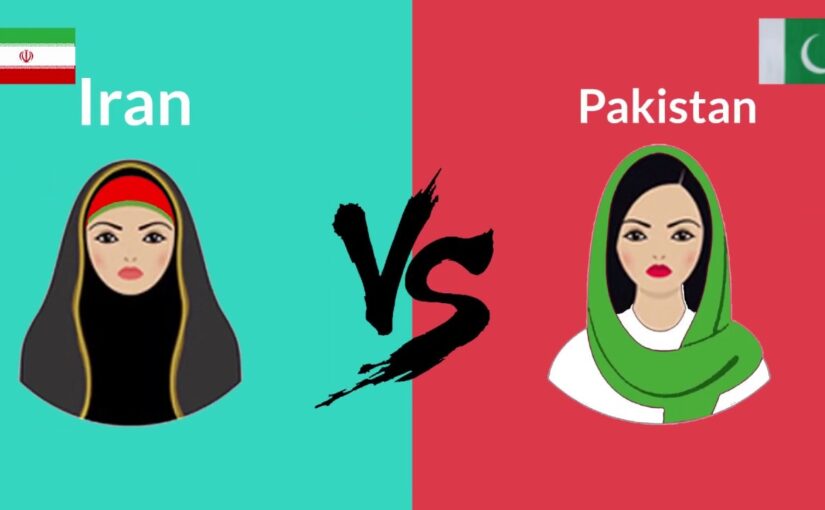
Pakistan is not returning to India. It is, perhaps, becoming the lowlands of the Iranian plateau; a bridge nation once again, neither fully Arab nor Indic. Suspended between worlds, it may rediscover itself in that liminality.

Because sometimes, the dead poets are not gone. They’re just waiting for the right silence.
Open Thread; Trans in the Muslim World

Other Stories (thank you Nivedita):

🔗 India Today – Harshvardhan Jain Scam

A man posed as a diplomat, set up fake embassies, and ran a multi-crore loan fraud racket via fake companies. He even issued “official” visas.

🔗 Business Standard – Karnataka Vendor GST Nightmare

A vegetable vendor in Karnataka received a GST notice due to high UPI volume — triggering a cascade of tax bureaucracy.

🔗 Economic Times – Indian Man Stabbed in Ireland

An Indian man in Ireland issues a public warning after surviving a random stabbing in Dublin.

🔗 NDTV – Hyderabad Man Kills Wife

In Hyderabad, a man stabbed his estranged wife to death at a birthday party for a child.

Brown Pundits: Broad Church or Narrow Canon?

Brown Pundits Must Stay a Broad Church

Reading Kabir’s thoughtful post on the “soft Hindutva” bias at Brown Pundits, I found myself both agreeing with parts of his argument and diverging from its framing. My own journey with BP goes back to its inception. The blog was born in Twixmas December 2010; 10 days after I had met Dr. Lalchand, whose presence has profoundly shaped my civilizational views.

I say this not as a biographical aside but because BP, at its best, is where the personal and civilizational collide. We bring who we are; our marriages, our migrations, our contradictions, into this messy, brilliant conversation.

At the time, like many Pakistanis, I held a deep-seated assumption: that Hindus were fundamentally “other.” It wasn’t overt hatred; just a civilizational distance, internalized from birth. But Dr. V & Brown Pundits challenged that.

A Forum With Bias? Yes. But Which One?

The heart of BP is not neutrality; it’s the willingness to host contradiction. That is its genius, and it must be protected.

Continue reading Brown Pundits: Broad Church or Narrow Canon?

What Kind of Space Is Brown Pundits

A few of us authors have been actively discussing the future of Brown Pundits; the space, the tone, and the deeper ideas we’re engaging. It started informally on our WhatsApp group, but the questions are foundational: What kind of platform is BP becoming? What should it strive to be? And what kinds of ideas does it host best?

At its best, Brown Pundits is a bridge; across nations, faiths, ideologies, and lived experiences. It’s a space where one can be deeply Indian, wholly Pakistani, broadly Bangladeshi, or diasporic and disillusioned but still belong. But like any bridge, it needs conscious upkeep. If a conversation leans too far in one direction, it doesn’t stretch, it collapses inward.

Some contributors feel the platform has become overly shaped by one ideological current. Others argue that the real problem isn’t dominance, but disengagement ; those who want plurality must also show up. And both perspectives can be true.

Pakistaniat & Urdu from Qasim to Quaid

UP’s very long shadow:

As I board my flight back to the UK after a brief but productive trip, I find myself reflecting on a language that continues to haunt and inspire me: Urdu.

It is a tongue caught between paradoxes. The language of courtesans and qawwals, of sacred supplication and sly seduction. It carries within it the scent of jasmine and blood, of Delhi’s dusk and Lahore’s lingering grief.

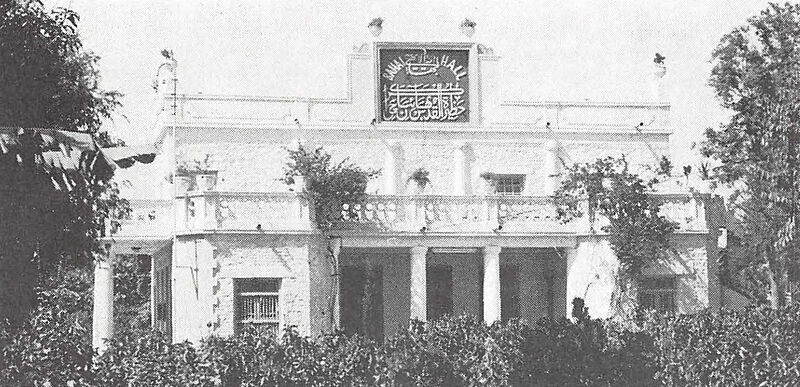
The Beloved Guardian of the Baha’i Faith once noted that while most Baha’i texts should be translated from English, Urdu alone is trusted for direct translation from Persian and Arabic. That proximity, that spiritual siblinghood with Persian, the language of kings, and Arabic, the language of God, renders Urdu magical.

Sanskrit, of course, is the language of gods, but Urdu, its stepdaughter of sorts, captures the longing of poet to partisan.

There’s a reason the Bahá’í prayer I share below is so piercing in Urdu. So here, before I cross back into another timezone, I offer this prayer—without commentary, without translation. Just Urdu, as it was meant to be heard.

And I wonder: perhaps this is what Pakistan truly is—a project in transcending the local. Not rooted in soil, but in sentiment. A place where Punjabis, Pathans, and Muhajirs are asked to shed skin and commune in Urdu. Where Pakistaniyat, for all its fractures, has succeeded in producing a common idiom: of piety, pride, and pain. Continue reading Pakistaniat & Urdu from Qasim to Quaid

Was Partition Good for Muslims?

Kabir:I will remind you of the Sachar Committee Report which stated that the condition of Indian Muslims was worse than that of Dalits. This was a report commissioned by the Congress government not by Pakistanis. India has never had a Muslim Prime Minister. I would be willing to bet that this is not going to happen in my lifetime. The Muslim League succeeded in getting the Muslim majority provinces a country of our own. This is a huge achievement.

Partition was sold as deliverance. In hindsight, it may have been the most sophisticated act of self-disinheritance in modern Muslim history. A century ago, Muslims on the subcontinent were a political force — deeply embedded, numerically significant, and intellectually diverse. Today, they are divided, disenfranchised, and disoriented. Three nations. No unity. No power. No clear path forward. Let’s take stock:

1. Divided into Three

Pakistan. Bangladesh. India. Three fractured expressions of one civilizational legacy — none of which fully represents or protects the totality of South Asia’s Muslims.

2. No Electorate Leverage

In India, Muslims lost their negotiating bloc overnight. From being a decisive vote in undivided India, they became a permanent minority — politically cautious, rhetorically silenced, and often viewed with suspicion. In Pakistan, Muslim identity became so hegemonic it erased internal plurality. In Bangladesh, it became suspect altogether.

3. Psychological Cleft

Two-thirds of Muslims had to unlearn India. Partition forced them to disown their history. The other third had to choose between being Muslim or becoming more Indian. This psychic wound — of being here, but not quite belonging — has never healed.

4. Urdu: From Bridge to Burden

Urdu, once the cultural glue of the Muslim elite, is now:

  • Enforced in Pakistan (to the resentment of Sindhis, Baloch, and Pashtuns)
  • Marginalized in India
  • Extinct in Bangladesh

A shared language was replaced by suspicion and statecraft.

5. Islam as a Spent Force

Partition Islam was meant to be political. It became performative. There is no robust Muslim political expression in the subcontinent today — only tokenism, sectarianism, or silence. It resembles post-revolution Iran: Islam was not discredited by the West, but by what its stewards did in its name. Partition didn’t solve the “Muslim Question.” It just made it unspeakable — in three different politicised idioms.

The Gratitude Trap: On Escaping Asia but Staying Captive

In a recent video, a young Punjabi woman, likely Sikh, candidly shares her discomfort upon returning to India after living in Canada (this kind of echoes the Aussie influencer’s comments on chronic Indian inequality). The noise, the pollution, the density. Her frustration is raw, familiar, and deeply sincere.

But beneath her words lies something larger: the aesthetic asymmetry that defines the postcolonial condition. Wide roads, clean air, manicured parks; these are not just amenities. In the global South, they become symbols of escape, status, and salvation. And so, millions migrate. Or aspire to. Not just for jobs, but for dignity. For air that doesn’t burn. For order that doesn’t humiliate. For a feeling of being seen.

And when they do, when they arrive in Canada, the UK, Australia, something subtle happens: they become grateful. Not just for opportunity, but for escape. For the fact that the West “works.” That gratitude then curdles into deference.

They begin to believe that the world outside the West is meant to be chaotic, dirty, loud. That governance is a Western gift. That clean streets and quiet parks are civilizational rather than institutional. This is the gratitude trap; the soft power of asphalt, symmetry, and silence.

And it’s why postcolonial recovery is so difficult. Not because the global South lacks culture or potential, but because its own elites, shaped by extraction, not architecture, rarely build for elegance. Rarely build for pride. Rarely build for joy. What the West exported was not just railways or rule of law. It exported a built environment that still shames us. And until that is understood, until we take seriously the spatial dignity of our cities and the material form of our futures, the colonial spell will remain unbroken.

Why Pakistan Is a Colonial Project & India a Civilizational One

Over the past few months, I’ve noticed a marked improvement in the quality of conversation on BP. A large part of this, I suspect, is due to eliminating trigger-response dynamics; as seen when I barred Q on a technicality. It created space: suddenly, the commentariat was thinking, not reacting. In that quiet, something became obvious.

Whenever Kabir invokes “neutral experts,” they always seem to be Western, usually venerably white, often from institutions directly involved in the colonial rape of India. And yet these same voices are elevated as if they were impartial or above it all. They aren’t. They are the architects, not the observers. This is the paradox at the heart of Pakistan. Continue reading Why Pakistan Is a Colonial Project & India a Civilizational One

Brown Pundits