Borders, Blind Spots, and the Mirror Game of South Asia

A recurring tension in South Asian discourse is the question of consistency: how states interpret borders, secession, and sovereignty; not in principle, but in practice.

Liberalstan’s case is that India acted selectively in 1947: Junagadh saw a plebiscite, Hyderabad faced military action, and Kashmir was referred to the UN. From this perspective, India chose whichever method suited its interests in each case. To Liberalstan, this isn’t pragmatism, it’s hypocrisy. The charge: if self-determination wasn’t good for Kashmir, why should it be for Balochistan? And what of Sikkim, Goa, Pondicherry, Khalistan, Nagaland, or the Naxalites?

Hindustan’s reply is rooted in realpolitik: decisions were shaped by demography, geography, and threats; not abstract norms. Q.E.A. Jinnah’s attempt to absorb Junagadh and court Jodhpur are seen as deliberate provocations, since Junagadh was Hindu-majority, non-contiguous, and largely symbolic (home to Somnath). After that, New Delhi abandoned any illusions of standard rules. From Hindustan’s view, Liberalstan’s moral framing is not only naïve but deeply asymmetrical; ignoring 1947, 1965, Kargil, Mumbai, and the long shadow of Pakistan’s own interventions.

When it comes to Balochistan, Hindustan notes its accession was closer to annexation, comparable to Nepal or Bhutan vanishing into India. Three major insurgencies since the 1960s complicate the narrative of “finality.” But here, Liberalstanflips the script: what is labeled a disputed territory in Kashmir is declared settled in Balochistan. This inversion doesn’t go unnoticed.

In truth, both sides are mirrors. Each demands flexibility for itself and finality for the other. Each invokes “consent”selectively; whether that of a prince, a people, or a state. The tragedy, perhaps, isn’t inconsistency but the absence of a shared regional framework for self-determination. One not held hostage by grievance, revenge, or exception.

Until then, accusations of hypocrisy will persist, each side fluent in the other’s blind spots.
Let Hindus Decide for India

There’s a quiet but persistent coalition, inside and outside India, that seems intent on denying Hindus the right to define their own future. It includes unreformed Islamists who refuse to reckon with modernity, English-speaking liberal elites still shadowboxing for Nehru, minorities with veto power but no stake in cohesion, and a chorus of Western (and increasingly Chinese) voices, eager to manage India’s trajectory from afar. What unites them? A shared discomfort with Hindu political consolidation.

Let’s be clear: Hindu identity is not a new construct. Whether you place its roots 3,000 or 5,000 years ago, it’s one of the world’s oldest living civilizational continuities. That identity has always been plural, regional, and evolving. But it has also always been there; visible in memory, ritual, geography, and language. Today, that identity is waking up to its political form. And it will not be put back to sleep.

Hindutva is not going anywhere. Nor is the Indian Union. Those who hoped Kashmir would stay outside this arc have already seen the direction of travel. Pakistan’s decision to opt out of Hindustan, and then build an identity against it, has led not to strength but to strategic stasis. Bangladesh, too, for all its cultural richness, now stands as a separate civilizational lane. And so we arrive at the core truth: Hinduism and India are coterminous.

This isn’t a call for exclusion. But it is a reminder that those who opted out do not get to dictate terms to those who stayed in. That includes foreign commentators and diasporic gatekeepers alike. There is a difference between pluralism and paralysis. There is a difference between nationalism and denial. And if majoritarianism is the anxiety; perhaps the deeper fear is that Hindus are no longer apologizing for being the majority. Let India decide. Let Hindus decide. Let the world, finally, learn to listen.

Did the Muslim League and RSS Want the Same Thing?

Let’s just ask it plainly: if the Muslim League got what it wanted—a Muslim-majority Pakistan—then what, exactly, is the problem with the RSS wanting a Hindu-majority India? This isn’t a provocation. It’s a genuine question.

The Muslim League, by the end, wasn’t fighting for shared rule. It wanted partition. It wanted sovereignty. It wanted to exit the Hindu-majority consensus that the Congress represented. And it succeeded—through law, politics, and eventually blood.

The RSS, for its part, never pretended to want pluralism. It’s been consistent for nearly a century: it wants India to have a Hindu character, spine, and center. If the League could ask for a state that reflects Muslim political interests, why is it unthinkable for the RSS to want the same, flipped?

This is where I struggle with a certain kind of liberal-istan logic—found across both India and Pakistan. You’ll hear:

“India must stay secular! Modi is destroying Nehru’s dream!”

But what was Q.E.A-Jinnah’s dream? Was Pakistan built as a pluralist utopia? Or was it built—openly, unapologetically—as a Muslim homeland?

If Pakistan’s existence is predicated on Muslim majoritarianism, then India’s tilt toward Hindu majoritarianism isn’t an anomaly. It’s symmetry. Maybe even inevitability.

So either we all agree that majoritarianism won in the subcontinent—and everyone adjusts accordingly. Or we all agree that the Congress secular ideal was the better one—and try, equally, to hold both India and Pakistan to it.

But it can’t be:

  • Muslim nationalism is liberation

  • Hindu nationalism is fascism

That math doesn’t work. And yes, the Muslim League had more polish. Jinnah smoked, drank, defended pork eaters in court. The RSS wore khaki and read Manu Smriti. But don’t be fooled by aesthetics. At the core, both movements rejected the idea of a shared national project. They just took different exits off the same imperial highway.

So pick one: Either Nehru and Gandhi were right—and so was Maulana Azad. Or everyone else was right—and we all now live in our chosen majorities. But don’t demand secularism from Delhi while praying for Muslim unity in Lahore. That’s not secularism. That’s selective memory.

Resistance, Realignment, and the Roads Not Taken

First, a brief acknowledgment: Kabir remains one of the pillars of this blog. His consistency, depth, and willingness to engage with the hardest questions are invaluable. I don’t always agree with him—but the conversation would be much poorer without his voice. The post is a series of reflections—stitched together from the comment threads.

I. Gaza: Beyond the Pale of Language

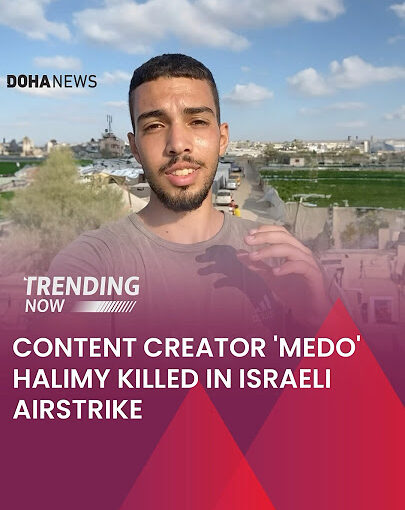
The death of a 19-year-old TikToker, Medo Halimy, in South Gaza this week caught my eye—not because it was the most horrific (foetuses are sliced in two in Gaza as Dr. Feroze Sidwa* attests). But because having seen his video, it just made the death so immediate (yes that is a cognitive bias).

At this point, to debate whether what is happening is a genocide feels grotesque. It clearly is. The scale, the intent, the targeting of civilians and children—it’s all there. The legal frame collapses under the moral weight. We are witnessing something darker than war: ethnocultural suffocation & demographic extinction, broadcast live and met with diplomatic shrugs. But the world is watching inspired by the very brave Bob Vylan duo (UK punk-rap duo opposing imperialism, recently denied US visas):

Something stirs and pricks beneath the rubble.

II. The Huma Moment: A Civilizational Reversal? Continue reading Resistance, Realignment, and the Roads Not Taken

What Was the Point of Israel’s Iran Strike?

The Limits of Provocation

At some point, the world will have to ask: what exactly was Israel hoping to achieve?

In the days following the dramatic escalation between Tel Aviv and Tehran, we are left not with clarity but with a deepening sense of confusion. If the intention was to disrupt Iran’s nuclear program, there is little to show for it—centrifuges still spin, scientists remain in place, and the infrastructure of Iran’s deterrent capability stands unshaken. If the aim was to trigger chaos within the Iranian regime, then that too has failed—Tehran did not descend into disarray; it retaliated, measured and intact. And if the goal was symbolic, to remind the world of Israel’s reach and resolve, then the moment has already passed, clouded by questions of proportionality, legality, and consequence.

For all the fire and fury, the strike landed with the strategic weight of a gesture. Continue reading What Was the Point of Israel’s Iran Strike?

🇼🇳Op Sindoor: A Podcast on Pahalgam, Pakistan, and the Limits of Peace

I’ve just listened to the first half-hour of Op Sindoor, the latest Brown Pundits Browncast featuring Amey, Poulasta, and Omar. The full episode runs over 90 minutes; I’ll be reflecting on the rest in due course. For now, some thoughts on the opening segment, which focuses on the recent terror attack in Pahalgam and its aftermath.


🧹 The Attack Itself: Pahalgam as a National Trauma

The episode begins by recounting the massacre in Pahalgam, Kashmir—a tourist meadow turned execution ground. Twenty-six people, most of them honeymooning Hindus, were murdered after being identified through religious markers: circumcision, Kalma recitations, names. The hosts don’t shy away from calling it what it is: a targeted Islamist attack. The group responsible, the TRF (The Resistance Front), is introduced as a Lashkar-e-Taiba cutout, designed to launder Pakistan-backed militancy through a local Kashmiri lens.

There is a palpable sense of cumulative fatigue in how the Indian speakers describe it—not as an aberration, but as part of a 30-year continuum of such violence. The emotional register is high, but justified. The use of plain terms like terrorists over euphemisms such as militants or gunmen reflects a long-standing frustration with how such attacks are framed in international discourse.


đŸ€  Modi, Nawaz, and the Civ-Mil Waltz Continue reading 🇼🇳Op Sindoor: A Podcast on Pahalgam, Pakistan, and the Limits of Peace

On Moderation, Minoritization, and the Elite

Pulse: The Threads We Weave —

Lately I’ve wondered whether I over-curated the threads. Things feel quieter. Maybe too quiet. But perhaps that’s the cost of raising the bar—of asking for dialogue instead of dopamine. Still, this lull has me reflecting not just on moderation but on why some arguments no longer move me.

Take the Indo-Pak conflict: once electric, now strangely inert. That shift reflects my own evolution over two decades. I no longer inhabit that binary. I carry a layered identity—a South Asian Bahá’í sensibility shaped by Persian aesthetics, grounded in British institutions, and fluently navigated through English. That complexity is my compass. It’s why I care less about flags and more about forces.

And the real force that shapes our lives? The elite. Not as a pejorative, but as a structural reality. I see it as nested tiers: Continue reading On Moderation, Minoritization, and the Elite

Belated Podcast: Operation Sindoor (and Bunyan al Marsoos)

Another Browncast is up. You can listen on Libsyn, Apple, Spotify, and Stitcher (and a variety of other platforms). Probably the easiest way to keep up the podcast since we don’t have a regular schedule is to subscribe to one of the links above!

In this episode Amey hosts myself (omar) and Poulasta (our resident Bengali expert) to talk about the recent India-Pakistan kerfuffle. Amey was ready for war, but we found common ground 😉 (as usual with India and Pakistan, a lot of the discussion is about partition and related misunderstandings)

đŸȘ™ What’s in a Name? Mukesh, Not Mukash.

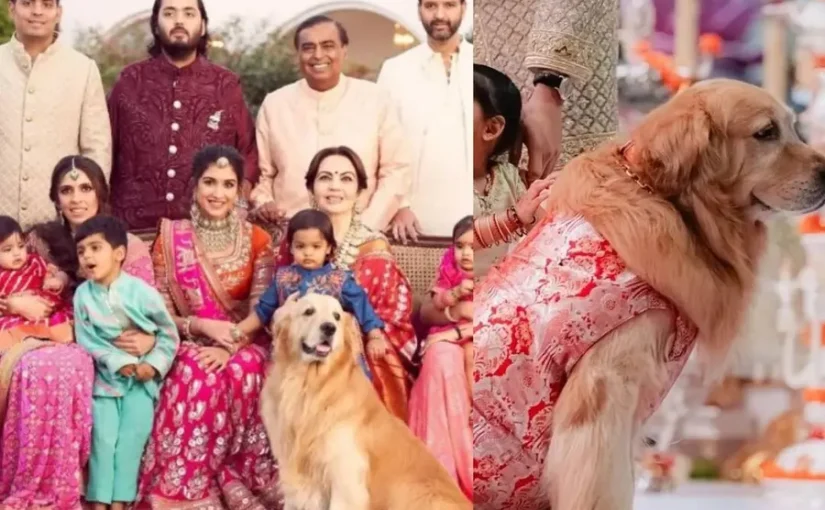
While reading Brad DeLong’s fascinating newsletter on centi-billionaires and political power (I’m going to ignore Elon’s self-imploding stunt), I noticed something that jarred me more than it should have: Mukesh Ambani’s name was misspelled as “Mukash.” A minor slip, perhaps. But it was the only error in a list that included Bernard Arnault, Warren Buffett, and Michael Bloomberg—men whose names command a certain global familiarity.

What does it say that even after spending nearly half a billion dollars on a wedding for his son, India’s wealthiest man doesn’t merit a spellcheck? It says a lot.

🧠 The Chimera of Respect via Capital Continue reading đŸȘ™ What’s in a Name? Mukesh, Not Mukash.

💔Sana Yusuf Did Not Have to Die

The Pakistani Crisis Is Not Just Legal—It’s Civilizational

By X.T.M

As I write this, the news of Sana Yusuf’s murder is barely 48 hours old. A 17-year-old TikTok creator with over a million followers, she was gunned down in Karachi by a 22-year-old stalker. She was a rising star—funny, expressive, beloved. And now, she is dead.

We’ve been here before. Qandeel Baloch. Noor Mukadam. Khadija Siddiqui. Now Sana.

Every few years, Pakistan reels in collective shock at the killing of yet another woman by a man convinced of his right to possess, control, or erase her. And every time, some voices insist “this is not our culture.” But what if it is?

📍Not an Anomaly—But an Outcome

Sana’s murder is not an aberration. It is the predictable consequence of a society structured around honor, control, and male entitlement. Patriarchy in Pakistan isn’t just cultural—it’s systemic, generational, and fiercely defended. Continue reading 💔Sana Yusuf Did Not Have to Die

Brown Pundits