Kabir says calling India, that is Bharat, a civilisational state is a “right-wing position.” We disagree; and the disagreement isn’t political, it’s archaeological.
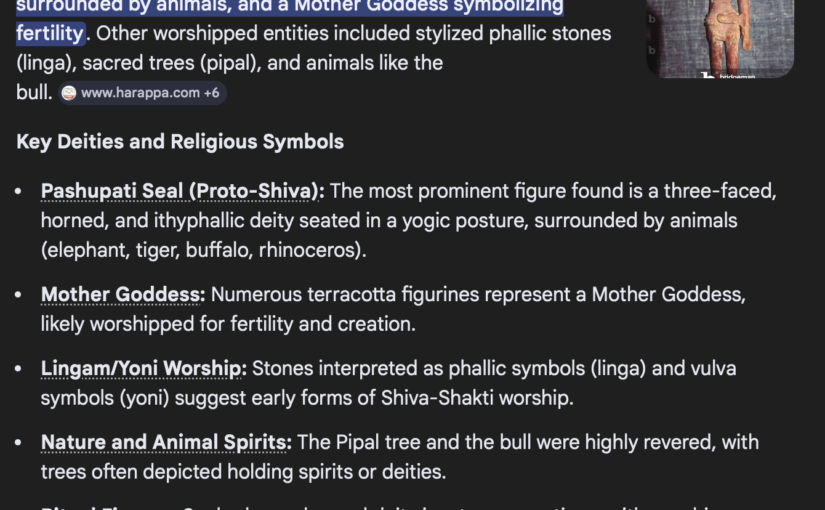
Look at what Mohenjo-daro actually gives us: the Pashupati Seal; three-faced, ithyphallic, seated in yogic posture, surrounded by elephant, tiger, buffalo, rhinoceros. Proto-Shiva. The Mother Goddess figurines. Linga and yoni stones. Pipal veneration. The sacred bull. Every single religious thread runs forward into the living Hindu tradition. Continue reading On Civilisational States and Who Gets to Claim the Indus
Omar’s excellent piece raises the question of barbarians. I want to raise a harder one: whose side is God on? I ask this not as theology but as military analysis. Because the planners of Operation Epic Fury appear to have assumed the answer is obvious; and that assumption may be the central miscalculation of this war.
Barbanians
The Pahlavist Map of Iran
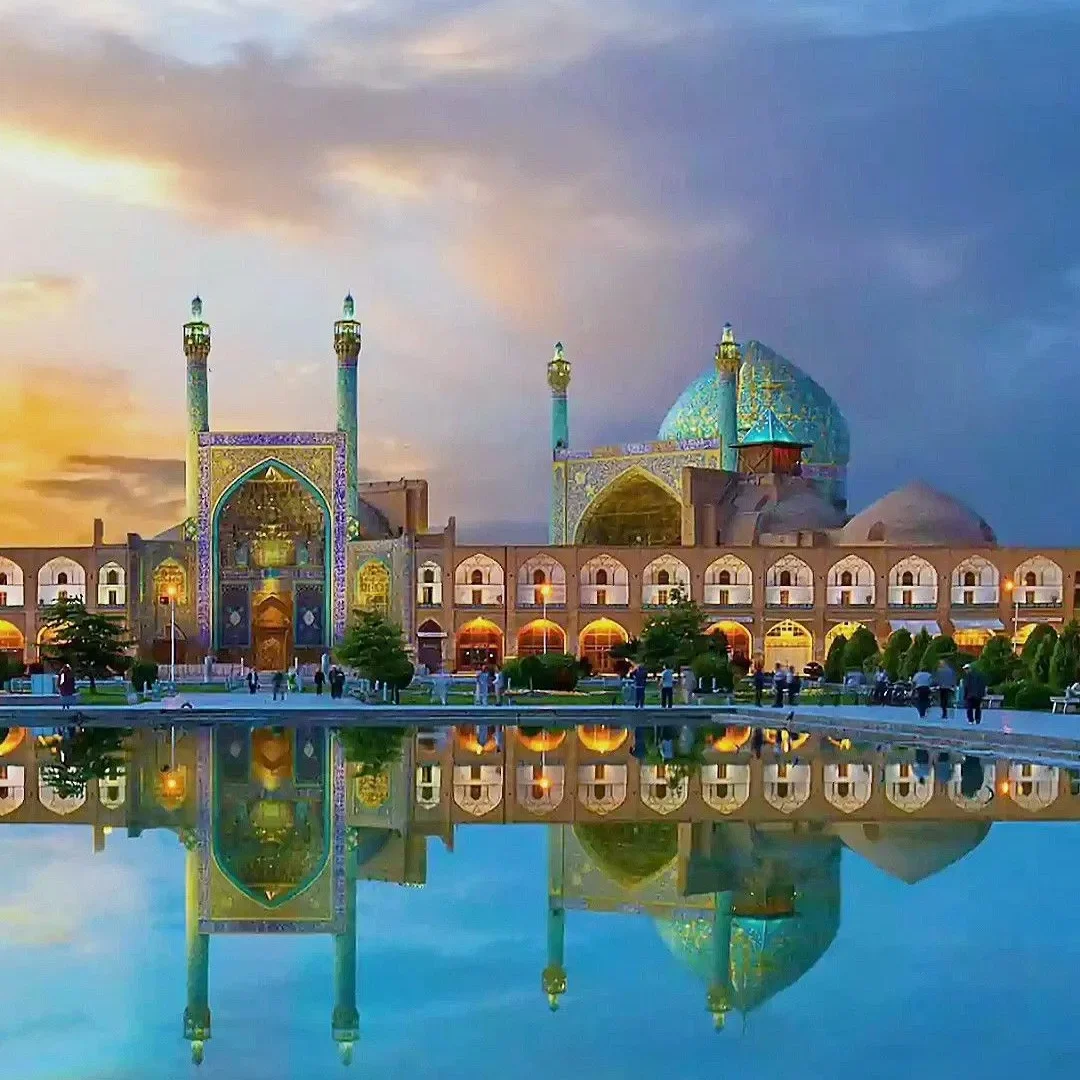
The Pahlavists who helped guide this operation are, broadly speaking, secular liberals. Their Iran is Tehran’s northern suburbs, Los Angeles, Paris. Their model of the enemy is a man like themselves: attached to life, afraid of death, protecting assets and family and position.
Rational actors in the economic sense. You remove the leader, you remove the fear, the system collapses. This is a coherent theory of change. It just happens to be wrong about the specific civilization it was applied to.
Pretender to the Peacock Throne
The Gift of Martyrdom
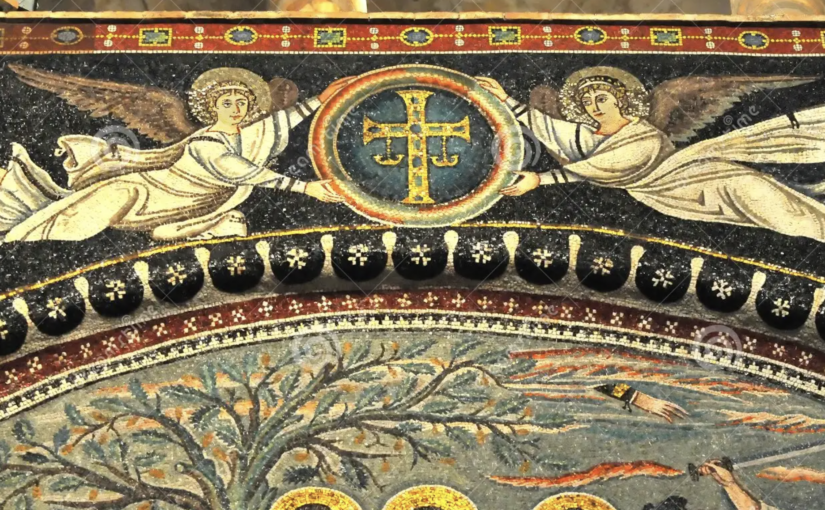
Shia Islam is not organised around the fear of death. It is organised around the embrace of honourable death as the supreme spiritual achievement. Karbala is not a trauma to be processed; it is a template to be repeated. Husayn did not miscalculate when he rode into the plain knowing Yazid’s army outnumbered him. He made a theological choice.
The willingness to die without surrendering is not a bug in the Shia operating system. It is the entire point of the operating system. When you assassinate a Supreme Leader who has spent forty years framing his rule in exactly these terms, you do not break the system. You hand it the most powerful gift available: a martyr. Khamenei is now Husayn. The Americans gave him that.
Tehran has been bombed; University Street, home to a Military Intelligence base, has been struck.
Today is 9/11 in the Muslim calendar: the 11th of Ramadan, the 9th and holiest month.
US Marine guards at the American Consulate in Karachi opened fire on Shia protesters attempting to storm the compound, killing at least 12. Pakistani police and paramilitary Rangers were also present. The Sindh chief minister has ordered a probe into the deaths.
Shia communities in Kargil are mourning the death of their leader.
Imam Khamenei was not just a leader for Iran but seemingly for Muslims around the world. The Muslims of Kashmir took to the streets upon hearing news of Seyyed Khamenei’s martyrdom.
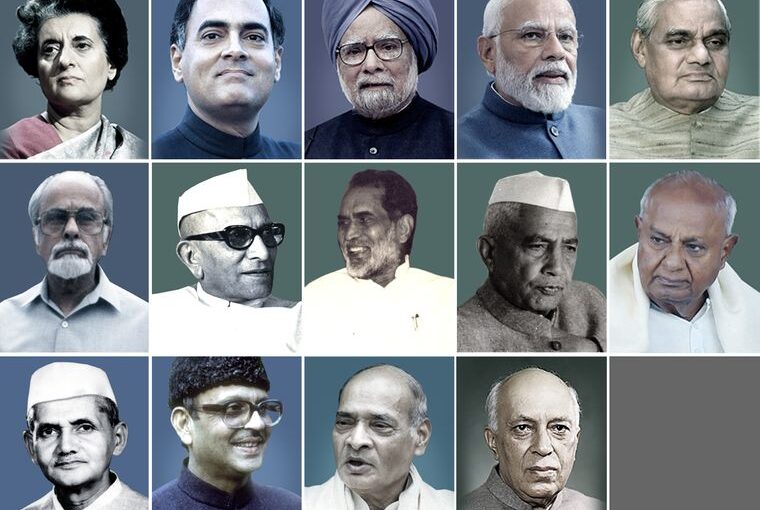
Replying to Sbarrkum got me thinking; instead of relitigating India-Pakistan, a more interesting question: across 14 India Prime Ministers, who actually did the job best?
Simple question. Hard answer.
Make the case. What criteria matters most to you?
Economic stewardship
Institutional integrity
Foreign policy judgment
Social cohesion
Crisis management
No slogans. No party loyalty. Just reasoning.
Moderated for substance. Indian-centred perspectives prioritised.
Two comments overnight exposed different sides of the the same problem.
You Can’t Weaponise Islamophobia and Then Kneecap Hinduism
Kabir tried to circulate a link around Manu Pillai’s Gods, Guns and Missionaries, a serious book, framed around whether Hinduism was, in some sense, constructed. The question is legitimate. All traditions are constructed. All identities consolidate under pressure.
But Hinduism and Islam are pari passu in this respect. The nineteenth century shaped both. Colonial enumeration shaped both. Reform movements reshaped both. Romila Thapar, Wendy Doniger, Sheldon Pollock; the literature on Hindu consolidation is vast. So is the literature on Islamic reform: Wahhabism emerging from Najd in the 1740s, Deoband crystallising in 1867 directly in response to 1857, Barelvism as counter-movement to both. All traditions have formation moments. All traditions modernise under pressure.
To apply the deconstructive lens to Hinduism while leaving Islamic historiography untouched is not intellectual rigour. It is asymmetry. Kabir, who deploys “Islamophobia” as a first-strike weapon with the hair-trigger of a seasoned litigator, has never shown the slightest inclination to subject his own tradition to equivalent scrutiny. If the lens is universal, use it universally. If it is selective, say so.
Anything else is prosecution dressed up as scholarship.
Before anything about this blog, its standards, or its arguments, I want to begin with a story; because sometimes a single human life cuts through every debate and reminds us what any of this is actually for.
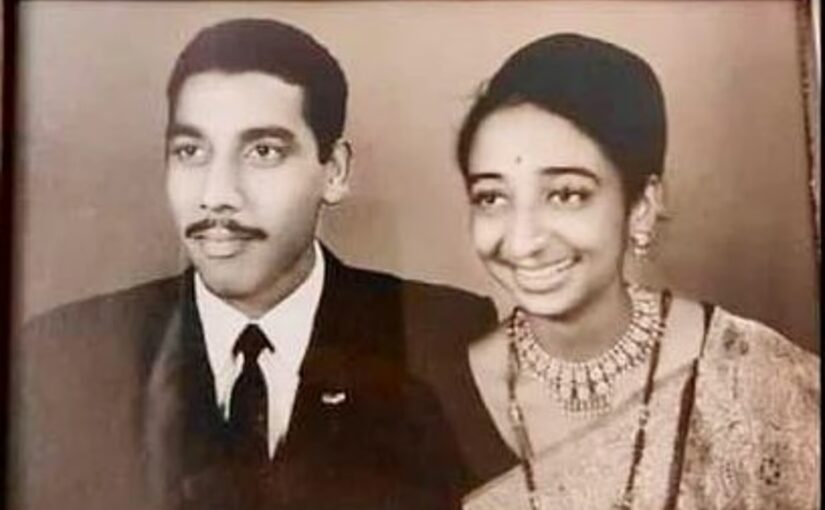
Damayanti Tambay was 21 years old, a three-time national badminton champion, when she married Flight Lieutenant Vijay Tambay in April 1970. Twenty months later, war broke out. On 3 December 1971, they drove together to a garage in Ambala cantonment to park their bottle-green Fiat. That was the last time she saw him.
On 5 December, flying a strike mission over Shorkot Airbase in West Pakistan, Vijay was hit by anti-aircraft fire and ejected. Radio Pakistan later broadcast his name among those captured. Damayanti heard it alone. She felt relief. A prisoner of war comes home eventually, she thought.
Brown Pundits exists to test ideas against evidence. That is not happening consistently. Four contributors have split into two camps. Threads are filling with video links and recycled assertions. Serious readers are leaving. This post explains what changes and why.
Effective immediately, all four authors have been moved to commentator status until each individually promises they can maintain the same standard in comments as in posts; high signal, evidence-based, no exceptions.
“No one wants a strong India. But PM Modi opened doors. He strengthened the military, advanced the economy, maintained balanced relations with the West, Russia, and China. That is serious statecraft” –Aleksandar Vučić, President of Serbia
India is richer
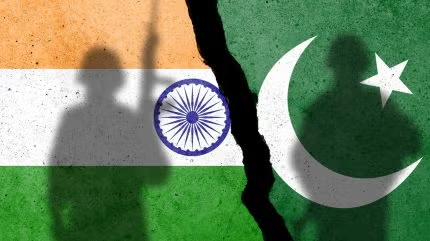
Strip away the noise and a simple asymmetry remains. India will almost certainly remain richer than Pakistan for the foreseeable future. The gap in GDP, fiscal depth, technology, and demographic scale is widening, not narrowing. On material indicators, India has the advantage. Yet material advantage does not always translate into strategic dominance.
India is louder
India is a mass democracy. It is electorally accountable, media-saturated, and sensitive to public opinion. Governments must justify escalation. Markets react to instability. Voters punish miscalculation. This imposes restraint.
Pakistan is tighter
Pakistan is structured differently. Power is narrower. Decision-making is concentrated within a smaller elite, with the military as the central institution. That creates rigidity in some domains but flexibility in others. Strategic continuity does not reset every five years. Public opinion matters, but it does not directly determine policy in the same way it does across the border.
Structural Differences
This structural difference shapes behaviour. India must think about global markets, coalition politics, and reputational cost. Pakistan can absorb economic stress more easily because its political system is already insulated from full electoral volatility. That insulation produces durability, even under strain.
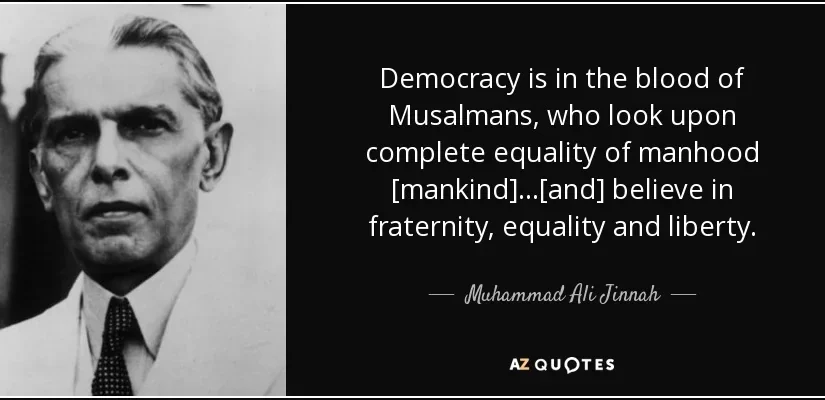
I would like Pakistan to be a secular democracy and give up its ambitions on Kashmir. Badshah
Similarly the core Hindu-Dharmic civilizational nature of India, that is Bharat, is for Indians to decide. Outsiders demanding secularism often mistake their own preferences for universal law.