Homebound with Ishaan Khatter

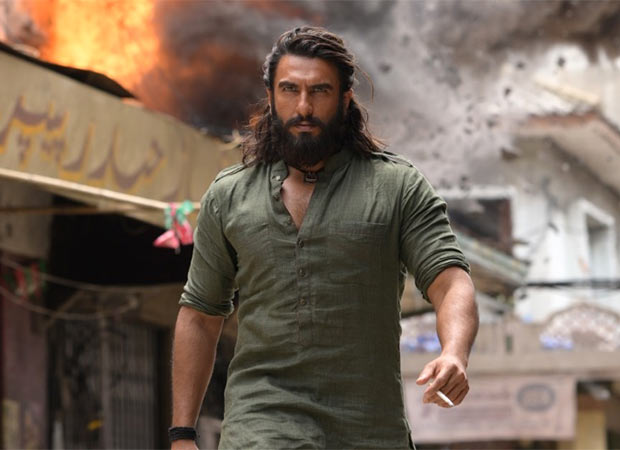
Last night Dr. Lalchand & I watched Homebound, India’s submission to the Oscars, at Apple Cinemas in Cambridge, Mass. This sad film follows a Dalit (Chandan Kumar) and a Muslim (Mohammed Shoaib Ali) struggling against the odds during the pandemic, their solidarity fictionalized as a fragile bridge across India’s deepest divides.

On the surface, it is a familiar story: the disenfranchised facing systemic barriers. But what struck me was how privilege itself performed disenfranchisement. Ishaan Khatter, brother to Shahid Kapoor, plays the marginalized Muslim. Janhvi Kapoor, descended from Bollywood royalty, embodies a Dalit woman. Vishal Jethwa, a bright-eyed Gujarati, portrays the Bhojpuri Dalit lead. This is not unique to India; Hollywood, too, casts elites as workers. Yet it raises the question: when poverty is performed rather than lived, is it “Dalit-washing”?


Poverty, Emotion, and Representation

Watching the film, I reflected on poverty’s emotional landscape. For elites, emotions can be expansive, indulgent, aestheticized into art. For the working poor, emotions are often constrained by survival — narrowed into necessity. Homebound tried to humanize its characters, but I wondered whether it romanticized what in practice is a relentless narrowing of possibility.

The West rewards this narrative. Parasite in Korea, Iranian cinema, Slumdog Millionaire — poverty & Global South tribulations as spectacle becomes “poverty porn.” The Guardian gave Homebound four stars. Great art often tilts melancholic, yes, but here the melancholia is curated for Western consumption.


Identity, Vectors, and Islamicate Selfhood

More unexpectedly, the film stirred something personal. I realized how much I have vacated my own Islamic identity. It was not traumatic. As a Bahá’í with Persian cultural roots, I found overlap — even comfort — in Hindu traditions. Dalits, in their rapid Hinduization, represent one vector of assimilation; Muslims and scheduled-caste Muslims, often in tension, another. Homebound imagines solidarity, but in life these vectors pull unequally. Continue reading Homebound with Ishaan Khatter

The Changing Demographics of Undivided India (1900–2025)

South Asia’s demography is one of the great untold stories of the modern world. Too often we look at the subcontinent through today’s partitions — India, Pakistan, Bangladesh — but the real insight comes when we view the region as a single whole. Across 125 years, the balance of populations has shifted dramatically.


📊 1900: A Baseline

At the turn of the twentieth century, Muslims made up about 20% of undivided India’s population. The rest were overwhelmingly Hindu, with significant Sikh, Christian, Jain, and other minorities.


📊 1950: Partition and Realignment Continue reading The Changing Demographics of Undivided India (1900–2025)

Travelling – Open Thread

🔗 Links shared from the comments


💬 Keep the links and thoughts coming — BP works best when the Commentariat bring their own sources into the mix.

The Ilhan Omar of Brown Pundits

Every movement has its lightning rods. In American politics, Ilhan Omar is one: progressive, unyielding, often correct in substance but polarizing in style. She calls out genuine injustices, but her timing and tone can sometimes drown out the very points she is trying to make.

I’ve begun to realize that Kabir plays a similar role on Brown Pundits. Like Ilhan, he often raises necessary truths (for instance Israel has just killed an American family in Lebanon). Like Ilhan, he brings traffic, visibility, and energy. But also like Ilhan, he has a way of inflaming rather than persuading.

Charlie Kirk’s remarks illustrate why Ilhan Omar’s critiques resonate, even if her tone divides. When Kirk sneers that there are “no tall buildings left in Gaza,” or jokes that Palestinians are “stupid Muslims” for resisting, he is not just making political commentary. He is engaging in dog-whistling — racialized, sexist, Islamophobic rhetoric that devalues human life. Combined with his earlier comments about the supposed lack of “brain processing power” among prominent Black women, the pattern is unmistakable. One does not have to be a progressive to see that such speech corrodes the civic space. At the same time, none of this justifies violence: the murders of Charlie Kirk and Irina Zarutska are deplorable and must be condemned without qualification.


The Progressive Dilemma Continue reading The Ilhan Omar of Brown Pundits

Pakistan: The Realpolitik State

In a recent exchange, Kabir suggested that Pakistanis often feel unwelcome in our discussions on Brown Pundits, and that constant criticism of their country creates a sense of unease. It is worth pausing to reflect on this. Pakistanis, like all of us, are shaped by history and circumstance. And yet, there is something in the cultural tenor of Pakistan that makes open engagement difficult.

I say this not to provoke but to observe. Pakistan, as a society, often leans heavily on hierarchism, patronage, and a culture of deference. To borrow an old saying about the Somalis, that every man thinks himself a Sulṭán, one might say that Pakistanis often view themselves through the prism of status and validation. This instinct is hardly unique; Indians, too, have their caste-bound privileges and invisible hierarchies. But in India, these structures are embedded in a dense cultural fabric; family, caste, neighbourhood, ritual, that, for all their flaws, anchor society. Pakistan, by contrast, feels less rooted. It is a younger country (with old traditions), with fewer inherited cultural layers to draw on.

This is not simply an abstract point. When I married, we drew freely from Hindu rituals (dual ceremonies, Bahá’í incl.), Persian customs, and Sindhi traditions, blending them into something whole. But I realised there was nothing distinctly “Pakistani” to contribute; no cultural motif that stood outside India or Iran (we didn’t do a Walima, which is Muslim). Pakistan is, in many ways, a derivation: a state forged through separation, rather than a civilization with deep roots of its own. The cultural space it occupies has been overlaid with militant nationalism and, too often, Hindu-phobia (Kabir is so inured to it that he isn’t able to recognise that but on the flipside so is the Commentariat towards Islam).

To acknowledge this is not to deny the prejudices of Indians toward Muslims, which are very real and enduring. Nor is it to ignore the deracinated, secular archetype embodied by figures like Benazir Bhutto, who seemed neither fully Muslim nor fully Western, suspended between worlds and who are the cultural elite of Pakistan (what they give up on their bridge is their Hindu origins; more than being half-Persian, Benazir’s nani was Hindu). It is simply to note that Pakistan’s cultural story remains unsettled & thus interesting.


Validation and Audience Continue reading Pakistan: The Realpolitik State

Links on My Browser Right Now – Open Thread

A few pieces I’ve been reading this week:


Reflections

On the Ummah: Muslims have often failed to concede ground in internal debates, which has left them politically boxed in. One reform across all denominations would be to return directly to the Quran as the primary authority. That alone would dissolve many cultural accretions, halal (animals should be stunned before slaughter), hijab (a Sassanian trait), and other practices, into something more adaptive.

And here’s a more speculative question: if the “Satanic Verses” were reconsidered if Al-Lat, Al-Uzzah, and Al-Manat were understood as sacred divinities at the threshold of the Lote Tree, would that make Islam more fluid, especially for minority-majority dynamics?

On Kabir: I’m not moderating him out, but readers should be aware that he frames everything through Muslim-rights activism. Engage, but don’t get gaslit into endless provocations. Everyone is entitled to their nationalisms — but they can’t claim liberalism at the same time. That tension makes it worth examining how plurality is treated within the Hindu fold itself. Dharma, unlike the Abrahamic Faiths, tends to all for multiple truths co-existing with each other (Buddhism and indigenous East Asian religions).


👉 Over to you. I’m retreating from heavy moderation — I see BP’s strength in letting the commentariat lead. Biases are fine. Gratuitous abuse is not.

Image

“In March 1998 the Indian PM Gujral, told … “Pakistan was not capable of making atomic bombs.” he had been convinced by Indian Intelligence and Dr Raja Raman, the head of Indian Atomic Energy Commission, who had publicly claimed that nuclear weapon were beyond Pakistan’s reach.”

Pakistan as India’s Ukraine?

The chart above lays out “strategic partners” for 2025. Pakistan lists China, Türkiye, Iran, Saudi Arabia, and assorted others. India, by contrast, shows Israel. But the real issue isn’t who collects more flags; it’s whether any of Pakistan’s patrons will ever raise its HDI, improve infrastructure, or embed long-term stability.

I’m interested to hear what the commentariat thinks of this moment. India’s foreign policy is already locking it into superpower status. Pakistan remains reactive, borrowing survival from whoever will lend it.

The analogy that strikes me: India–Pakistan resembles Russia–Ukraine, except if Ukraine had kept nuclear weapons. The parallels are strong:

  • Ukraine, like Pakistan, is a breakaway sibling — the “other half” of a civilizational whole.

  • Ukraine, like Pakistan, survives by appealing to larger patrons.

  • And interestingly, the GDP ratio gap between Russia and Ukraine is almost exactly the same as between India and Pakistan (please fact check me).

Just as Ukraine is considered the homeland of the Russian Empire (Kievan Rus’), Pakistan carries the legacy of Partition as the “Indus homeland.” That symmetry makes the analogy more than superficial.

On Kabir: I understand his consistent emphasis on Muslim rights and Muslim nationalism. Readers should be aware of that lens. I’m not moderating him out, but I would caution the commentariat against being gaslit into endless provocations by Kabir. The question here is not identity politics, but the direction of Indian and Pakistani foreign policy in a critical moment in global history (decades are happening in weeks).

🗓️ One Year Ago Today: The Taj Mahal, Sacred Lands, and the Power of Timing

Friends,

The spirit of Brown Pundits has always been dialogue — open, searching, and at times, fierce. But dialogue only flourishes when it is consistent and principled.

Recently, a contradiction has emerged in Kabir’s contributions: applying one set of standards to India and Pakistan, and a different set to Israel. This has led to repeated cycles of disruption, rather than genuine exchange.

To preserve the integrity of our space, Kabir’s participation will be paused until this inconsistency is clarified (we will remove any of his comments that do not address and acknowledge the contradiction; we will also remove any replies to his comments). This is not censorship, but stewardship. Free speech here is not about endless repetition; it is about coherence, accountability, and respect for the whole.

🕊️ On Confirmation, Coincidence, and the Return of Brown Pundits

Exactly one year ago today, 17 September 2024, I published a piece titled “The Battle for the Taj Mahal: India’s Sacred Lands & Waqf Boards Under Fire”.

At the time, Brown Pundits was stirring from hibernation. Readership had dwindled to near-zero, the commentariat was dormant, and the site, once lively and interrogative in its heyday, felt like a forgotten archive. That post, like so many others before it, was written in solitude. There was no traction, no expectation. Just thought, laid down with care.

And yet here we are, one year to the day, and the blog has roared back to life.


📿 What the Baháʼí Tradition Calls “Confirmation”

In the Baháʼí tradition, we don’t reduce these moments to mere coincidence. Instead, we speak of confirmation; divine endorsement coupled with meaningful alignment. A subtle assurance that what was offered in silence may still echo in relevance.

Sometimes, truth takes time. It must be planted, and it must ripen. And then, if the conditions are right, it re-emerges at the very moment it’s needed again.


🏛️ Revisiting the Taj & the Sacredness of Land

That post, exploring Waqf Boards, sacred lands, and the Taj Mahal’s place in India’s civilizational memory, was written in a moment of saturation. Too many headlines, too little context. My intention wasn’t to settle the argument, but to recast it: What makes land sacred? Who has the right to remember? Who gets to reclaim?

Reading it now, what’s striking is not just how relevant it remains, but how the same debate has reassembled; not just thematically, but almost ritually, with new voices circling back in familiar orbits.


🌀 Same Debate, Same Deflection

And so we arrive back, with uncanny symmetry, to Kabir. He’s long argued that nations must be judged by their own internal frameworks: Continue reading 🗓️ One Year Ago Today: The Taj Mahal, Sacred Lands, and the Power of Timing

Brown Pundits