Author: X.T.M
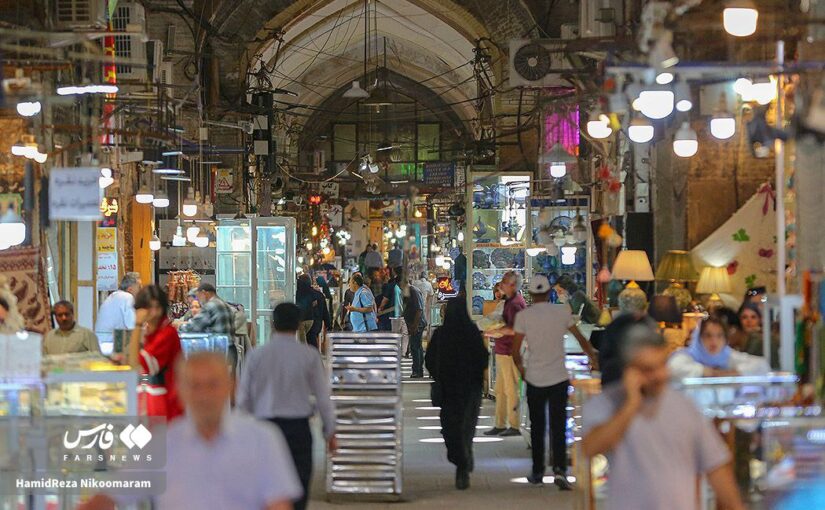
đ Dispatch from Dubai: The City-State That Arrived
Date:Â April 29, 2025 |Â Location:Â Dubai
Dear Friends,
Iâve been to Dubai countless times. I even got married here.
An Arabian Night
But this tripâtechnically for workâlanded differently. Something in the skyline had shifted. And this time, I saw it.
The City That Clicked
Dubai isnât a city in progress anymore. Itâs a city in command. The lighting, the landscaping, the infrastructure, the energyâafter decades of relentless building, it has finally snapped into harmony.
Celestial
For years, Dubai dazzled. Now, it breathes. Someone quipped to me, âHere, fuel is cheapâbut water is expensive.â They werenât wrong. I found myself driving 20km stretches without thinking twiceâdistances that, in the Home Counties, would take you through ten towns and two sets of speed cameras. Everything here is scaled differently: the lighting spectacular because energy is almost free, the landscaping evolving into more ânaturalâ forms with drip irrigation discreetly running through the sand. And the traffic? Dubai has less congestion than Calgary. That says everything.
Continue reading đ Dispatch from Dubai: The City-State That Arrived
The Arrogance That Binds: Post-Colonial Delusions in the English speaking Pakistani Mind
Itâs been startlingâat times dispiritingâto witness the tenor of Pakistani responses to recent BP posts. Not just the jingoism, but the denial. A refusal to acknowledge the civilizational reality of India before 1947. It isnât just ahistoricalâitâs tragicomic. And it reveals a deeper pathology: the English-speaking Pakistani elite is afflicted with Post-Colonial Derangement Syndrome. Omar has long argued this. Iâve become a convert over the past decade.
I love Pakistan. But that love doesnât require denying India. I can honour my father and mother without disfiguring one to exalt the other. Civilizations are not exclusive claimsâthey are overlapping inheritances. Nationalism demands we choose. Patriotism allows us to belong. One blinds. The other binds.
Pakistanâs identity hinges on rupture. It claims to be not Hind, not Bharatâsomething purer, separate, superior. And yet, its elites remain obsessed with India. At least the Koreas and Vietnams acknowledge their shared past. Even China and Taiwan didâuntil foreign interference fractured that memory. But here? Not even a name is spared. There is no sign of âIndiaâ in the very land that birthed the name. If India truly didnât exist in the Pakistani imagination, why the resentment? Why the rivalry? The schizophrenia is telling: deny the mother, envy the sibling.
Take Kashmir. If this is a political conflictânot religiousâwhy were the victims in Pahalgam targeted as adult Hindu men? That wasnât strategic. It was sectarian. Either the attackers acted from religious hatred, or the political cause they serve is entangled with it. You cannot claim secular nationalism while endorsing ideological murder. Continue reading The Arrogance That Binds: Post-Colonial Delusions in the English speaking Pakistani Mind
Why Pakistanis Should Say Jai Hind: Civilizational Fractures in a Post-Nation South Asia
In an unexpected way, this war has revived Brown Pundits. A site that had drifted into silence is now surging with life againâthreads are active, arguments are sharp, and the intellectual pulse has returned. Conflict, for all its tragedy, has a way of clarifying identities and sharpening thought. Itâs given many of us the urgencyâand the materialâto write. Iâll be resuming active moderation and will be onboarding new moderators and authors shortly. But one key requirement for any new authors & moderators (we are only 6 right now), beyond what is stated: you must be active. Lurking is fine, but contribution is what keeps this platform alive.
Three comments caught my attention, each illuminating a deeper tension at the heart of South Asia. But all point to the same truth: the deeper our wars go, the more we are forced to ask, what are we really fighting for? Continue reading Why Pakistanis Should Say Jai Hind: Civilizational Fractures in a Post-Nation South Asia
Modi the man

Ngl Kabirâs comments about the âMuslim Valleyâ kind of triggered me. It really does solidify Pakistan as a second class state for everyone who is not a Muslim (and thatâs at least 5% of the population).
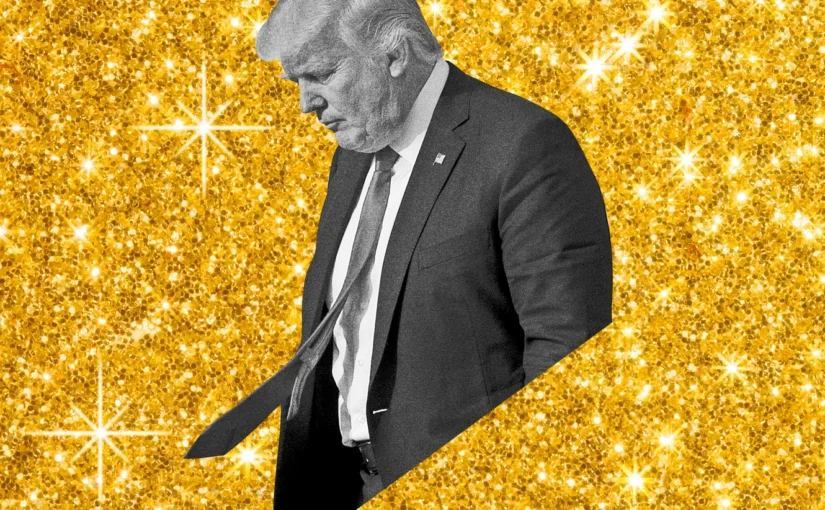
I find that majoritarianism unhealthy so Iâm going to stick this picture of the above; Modi, for all his flaws, has presided over a shining decade for India, where it is recognised as an ascendant superpower while Pakistan is firmly a Chinese satellite.
BP Ground Rules for Commenters
Comment Policy Update (May 11, 2025)
A quick reminder for all:
1. Spam Filter: Comments with 2+ links may go to spam automatically. Itâs a default safeguardânot a block.
2. Trusted Commenters: If youâve commented twice before without issue, you should now post freely. No one is blocked or suspended right now.
3. If Your Comment Disappears: Just post a short note: âMy comment went to spam.â Iâll retrieve it manually.
(Thanks to Nivedita for flagging the issueâotherwise, I wouldnât have noticed Xperiaâs comment got filtered.)
4. Moderation Style: I reply to all substantive comments. If a comment crosses a clear line (abuse, trolling, tone violations), I may quietly remove or edit the offending portion.
5. Core Principles: Brown Pundits is a neutral platform. Nothing is sacred. Everything is up for discussionâexcept jingoism, personal abuse, or low-signal provocation.
Want to help moderate? Drop me a line if youâre interested in mod privileges and willing to uphold these norms. Feedback always welcome.
China: The Unseen Winner of the Indo-Pak Skirmish?
Now that comments are backâletâs look at this dispassionately. Set aside emotion and accept a simple civilizational fact: South Asia should be plural, civil, and syncretic. Its unity lies in its AASI roots and Sanskritic inheritance, whether acknowledged or not. Otherwise who were the winners, losers and in-betweeners of this senseless conflict?
Prefacing the below with Xperia’s comment in the interests of neutrality and impartiality:
There is however a ton of evidence that Pakistani airfields were put out of operation, at least one hanger hit killing personnel inside. Runways blown up. C130 in flames.
This was was not a dogfight, it was a drone and missile war. The Indian defence was layered and effective. All airports operational and runways intact.
Op sec was also much better on the Indian side, you donât have any pictures of army personnel firing missiles and jumping around next to locals.
Donât worry so much about the stock prices. The Chinese market is propaganda in itself.
https://x.com/ConflictMoniter has good OSINT in case you want to take a look.
https://x.com/MenchOsint is more neutral and unbiased.
That said, the data circulating on Telegram suggests a major strategic recalibration is underway.
Without speculating on war origins, the result is seismic: India just suffered its worst aerial defeat. Five high-end aircraftâ3 Rafales, 1 MiG-29, 1 Su-30âand 1 Israeli Heron drone were downed. None returned. This is more than battlefield loss. Itâs a realignment.
1. Chinese Systems, Pakistani Trigger
For the first time, Pakistan deployed Chinese-made HQ-9B, LY-80, HQ-16 air defenses and J-10C, JF-17 fighters in live combat. All Indian aircraft were neutralized. Not a single Chinese platform was hit.
This wasnât just retaliation. It was a demonstration. RafalesâFranceâs prideâwere shot down for the first time in history. With zero Pakistani losses, Chinaâs weapons just outperformed Western tech on a global stage.
2. Markets Reacted
⢠Dassault Aviation (Rafale): â 1.6%
⢠Chengdu Aircraft Corp (J-10C): â 18%
A $25M Chinese jet took out over $100M in Western tech. That resets the cost-benefit of warfare. Permanently.
3. Strategic Ripples
⢠Pakistanâs dependence on China is now military, not just economic.
⢠Chinese systems will gain traction in the Middle East, especially with Egypt.
⢠Indiaâs strategic posture faces urgent questionsâits French, Russian, Israeli kit just got field-testedâand failed.
Hooray to the ceasefire
Pakistan Is Showing Restraint. That Should Worry India.
Not out of weakness, but calculation. Itâs waiting for the international community to bribe it into silence. One advantage of being quasi-democratic (like Russia or China) is the ability to sideline public opinion. Pakistan can afford to wait. India, by contrast, appears to be following an Israel-style doctrine. But Pakistan is more Prussia than Palestine and Modi feels much weaker from this episode (he promised a safe Kashmir).
Competing regional giants and nuclear powers, India and China are widely seen as long-term strategic rivals, sharing a 3,800 km (2,400 mile) Himalayan border that has been disputed since the 1950s and sparked a brief war in 1962. The most recent standoff began in 2020 and thawed only in October 2023, when both sides agreed to a formal patrolling agreement, placing limits on forward deployment and coordinated disengagement. Even between nuclear-armed antagonists, restraint is possible when war threatens mutual prosperity.
Likewise, Putinâs behavior post-Maidan in 2014 was not immediate escalation. Instead, Crimea was seized swiftly, but Russia spent eight years supporting separatists and waging hybrid war in Donbas before launching a full-scale invasion in 2022. It was restraint with intent, waiting for the West to appear divided or distracted.
Itâs strange that every time the region stabilizes, something reignites tension. Why would China, India, or Pakistan want instability when wealth and growth depend on peace? Yet here we are.
The BJP base craves nothing short of Pakistanâs annihilation. Thatâs a fantasy; militarily, diplomatically, and strategically. Why shouldnât India fully cooperate in an international investigation to determine who was behind the Pahalgam attack? The refusal suggests this moment is being used as a casus belli; leveraging the incident to project force in a world increasingly shaped by Trumpian-Putinesque instincts.
Even the postponement of the IPL was an indirect consequence of what Pakistan could do. This is not a toothless state. Pakistan is David with a nuke or more accurately, an incidental Prussia, hyper-militarized but calculating. The public isnât rising up against its military; if anything, this round has shown that Pakistan can restrain itself without looking weak.
In fact, Pakistan has consistently been the more restrained nuclear power. Israel has spent two years trying to flatten Gaza with limited success. The U.S. stayed in Afghanistan and Iraq far too long, trapped by asymmetric warfare. These are textbook examples of tactical response leading to strategic drift.
Modi should study those cases. Retaliation may thrill headlines. But strategy lies in staying still until the storm passes and only then, deciding if and how to move.
Quaid, Modi, and the Operation Sindoor
On Pakistanâs second birth, Indiaâs rising nationalism, and the politics of martyrdom
Thereâs a strange irony in history: the founder of Pakistan and the “strongest” Prime Minister of India may ultimately be remembered for the same thingâgiving Pakistan life.
Muhammad Ali Jinnah birthed the state. Narendra Modi may have revived its soul. Because nothing steels a national identity like resistance. And nothing immortalizes a cause like martyrdom.
Blood in Pahalgam, Resolve in Islamabad
When civiliansâchildrenâare killed, as in the recent attacks in Pahalgam & Bahawalpur, the horror doesnât demoralize. It clarifies. It creates martyrs. And martyrdom sanctifies. Pakistan, often in search of a purpose, just received one. What makes this even more striking is the dynamic behind it. Modi may need Pakistanânot as a partner, but as a perpetual foil. A pressure point. A mirror. A justification.Every strong nationalism needs its adversary:
- Israel has Hamas.
- The U.S. had the USSR.
- India, increasingly, needs Pakistan.
Nationhood hardens in opposition. This is what the “failed” projects of Czechoslovakia and Yugoslavia lacked: no existential other. No enemy, no glue. Even the most successful WillensnationâSwitzerland, a country built by choice, not ethnicityâengaged in intense nation-building during the 1960s. Its wealth today isnât just neutralityâitâs the compound interest of skipping two world wars. But in todayâs world, Dubai may inherit Switzerlandâs darker mantleâas the future capital of hot money and global shadow finance. Meanwhile, across the Atlantic, Canadaâs national identity has paradoxically strengthened in Trumpâs wakeâa quiet rebellion through civility, as if to say: we are what he is not.
The Strategic Misstep?
Operation Sindoor. Suspension of the Indus Waters Treaty. Visa blocks. High Commission closures. Are these pressure pointsâor accelerants? The danger is that such moves only validate Pakistanâs siege narrative. And that narrative fuels its resilience. You canât bomb a martyr complex. You can only confirm it. Continue reading Quaid, Modi, and the Operation Sindoor

Letâs unpack Kabirâs comment. Credit where itâs due; his opinions inspire more of my posts. Perhaps itâs time he rejoined as a contributor.
“That may well be true. But you canât deny that it is the liturgical language of Hinduism. There is zero reason for any Muslim to identify with it (unless they are specifically interested in languages). You could make a case for Pakistanis learning Persian since our high culture is Persianate. The same case cannot be made for Sanskrit.”
If Persian is truly the high culture, then why do ignore the one holiday that defines the Persianate sphere, Norouz? Afghanistan, Tajikistan, Iran, the Kurds, all speak different tongues, yet Norouz unites them. It is the civilizational cornerstone of Persian identity, the cultural “Jan. 1” across centuries of shared memory. But in Pakistan, Norouz is invisible. Not because Pakistan is un-Persian. But because Pakistan is post-colonial. The elite curate rupture, not heritage. Distance, not descent.
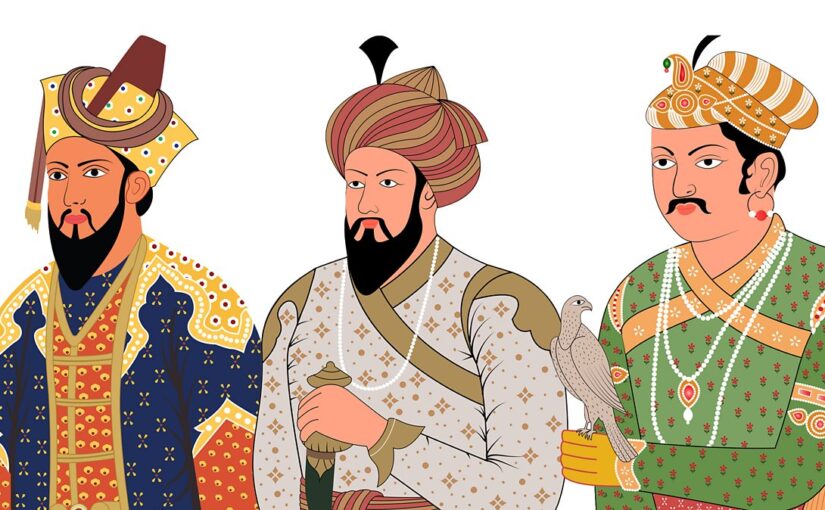
And letâs be honest: the erasure didnât start with the British. Aurangzeb, still lionized by most Pakistanis (his fanaticism and Hinduphobia a plus point), abolished Nowruz as part of his Islamic âreforms,â replacing it with religious festivals. So how can one claim Persianate lineage while revering the very figure who uprooted it?
Continue reading Norouz or Nowhere: The Identity Pakistan Can’t Claim