Open Thread: Rasam, Stray Dogs, and the Battle Over India’s Story

Life in Chennai has been calm. For breakfast I have rasam. It is a superfood: light, hot, and full of spice. Indian food is the only cuisine where I could be vegetarian. I know Persians who try. I feel sorry for them. No meat, no masala, no spice. There is only so much hummus one can eat.

But calm at the table contrasts with what I read in the news. The Delhi order to remove stray dogs is disturbing. I cannot look at the pictures of the removals.

Across the Trans-Wagah line, another current runs. The Pakistan Cricket Board may change its revenue-sharing with players. A small story, yet it speaks of a larger one: Pakistan may gain small tactical wins by tying its path as the flexible adversary to India. But for the top ten percent of its economy, the block is clear. They cannot flow into India’s success. They remain tied to Western patrons.

Meanwhile, old arguments are stirred again. Audrey Truschke has been active with fresh claims on Aurangzeb. The same week, Kabir wrote that Western philosophy outweighs Dharmic wisdom, and that Greek thought shaped Buddhism (I can’t remember if it was him). I wonder who first wrote this propaganda. It is damaging, and it lingers.

India’s stories stretch from the taste of rasam to the fate of stray dogs, from cricket boards to Aurangzeb’s ghost, from Kabir to the Greeks. Each is part of the same struggle: who owns the narrative of Bharat, and how it is told.

Links:

To the Dutch, a German Shepherd holds more worth: https://www.instagram.com/reel/DNYEoQForz2/?igsh=MTVrZW1kZW94NHdieQ==

Serial Killing at a Famous Karnataka Temple: https://youtube.com/shorts/YexL_ASaGqE?si=mQ-Kdj6jSMzNPrAx

Could be Social Media Frenzy: https://www.thehindu.com/news/national/karnataka/dharmasthala-burial-case-political-temperature-soars-as-no-major-recovery-after-digging-17-spots/article69937387.ece

Not one Football: https://youtube.com/shorts/DR8SFCTCaoQ?si=tut2ymQB3EcDHTY6

Why Pakistan Won’t Go the Way of Iran

I’ve been enjoying the new direction Brown Pundits has taken since the recent shake-up. Posts are now generating 100+ comments, and that kind of engagement creates a virtuous cycle. You want to write more, think more, respond more. I’m leaning into that.

For now, a lot of the content burden rests on me and that’s okay. It’s been encouraging to see older names return: Girmit, for instance. It feels like a slow reconsolidation of the original readership. Letting people return on their own terms.

Meanwhile, BRAHM, my newsletter, has taken on a different role; a home for more composed writing, life pieces, and the slow launchpad for my business. I just posted something there recently, which I’ll link to for now and follow up on soon. But here, on BP, is where I let myself think in public. Where I go long. Where thoughts breathe.

Continue reading Why Pakistan Won’t Go the Way of Iran

India, Pakistan & the Central Asian Dancefloor

India and Pakistan used to dance together; locked in step, even if offbeat. Now, they move in opposite directions, occasionally brushing shoulders, never quite facing each other.

Take this month. On one hand, India is set to join the Central Asian Football Association’s (CAFA) Nations Cup; a sporting signal of its growing diplomatic footprint across post-Soviet Asia. On the other hand, India pulled out of the WCL 2025 cricket semi-final against Pakistan, citing the tragic Pahalgam terror attack. The result? Pakistan walked into the final uncontested.

Two headlines. Two very different moods. One shows India gaining legitimacy in a new regional club. The other reflects how fragile the bilateral dance with Pakistan remains. Continue reading India, Pakistan & the Central Asian Dancefloor

What Kind of Space Is Brown Pundits

A few of us authors have been actively discussing the future of Brown Pundits; the space, the tone, and the deeper ideas we’re engaging. It started informally on our WhatsApp group, but the questions are foundational: What kind of platform is BP becoming? What should it strive to be? And what kinds of ideas does it host best?

At its best, Brown Pundits is a bridge; across nations, faiths, ideologies, and lived experiences. It’s a space where one can be deeply Indian, wholly Pakistani, broadly Bangladeshi, or diasporic and disillusioned but still belong. But like any bridge, it needs conscious upkeep. If a conversation leans too far in one direction, it doesn’t stretch, it collapses inward.

Some contributors feel the platform has become overly shaped by one ideological current. Others argue that the real problem isn’t dominance, but disengagement ; those who want plurality must also show up. And both perspectives can be true.

Open Thread

Today will be a bit busy so I haven’t had time to attend to BP (running on 4-5hours sleep).

Talk about whatever you like; I’ll make this thread sticky a while. A good & engaged commentariat is the lifeblood of a platform.

I’m working on something that will be a bit interesting (my newsletter meets my work) but let’s hear from you w.r.t the wacky and the wonderful.

Was Partition Good for Muslims?

Kabir:I will remind you of the Sachar Committee Report which stated that the condition of Indian Muslims was worse than that of Dalits. This was a report commissioned by the Congress government not by Pakistanis. India has never had a Muslim Prime Minister. I would be willing to bet that this is not going to happen in my lifetime. The Muslim League succeeded in getting the Muslim majority provinces a country of our own. This is a huge achievement.

Partition was sold as deliverance. In hindsight, it may have been the most sophisticated act of self-disinheritance in modern Muslim history. A century ago, Muslims on the subcontinent were a political force — deeply embedded, numerically significant, and intellectually diverse. Today, they are divided, disenfranchised, and disoriented. Three nations. No unity. No power. No clear path forward. Let’s take stock:

1. Divided into Three

Pakistan. Bangladesh. India. Three fractured expressions of one civilizational legacy — none of which fully represents or protects the totality of South Asia’s Muslims.

2. No Electorate Leverage

In India, Muslims lost their negotiating bloc overnight. From being a decisive vote in undivided India, they became a permanent minority — politically cautious, rhetorically silenced, and often viewed with suspicion. In Pakistan, Muslim identity became so hegemonic it erased internal plurality. In Bangladesh, it became suspect altogether.

3. Psychological Cleft

Two-thirds of Muslims had to unlearn India. Partition forced them to disown their history. The other third had to choose between being Muslim or becoming more Indian. This psychic wound — of being here, but not quite belonging — has never healed.

4. Urdu: From Bridge to Burden

Urdu, once the cultural glue of the Muslim elite, is now:

  • Enforced in Pakistan (to the resentment of Sindhis, Baloch, and Pashtuns)
  • Marginalized in India
  • Extinct in Bangladesh

A shared language was replaced by suspicion and statecraft.

5. Islam as a Spent Force

Partition Islam was meant to be political. It became performative. There is no robust Muslim political expression in the subcontinent today — only tokenism, sectarianism, or silence. It resembles post-revolution Iran: Islam was not discredited by the West, but by what its stewards did in its name. Partition didn’t solve the “Muslim Question.” It just made it unspeakable — in three different politicised idioms.

Let Hindus Decide for India

There’s a quiet but persistent coalition, inside and outside India, that seems intent on denying Hindus the right to define their own future. It includes unreformed Islamists who refuse to reckon with modernity, English-speaking liberal elites still shadowboxing for Nehru, minorities with veto power but no stake in cohesion, and a chorus of Western (and increasingly Chinese) voices, eager to manage India’s trajectory from afar. What unites them? A shared discomfort with Hindu political consolidation.

Let’s be clear: Hindu identity is not a new construct. Whether you place its roots 3,000 or 5,000 years ago, it’s one of the world’s oldest living civilizational continuities. That identity has always been plural, regional, and evolving. But it has also always been there; visible in memory, ritual, geography, and language. Today, that identity is waking up to its political form. And it will not be put back to sleep.

Hindutva is not going anywhere. Nor is the Indian Union. Those who hoped Kashmir would stay outside this arc have already seen the direction of travel. Pakistan’s decision to opt out of Hindustan, and then build an identity against it, has led not to strength but to strategic stasis. Bangladesh, too, for all its cultural richness, now stands as a separate civilizational lane. And so we arrive at the core truth: Hinduism and India are coterminous.

This isn’t a call for exclusion. But it is a reminder that those who opted out do not get to dictate terms to those who stayed in. That includes foreign commentators and diasporic gatekeepers alike. There is a difference between pluralism and paralysis. There is a difference between nationalism and denial. And if majoritarianism is the anxiety; perhaps the deeper fear is that Hindus are no longer apologizing for being the majority. Let India decide. Let Hindus decide. Let the world, finally, learn to listen.

The Mughals Were Not an Indian Dynasty — They Were a Dynasty in India

The Mughals were not an Indian dynasty in the civilizational sense. They were a dynasty in India — rooted in the Persianate ecumene that stretched from Anatolia to Bengal, but distinct from the indigenous Indic civilizational framework.

Richard Eaton’s India in the Persianate Age captures this well. The Mughal elite, like other Turko-Mongol polities across the Islamic world, operated through a tri-layered framework: Arabic religion, Persianate high culture, and Turko-Mongolian kingship. This pattern held from Egypt to Samarkand — and India was no exception.

But here’s the distinction: while in places like Iran, Central Asia, and even parts of Anatolia, the ruling elite and the subject populations often shared linguistic, religious, or cultural proximity, in India the Mughal court sat atop a society whose foundational worldview — Dharma, Sanskritic cosmology, ritual plurality — was wholly different.

Yes, the Mughals were cosmopolitan. Yes, Akbar attempted synthesis. But at their core, the Mughal dynasty retained its sense of separateness — not just politically, but civilizationally. Persian remained the language of court and culture, their aesthetics leaned West, and their ethos remained imperially aloof. Their legitimacy was not drawn from Indian sacred geography but from Turanic, Persian, and Islamic claims of kingship.

Contrast this with the Suri dynasty, which, despite being devoutly Muslim, left a remarkably grounded imprint. Sher Shah Suri ruled in Hindavi. His administrative and infrastructural legacy felt local, even national. In some ways, paradoxically, he felt more Indian than the Mughals did.

This isn’t about Islam being foreign to India. Islam has deep roots in the subcontinent — from Kerala to Bengal to Kashmir. It has been deeply indigenized across regions. But when Islam arrives twinned with Persianate high culture, it becomes something else: a hybrid elite formation, distinct both from Sanskritic Hinduism and from vernacular Islam.

The British Raj, too, was alien — but ironically, its later administrators localized many elements of their rule. The Mughals, by contrast, represented a more refined foreignness: imperial, hybrid, and between worlds.

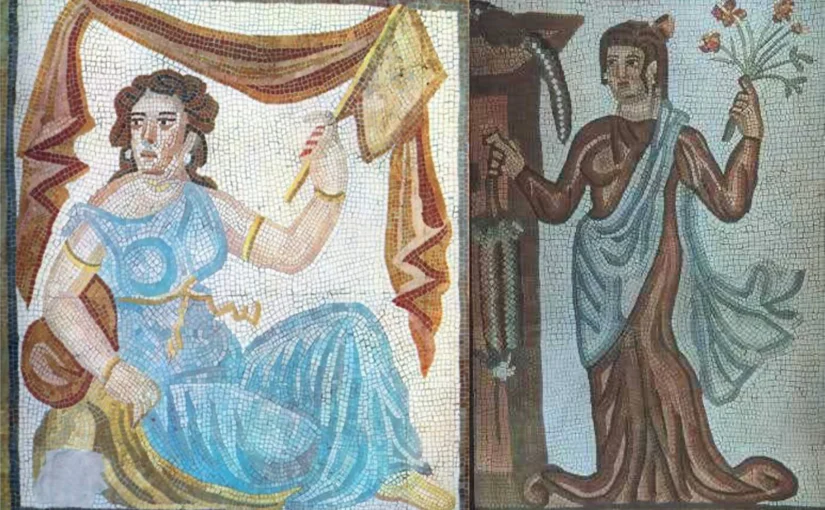
It’s telling that the most influential women of the Mughal court—Noor Jahan, Mumtaz Mahal, and Hamida Banu Begum—were all of Persian origin. They wielded real power: issuing firmans, shaping court politics, commissioning architecture. In contrast, the Hindu-indigenous consorts—Jodha Bai, Anarkali, even Aurangzeb’s Hindu Rajput lover—were celebrated in romance, not governance. They were symbols, not strategists. Influence, in the Mughal world, came not with local integration but with Persian pedigree. That, in itself, says a great deal.

So no — the Mughals were not an Indian dynasty. They were a dynasty in India. That distinction matters.

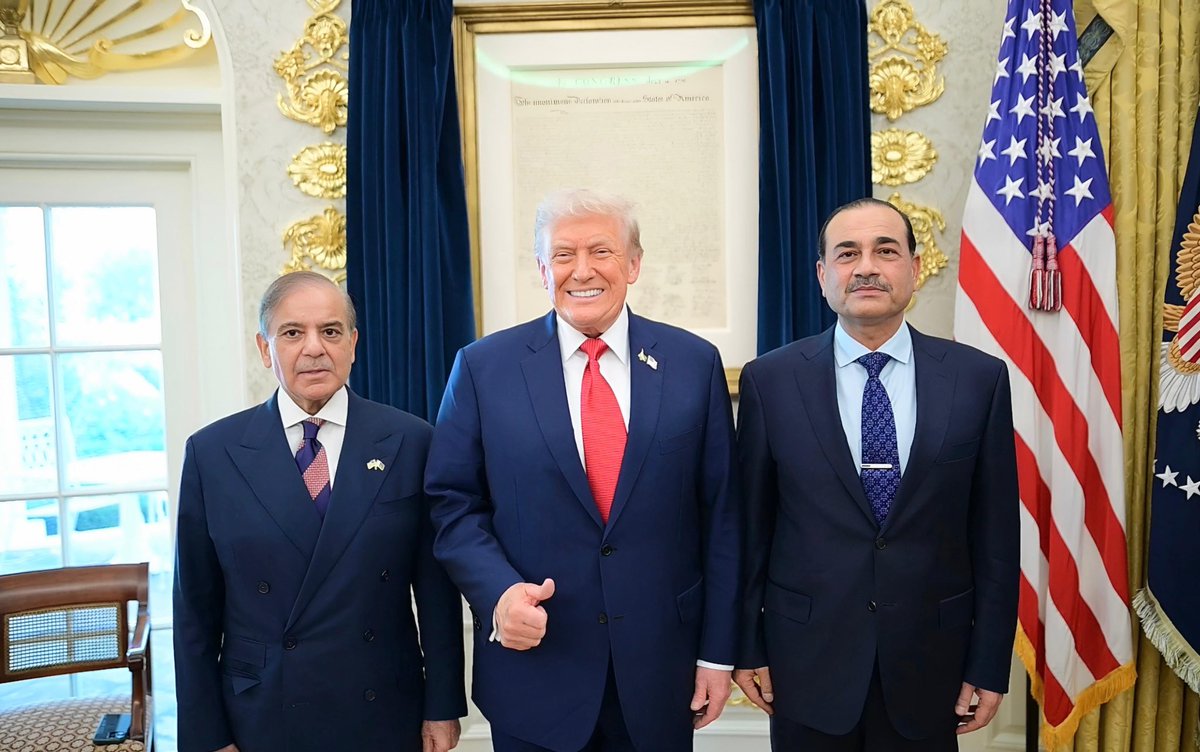
What did Asim Munir talk with Trump

Now that the blog has a lease of new life i thought why don’t I join the fray.

Funny that Asim Munir is having lunch with Donald Trump only a day after Trump was having X diarrhoea threatening Iran and its leadership.

What could potentially be the points of discussion one wonders. I have a few wild thoughts.

  1. Trump is asking for Pakistani help against Iran. Either back-channel negotiations and/or direct intelligence. I am not sure of this one as this seems for a Pro-India cope which sort of makes sense of the ceasefire.
  2. Pakistan wants to remain the only Nuclear Islamic nation and hence is willing to get into bed with Zionists in Trump towers while giving a middle finger to Ummah.
  3. The felid marshal wants swip up some Tomahawks to counter Brahmos.
  4. Trump in all his infinite wisdom is playing at 56D Chess against China via flirting with the felid Marshal and Dumping Modi after a brief fling (or maybe it never was a fling).
  5. Trump wants to learn some catty dictatorship from the felid Marshal for the 3rd term.

Ironically Modi declined US invitation which seems to be related to either claimed US mediation into Op Sindoor or Israel Iran war.

Finally Sorry Amey and Poulasta but the podcast episode on OP Sindoor was terrible. Cant have a podcast where Omar’s wisdom is interrupted as frequently as that with all the rants and interruptions.

I hope to write a longish post from India POV about Op Sindoor and the future as soon as i get some brainspace.

Be civil in comments. 

Israel, India, and the Rise of Defensive Asymmetry

A Pause in the Offensive:

Without getting into the ideological or emotional dimensions of current conflicts, one point stands out: both Israel and India seem quietly surprised by the defensive resilience of their adversaries.

Whether it’s Iran-Israel, India-Pakistan, or even Russia-Ukraine, a pattern is emerging: offensive campaigns that assumed rapid success are stalling against increasingly capable—and surprisingly tenacious—defensive postures.

In classic military doctrine, a successful offense requires a 3:1 superiority. That logic appears to be inverting. What we may be witnessing is a shift in the scientific and technological balance—not just in weaponry, but in surveillance, cyber, and even psychological endurance as evidenced by the Iranians on national television in this clip, IMG_0631.

Continue reading Israel, India, and the Rise of Defensive Asymmetry

Brown Pundits