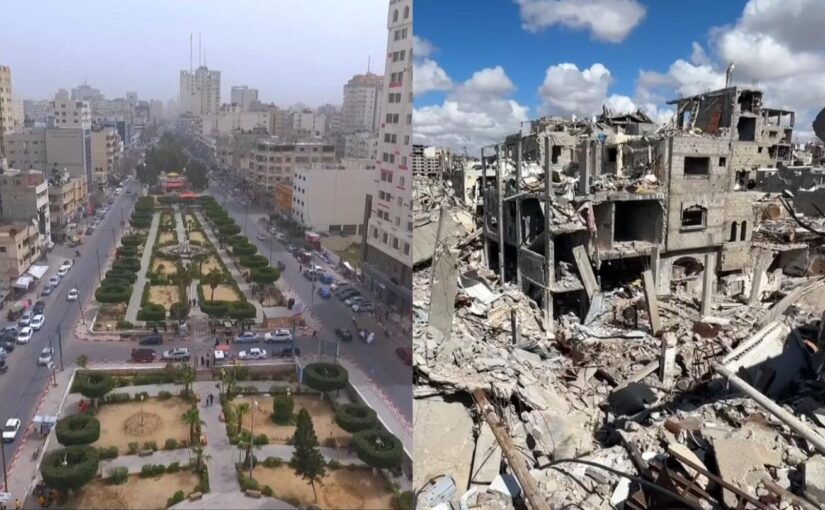
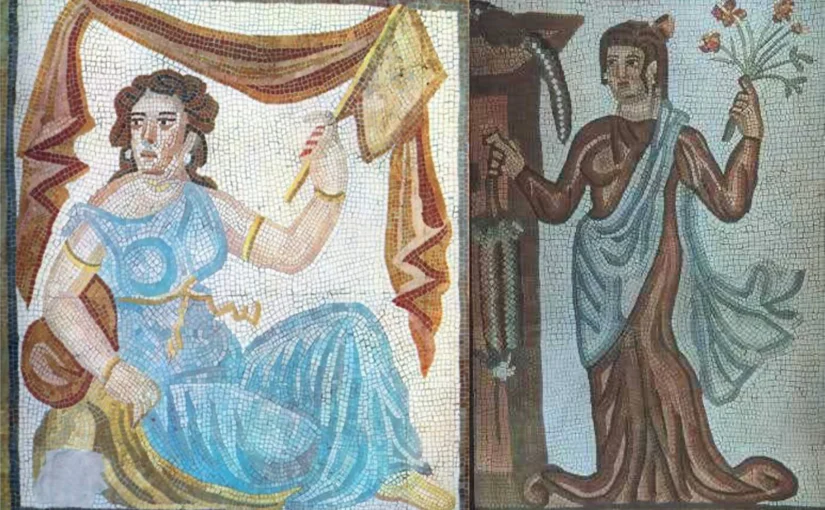
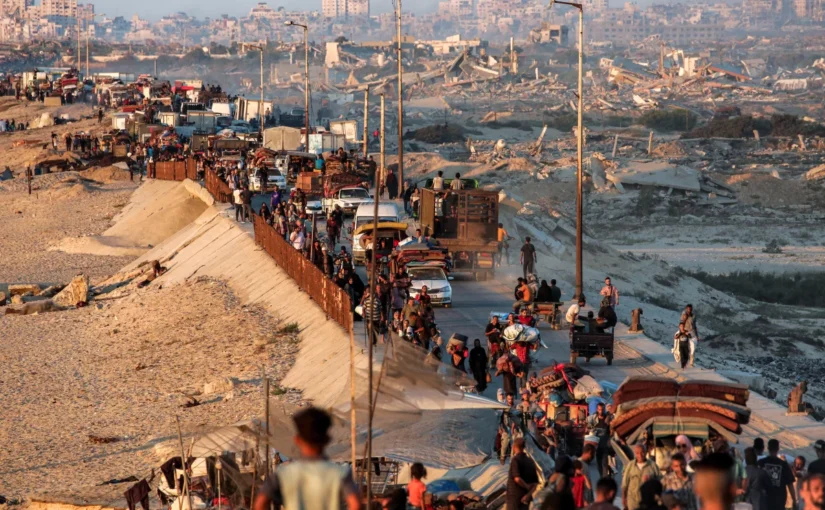
I’ll add as I go along but this seems quite topical..
I do see the Persian Gulf States emerging as a hyper-conduit between capital, labour and technology. The West is raising up its walls.
I’ll add as I go along but this seems quite topical..
I do see the Persian Gulf States emerging as a hyper-conduit between capital, labour and technology. The West is raising up its walls.
Kabir’s Muslim nationalism cosplaying as liberalism is vexatious (it would be excellent if he just disclosed his priors), but I give the admin full authority to handle that directly.
My immediate concern is with BB-HS. I have barred him from becoming an author and have removed his last twenty comments. Despite his earlier misrepresentation about being “half-Muslim,” I allowed him to return under a new handle, tabula rasa. His output, however, is increasingly defined by “fantasies” about what a model minority should be; deracinated and devoid of meaningful character.
BB’s Response (after I had deleted his past 20 comments)
“Why though? The only animus I have is with Kabir because he represents a demographic I loathe – The soft Islamist | The ‘liberal’ English-speaking version who whitewashes his more hardcore cousins’ atrocities. Actual people have died due to Islamists which Kabir downplays (Pahalgam, October 7th). Some ribbing online is nothing in comparison. And I haven’t even said anything insulting.”
My Response
Moderation Philosophy
As a Founder, my job is to ensure Brown Pundits does not become an echo chamber. I have repeatedly critiqued Kabir’s contradictions, but once I accepted him as a Muslim nationalist cosplaying liberalism, I could also accept his place in the debate. We have multiple Hindu nationalists here, and when Kabir is challenged\moderated, the balance tends to restore itself. The ecosystem can correct for his presence.
Finally, let me stress: the comment boards are not the only heart of this site. Too often they descend into noise. If regular commentators want to influence debate constructively, they should apply to become Authors; where they can speak directly to our 2,000+ daily readers, not just the dozen or so regular commentariat.
Brown Pundits is rapidly emerging as the most interesting Indo-Pak cross-channel precisely because it is not an echo chamber. We literally upset everyone and that is a great thing because it means we are covering new difficult terrain. My moderation began with strict principles, but like everyone else, I have a life, job, and family. That means I must also be pragmatic.
Brown Pundits has always thrived on debate, commentary, and detail. Our compact team—three co-founders, two editors (Nivedita & Indosaurus), and three authors (sbarrkum, Gaurav Lele, Saiarav and Manav); keeps the conversation alive.
We’d like to expand. If you’ve been a regular voice in the comments or simply feel you have something to add, please apply to write for BP. Sharp observations, whether about Modi Ji’s birthday celebrations or broader cricketing analogies, are exactly what we value.
The word Pundit comes from Sanskrit, meaning “learned man” or Brahmin. It reminds us that Brown intellectual life is rooted in centuries of plural, complex traditions of debate. This is our inheritance, and BP stands on those terms; not reducible to any ideology.
I’d especially encourage regulars like brown, Daves, Hoju, Pandit Brown, and BB to consider joining the author list.
A few pieces I’ve been reading this week:
The Lies America Tells Itself About the Middle East: (Foreign Affairs) – On how U.S. narratives obscure its own role in the region.
Don’t Overestimate the Autocratic Alliance: (Foreign Affairs) – A counterpoint: authoritarian states may not be as cohesive as advertised.
The Four Humours: Our 2,500-Year-Old Mania for Personality Types: (BBC Future) – Why these frameworks endure and what that says about how societies interpret character.
Can We Hear God? (Bahá’í Teachings) – A reflection on divine communication and perception.
Reflections
On the Ummah: Muslims have often failed to concede ground in internal debates, which has left them politically boxed in. One reform across all denominations would be to return directly to the Quran as the primary authority. That alone would dissolve many cultural accretions, halal (animals should be stunned before slaughter), hijab (a Sassanian trait), and other practices, into something more adaptive.
And here’s a more speculative question: if the “Satanic Verses” were reconsidered if Al-Lat, Al-Uzzah, and Al-Manat were understood as sacred divinities at the threshold of the Lote Tree, would that make Islam more fluid, especially for minority-majority dynamics?
On Kabir: I’m not moderating him out, but readers should be aware that he frames everything through Muslim-rights activism. Engage, but don’t get gaslit into endless provocations. Everyone is entitled to their nationalisms — but they can’t claim liberalism at the same time. That tension makes it worth examining how plurality is treated within the Hindu fold itself. Dharma, unlike the Abrahamic Faiths, tends to all for multiple truths co-existing with each other (Buddhism and indigenous East Asian religions).
👉 Over to you. I’m retreating from heavy moderation — I see BP’s strength in letting the commentariat lead. Biases are fine. Gratuitous abuse is not.
“In March 1998 the Indian PM Gujral, told … “Pakistan was not capable of making atomic bombs.” he had been convinced by Indian Intelligence and Dr Raja Raman, the head of Indian Atomic Energy Commission, who had publicly claimed that nuclear weapon were beyond Pakistan’s reach.”
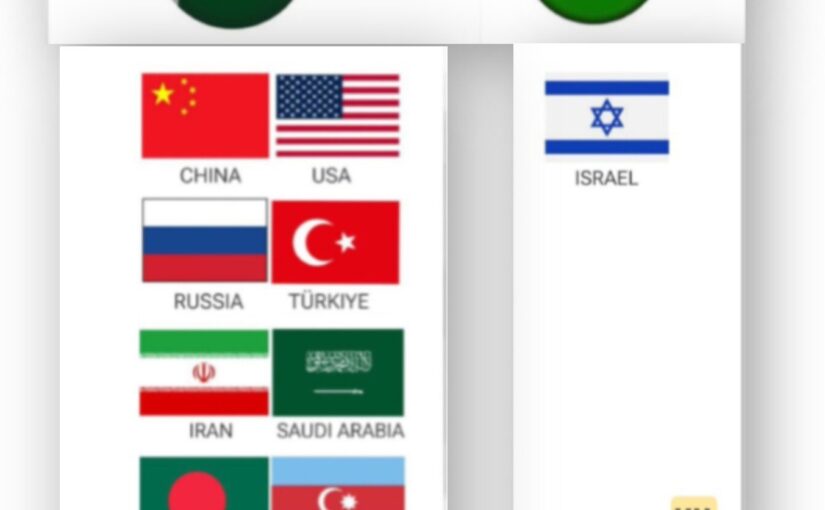
The chart above lays out “strategic partners” for 2025. Pakistan lists China, Türkiye, Iran, Saudi Arabia, and assorted others. India, by contrast, shows Israel. But the real issue isn’t who collects more flags; it’s whether any of Pakistan’s patrons will ever raise its HDI, improve infrastructure, or embed long-term stability.
I’m interested to hear what the commentariat thinks of this moment. India’s foreign policy is already locking it into superpower status. Pakistan remains reactive, borrowing survival from whoever will lend it.
The analogy that strikes me: India–Pakistan resembles Russia–Ukraine, except if Ukraine had kept nuclear weapons. The parallels are strong:
Ukraine, like Pakistan, is a breakaway sibling — the “other half” of a civilizational whole.
Ukraine, like Pakistan, survives by appealing to larger patrons.
And interestingly, the GDP ratio gap between Russia and Ukraine is almost exactly the same as between India and Pakistan (please fact check me).
Just as Ukraine is considered the homeland of the Russian Empire (Kievan Rus’), Pakistan carries the legacy of Partition as the “Indus homeland.” That symmetry makes the analogy more than superficial.
On Kabir: I understand his consistent emphasis on Muslim rights and Muslim nationalism. Readers should be aware of that lens. I’m not moderating him out, but I would caution the commentariat against being gaslit into endless provocations by Kabir. The question here is not identity politics, but the direction of Indian and Pakistani foreign policy in a critical moment in global history (decades are happening in weeks).
A must read.
Excerpts
Larry Wilkerson, who both regularly reads Israel press and has many contact, has repeatedly said Israel has taken such serious economic and societal damage that he predicts it will no longer exist in ten years.
The fact that the next day, a UN commission of inquiry released a report finding that Israel has engaged in four of five genocidal activities as defined by relevant law puts even more pressure on the ethnosupremacist state.
Microsoft, Google, Amazon, Palantir, IBM and HP are named in a groundbreaking UN report for their role in automating apartheid and accelerating genocide.
Tech companies and weapons manufacturers are the most complicit enablers of Israel’s economy. Escalate BDS pressure against them and send a clear message: No tech for apartheid and genocide.
GOLDMAN SACHS YOU CAN’T HIDE!
Goldman Sachs is the biggest holder of Israeli bonds and a key investor in the weapons companies making the bombs Israel drops on Gaza. Continue reading Netanyahu Depicts Grim Economic Future for Israel, Need to Become an Autarky, “Super Sparta” Due to Isolation; Are There More Meanings?
Friends,
The spirit of Brown Pundits has always been dialogue — open, searching, and at times, fierce. But dialogue only flourishes when it is consistent and principled.
Recently, a contradiction has emerged in Kabir’s contributions: applying one set of standards to India and Pakistan, and a different set to Israel. This has led to repeated cycles of disruption, rather than genuine exchange.
To preserve the integrity of our space, Kabir’s participation will be paused until this inconsistency is clarified (we will remove any of his comments that do not address and acknowledge the contradiction; we will also remove any replies to his comments). This is not censorship, but stewardship. Free speech here is not about endless repetition; it is about coherence, accountability, and respect for the whole.
🕊️ On Confirmation, Coincidence, and the Return of Brown Pundits
Exactly one year ago today, 17 September 2024, I published a piece titled “The Battle for the Taj Mahal: India’s Sacred Lands & Waqf Boards Under Fire”.
At the time, Brown Pundits was stirring from hibernation. Readership had dwindled to near-zero, the commentariat was dormant, and the site, once lively and interrogative in its heyday, felt like a forgotten archive. That post, like so many others before it, was written in solitude. There was no traction, no expectation. Just thought, laid down with care.
And yet here we are, one year to the day, and the blog has roared back to life.
📿 What the Baháʼí Tradition Calls “Confirmation”
In the Baháʼí tradition, we don’t reduce these moments to mere coincidence. Instead, we speak of confirmation; divine endorsement coupled with meaningful alignment. A subtle assurance that what was offered in silence may still echo in relevance.
Sometimes, truth takes time. It must be planted, and it must ripen. And then, if the conditions are right, it re-emerges at the very moment it’s needed again.
🏛️ Revisiting the Taj & the Sacredness of Land
That post, exploring Waqf Boards, sacred lands, and the Taj Mahal’s place in India’s civilizational memory, was written in a moment of saturation. Too many headlines, too little context. My intention wasn’t to settle the argument, but to recast it: What makes land sacred? Who has the right to remember? Who gets to reclaim?
Reading it now, what’s striking is not just how relevant it remains, but how the same debate has reassembled; not just thematically, but almost ritually, with new voices circling back in familiar orbits.
🌀 Same Debate, Same Deflection
And so we arrive back, with uncanny symmetry, to Kabir. He’s long argued that nations must be judged by their own internal frameworks: Continue reading 🗓️ One Year Ago Today: The Taj Mahal, Sacred Lands, and the Power of Timing
Happy Birthday Pradhan Mantri:
I watched several videos — four or five, maybe more — of public figures sending their wishes. Among them: Donald Trump, Narendra Modi, Benjamin Netanyahu, Shah Rukh Khan, Aamir Khan, Mohammed Siraj, and Mukesh Ambani.
Mukesh Ambani, of course, remains closely aligned with the establishment, and Aamir Khan seemed to lean heavily into his Hindu heritage — adorned with Rakhis on his wrist, even a Bindi. He’s presenting himself now in a distinctly Hindu cultural idiom, though he comes from a very prominent Indian Muslim family.
By contrast, Shah Rukh Khan stood out. His message was subtly sardonic — he remarked that the recipient was “outrunning young people like me.” It was light, but just subversive enough to feel intentional. Interestingly, both Shah Rukh and Aamir spoke in shuddh Hindi, which added a certain performative weight to their gestures.
Hindu Art
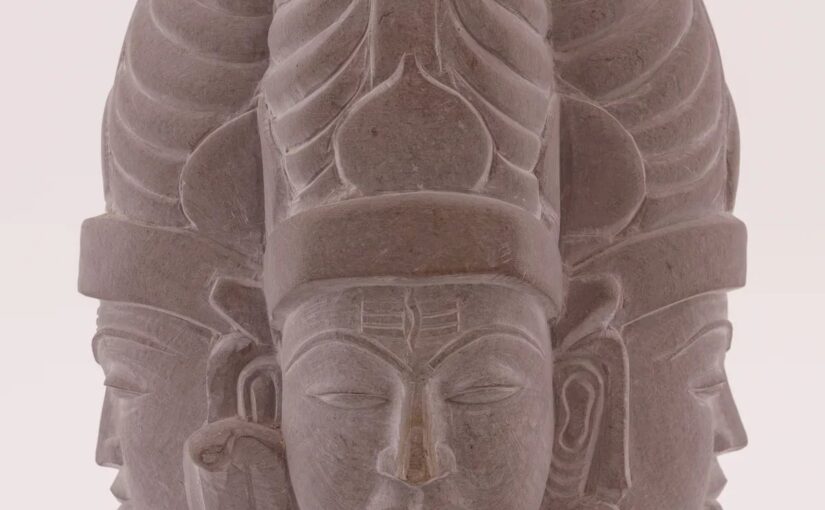
I’ve been fairly busy the past few days, mostly focused on BRAHM Collections; writing about carpets, curating Trimurti sculptures, and exploring Ardhanarishvara iconography. It’s been a deep dive into the civilizational grammar of India and by extension, the porous boundary between sacred art and civil religion.
In the background, I’ve also been chipping away at longer-form reflections; trying to crack the formula for my newsletter (believe it or not the readership is neck to neck with BP but different demographics). It’s all a bit scattered, but the writing has become its own brown paper trail.
On the Commentariat (and Why I’m Stepping Back)
I still follow the commentariat but I’m slowly easing off. There’s a rhythm to it, sure, but too often it turns into exhaustion. I’ve removed all of Honey Singh’s abusive posts. Abuse is now a hard red line for me, but beyond that, I’m stepping back from constant moderation or sparring. Continue reading Threads, Carpets, and PM Modi’s 75th
🕌 Reflections on Kabir, Afridi, and the Compact of Coexistence
The recent incident involving Kabir / Bombay Badshah / Honey Singh, and the orchestrated drama around his entrapment has, quite unexpectedly, become a catalyst for deeper discussion on Brown Pundits. While none have chosen to focus on analytics (“2,000 daily visitors”—thank you very much:-), the real story lies in how this drama has exposed, yet again, the deep ideological fissures within South Asian identity; especially in the India-Pakistan-Muslim triad.
Let’s begin by being honest: Brown Pundits, for all its digressions into Sri Lanka, Nepal, or Bangladesh, is still primarily a blog about India and Pakistan, and more crucially, about Indian and Pakistani Muslims. This is a feature, not a bug. The origins of the blog lie in the Sepia Mutiny, a scattered band of intellectually independent thinkers questioning dogma from every direction (which started in 2004 and if we are a “daughter blog” that we means have 20+yrs of intellectual antecedents on the Brownet), and it has now matured into one of the few platforms willing to wrestle with the ideological ambiguities at the heart of the subcontinent.
🧕 Kabir’s Point: Brotherhood, Boundaries, and the Big Choice
Kabir made an astute, if difficult, observation: that he views Indian Muslims as “brothers”, but does not feel the same about Pakistani non-Muslims.
This sounds contradictory until one understands the emotional exhaustion of watching Muslims oscillate between claiming ummah-hood when convenient, and weaponizing liberal values when needed. It’s a cognitive dissonance that creates what I can only call the moral coexistence trap: the idea that Muslims, especially in India, demand maximum accommodation, of their food (their nauseating right to murder Gau Mata on Bharat’s sacred soil itself), Faith, festivals, and foreign affiliations, while rarely extending the same pluralistic courtesy in return.
And then there’s that infamous Shahid Afridi clip, the one where he smashed his television after watching an Aarti, being performed. To many of us, that wasn’t just a cringe-inducing moment of bigotry; it begged a real question: Why do Indian cricketers continue to shake hands with Hinduphobes Hindu-hating men like Afridi and his ilk (the Pakistan cricket team)? At what point does tolerance become indulgence?
🚩 The Compact of Indian Minorities: Understand It or Leave It
That’s more than 2,000 visitors a day. What’s driving it?
✅ Open Threads
✅ Honest takes
✅ And yes — argumentation.
But arguments only work if they spark thought, not just heat. Take Kabir; he’s a regular, and I’ve given him free rein. But his tendency to argue without reflection rubs people the wrong way. He blames his relative unpopularity on identity, but it’s more about tone than religion; highhandedness vs humility.
In my own recent disagreement: I paused, thought, reflected deeply. That’s the spirit of BP; a messy, open-minded search for truth.
🎭 Meanwhile, the real tamasha isn’t cricket 🏏 (India did trounce Pakistan) — it’s on X, and on the BP comment section.
X 🧵:
Mohammed Shami’s viral Ramzan juice reel — “His religion lets him put his nation first”
Indian media ad for INDvPAK — lynching for selling beef.
A Malayalam film scene: Hindu girl eating beef — what are South Indian Hindu traditions on beef?
Tallest structures in the subcontinent through the ages.
The stupas raises a deeper question:
How central was Buddhism to the Indian subcontinent — and how total was its erasure? In the heartlands, Brahmanism absorbed and displaced it; in the frontier zones, Islam swept away what remained. What we see today are ruins — but once, this was the dominant civilizational framework of the region.
Was its disappearance a slow assimilation, or a deliberate effacement?