Vantara, Caste, and the Fragile Commons

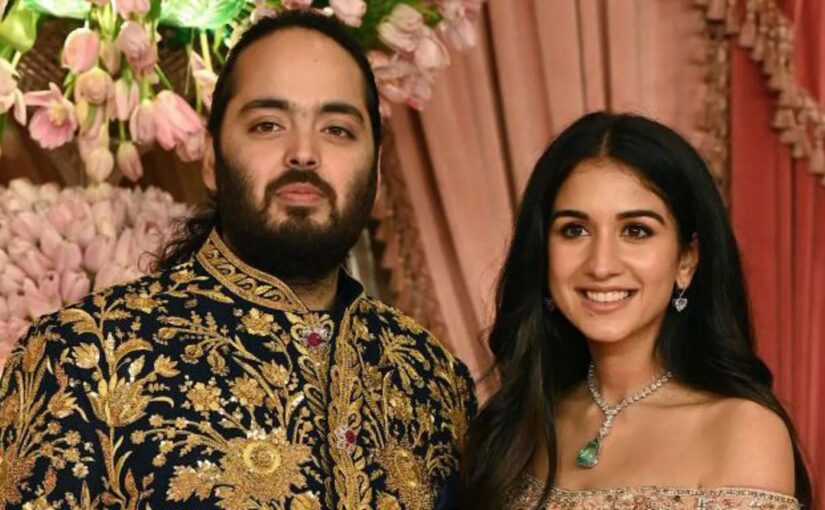
I was speaking with Dr. Lalchand about a number of things, from Anant Ambani’s wildlife project to the recent caste discourse on Brown Pundits. Both, strangely enough, converge around the theme of scrutiny; of who gets to build, who gets to critique, and who sets the rules of engagement.

Let’s start with Vantara. Anant Ambani’s wildlife refuge is coming under sustained criticism. But I ask: why shouldn’t Bharat, arguably the only major civilisation that views animals as divinely inspired, have a world-class zoo or rescue center? If done with sensitivity and vision, this could be a profound expression of India’s Hindu civilisational ethos.

Vantara houses over 200 elephants, 50 bears, 160 tigers, 200 lions, 250 leopards, and 900 crocodiles; albeit imported from across the world into the baking flatlands beside an oil refinery. The scale is staggering. Yes, there are questions: about captive animal welfare, about the case of Pratima the elephant, about transparency. But we should also be able to think of Indian megafauna conservation at global scale especially in a nation where sacred animals are part of dharmic memory.

America had its Gilded Age. The robber barons left behind libraries, parks, and museums. Can’t India do the same? Or do we reflexively dismiss anything built by wealth as vanity? Can there not be a deeper Dharma behind patronage?

And that brings me yet again to caste, controversy, and the structure of Brown Pundits. Continue reading Vantara, Caste, and the Fragile Commons

Homebound with Ishaan Khatter

Last night Dr. Lalchand & I watched Homebound, India’s submission to the Oscars, at Apple Cinemas in Cambridge, Mass. This sad film follows a Dalit (Chandan Kumar) and a Muslim (Mohammed Shoaib Ali) struggling against the odds during the pandemic, their solidarity fictionalized as a fragile bridge across India’s deepest divides.

On the surface, it is a familiar story: the disenfranchised facing systemic barriers. But what struck me was how privilege itself performed disenfranchisement. Ishaan Khatter, brother to Shahid Kapoor, plays the marginalized Muslim. Janhvi Kapoor, descended from Bollywood royalty, embodies a Dalit woman. Vishal Jethwa, a bright-eyed Gujarati, portrays the Bhojpuri Dalit lead. This is not unique to India; Hollywood, too, casts elites as workers. Yet it raises the question: when poverty is performed rather than lived, is it “Dalit-washing”?


Poverty, Emotion, and Representation

Watching the film, I reflected on poverty’s emotional landscape. For elites, emotions can be expansive, indulgent, aestheticized into art. For the working poor, emotions are often constrained by survival — narrowed into necessity. Homebound tried to humanize its characters, but I wondered whether it romanticized what in practice is a relentless narrowing of possibility.

The West rewards this narrative. Parasite in Korea, Iranian cinema, Slumdog Millionaire — poverty & Global South tribulations as spectacle becomes “poverty porn.” The Guardian gave Homebound four stars. Great art often tilts melancholic, yes, but here the melancholia is curated for Western consumption.


Identity, Vectors, and Islamicate Selfhood

More unexpectedly, the film stirred something personal. I realized how much I have vacated my own Islamic identity. It was not traumatic. As a Bahá’í with Persian cultural roots, I found overlap — even comfort — in Hindu traditions. Dalits, in their rapid Hinduization, represent one vector of assimilation; Muslims and scheduled-caste Muslims, often in tension, another. Homebound imagines solidarity, but in life these vectors pull unequally. Continue reading Homebound with Ishaan Khatter

Links on My Browser Right Now – Open Thread

A few pieces I’ve been reading this week:


Reflections

On the Ummah: Muslims have often failed to concede ground in internal debates, which has left them politically boxed in. One reform across all denominations would be to return directly to the Quran as the primary authority. That alone would dissolve many cultural accretions, halal (animals should be stunned before slaughter), hijab (a Sassanian trait), and other practices, into something more adaptive.

And here’s a more speculative question: if the “Satanic Verses” were reconsidered if Al-Lat, Al-Uzzah, and Al-Manat were understood as sacred divinities at the threshold of the Lote Tree, would that make Islam more fluid, especially for minority-majority dynamics?

On Kabir: I’m not moderating him out, but readers should be aware that he frames everything through Muslim-rights activism. Engage, but don’t get gaslit into endless provocations. Everyone is entitled to their nationalisms — but they can’t claim liberalism at the same time. That tension makes it worth examining how plurality is treated within the Hindu fold itself. Dharma, unlike the Abrahamic Faiths, tends to all for multiple truths co-existing with each other (Buddhism and indigenous East Asian religions).


👉 Over to you. I’m retreating from heavy moderation — I see BP’s strength in letting the commentariat lead. Biases are fine. Gratuitous abuse is not.

Image

“In March 1998 the Indian PM Gujral, told … “Pakistan was not capable of making atomic bombs.” he had been convinced by Indian Intelligence and Dr Raja Raman, the head of Indian Atomic Energy Commission, who had publicly claimed that nuclear weapon were beyond Pakistan’s reach.”

Brown Pundits: Broad Church or Narrow Canon?

Brown Pundits Must Stay a Broad Church

Reading Kabir’s thoughtful post on the “soft Hindutva” bias at Brown Pundits, I found myself both agreeing with parts of his argument and diverging from its framing. My own journey with BP goes back to its inception. The blog was born in Twixmas December 2010; 10 days after I had met Dr. Lalchand, whose presence has profoundly shaped my civilizational views.

I say this not as a biographical aside but because BP, at its best, is where the personal and civilizational collide. We bring who we are; our marriages, our migrations, our contradictions, into this messy, brilliant conversation.

At the time, like many Pakistanis, I held a deep-seated assumption: that Hindus were fundamentally “other.” It wasn’t overt hatred; just a civilizational distance, internalized from birth. But Dr. V & Brown Pundits challenged that.

A Forum With Bias? Yes. But Which One?

The heart of BP is not neutrality; it’s the willingness to host contradiction. That is its genius, and it must be protected.

Continue reading Brown Pundits: Broad Church or Narrow Canon?

If You Have a Side, You Don’t Care for the Other Side

In a world increasingly defined by sides, partisanship often masquerades as empathy. Whether it’s Pakistanis performing concern for Indian liberalism, or Indians invoking the plight of Muslim minorities to score points against their ideological rivals, the truth is simple: if you already have a side, you’re not truly invested in the fate of the other.

This isn’t cynicism; it’s structure. Sides, by their nature, demand loyalty. And loyalty comes at the expense of dispassion. You can mourn injustice selectively, but don’t pretend it’s universalism. More often than not, tribalism puts on the mask of principle.

As a Bahá’í, I’ve been shaped by a millenarian vision that urges global unity; yet I’m also deeply influenced by Hindu pluralism and pagan elasticity. Nicholas Nassim Taleb once said the more pagan a mind, the more brilliant it might be (excellent article) because it can hold many contradictions without demanding resolution. That capaciousness allows one to see that not every question needs a single answer. Hinduism, with its deep pluralism, contrasts radically with Islam’s (and Judaism’s) uncompromising monotheism. And yet, these two traditions are bound together—enmeshed across centuries of history, thought, and blood. Their tension is real, but so is their shared life.

That’s the point: opposites don’t just coexist, they form a whole. But when we prescribe change for the “other side,” we ignore our own capacity for reform. It’s always easier to critique outward than to renovate inward. Especially in a world run by oligarchic elites and managed emotions, where empathy is choreographed and outrage monetized.

So no, the Dalit Muslims of Dharavi aren’t the problem. Nor are the marginalized Hindus of East UP and Biharis. The problem is that a single family can build a private skyscraper in Mumbai while the city gasps beneath it. It’s the system that rewards power accumulation, not its occasional victims, that should concern us.

I don’t offer neat solutions. Maybe it’s taxation. Maybe it’s redistribution. Maybe it’s noblesse oblige. But the first step is this: stop pretending your critique of the other side is altruism. It’s not. It’s strategy. And perhaps the more honest work begins at home—with your own side, your own people, your own self.

What Was the Point of Israel’s Iran Strike?

The Limits of Provocation

At some point, the world will have to ask: what exactly was Israel hoping to achieve?

In the days following the dramatic escalation between Tel Aviv and Tehran, we are left not with clarity but with a deepening sense of confusion. If the intention was to disrupt Iran’s nuclear program, there is little to show for it—centrifuges still spin, scientists remain in place, and the infrastructure of Iran’s deterrent capability stands unshaken. If the aim was to trigger chaos within the Iranian regime, then that too has failed—Tehran did not descend into disarray; it retaliated, measured and intact. And if the goal was symbolic, to remind the world of Israel’s reach and resolve, then the moment has already passed, clouded by questions of proportionality, legality, and consequence.

For all the fire and fury, the strike landed with the strategic weight of a gesture. Continue reading What Was the Point of Israel’s Iran Strike?

On Moderation, Minoritization, and the Elite

Pulse: The Threads We Weave —

Lately I’ve wondered whether I over-curated the threads. Things feel quieter. Maybe too quiet. But perhaps that’s the cost of raising the bar—of asking for dialogue instead of dopamine. Still, this lull has me reflecting not just on moderation but on why some arguments no longer move me.

Take the Indo-Pak conflict: once electric, now strangely inert. That shift reflects my own evolution over two decades. I no longer inhabit that binary. I carry a layered identity—a South Asian Bahá’í sensibility shaped by Persian aesthetics, grounded in British institutions, and fluently navigated through English. That complexity is my compass. It’s why I care less about flags and more about forces.

And the real force that shapes our lives? The elite. Not as a pejorative, but as a structural reality. I see it as nested tiers: Continue reading On Moderation, Minoritization, and the Elite

Brown Pundits