Homebound with Ishaan Khatter

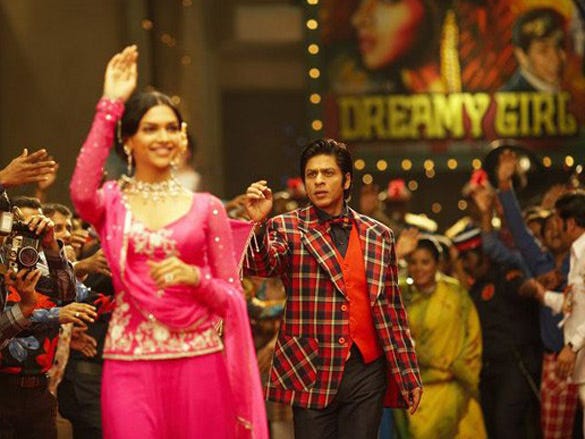
Last night Dr. Lalchand & I watched Homebound, India’s submission to the Oscars, at Apple Cinemas in Cambridge, Mass. This sad film follows a Dalit (Chandan Kumar) and a Muslim (Mohammed Shoaib Ali) struggling against the odds during the pandemic, their solidarity fictionalized as a fragile bridge across India’s deepest divides.

On the surface, it is a familiar story: the disenfranchised facing systemic barriers. But what struck me was how privilege itself performed disenfranchisement. Ishaan Khatter, brother to Shahid Kapoor, plays the marginalized Muslim. Janhvi Kapoor, descended from Bollywood royalty, embodies a Dalit woman. Vishal Jethwa, a bright-eyed Gujarati, portrays the Bhojpuri Dalit lead. This is not unique to India; Hollywood, too, casts elites as workers. Yet it raises the question: when poverty is performed rather than lived, is it “Dalit-washing”?


Poverty, Emotion, and Representation

Watching the film, I reflected on poverty’s emotional landscape. For elites, emotions can be expansive, indulgent, aestheticized into art. For the working poor, emotions are often constrained by survival — narrowed into necessity. Homebound tried to humanize its characters, but I wondered whether it romanticized what in practice is a relentless narrowing of possibility.

The West rewards this narrative. Parasite in Korea, Iranian cinema, Slumdog Millionaire — poverty & Global South tribulations as spectacle becomes “poverty porn.” The Guardian gave Homebound four stars. Great art often tilts melancholic, yes, but here the melancholia is curated for Western consumption.


Identity, Vectors, and Islamicate Selfhood

More unexpectedly, the film stirred something personal. I realized how much I have vacated my own Islamic identity. It was not traumatic. As a Bahá’í with Persian cultural roots, I found overlap — even comfort — in Hindu traditions. Dalits, in their rapid Hinduization, represent one vector of assimilation; Muslims and scheduled-caste Muslims, often in tension, another. Homebound imagines solidarity, but in life these vectors pull unequally. Continue reading Homebound with Ishaan Khatter

Travelling – Open Thread

🔗 Links shared from the comments


💬 Keep the links and thoughts coming — BP works best when the Commentariat bring their own sources into the mix.

The Ilhan Omar of Brown Pundits

Every movement has its lightning rods. In American politics, Ilhan Omar is one: progressive, unyielding, often correct in substance but polarizing in style. She calls out genuine injustices, but her timing and tone can sometimes drown out the very points she is trying to make.

I’ve begun to realize that Kabir plays a similar role on Brown Pundits. Like Ilhan, he often raises necessary truths (for instance Israel has just killed an American family in Lebanon). Like Ilhan, he brings traffic, visibility, and energy. But also like Ilhan, he has a way of inflaming rather than persuading.

Charlie Kirk’s remarks illustrate why Ilhan Omar’s critiques resonate, even if her tone divides. When Kirk sneers that there are “no tall buildings left in Gaza,” or jokes that Palestinians are “stupid Muslims” for resisting, he is not just making political commentary. He is engaging in dog-whistling — racialized, sexist, Islamophobic rhetoric that devalues human life. Combined with his earlier comments about the supposed lack of “brain processing power” among prominent Black women, the pattern is unmistakable. One does not have to be a progressive to see that such speech corrodes the civic space. At the same time, none of this justifies violence: the murders of Charlie Kirk and Irina Zarutska are deplorable and must be condemned without qualification.


The Progressive Dilemma Continue reading The Ilhan Omar of Brown Pundits

Links on My Browser Right Now – Open Thread

A few pieces I’ve been reading this week:


Reflections

On the Ummah: Muslims have often failed to concede ground in internal debates, which has left them politically boxed in. One reform across all denominations would be to return directly to the Quran as the primary authority. That alone would dissolve many cultural accretions, halal (animals should be stunned before slaughter), hijab (a Sassanian trait), and other practices, into something more adaptive.

And here’s a more speculative question: if the “Satanic Verses” were reconsidered if Al-Lat, Al-Uzzah, and Al-Manat were understood as sacred divinities at the threshold of the Lote Tree, would that make Islam more fluid, especially for minority-majority dynamics?

On Kabir: I’m not moderating him out, but readers should be aware that he frames everything through Muslim-rights activism. Engage, but don’t get gaslit into endless provocations. Everyone is entitled to their nationalisms — but they can’t claim liberalism at the same time. That tension makes it worth examining how plurality is treated within the Hindu fold itself. Dharma, unlike the Abrahamic Faiths, tends to all for multiple truths co-existing with each other (Buddhism and indigenous East Asian religions).


👉 Over to you. I’m retreating from heavy moderation — I see BP’s strength in letting the commentariat lead. Biases are fine. Gratuitous abuse is not.

Image

“In March 1998 the Indian PM Gujral, told … “Pakistan was not capable of making atomic bombs.” he had been convinced by Indian Intelligence and Dr Raja Raman, the head of Indian Atomic Energy Commission, who had publicly claimed that nuclear weapon were beyond Pakistan’s reach.”

Pakistan as India’s Ukraine?

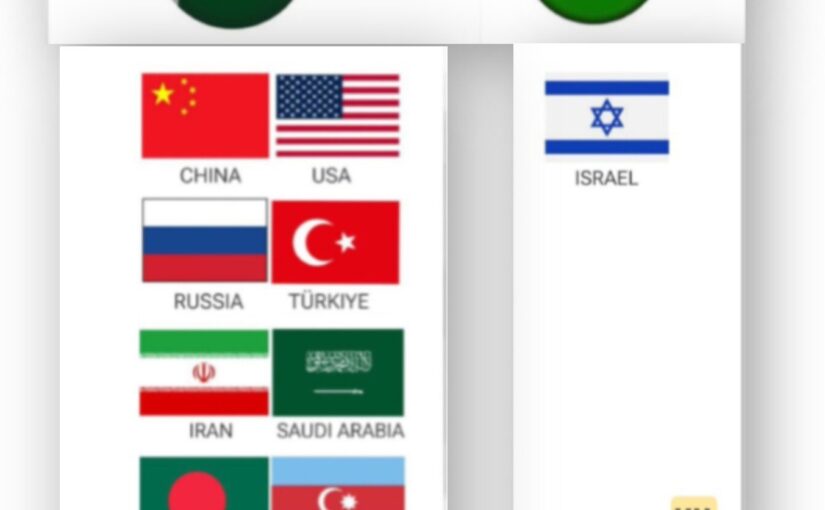
The chart above lays out “strategic partners” for 2025. Pakistan lists China, Türkiye, Iran, Saudi Arabia, and assorted others. India, by contrast, shows Israel. But the real issue isn’t who collects more flags; it’s whether any of Pakistan’s patrons will ever raise its HDI, improve infrastructure, or embed long-term stability.

I’m interested to hear what the commentariat thinks of this moment. India’s foreign policy is already locking it into superpower status. Pakistan remains reactive, borrowing survival from whoever will lend it.

The analogy that strikes me: India–Pakistan resembles Russia–Ukraine, except if Ukraine had kept nuclear weapons. The parallels are strong:

  • Ukraine, like Pakistan, is a breakaway sibling — the “other half” of a civilizational whole.

  • Ukraine, like Pakistan, survives by appealing to larger patrons.

  • And interestingly, the GDP ratio gap between Russia and Ukraine is almost exactly the same as between India and Pakistan (please fact check me).

Just as Ukraine is considered the homeland of the Russian Empire (Kievan Rus’), Pakistan carries the legacy of Partition as the “Indus homeland.” That symmetry makes the analogy more than superficial.

On Kabir: I understand his consistent emphasis on Muslim rights and Muslim nationalism. Readers should be aware of that lens. I’m not moderating him out, but I would caution the commentariat against being gaslit into endless provocations by Kabir. The question here is not identity politics, but the direction of Indian and Pakistani foreign policy in a critical moment in global history (decades are happening in weeks).

Threads, Carpets, and PM Modi’s 75th

Happy Birthday Pradhan Mantri:

I watched several videos — four or five, maybe more — of public figures sending their wishes. Among them: Donald Trump, Narendra Modi, Benjamin Netanyahu, Shah Rukh Khan, Aamir Khan, Mohammed Siraj, and Mukesh Ambani.

Mukesh Ambani, of course, remains closely aligned with the establishment, and Aamir Khan seemed to lean heavily into his Hindu heritage — adorned with Rakhis on his wrist, even a Bindi. He’s presenting himself now in a distinctly Hindu cultural idiom, though he comes from a very prominent Indian Muslim family.

By contrast, Shah Rukh Khan stood out. His message was subtly sardonic — he remarked that the recipient was “outrunning young people like me.” It was light, but just subversive enough to feel intentional. Interestingly, both Shah Rukh and Aamir spoke in shuddh Hindi, which added a certain performative weight to their gestures.


Hindu Art

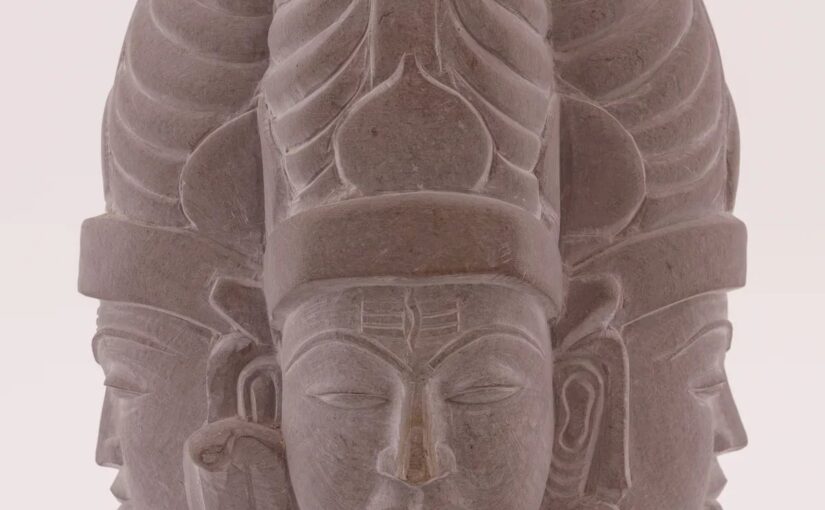
I’ve been fairly busy the past few days, mostly focused on BRAHM Collections; writing about carpets, curating Trimurti sculptures, and exploring Ardhanarishvara iconography. It’s been a deep dive into the civilizational grammar of India and by extension, the porous boundary between sacred art and civil religion.

In the background, I’ve also been chipping away at longer-form reflections; trying to crack the formula for my newsletter (believe it or not the readership is neck to neck with BP but different demographics). It’s all a bit scattered, but the writing has become its own brown paper trail.


On the Commentariat (and Why I’m Stepping Back)

I still follow the commentariat but I’m slowly easing off. There’s a rhythm to it, sure, but too often it turns into exhaustion. I’ve removed all of Honey Singh’s abusive posts. Abuse is now a hard red line for me, but beyond that, I’m stepping back from constant moderation or sparring. Continue reading Threads, Carpets, and PM Modi’s 75th

The Honey Trap of the Ummah:

🕌 Reflections on Kabir, Afridi, and the Compact of Coexistence

The recent incident involving Kabir / Bombay Badshah / Honey Singh, and the orchestrated drama around his entrapment has, quite unexpectedly, become a catalyst for deeper discussion on Brown Pundits. While none have chosen to focus on analytics (“2,000 daily visitors”—thank you very much:-), the real story lies in how this drama has exposed, yet again, the deep ideological fissures within South Asian identity; especially in the India-Pakistan-Muslim triad.

Let’s begin by being honest: Brown Pundits, for all its digressions into Sri Lanka, Nepal, or Bangladesh, is still primarily a blog about India and Pakistan, and more crucially, about Indian and Pakistani Muslims. This is a feature, not a bug. The origins of the blog lie in the Sepia Mutiny, a scattered band of intellectually independent thinkers questioning dogma from every direction (which started in 2004 and if we are a “daughter blog” that we means have 20+yrs of intellectual antecedents on the Brownet), and it has now matured into one of the few platforms willing to wrestle with the ideological ambiguities at the heart of the subcontinent.

🧕 Kabir’s Point: Brotherhood, Boundaries, and the Big Choice

Kabir made an astute, if difficult, observation: that he views Indian Muslims as “brothers”, but does not feel the same about Pakistani non-Muslims.

This sounds contradictory until one understands the emotional exhaustion of watching Muslims oscillate between claiming ummah-hood when convenient, and weaponizing liberal values when needed. It’s a cognitive dissonance that creates what I can only call the moral coexistence trap: the idea that Muslims, especially in India, demand maximum accommodation, of their food (their nauseating right to murder Gau Mata on Bharat’s sacred soil itself), Faith, festivals, and foreign affiliations, while rarely extending the same pluralistic courtesy in return.

And then there’s that infamous Shahid Afridi clip, the one where he smashed his television after watching an Aarti, being performed. To many of us, that wasn’t just a cringe-inducing moment of bigotry; it begged a real question: Why do Indian cricketers continue to shake hands with Hinduphobes Hindu-hating men like Afridi and his ilk (the Pakistan cricket team)? At what point does tolerance become indulgence?

🚩 The Compact of Indian Minorities: Understand It or Leave It

Continue reading The Honey Trap of the Ummah:

When the Commentariat lies

I’ve updated this post (Brown Pundits is not an echo chamber) after realising something important.

What began as a spirited disagreement veered into something darker. It turns out that bombay_badshah, a voice I initially assumed to be new, may not be who he claims to be (I had a hunch but so did Kabir, that BB was HS reincarnated). The posting style, the fixations, the timing; all too familiar. My suspicion is that BB may be a derivative or proxy of HS, previously banned. If true, this was not a genuine disagreement; it was entrapment, bait-and-switch.

In that light, I owe Kabir an apology. He was provoked in bad faith by someone who may be operating behind a mask. And that matters, because here on Brown Pundits, identity isn’t incidental; it shapes perspective, and we respect that. We excavate worldviews, not just opinions.

While I cannot definitively prove that BB is HS, the circumstantial evidence is strong. I will allow BB to remain but if the commentary returns obsessively to Kabir or Pakistan, I will intervene. Everyone is welcome to engage on substance. But this space will not be hijacked.

The original post remains below the jump, unedited but its context has now changed.

Continue reading When the Commentariat lies

Request for Calm and Civility

Dear Punditeers,

A gentle reminder to take a breath and step back. Kabir is entitled to his views—there’s no obligation to counter every provocation point-by-point.

What’s troubling isn’t disagreement—it’s the sheer volume of rage replies. This doesn’t reflect the standard we aspire to. It’s neither civil nor intellectual. The only reason I’m stepping in is because, while I generally prefer light-touch moderation, the tone of these threads now reflects poorly on the broader community. It lowers the quality of both the commentariat and the platform.

We’ve seen this play out before—Sepia Mutiny is a cautionary tale. Let’s not replicate it.

So please: engage with ideas, not just identities. Let’s not derail into yet another endless Indo-Pak back-and-forth. We’re capable of better.

Warmly,

X.T.M

✉️ [Addendum]

On Nivedita’s query, I’ve finally re-created the Brown Pundits email account. It’s hosted on Gmail, but I’ve deliberately avoided posting the full address here to prevent spam harvesters. If you’d like to get in touch privately or share something offline, feel free to reach out via:

📧 brownpundits19 [@g]

Brown Pundits