Roman Palestine and the Crusades

I am quite familiar with History of England and Europe since even before my teens. That was because my father had beautifully illustrated school History text books from England. Plus many historical novels eg Walter Scotts The Talisman which is set in Palestine during the Crusades. I read them all many times over as nothing better to do as no TV then in SL till 1977.

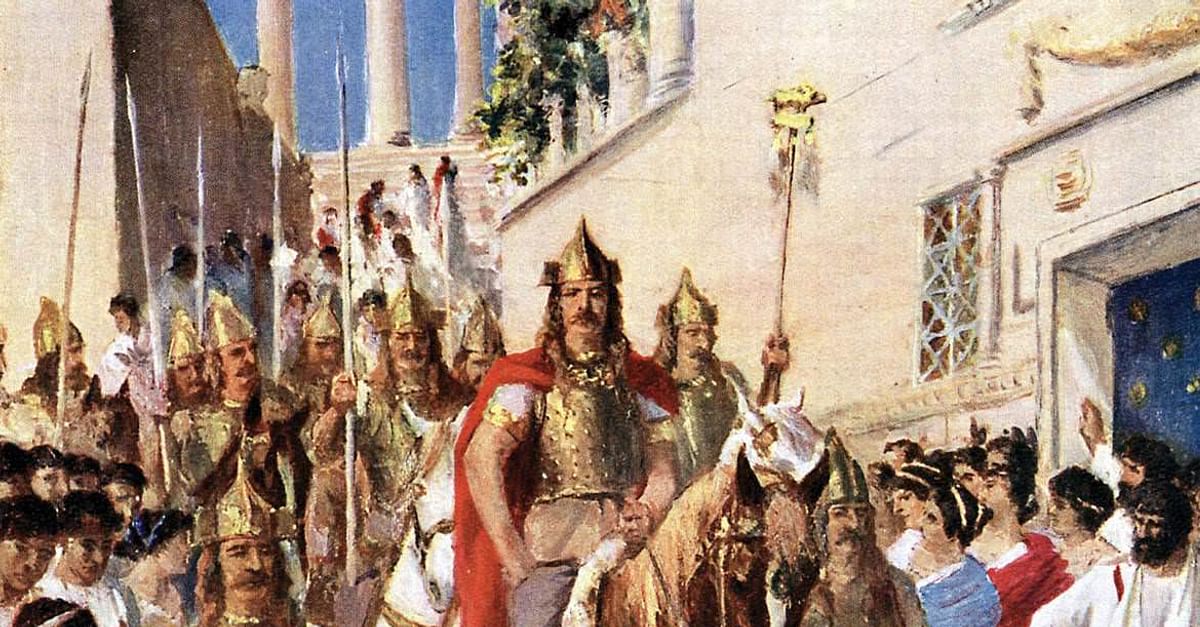
Let us start with the historical Jewish Diaspora. Historical as verified from sources other than the Bible. The Romans controlled the middle east around 1 BC. (Think Julius Caesar and Cleopatra an Egyptian Queen of Greek Origin)

To quote
Asia Minor after the Macedonian Wars (214–148 B.C.). In 63 B.C. The defeat of the Carthaginians gave Rome almost complete control of the Mediterranean. Romans conquered most of Asia Minor in 188 B.C., Syria and Palestine in 64 and 63 B.C.

In 70 C.E. (a few years after the purported passing of Jesus Christ the Romans Destroyed the Judaism Temple in Jerusalem. Apparently this ended the ability to make animal sacrifices to God (Yahweh). Plus the Roman persecution of the Jews and Judaism led to their disperal from Palestine, i.e. the Diaspora

Note: There is no evidence of a Kingdom or Country called Israel in any of the Historical or Pre-historical records of the Babylonians and Assyrians. There was region called Palestine (PalaistinĂŞ, Παλαιστῑ́νη) since at least since the Greek times. The word Israel became considered “Fact” when Europe became Christian and the Bible an accepted source of fact given by the Divine. The Jews became notable and rich because they were money lenders. Christians (and Muslims) are forbidden to lend money on interest (usury). Think Merchant of Venice and Shylock the Jew

Continue reading Roman Palestine and the Crusades

Moderation Note: On Gaza, October 7, and the Limits of Tolerance

Kabir’s Muslim nationalism cosplaying as liberalism is vexatious (it would be excellent if he just disclosed his priors), but I give the admin full authority to handle that directly.

My immediate concern is with BB-HS. I have barred him from becoming an author and have removed his last twenty comments. Despite his earlier misrepresentation about being “half-Muslim,” I allowed him to return under a new handle, tabula rasa. His output, however, is increasingly defined by “fantasies” about what a model minority should be; deracinated and devoid of meaningful character.

BB’s Response (after I had deleted his past 20 comments)

“Why though? The only animus I have is with Kabir because he represents a demographic I loathe – The soft Islamist | The ‘liberal’ English-speaking version who whitewashes his more hardcore cousins’ atrocities. Actual people have died due to Islamists which Kabir downplays (Pahalgam, October 7th). Some ribbing online is nothing in comparison. And I haven’t even said anything insulting.”

My Response

    1. Kabir is not an Islamist. He is a Muslim nationalist—since Pakistan itself is sine qua non Muslim nationalism (the idea that Indian Muslims were entitled to their own nation). Just as every Israeli is, by definition, a Zionist/Jewish nationalist, even if individuals disagree with its implications, Kabir represents that current.
    2. What stands out is that BB mentions only Pahalgam and October 7—both undeniably tragic events, and I say this as someone who is not Muslim—while omitting the ongoing genocide in Gaza.It is akin to referencing 9/11, a devastating moment in history, without also acknowledging the destruction of Afghanistan and Iraq and the millions of lives lost in their aftermath.
    3. Unlike Kabir, vexatious, but rarely personal, BB makes his attacks direct. He is not Kabir’s friend indulging in ribbing; he is simply “Honey” under another guise.
    4. What sets him apart is an openly hierarchical stance: non-Muslim lives ranked above Muslim ones, echoing the very post-colonial divide-and-rule strategies we are meant to reject.
    5. Kabir manipulates through weaponised victimhood; BB chooses blunt hostility, lacing personal abuse into his commentary. I have permanently removed Honey’s comments for that reason, vulgarity leaves no space for debate and I treat BB and Honey as a single entity.
    6. Beneath the very different styles of BB-HS & Kabir lies the same contempt: the belief that the only acceptable minority is one hollowed out, compliant, and dead on the inside.

Moderation Philosophy

As a Founder, my job is to ensure Brown Pundits does not become an echo chamber. I have repeatedly critiqued Kabir’s contradictions, but once I accepted him as a Muslim nationalist cosplaying liberalism, I could also accept his place in the debate. We have multiple Hindu nationalists here, and when Kabir is challenged\moderated, the balance tends to restore itself. The ecosystem can correct for his presence.

Finally, let me stress: the comment boards are not the only heart of this site. Too often they descend into noise. If regular commentators want to influence debate constructively, they should apply to become Authors; where they can speak directly to our 2,000+ daily readers, not just the dozen or so regular commentariat.

Brown Pundits is rapidly emerging as the most interesting Indo-Pak cross-channel precisely because it is not an echo chamber. We literally upset everyone and that is a great thing because it means we are covering new difficult terrain. My moderation began with strict principles, but like everyone else, I have a life, job, and family. That means I must also be pragmatic.

Pakistan as India’s Ukraine?

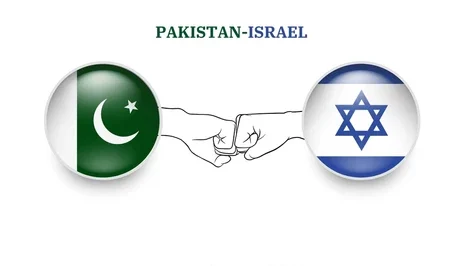
The chart above lays out “strategic partners” for 2025. Pakistan lists China, Türkiye, Iran, Saudi Arabia, and assorted others. India, by contrast, shows Israel. But the real issue isn’t who collects more flags; it’s whether any of Pakistan’s patrons will ever raise its HDI, improve infrastructure, or embed long-term stability.

I’m interested to hear what the commentariat thinks of this moment. India’s foreign policy is already locking it into superpower status. Pakistan remains reactive, borrowing survival from whoever will lend it.

The analogy that strikes me: India–Pakistan resembles Russia–Ukraine, except if Ukraine had kept nuclear weapons. The parallels are strong:

  • Ukraine, like Pakistan, is a breakaway sibling — the “other half” of a civilizational whole.

  • Ukraine, like Pakistan, survives by appealing to larger patrons.

  • And interestingly, the GDP ratio gap between Russia and Ukraine is almost exactly the same as between India and Pakistan (please fact check me).

Just as Ukraine is considered the homeland of the Russian Empire (Kievan Rus’), Pakistan carries the legacy of Partition as the “Indus homeland.” That symmetry makes the analogy more than superficial.

On Kabir: I understand his consistent emphasis on Muslim rights and Muslim nationalism. Readers should be aware of that lens. I’m not moderating him out, but I would caution the commentariat against being gaslit into endless provocations by Kabir. The question here is not identity politics, but the direction of Indian and Pakistani foreign policy in a critical moment in global history (decades are happening in weeks).

🗓️ One Year Ago Today: The Taj Mahal, Sacred Lands, and the Power of Timing

Friends,

The spirit of Brown Pundits has always been dialogue — open, searching, and at times, fierce. But dialogue only flourishes when it is consistent and principled.

Recently, a contradiction has emerged in Kabir’s contributions: applying one set of standards to India and Pakistan, and a different set to Israel. This has led to repeated cycles of disruption, rather than genuine exchange.

To preserve the integrity of our space, Kabir’s participation will be paused until this inconsistency is clarified (we will remove any of his comments that do not address and acknowledge the contradiction; we will also remove any replies to his comments). This is not censorship, but stewardship. Free speech here is not about endless repetition; it is about coherence, accountability, and respect for the whole.

🕊️ On Confirmation, Coincidence, and the Return of Brown Pundits

Exactly one year ago today, 17 September 2024, I published a piece titled “The Battle for the Taj Mahal: India’s Sacred Lands & Waqf Boards Under Fire”.

At the time, Brown Pundits was stirring from hibernation. Readership had dwindled to near-zero, the commentariat was dormant, and the site, once lively and interrogative in its heyday, felt like a forgotten archive. That post, like so many others before it, was written in solitude. There was no traction, no expectation. Just thought, laid down with care.

And yet here we are, one year to the day, and the blog has roared back to life.


📿 What the Baháʼí Tradition Calls “Confirmation”

In the Baháʼí tradition, we don’t reduce these moments to mere coincidence. Instead, we speak of confirmation; divine endorsement coupled with meaningful alignment. A subtle assurance that what was offered in silence may still echo in relevance.

Sometimes, truth takes time. It must be planted, and it must ripen. And then, if the conditions are right, it re-emerges at the very moment it’s needed again.


🏛️ Revisiting the Taj & the Sacredness of Land

That post, exploring Waqf Boards, sacred lands, and the Taj Mahal’s place in India’s civilizational memory, was written in a moment of saturation. Too many headlines, too little context. My intention wasn’t to settle the argument, but to recast it: What makes land sacred? Who has the right to remember? Who gets to reclaim?

Reading it now, what’s striking is not just how relevant it remains, but how the same debate has reassembled; not just thematically, but almost ritually, with new voices circling back in familiar orbits.


🌀 Same Debate, Same Deflection

And so we arrive back, with uncanny symmetry, to Kabir. He’s long argued that nations must be judged by their own internal frameworks: Continue reading 🗓️ One Year Ago Today: The Taj Mahal, Sacred Lands, and the Power of Timing

What Was the Point of Israel’s Iran Strike?

The Limits of Provocation

At some point, the world will have to ask: what exactly was Israel hoping to achieve?

In the days following the dramatic escalation between Tel Aviv and Tehran, we are left not with clarity but with a deepening sense of confusion. If the intention was to disrupt Iran’s nuclear program, there is little to show for it—centrifuges still spin, scientists remain in place, and the infrastructure of Iran’s deterrent capability stands unshaken. If the aim was to trigger chaos within the Iranian regime, then that too has failed—Tehran did not descend into disarray; it retaliated, measured and intact. And if the goal was symbolic, to remind the world of Israel’s reach and resolve, then the moment has already passed, clouded by questions of proportionality, legality, and consequence.

For all the fire and fury, the strike landed with the strategic weight of a gesture. Continue reading What Was the Point of Israel’s Iran Strike?

Satyajit Das: Middle East Trajectories – Implications for the Region and Energy Markets

This excerpts of the above titled article. Full article at
https://www.nakedcapitalism.com/2025/06/satyajit-das-middle-east-trajectories-implications-for-the-region-and-energy-markets.html

A little intro

When I first got hired to a small Wall Street startup I had low opinion of Traders and the like. Had to change my mind in a month or two. It was impressive to see how successful Traders could reduce different information from politics to medicine into one common Denominator: MONEY. This was the holy grail that Enron was pursuing, to have different markets, eg Water and Weather Futures to Credit Defauls Swaps all in one Porrfolio and integrated Pricing and Risk Management. Got wined and dined by Enron but was woefully lacking in knowledge.

Anyway  was never interested in Finance etc, so was somewhat clueless. The Traders gave me a grounding, but to get a more formal background worked my way thru about 30% of Risk Management and Financial Derivatives: A Guide to the Mathematics by Satyajit Das. Been impressed by him ever since. So when he writes I read very carefully

Later was very disillusioned, Wall Street as it was full of schemes to scam the middle classes and poor out of their money directly or indirectly.  The best example being Sub Prime Mortgages which led to Financial Crash in 2008 (Quite hypocritical of me because I made some decent moolah as well, even though a very small minion)
——————-

Some excerpts
Complacent financial markets and policymakers are playing out a theatre of the absurd based on little detail and propaganda– as the old trope states truth is the first casualty of war.

Caution is warranted. There is no certainty that Iran’s nuclear capabilities have been destroyed or significantly degraded. The fate of Iran’s highly enriched Uranium is unknown. Iran, which has extensive nuclear expertise despite the targeted killings of its scientists, has not indicated abandonment of its programs.

In effect, Iran is being forced to choose between becoming Libya (where Colonel Gaddafi gave up his nuclear ambition and was removed then murdered) or North Korea.

Its campaign against the abandoned Palestinians and attacks on Lebanon and Syria have not ceased. The Iranian action was in part to distract the world’s attention from its continuing genocidal atrocities. These will come back into focus.

Despite its undoubted military capabilities, the Islamic Republic will have noted that the Jewish state is not invulnerable to its missiles and needed extensive US support and intervention in the “12-day war”.

Oil Matters
Western focus on the Middle East is because of Israel, to expiate its own Holocaust guilt, and energy

Currently the world consumes around 100 million barrels of oil daily (around 50 percent for transport and 20 percent for petrochemicals). While energy intensity (usually measured as the tonnes of oil needed to create $1,000 of GDP) has declined from 0.12 in 1975 to 0.05 in 2022, no significant decline in demand is forecast due to limited alternatives for heavy transportation and as a chemical feedstock. Natural gas is around 23 percent of the world’s total energy consumption and provides a quarter of global electricity.

Saudi Arabia’s objectives remain unchanged: generate revenue at necessary levels, maintain its market share as low prices make US shale oil and gas uncompetitive and accelerate use of a potentially stranded resource.

The ruling dynasties can be displaced at the whim of the West. Given the volatile foreign policies of the US and its allies including their short-lived and disastrous backing of the ill-fated Arab Spring, this possibility is non-trivial. As Hosni Mubarak discovered, US support for its ‘allies’ exists until it doesn’t. Subsequently, the Muslim Brotherhood found that Western belief in democracy was highly selective.

In a curious twist which would have been unwelcome in Israel, following the announcement of the ceasefire, President Trump announced that China would be allowed to buy oil from Iran, reversing a policy of sanctioning Chinese refineries for these purchases.

While they may not acknowledge the reality, failure to act strategically now undermines the ruling dynasties of the Gulf states and Jordan. They become little more than rich puppets who serve their American, Israeli and allied masters and whose policies are chosen for them. Their standing and wealth is dependent on a dwindling finite resource with an uncertain future.

For many, MAGA has morphed into MIGA – Make Israel Great Again. The US appears to have been coerced into intervening on behalf of the Jewish state. One X denizen tweeted that “America so deindustrialized we don’t even manufacture our own consent”.

Conflict, most worthwhile military strategists agree, is like opening a door into a dark room where no one knows what is hidden in the darkness. The only certainty is that a new most likely tragic and violent chapter in the history of the region is under way.

The US, Israel and its allies would do well to remember Thucydides’ Melian Dialogue which records Athens’ conquest of Melos. The Melians unsuccessfully resisted suffering horrific losses. Athens believed that “the strong do what they can and the weak suffer what they must”. They believed that they could act with impunity because their power was complete. Less than three years later Athens suffered a military disaster in Sicily from which they never recovered.

The West’s War of Decline

Dear friends,

I just wanted to share a thought that’s been on my mind lately. Yes, Trump has attacked Iran — but Iran hasn’t responded in any major way. That in itself is telling. It seems less a climax than a provocation, more bait than strategy. In truth, this might be part of a larger Western pattern: in its long twilight, the West no longer seeks peace but relevance — and sometimes, relevance requires war.

I recently heard a wild claim: that Norway was positioning a remote island of 150 people to tempt a Russian invasion, hoping to activate NATO’s mutual defence clause. Whether true or not, it captures something of the moment — the performative anxiety of a declining order, looking for conflict to reaffirm its own centrality.

As Amar writes, “It is heart-wrenching to see Iran being bombed by two nuclear states, while it remains a signatory to the NPT and compliant with IAEA inspections.” He recalls living in Tehran in 1980, a schoolboy witnessing warplanes above Mehrabad and the skies of Tehran blazing with anti-aircraft fire. That memory isn’t abstract — it’s personal, etched in smoke. His excellent comment is after the jump: Continue reading The West’s War of Decline

🕊️ On Iran, Israel, and the Right to Self-Defense

Why loving Israel, believing in peace, and opposing regimes means defending Iran’s right not to be bombed.

Dear Friends,

I don’t usually write about politics. And when I do, I try to centre peace — not provocation.

Anyone who knows me knows I have always believed in the dignity of Israel, the rights of Palestinians, and the intertwined destinies of both peoples. I love Israel. I love Iran. I believe in Palestine. I believe in peace. And I believe that each nation — each people — has a right to their own story, their own future, and yes, their own defense.

Which is why I write today, with care and some sorrow, in response to the recent Israeli strikes on Iran’s nuclear facilities. Let me be clear: I oppose the Iranian regime. Vehemently. I stand with the brave women and men who chanted “Zan, Zendegi, Azadi” — women, life, freedom. But I cannot condone this unprovoked assault.

Read the rest at this link and please subscribe to my newsletter.

Trump Goes Big in the Middle East

Preface: I am not wading into the most important dispute in the galaxy. These are not recommendations or desires, just an attempt to see what the possibilities are.

So as everyone knows by now, Trump and Bibi had a press conference. Here it is.

Trump announced that the US now intends to take over Gaza, clean it out and rebuild it “nice”. And while this happens, some or all Palestinians will move to other Arab countries, where Trump will make sure they get a chance at a good life “not the hellhole that was Gaza”. Whatever you may think of the proposal, there is no doubt that this is “thinking outside the box”. 75 years of policy tangles and arguments have been swept aside and a bold plan has been offered as if it is actually going to happen. So lets steel man it.

We obviously do not know what their detailed plan is (if anyone has any ideas, do share), but it does seem that the thinking from Trump-Bibi is that the Palestinians have been defeated (not the first time) in battle and should finally see that 75 years of trying to cancel the Zionist project has failed; So (bitterly, reluctantly) they will now accept a deal they hate. And secondary claim: they will find out it’s not that bad, losing to America and allies. They could be the middle eastern Japan if they give up their war. This at least is the public claim.

So what could go wrong. 

1. Most Palestinians have not accepted defeat (or at least, if they have they keep it to themselves, the public posture is defiant) and enough fully intend to fight on to make removal a brutal nightmare.

2. Some Arab regimes will not be able to hold it together once their opponents come after them with “these guys sold Palestine” AND we see above brutal nightmare unfold on live TV

3. Russia is weaker, but unlike China, has skills galore. Unless there is a simultaneous deal with Putin, he could throw a spanner. Maybe the Chinese are not that passive either. The “axis” may push back.

4. What else? (keyboard warriors and western leftists are not on the list of possible spoilers as far as I am concerned, though they will hog attention)


Browncast: Hussein Ibish on the War in the Middle East

Another Browncast is up. You can listen on Libsyn, Apple, Spotify (and a variety of other platforms). Probably the easiest way to keep up the podcast since we don’t have a regular schedule is to subscribe to one of the links above!

In this episode I talk to Hussein Ibish, a resident scholar at the Arab Gulf States Insititute in Washington DC and a longtime commentator on Palestinian affairs as well as the Arab world in general. He described how the crisis looks to a liberal Arab scholar who would prefer to see peace for both Palestinians and Israelis, and what we may expect in the future and ended with a rather pessimistic (or optimistic, depending on your point of view) vision of the near future. We hope to have him back soon to discuss what a saner outcome could look like and how that can be achieved (at least in theory; in practice we are probably in for prolonged violence). This is a complement to our earlier podcast with Dr Edward Luttwak, who presented a more optimistic vision of what Israel is trying to achieve and what it is likely to achieve.

Our friends at scribebuddy.com have prepared a transcript. I am posting it at the end below, unedited. But first, here is a chatgpt summary:

Blog Post: A Deep Dive into the Middle Eastern Crisis with Hossam Ibish on The Brown Pundits Browncast

In a recent episode of The Brown Pundits Browncast, Dr. Ali hosts Hossam Ibish, a prominent commentator on Middle Eastern affairs, to discuss the current tumultuous situation in the Middle East, focusing on the complex dynamics between Israel, Iran, Hezbollah, and Hamas. Their conversation sheds light on a geopolitical crisis that has long roots in history and contemporary struggles for power, influence, and survival.

The Prelude to a Wider Conflict
Ibish sets the stage by explaining the origins of the current conflict, particularly after Hamas' attack on southern Israel on October 7. This event was intended to provoke a multi-front war, which Hamas hoped would involve Iran and its network of militias, notably Hezbollah, the Houthis, and pro-Iranian forces in Iraq and Syria. However, despite these hopes, Hamas is not fully trusted by these groups due to its Sunni identity, which clashes with the Shia alignment of Iran’s “Axis of Resistance.”

Hamas' attack, while significant, has not succeeded in igniting the widespread regional war it had hoped for. Nasrallah, the leader of Hezbollah, notably went into hiding during the initial escalation, leaving Hamas without the robust military support it had counted on.

The Strategic Calculus: Hezbollah, Iran, and Israel
Ibish highlights how Hezbollah, despite its vast arsenal of missiles, has refrained from fully engaging Israel. The reason? Hezbollah's primary mission, as dictated by Iran, is not to fight for Hamas or Gaza, but to serve as a deterrent in the event of an Israeli attack on Iran's nuclear facilities. This strategic restraint is informed by Hezbollah’s role as a vital asset in Iran’s regional power structure.

While Hezbollah attempted to support Hamas through limited military action on the border with Israel, the group has largely avoided provoking an all-out war. This approach preserves Hezbollah’s strength for its primary purpose—defending Iran—and avoids unnecessary depletion of resources in a battle it doesn’t see as its own. Israel, on the other hand, views Hezbollah’s arsenal and its proximity to its borders as a significant threat, which has led to the current Israeli invasion of Lebanon.

Israel's Quest for a Recuperative Victory
Ibish introduces the idea of Israel’s need for a "recuperative victory." Following the security failures of October 7, Israel seeks to restore its national security image and the confidence of its citizens. For Israel, a clear-cut victory against Hezbollah in Lebanon would serve two purposes: weakening Iran's regional influence by crippling Hezbollah and restoring the sense of security for Israelis in the north.

However, Ibish warns that this may lead to only an "illusion of security." Even if Israel manages to weaken Hezbollah and push them back from the border, guerrilla warfare and insurgency tactics will likely persist. This scenario would mirror Israel’s ongoing insurgency struggles in Gaza, where an unending cycle of attacks and counterattacks creates a quagmire that may last decades.

Hezbollah’s Calculus: Back to Guerrilla Warfare?
One of the most compelling points in Ibish’s analysis is Hezbollah’s potential shift back to its guerrilla roots. The expansion of Hezbollah during the Syrian civil war, where it acted as the main ground force for Assad, has left the group vulnerable to Israeli intelligence and infiltration. A return to a more focused guerrilla war in southern Lebanon could help Hezbollah regain its earlier effectiveness as a lean, resilient fighting force, a possibility that Nasrallah seems to welcome.

Iran's Role and the Prospect of a Larger War
The conversation then shifts to Iran’s broader role in the conflict. Ibish points out that while Iran has supported Hezbollah and Hamas in the past, its current priority is regime survival and preventing any attack on its nuclear facilities. The Iranian leadership may be feeling domestic political pressure to act, especially as Israel has been striking at its proxies without significant retaliation from Tehran.

Ibish predicts that a "war of the cities," reminiscent of the Iran-Iraq War, could be on the horizon. Israel could target Iran’s oil production facilities and nuclear infrastructure, which would be a significant blow to Iran's economy and national security. In response, Iran might hunker down and focus on developing a nuclear weapon as a long-term survival strategy, similar to North Korea's approach.

The Grim Reality: Open-Ended Insurgencies
As the discussion wraps up, Ibish emphasizes the grim reality that Israel now faces: open-ended insurgencies in the south (Gaza), the north (Lebanon), and possibly soon in the east (West Bank). This strategy of counterinsurgency warfare offers no clear path to resolution, and Israel’s attempts to secure its borders may only deepen the quagmire.

Conclusion
In this insightful conversation, Hossam Ibish paints a complex and often bleak picture of the Middle East’s current situation. The region’s entrenched conflicts, ideological divides, and strategic imperatives have created a powder keg where no side seems capable of securing a decisive victory. Whether it’s Israel’s quest for security, Hezbollah’s guerrilla warfare tactics, or Iran’s nuclear ambitions, the road ahead is fraught with uncertainty. As the crisis continues to unfold, the stakes for all parties involved remain perilously high.

This episode of The Brown Pundits Browncast offers a sobering reminder of the intricate web of alliances and hostilities that define the modern Middle East, and the dangerous potential for further escalation in the coming months.

Continue reading Browncast: Hussein Ibish on the War in the Middle East

Brown Pundits