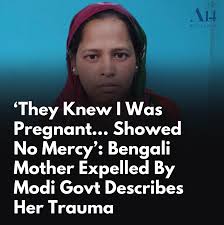
“We are not from Bangladesh. We are Indian. Why did they do this to us?”
That question should shame the Indian state. On the facts as currently established, Sunali Khatun, a pregnant Indian woman, her husband, and their child were detained in Delhi, deported across an international border without due process, imprisoned in a foreign country, separated, and left to survive on charity and court orders. Their crime was not illegal entry. It was speaking Bengali, being Muslim, and being poor. This was not a mistake or overreach. It was state violence carried out through paperwork and silence.
India has procedures for suspected illegal migrants
They exist to prevent this outcome. They were ignored. There was no verification with the home state, no due process, no public record, and no accountability. A family was pushed across a border, reportedly beaten when they tried to return, and abandoned. That is not law enforcement. It is expulsion by force. When a state confuses language with nationality and religion with foreignness, it stops governing and starts hunting.
Citizenship is not a favour
It is a legal fact. India is not meant to be a blood, language, or religious state. Citizenship is defined by law, not accent or poverty. When the weakest are forced to prove citizenship under duress while the powerful are never asked, law collapses into power. This is how republics rot: not through coups, but through habits.
This is not an isolated lapse of manners towards the Muslim minority
It is the same logic in a smaller, more public form. When a Chief Minister can pull down a Muslim woman’s veil at a government appointment ceremony, and senior ministers can defend it as “show your face” patriotism, the message is clear: Muslim dignity is conditional, and visibility is enforced, not consented to. The argument is always the same. It is dressed up as procedure, security, or “rule of law,” but it operates as dominance.
Muslim Identity is seen as a National Threat
Today it is a veil tugged down in a room of officials. Yesterday it was a Bengali-speaking family pushed across a border. In both cases, the state treats Muslim identity as an offence to be corrected in public, and citizenship as something that can be suspended by suspicion. This is how discrimination becomes policy: first through humiliation, then through paperwork, then through expulsion.
Bengal, like Kashmir, is not a border zone to be cleansed Continue reading A Republic Cannot Deport, Humiliate or “Outbreed” Its Own People