South Asia Is an Ugly Postcolonial Euphemism

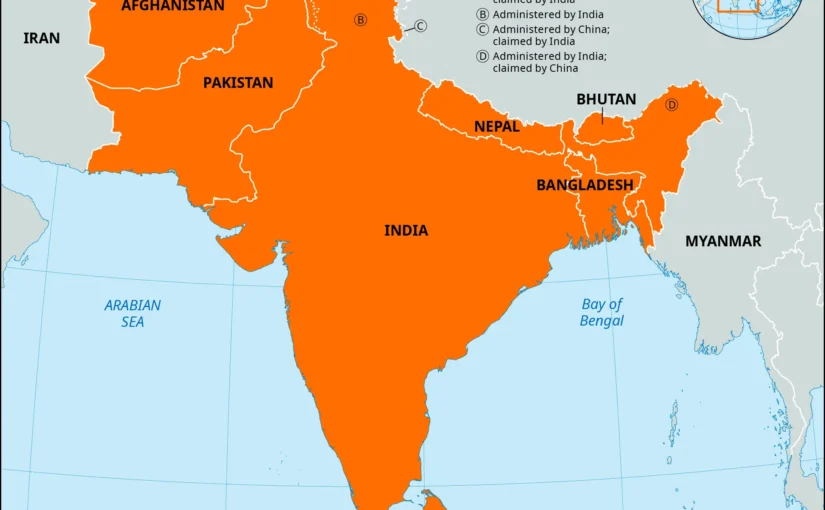
There is something faintly ridiculous about how often educated people insist on using the term South Asia as if it were a neutral, hygienic improvement on an older and supposedly “problematic” word. It is neither neutral nor an improvement. It is a bureaucratic euphemism invented to manage post-Partition discomfort, and it collapses the civilizational reality of the region rather than clarifying it.

The Indian subcontinent has had a name for millennia. It was called India because it lay beyond the Indus. Greeks used it. Persians used it. Arabs used it. Medieval Muslims, early modern Europeans, and the British all used it. The word survived because it described a geographic and civilizational unit, not because it flattered any modern state. The fact that the Republic of India later adopted the name does not retroactively invalidate its older meaning. Belgium did not abolish the word “Europe,” and Serbia’s existence does not make “European” offensive.

South Asia, by contrast, is not an ancient term misused by a nation-state. It is a late–Cold War academic construction, popularised by American area studies departments that were uncomfortable saying “India” once India no longer meant a single polity. It is a word designed to avoid an argument, not to resolve one. Like “Middle East,” it describes nothing from within the region itself. No one historically lived in “South Asia.” No one spoke “South Asian.” No one cooked “South Asian food.” Continue reading South Asia Is an Ugly Postcolonial Euphemism
India Is No Longer Legible to Pakistani Liberals

There is a persistent habit among Pakistani liberals, especially those from elite backgrounds or with deep emotional ties to pre-1947 North India, of speaking about India as if it were still legible to them. It is not. India has moved on. So has Pakistan. But only one side seems unable to accept that.

The Mirage of Patrimony

Many Pakistanis of Muhajir or North Indian lineage carry an inherited sense of ownership over India. They speak as if India is a shared cultural estate, temporarily misplaced. This is a fantasy. The India of 2025 is not the India of 1947. It is not even the India of 1991. It has changed demographically, economically, politically, and, most importantly, civilizationally. Pakistanis who have not travelled to India in decades, who rely on English-language media and nostalgic family memory, do not “understand” India. They are projecting onto it. Projection is not insight. It is displacement.

Code-Switching as Evasion Continue reading India Is No Longer Legible to Pakistani Liberals

Dhurandhar showcases Bollywood’s New Obsession: The Sexy Pakistani Villain

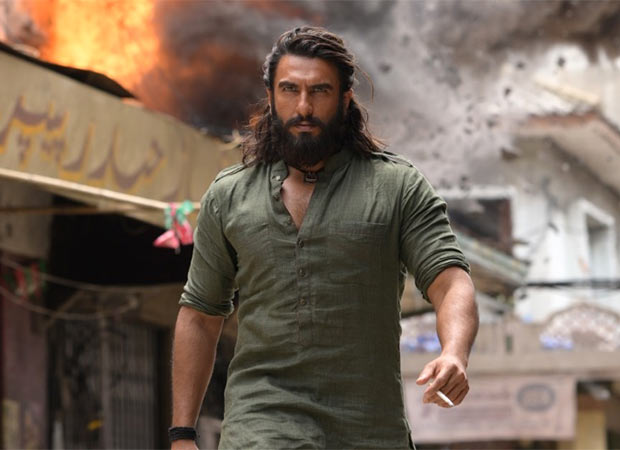
We watched Dhurandhar last night at Apple Cinemas (the last time we went to see Ishaan Khatter’s Homebound). It is the best mass-market Bollywood film I’ve seen since Animal, and far more immersive. What struck me most was not the action, nor the plot, but Bollywood’s new formula: a full-scale fetishisation of Pakistan.

Kabir keeps claiming that Bollywood casts Pakistanis as villains. This misses the point. The villain is always the sexiest figure in any film. Bollywood has finally realised this. Raazi hinted at it. Animal stumbled on it with Bobby Deol’s star stealing turn. Dhurandhar perfects it.

For the first time, Hindu actors are not performing cartoon versions of Pakistan. They are cosplaying Pakistanis with forensic precision; the clothes, the diction, the swagger, the social codes. In earlier decades the attempt was clumsy. Now the calibration is exact. Pakistan, in these films, becomes the Wild West of the subcontinent: familiar enough to feel intimate, distant enough to feel dangerous. Continue reading Dhurandhar showcases Bollywood’s New Obsession: The Sexy Pakistani Villain

The Earth’s Lost Industrial Heart

After our discussion on industrialisation in India, I began to wonder: if the Earth were one country, one government, one infrastructure grid, one economy, where would its industrial heart lie?

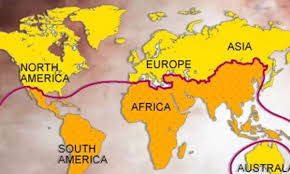
Geographically, the answer is obvious. The natural centre of the world, for energy, labour, and trade routes, isn’t London, New York, or Beijing. It’s the triangle between the Persian Gulf, the Indo-Gangetic plain, and the Red Sea.

Deserts rich in hydrocarbons. River basins dense with labour, water, and grain. Seas that touch every continent. If the world were united, this belt, Arabia to India to the Nile, would be the Ruhr, the Great Lakes, and the Pearl River Delta combined.

The Natural Order of Geography

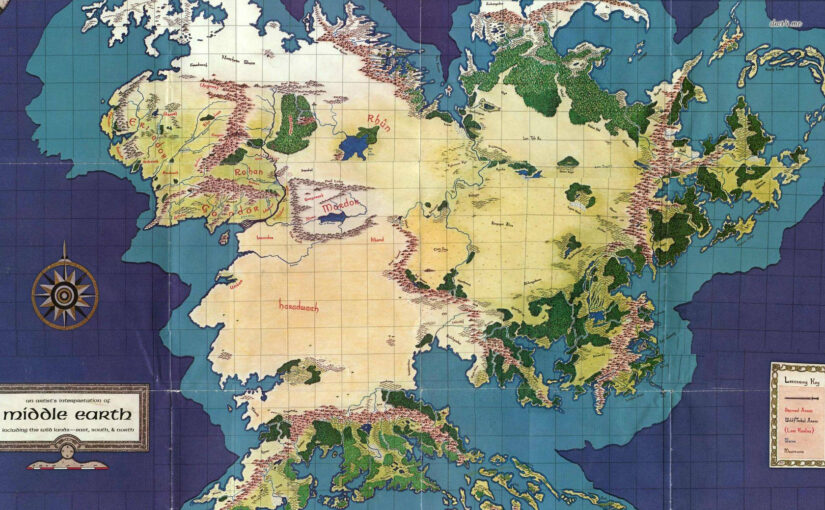
Before empire, this region was the planet’s connective tissue. Spices, silk, horses, and steel moved from India to Arabia to Africa. Energy, grain, and knowledge flowed through the Red Sea and the Persian Gulf like the arteries of the Earth. It was not the “Middle East”; it was Middle Earth. Continue reading The Earth’s Lost Industrial Heart

The Pakistani Inferiority Complex

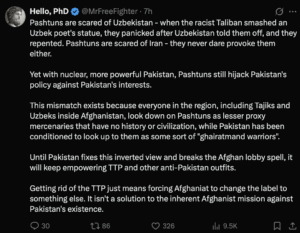
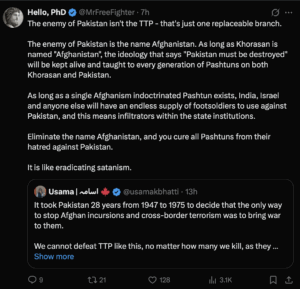
These excellent tweets exhibit a painful pattern that many of us see but few want to name.

Pakistanis, particularly its establishment and elite classes, exhibit a deep inferiority complex towards white (light) Muslims; Arabs, Turks, Persians, and Afghans. These groups are valorized, romanticized, and used as benchmarks for identity and belonging. Meanwhile, other Asian groups, especially within South Asia and Southeast Asia, are seen as lesser. This manifests not only in foreign policy but in pop culture, education, and internalized social hierarchies.

This is why, even if Partition had to happen (and it was undeniably disastrous), Pakistan still could have been something else. It could’ve been a GCC meets Pahlavi Iran construct—a sleek, semi-modernist, high-income Asian Muslim republic with cultural gravitas and economic depth.

Instead, as others have rightly pointed out, Pakistan today has one of the lowest HDIs in its region. Karachi didn’t become Dubai. Lahore didn’t become Paris. Islamabad remains a ghost town of beautiful boulevards and hollow institutions. The promise wasn’t just broken; it was never even understood.

In some ways, Pakistan inherited the worst of both its imagined lineages: neither the intellectual cosmopolitanism of Persianate high culture, nor the industrious civic ambition of Indian civilizational continuity.

This is why tweets like those from @MrFreeFighter land so hard. They expose the psychic dissonance at the heart of the Pakistani state’s anxieties; its hatred of Pashtuns, its paranoia about “Afghanism,” and its inability to deal with its own peripheral ethnic groups as anything but threats.

Meanwhile, Indian Muslims like bombaybadshah, though deeply patriotic to India, often voice critiques of Pakistan with a clarity born of disappointment. They represent what Pakistan could have cultivated: a civic Islam, grounded in identity but untethered to ethnic obsession.

The final irony? South East Asia, Thailand, Cambodia, even Bali, retains more civilizational Dharma than most of Pakistan. Religion is irrespective of that elusive civilisational quality of Dharma, thus the true borders of Bharat lie eastward, not northwest.

Pakistan is not the enemy of India. It is the shattered mirror. And what it reflects, feudalism, insecurity, bigotry, and colonial hangover, is what the entire subcontinent must transcend. Again anyone who reads this can see I’m not saying this from a place of hate but love.


Hinduphobia Exists, But Pakistan Was Not Born from It

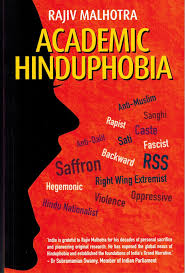
I was riffling through the comments and my jaw dropped when Kabir claimed Hinduphobia doesn’t exist. It struck me as both historically and emotionally tone-deaf. I didn’t respond at the time, but I’ve been reflecting on it since.

Let me say upfront: Hinduphobia does exist. It may not always manifest in overt violence or systemic persecution (at least not today, and not in most places globally), but it does appear in more insidious, ideological forms; especially in academic and diasporic discourse.

Take, for instance, the backlash against H1B visa recipients. Much of that criticism is coded; targeting upper-caste Indians, especially Hindus, who are the primary beneficiaries of this brain-drain dynamic. It’s not just about class or meritocracy; there’s an unspoken discomfort with their presence and success, often couched in progressive rhetoric.

On the intellectual front, academics like Audrey Truschke and others within the left-liberal Western consensus have regularly challenged or dismissed Hindu identity altogether; reducing it to political nationalism or caste oppression. This refusal to acknowledge Hinduism as a living, plural, and spiritual tradition creates an environment where Hindu self-articulation is delegitimized. That too is a form of Hinduphobia.

Now, is this Hinduphobia the same as the systemic anti-Muslim, anti-Black, or anti-immigrant hatred we see elsewhere? No. Hinduphobia today is more dismissive than violent, more erasure than exclusion, but it is real and it needs to be acknowledged.

Pakistan Was Not Born from Hinduphobia Continue reading Hinduphobia Exists, But Pakistan Was Not Born from It

Pakistaniat & Urdu from Qasim to Quaid

UP’s very long shadow:

As I board my flight back to the UK after a brief but productive trip, I find myself reflecting on a language that continues to haunt and inspire me: Urdu.

It is a tongue caught between paradoxes. The language of courtesans and qawwals, of sacred supplication and sly seduction. It carries within it the scent of jasmine and blood, of Delhi’s dusk and Lahore’s lingering grief.

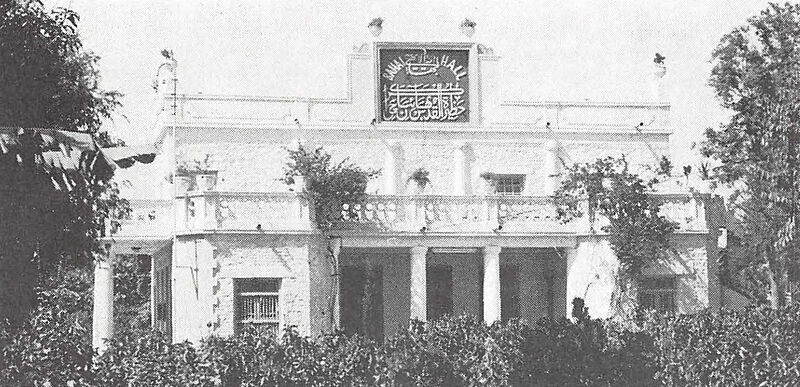
The Beloved Guardian of the Baha’i Faith once noted that while most Baha’i texts should be translated from English, Urdu alone is trusted for direct translation from Persian and Arabic. That proximity, that spiritual siblinghood with Persian, the language of kings, and Arabic, the language of God, renders Urdu magical.

Sanskrit, of course, is the language of gods, but Urdu, its stepdaughter of sorts, captures the longing of poet to partisan.

There’s a reason the Bahá’í prayer I share below is so piercing in Urdu. So here, before I cross back into another timezone, I offer this prayer—without commentary, without translation. Just Urdu, as it was meant to be heard.

And I wonder: perhaps this is what Pakistan truly is—a project in transcending the local. Not rooted in soil, but in sentiment. A place where Punjabis, Pathans, and Muhajirs are asked to shed skin and commune in Urdu. Where Pakistaniyat, for all its fractures, has succeeded in producing a common idiom: of piety, pride, and pain. Continue reading Pakistaniat & Urdu from Qasim to Quaid

The Gratitude Trap: On Escaping Asia but Staying Captive

In a recent video, a young Punjabi woman, likely Sikh, candidly shares her discomfort upon returning to India after living in Canada (this kind of echoes the Aussie influencer’s comments on chronic Indian inequality). The noise, the pollution, the density. Her frustration is raw, familiar, and deeply sincere.

But beneath her words lies something larger: the aesthetic asymmetry that defines the postcolonial condition. Wide roads, clean air, manicured parks; these are not just amenities. In the global South, they become symbols of escape, status, and salvation. And so, millions migrate. Or aspire to. Not just for jobs, but for dignity. For air that doesn’t burn. For order that doesn’t humiliate. For a feeling of being seen.

And when they do, when they arrive in Canada, the UK, Australia, something subtle happens: they become grateful. Not just for opportunity, but for escape. For the fact that the West “works.” That gratitude then curdles into deference.

They begin to believe that the world outside the West is meant to be chaotic, dirty, loud. That governance is a Western gift. That clean streets and quiet parks are civilizational rather than institutional. This is the gratitude trap; the soft power of asphalt, symmetry, and silence.

And it’s why postcolonial recovery is so difficult. Not because the global South lacks culture or potential, but because its own elites, shaped by extraction, not architecture, rarely build for elegance. Rarely build for pride. Rarely build for joy. What the West exported was not just railways or rule of law. It exported a built environment that still shames us. And until that is understood, until we take seriously the spatial dignity of our cities and the material form of our futures, the colonial spell will remain unbroken.

Borders, Blind Spots, and the Mirror Game of South Asia

A recurring tension in South Asian discourse is the question of consistency: how states interpret borders, secession, and sovereignty; not in principle, but in practice.

Liberalstan’s case is that India acted selectively in 1947: Junagadh saw a plebiscite, Hyderabad faced military action, and Kashmir was referred to the UN. From this perspective, India chose whichever method suited its interests in each case. To Liberalstan, this isn’t pragmatism, it’s hypocrisy. The charge: if self-determination wasn’t good for Kashmir, why should it be for Balochistan? And what of Sikkim, Goa, Pondicherry, Khalistan, Nagaland, or the Naxalites?

Hindustan’s reply is rooted in realpolitik: decisions were shaped by demography, geography, and threats; not abstract norms. Q.E.A. Jinnah’s attempt to absorb Junagadh and court Jodhpur are seen as deliberate provocations, since Junagadh was Hindu-majority, non-contiguous, and largely symbolic (home to Somnath). After that, New Delhi abandoned any illusions of standard rules. From Hindustan’s view, Liberalstan’s moral framing is not only naïve but deeply asymmetrical; ignoring 1947, 1965, Kargil, Mumbai, and the long shadow of Pakistan’s own interventions.

When it comes to Balochistan, Hindustan notes its accession was closer to annexation, comparable to Nepal or Bhutan vanishing into India. Three major insurgencies since the 1960s complicate the narrative of “finality.” But here, Liberalstanflips the script: what is labeled a disputed territory in Kashmir is declared settled in Balochistan. This inversion doesn’t go unnoticed.

In truth, both sides are mirrors. Each demands flexibility for itself and finality for the other. Each invokes “consent”selectively; whether that of a prince, a people, or a state. The tragedy, perhaps, isn’t inconsistency but the absence of a shared regional framework for self-determination. One not held hostage by grievance, revenge, or exception.

Until then, accusations of hypocrisy will persist, each side fluent in the other’s blind spots.

The Myth of the “Average Pakistani”

Dave’s comment:

“I have in fact met some. In person. Ran into a lovely couple while on vacay in Guatemala. Excellent conversation along a 2 hour shared shuttle ride. Shia muslims from Baltistan – he took great pains to indicate that his community is not like the average Pakistani, and that in his biradari they are proud to educate their daughters and wives, have them take the lead in public lives. Both his daughters were young med students.

The tragedy for Pakistan is that such actual liberals with modern outlooks wisely avoid taking public positions. They don’t want to get lynched. Hence the domination by the nutters and fringe on the right continues. Leading to mis-categorization of the right-wing as “the center”.”

The above praises a “liberal” Shia couple from Baltistan for educating their daughters and living modern lives, contrasting them with “the average Pakistani,” portrayed as a backward, anti-education fanatic. This framing is not just lazy; it’s offensive.

It reflects a deeply colonial hangover: the idea that modernity is rare in Pakistan, that deviation from presumed fanaticism is a revelation. But let’s be clear, Pakistanis, like people anywhere else, are ambitious, aspirational, and complex. Medical colleges are oversubscribed. Education is highly prized. And many people, devout or not, are navigating life with dignity, values, and a deep desire to move forward; not just materially, but spiritually and ethically.

Politics of Projection

Just because a population is not obsessed with hyper-capitalism doesn’t mean it is “backward.” It may simply mean it has not surrendered entirely to the logic that everything must be monetized. That’s not regression; it might be restraint. In a world where the only metric that seems to matter is money, resisting that tide is itself a kind of wisdom.

This kind of patronizing liberalism, one that exoticizes progressive Muslims as rare exceptions, isn’t harmless. It feeds into a narrative that justifies erasure: of language, culture, self-rule, and civilizational continuity. South Asians speaking in English, debating one another with colonial grammars, is not a mark of modernity, it is a symptom of displacement. The Global South doesn’t need to be saved. We need to be seen, on our own terms.

Brown Pundits