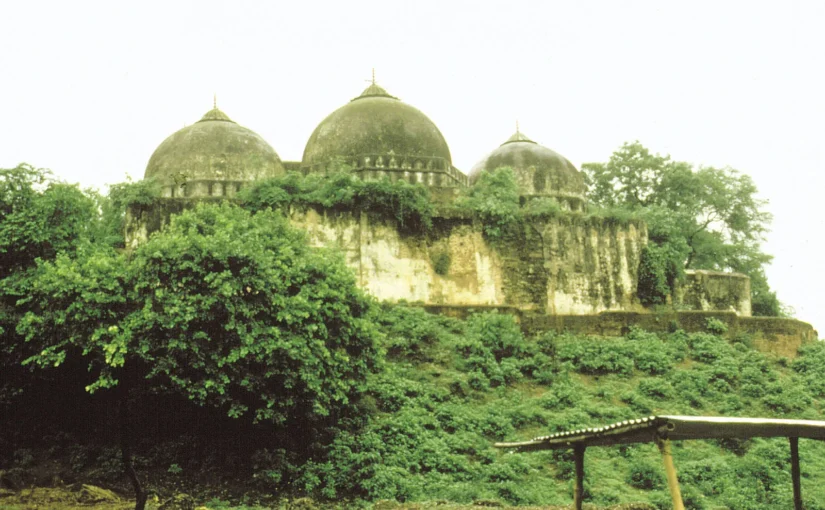
Should Babri Masjid have been moved to Pakistan?

This deliberately provocative piece draws on Kabir’s recent comments, Arkacanda’s excellent essay, Musings on & Answers, and Nikhil’s profound piece in “Urdu: An Indian Language.”

If India wants to avoid future Babri Masjids, it needs a clearer, more orderly doctrine for handling irreconcilable sacred disputes. Excavation, relocation, and compensation should be formalised as the default tools, rather than allowing conflicts to metastasise into civilisational crises. Geography matters. Some sites carry layered sanctity for multiple traditions; others do not. Al-Aqsa, for instance, is both the site of the Jewish Temple and central to Islamic sacred history through the Isra and MiÊżraj. Babri Masjid was not comparable. It had no unique pan-Islamic significance, while the site was widely regarded within Hindu tradition as the birthplace of Lord Ram. The same logic applies to Mathura, associated with Lord Krishna. Recognising asymmetry of sacred weight is not prejudice; it is common sense. A rules-based system—full archaeological excavation, dignified relocation of structures where necessary, and generous compensation—would allow India to preserve heritage without endlessly reopening civilisational wounds.

Urdu is not an Indian language but Hindu nationalists made it one

It is a Muslim-inspired language that emerged in India. That distinction matters. Blurring it creates confusion, not harmony. There was an early misstep in North Indian language politics. Modern Hindi was deliberately standardised on Khari Boli rather than on Braj Bhasha or Awadhi, both of which possessed far richer literary lineages. This decision, shaped by colonial administrative needs and North Indian elite nationalism, flattened a complex linguistic ecology and hardened later divides. One unintended consequence was the permanent preservation of Urdu within the Indian subcontinent. Because Khari Boli Hindi remained structurally interchangeable with Urdu, Urdu survived as a parallel high language. Had Braj or Awadhi become the standard instead, that mutual intelligibility would have collapsed, and Urdu would likely have been pushed entirely outside the Indian linguistic sphere.

Persian Linguistic Pride

Today, a similar impulse is at work. There is a growing tendency, often well intentioned, to Indianise the Mughals and Urdu, to fold them into a seamless civilisational story. This misunderstands both history and the settlement that Partition produced. Partition did not merely redraw borders. It separated elites, languages, and political destinies. Urdu crossed that line with Muslim nationalism. It cannot now be reclaimed without ignoring that choice. I say this as someone with both an Urdu-speaking and Persian-speaking inheritance. When I chose which tradition to consciously relearn and deepen, I chose Persian. Not out of sentiment, but judgment. Persian language nationalism remains rigorous, self-confident, and civilisationally anchored. Persian survived empire, exile, and modernity without losing coherence. It carries philosophy, poetry, statecraft, and metaphysics as a single, continuous tradition. Shi‘ism, Persianate culture, and Persian literature remain intertwined. They preserve depth rather than dilute it. As a Bahá’í, that continuity has personal resonance. But the argument does not depend on belief. It stands on history.

Urdu as the “Muslim tongue” Continue reading Should Babri Masjid have been moved to Pakistan?
Musings on & Answers to “The Partition of Elites: India, Pakistan, and the Unfinished Trauma of 1947” (Part 1)

This post by X.T.M has brought up some important points that Indians (and, by extension, Hindus) need to wrestle with. The author’s foundational hypothesis is that “India’s central trauma is not diversity. It is Partition.”

I don’t think I’ve ever read such a succinct diagnosis trying to get to the root of India’s issues, much less such a novel one (at least to me). For these reasons, if nothing else, I think X.T.M’s idea merits a deeper look.

I am largely in agreement with the author that diversity in and of itself is not at the heart of India’s troubles if only because it seems to have always been a factor in Indian society for as far back as we have history. Indeed, “diversity” and differentiation seem to me to be a mark of the continuity of Indian civilization from the earliest days of our forefathers. If this, our patrimonial diversity, has become a bane to India, it is to the India that plays at being a modern nation-state, democracy, and republic — not to the India of uncountable Gods, saints, and heroes, each at the heart of their world, ruling over the innumerable hamlets that dot the country and the uncountable kindreds that dwell within them. As Diana Eck (2012) puts it: “The profusion of divine manifestation is played in multiple keys as the natural counterpart of divine infinity, incapable of being limited to any name or form, and therefore expressible only through multiplication and plurality.” (India: A Sacred Geography, p. 48).

It is the second half of the author’s initial hypothesis that I think is the most important bit to dissect. Something about this diagnosis does not strike me as entirely accurate.

It is true that Partition split the Indian folk, namely, Hindus and Muslims, but the shape that this split took is a rather curious and, at least for me, unexpected one. According to the Pew Research Center’s June 29, 2021 report titled Religion in India: Tolerance and Segregation (Sahgal et al.), when asked whether Partition was a good or a bad thing for Hindu-Muslim relations in a 2019 survey, 43% of Indian Hindus saw it as good while 37% of them saw it as bad. Indian Muslims? Quite the opposite. Only a third (30%) of them saw it as helping communal relations while almost half (48%) saw it as actually harmful.

While Partition may have been the bloody birth pangs of the Indian State and been a very real source of deep pain to the actual humans affected by it, what ails the folks of India is, I think, altogether something else. As to what exactly this is, I will come back to it towards the end of this essay.

X.T.M’s second hypothesis is something I actually agree with. such as the idea that the “two peoples” (Hindus and Muslims) could have lived together. We have seen time and time again that incomers to India have, over time, flowed into the great folksea that ebbs and flows upon our lands like trickles of glacial melt joining with the ocean, at once both one and sundry.

There is data to support this as well. In the same Pew report I cited above (Sehgal et al., 2021), the researchers found that while both Hindus and Muslims wish for segregation in their personal lives, as can be seen in the high percentage (over two-thirds) of both groups who want to stop intermarriage, the fact that most Indians’ friends tend to be from their own religious communities, and 45% of Hindus would not want a neighbour from at least one of the other major religions (Hindu, Sikh, Jain, Buddhist, Muslim, & Christian) — a figure matched by 36% of Muslims, when it comes to what folks believe, there seems to be a surprising degree of similarity that crosses religious lines. The report revealed that an equal percentage of Indian Muslims believed in karma as did Indian Hindus (77%), along with over half of Indian Christians (54%), two-thirds of Buddhists and Sikhs, and 75% of Jains. Around one-third of Muslims and Christians said they believed in reincarnation as opposed to (and I found this very weird) only 40% of Hindus, 18% of Buddhists and Sikhs, and 23% of Jains). A similar level of belief in the purifying power of the Ganga was found among the two Abrahamic faiths. Needless to say that none of these ideas could be considered orthodox doctrine in any tradition of Islam or Christianity, and any adherence to them by followers of those religions in India immediately opens up a flood of questions one could ask.

Could it be the result of a superimposition of a Muslim or Christian layer onto a Hindu-Buddhist base such as happens when a linguistic superstrate is built atop a conquered population leading to the adoption of vocabulary and grammatical features from the linguistic substrate? Or, could it be like the speculated spread of retroflex consonants, which, while found in languages in many parts of the world, are particularly concentrated in India? Perhaps it’s a consequence of Hindu demographic domination over the last several decades causing it to serve as a sort of ‘prestige dialect’ among Indian religions? In any case, I don’t think we can discount the probability that a generally convivial attitude between Hindus and Muslims could have been maintained prior to Partition.

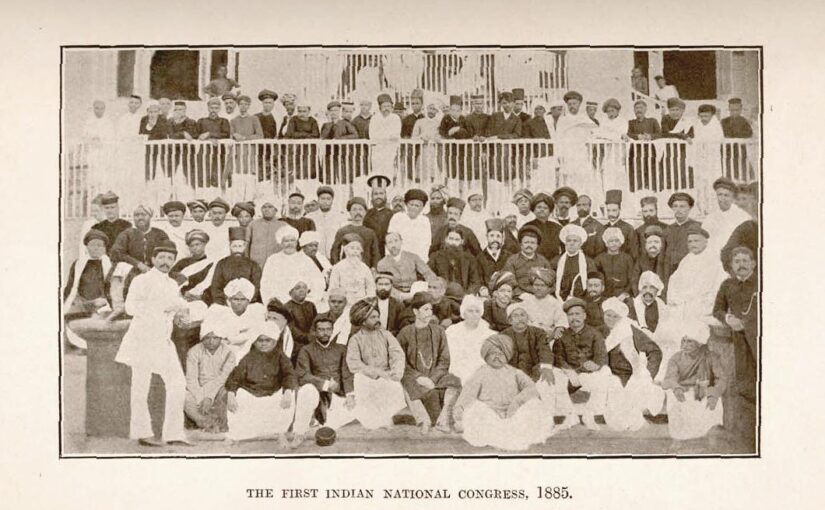
As such, I am generally in agreement with X.T.M’s argument that what happened was largely because of the will of the political elite. What I do take issue with is the rather ludicrous oversimplification of the so-called ‘Hindu’ side as the “Brahminical–Congress elite”, not only because it is patently untrue in terms of the actual people who led the Congress. Let’s take a look at some of the founding and early members. There are: Continue reading Musings on & Answers to “The Partition of Elites: India, Pakistan, and the Unfinished Trauma of 1947” (Part 1)

Dhurandhar showcases Bollywood’s New Obsession: The Sexy Pakistani Villain

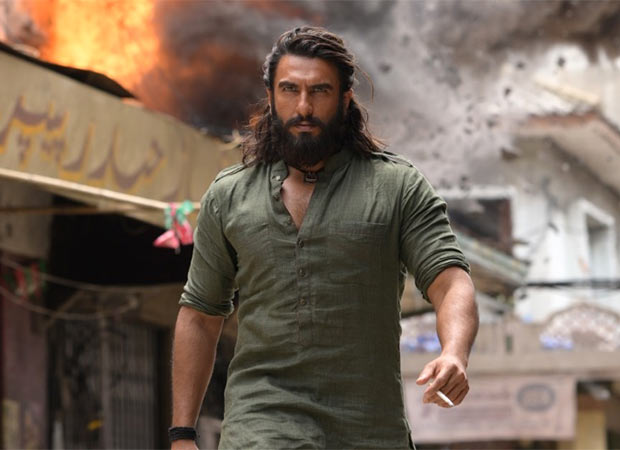
We watched Dhurandhar last night at Apple Cinemas (the last time we went to see Ishaan Khatter’s Homebound). It is the best mass-market Bollywood film I’ve seen since Animal, and far more immersive. What struck me most was not the action, nor the plot, but Bollywood’s new formula: a full-scale fetishisation of Pakistan.

Kabir keeps claiming that Bollywood casts Pakistanis as villains. This misses the point. The villain is always the sexiest figure in any film. Bollywood has finally realised this. Raazi hinted at it. Animal stumbled on it with Bobby Deol’s star stealing turn. Dhurandhar perfects it.

For the first time, Hindu actors are not performing cartoon versions of Pakistan. They are cosplaying Pakistanis with forensic precision; the clothes, the diction, the swagger, the social codes. In earlier decades the attempt was clumsy. Now the calibration is exact. Pakistan, in these films, becomes the Wild West of the subcontinent: familiar enough to feel intimate, distant enough to feel dangerous. Continue reading Dhurandhar showcases Bollywood’s New Obsession: The Sexy Pakistani Villain

When was India’s Golden Age?

When people claim that India and Pakistan are “equally artificial,” they erase the long, uneven civilisational trajectories that produced both. Kabir, who is generally more courteous than the average Saffroniate imagines, still falls into this conceptual trap. But the question this raises is larger than contemporary geopolitics:

When was India’s Golden Age, and for whom?

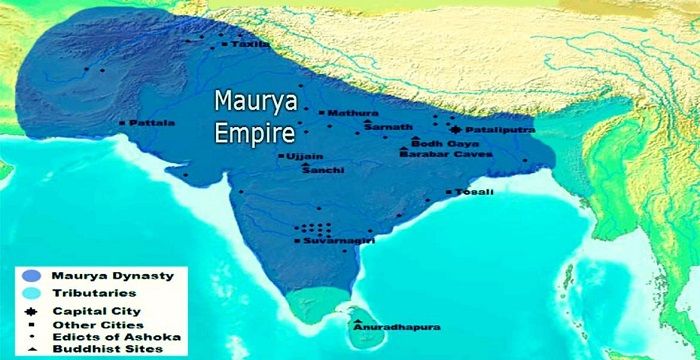
A Golden Age can be political, cultural, philosophical, or civilisational. The answer depends on what we measure: scale, radiance, confidence, or continuity. Asking it forces us to examine whether India is a recent invention or a very old organism repeatedly broken and reconstituted.

Pakistan complicates this picture. As the Indus zone, it has deep civilisational roots of its own; older than Islam, perhaps as a geographic expression even older than the Vedic world. This is why, despite its ideological volatility, Pakistan will likely persist: it sits on a basin that has generated coherent cultures for five millennia. Its anti-India posture gives it political definition, but its underlying geography gives it durability. Continue reading When was India’s Golden Age?

Where Do Brahmins Come From?

The Historical, Genetic, and Mythic Answer

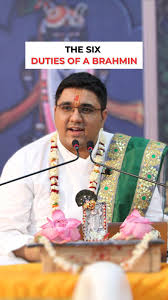
The idea that “all Brahmins come from Kannauj” is neat, flattering, and wrong. Kannauj is one important node in a much older, wider story. Brahmins do not descend from a single tribe or city. But they do share ancestry. That ancestry is older than Kannauj, older than caste, and visible in both texts and genes. To understand it, we must keep two truths in view at once: Brahmins have many regional origins, yet they descend—paternally—from a small circle of Vedic founders whose lineages spread across India.

This is the cleanest way to explain it without euphemism or ideology.

1. What the Kannauj Narrative Actually Refers To

When groups claim origin from Kānyakubja (Kannauj), they refer to the medieval centre that produced, housed, and exported Brahmins—especially after the Ghaznavid and Ghurid invasions pushed scribal and priestly families south and west. These migrants seeded communities in Maharashtra, Gujarat, the Konkan, Karnataka, Tamil Nadu, and Andhra. Their prestige shaped memory: “coming from Kannauj” became a shorthand for ritual pedigree. But Kannauj was only one centre among many. It cannot explain the full map of Brahmin origins.

2. The Real Landscape: Many Independent Lineages Continue reading Where Do Brahmins Come From?

Who can speak for the “Muslim minority” of India?

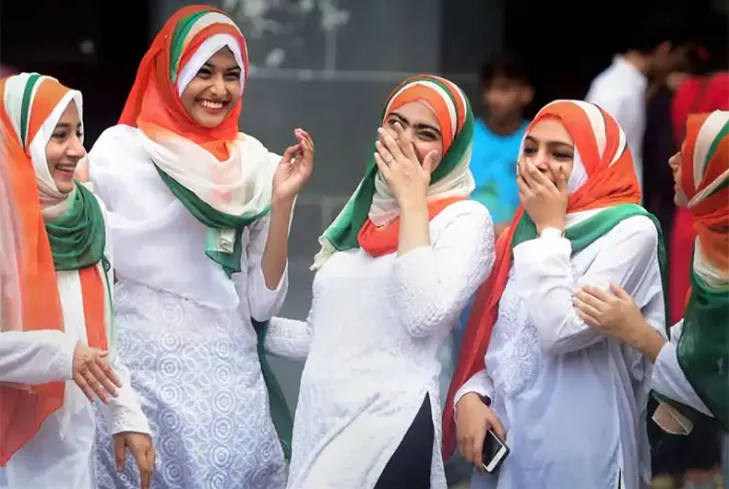
Public debates on Indian Muslims often make one basic mistake: they collapse all minorities into a single category and then declare that “everyone is thriving because a few individuals have done well”. This flattens history, erases structure, and turns civilisational questions into census arithmetic.

1. Minorities Are Not Interchangeable

Jains, Sikhs, and Buddhists offer no meaningful analogy to Indian Muslims.

  • Jains were never politically central to the subcontinent.

  • Sikhs built a regional power, not a pan-subcontinental order.

  • Buddhists have been demographically marginal for a thousand years.

Indian Muslims were different. For centuries they formed the civilisational elite of North India; shaping courts, languages, music, etiquette, food, architecture, and the ways Indian states understood power. Delhi, Agra, Lucknow, Hyderabad were not enclaves. They were the centre of the political and aesthetic world of the Indo-Gangetic plain. A fall from centrality is not comparable to never having been central at all.

2. Individual Success Is Not Structural Health Continue reading Who can speak for the “Muslim minority” of India?

Cyclone Ditwah November 2025

Cyclone Ditwah may have been a once in a 1,000 year event. However the Oceanographic and Atmospheric Physics implies this could be in all probability a regular even, may be a once in 10 years event.

First, energy for cyclones comes fir the ocean. Usually sea surface temperatures higher then 27 degrees is required. The ocean around Sri Lanka is currently more than 30 degrees. More than sufficient energy.

Second, more importantly the formation history of TC Ditwah. This is from the analysis of  Dr Sarath Wijeratne.The system started with the formation of two low pressure systems: one to the south-east of the Island and the other south-west. The one to the south-west was stronger and moved to the east whist the one south-east moved slowly to the west. Ultimately they joined together to form TC Ditwah. This merging of two low pressure system is called the Fujiwhara effect. This very rare event and has not been documented in this region. The merging of the two low pressure systems intensified TC Ditwah. Now we know the result. (Charitha Pattiarachi)

Watch video

https://web.facebook.com/511554041/videos/pcb.10164281956204042/828565176728130

There are two basic Physics that make the current condition conducive to devastating storms
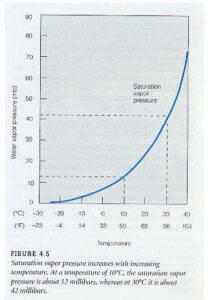
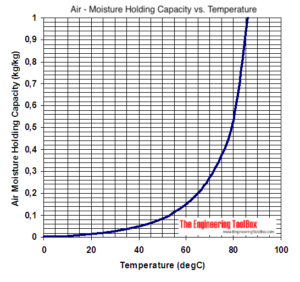
a) Evaporation becomes exponential around 30C
b) Water holding capacity of Atmosphere too turns exponential around 30C

Thus a small change in air temperature results in a large change in amount of water vapor that can be held in the Atmosphere

The larger the amount of water held in the atmosphere, bigger possibility of it condensing i.e. becoming rain.  Worse because bigger amounts, it will come down in buckets,

Increases in atmospheric water vapor also amplify the global water cycle. They contribute to making wet regions wetter and dry regions drier. The more water vapor that air contains, the more energy it holds. This energy fuels intense storms, particularly over land. This results in more extreme weather events. (This was known by Year 2000 from Climate Models)    For South Asia means wetter Kerala, Tamil Nadu and Sri Lanka.  Drier North India.

Nehru bashing has become very old but is it ineffective yet ?

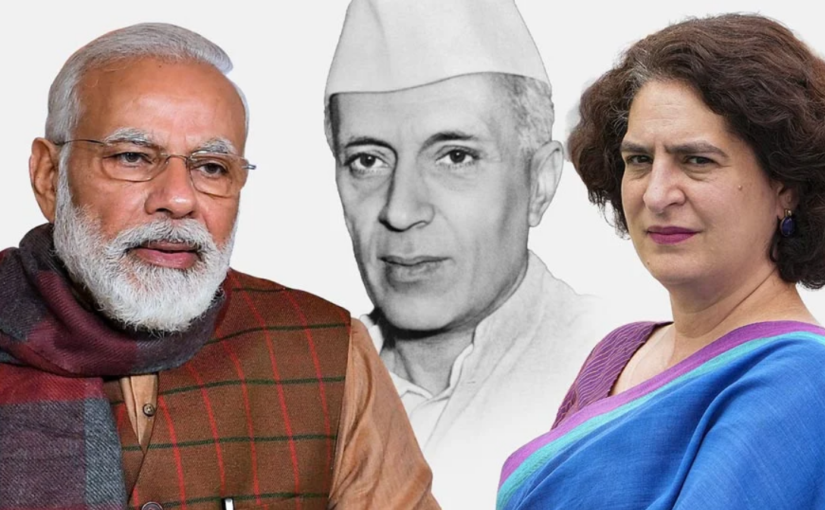
Priyanka Gandhi Vadra targeted PM Modi over the latter’s repeated Nehru bashing, and i felt a some happiness that someone was voicing what i had felt for 6 odd years now, and done so in a rhetorically effective way (unlike her brother).

“When Done Nehru Bashing, Debate Unemployment”: Priyanka Gandhi’s Top Quotes

You can find the entire speech on YouTube : LIVE: Smt. Priyanka Gandhi ji speaks in Parliament on the 150th anniversary of ‘Vande Mataram’.

Ram Guha has said multiple times that if Rahul and Priyanka were to leave the INC, the charge of dynasty and sins Nehru and Indira (real and alleged) wouldn’t pull the INC back as much as it does. But i think we are at a point where even firm BJP supporters are fed up of BJP’s Nehru bashing and its bound to have diminishing returns.

Its been 12 years and Nehru bashing brings cheers from only the hardcore supporters and none others. Maybe we are at an inflection point, maybe not.

Personally I remain an admirer of Nehru while disagreeing with his decisions profoundly. Maybe i will expand upon my criticisms and praise at some point but i do not think Gandhi erred massively in choosing Nehru over Patel. While i do think Gandhi shouldn’t have gone against democratic nature of congress (which had chosen Patel), I do think Nehru would have been a better PM had Patel remained alive longer into Nehru’s term. A bit cliched but Nehru’s life kind of reminds me of famous lines from Dark knight trilogy.

You die a hero or you stay alive long enough to become a villain.

I am not into fortune telling but i think the path Modi is following is very similar to his great opponent (atleast in his own mind), Jawahar Lal Nehru. I think they’re a bit more alike that their followers think. But all thats for another time.

November Update (Traffic & Activity)

Traffic

We published 76 posts and 1 podcast (Bangladesh) this month.

Traffic fell from ~55–65k (Sept–Oct) to ~33k in November.

However, comment activity remained strong at 819 comments (~27/day).

Continue reading November Update (Traffic & Activity)

Why Hasn’t Pakistan Collapsed Yet?

A cultural explanation, not an institutional one.

The comments on the last post revealed something important: there is a difference between learning about a culture and living inside it. The Indo-Muslim legacy sits precisely in that gap. It is not owned by a census or a successor state. It survives in people whose habits, tastes and instincts are shaped by it, even if they no longer identify with the religion that produced it.

Most arguments in the thread reduced the issue to arithmetic. “India owns the legacy because most Muslims stayed.” “Pakistan can’t own it because Delhi and Lucknow are in India.” These claims are tidy, but they miss the point. Culture does not follow borders. It follows continuity.

My own shift in identity made this clear. As I Hinducised through marriage, I also Persianised. The Islamicate part of me did not vanish; it was absorbed into a Bahá’í frame where contradictions resolved themselves in a Dharmic canvas. It taught me something simple: civilisations are not inherited by territory; they are inherited by people who keep caring.


1. Rushdie and the Islamicate Without Islam

Continue reading Why Hasn’t Pakistan Collapsed Yet?

Brown Pundits