🇮🇳Op Sindoor: A Podcast on Pahalgam, Pakistan, and the Limits of Peace

I’ve just listened to the first half-hour of Op Sindoor, the latest Brown Pundits Browncast featuring Amey, Poulasta, and Omar. The full episode runs over 90 minutes; I’ll be reflecting on the rest in due course. For now, some thoughts on the opening segment, which focuses on the recent terror attack in Pahalgam and its aftermath.


🧨 The Attack Itself: Pahalgam as a National Trauma

The episode begins by recounting the massacre in Pahalgam, Kashmir—a tourist meadow turned execution ground. Twenty-six people, most of them honeymooning Hindus, were murdered after being identified through religious markers: circumcision, Kalma recitations, names. The hosts don’t shy away from calling it what it is: a targeted Islamist attack. The group responsible, the TRF (The Resistance Front), is introduced as a Lashkar-e-Taiba cutout, designed to launder Pakistan-backed militancy through a local Kashmiri lens.

There is a palpable sense of cumulative fatigue in how the Indian speakers describe it—not as an aberration, but as part of a 30-year continuum of such violence. The emotional register is high, but justified. The use of plain terms like terrorists over euphemisms such as militants or gunmen reflects a long-standing frustration with how such attacks are framed in international discourse.


🤝  Modi, Nawaz, and the Civ-Mil Waltz Continue reading 🇮🇳Op Sindoor: A Podcast on Pahalgam, Pakistan, and the Limits of Peace

💔Sana Yusuf Did Not Have to Die

The Pakistani Crisis Is Not Just Legal—It’s Civilizational

By X.T.M

As I write this, the news of Sana Yusuf’s murder is barely 48 hours old. A 17-year-old TikTok creator with over a million followers, she was gunned down in Karachi by a 22-year-old stalker. She was a rising star—funny, expressive, beloved. And now, she is dead.

We’ve been here before. Qandeel Baloch. Noor Mukadam. Khadija Siddiqui. Now Sana.

Every few years, Pakistan reels in collective shock at the killing of yet another woman by a man convinced of his right to possess, control, or erase her. And every time, some voices insist “this is not our culture.” But what if it is?

📍Not an Anomaly—But an Outcome

Sana’s murder is not an aberration. It is the predictable consequence of a society structured around honor, control, and male entitlement. Patriarchy in Pakistan isn’t just cultural—it’s systemic, generational, and fiercely defended. Continue reading 💔Sana Yusuf Did Not Have to Die

Denial Isn’t Just a River in Egypt—It’s a Dammed Indus Too

By X.T.M | Acting Editor, Brown Pundits

“Qureshi” has glibly informed me that caste doesn’t exist in Pakistan, and that had I not deleted his comment, I would have seen his thoughtful explanation on why his ancestors would (or wouldn’t- tough to follow) have “embraced caste.”

Let’s address both claims.

I. Denial, and the Geography of Amnesia

First: the deletion. The reason I removed Qureshi’s comment was simple—it referred to “when the Hindus left Pakistan in 1947.” As if they left. As if it were a long vacation. That turn of phrase is emblematic of a deep, disturbing historical erasure—a civilizational amnesia that’s not just inaccurate, but actively offensive.

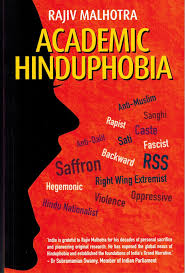
To phrase the violent dislocation of millions as “leaving” is a textbook case of internalized Hinduphobia—a posture so normalized in Pakistani elite discourse that it barely registers as cruelty.

This is not about word policing. It’s about confronting the inherited violence buried in euphemism. Continue reading Denial Isn’t Just a River in Egypt—It’s a Dammed Indus Too

Is It Indian Culture or Hindu (Brahmin) Culture that creates excellence?

On Faizan Zaki, Spelling Bees, and Civilizational Osmosis

Another year, another Spelling Bee crown for an Indian American. But this one, the 100th Scripps tournament,  is different.

Faizan Zaki—young, brilliant, and by name Muslim—just became the latest in a long line of Indian-origin champions of America’s most idiosyncratic intellectual ritual. Faizan is the 32nd Indian American to win—meaning they’ve claimed 32 out of the last 40 Spelling Bees. But he is very likely the first Muslim American to do so.

Which raises an old but essential question: Continue reading Is It Indian Culture or Hindu (Brahmin) Culture that creates excellence?

Flame Thread Protocols: Honey Kabir

A Note from the Editor

Flame thread warning: Honey vs. Kabir.

Last night’s open thread surged past 50 comments—most of it orbiting the now-familiar friction between the two.

Let me be clear: I’m inclined toward Kabir. He’s often overwrought, sometimes hyperbolic, but he’s a known quantity. He’s been part of this space for nearly a decade. He is a “real person.” We know how he argues, where he lands, and the limits of his provocations.

Honey is harder to read. Multiple handles. No clear background. No track record. And a rhetorical posture that feels less like engagement, more like carpet bombing—especially when it comes to Pakistan. There’s a difference between critique and hatred, and it’s usually in the tone. “Pakistanis under-endowed”—LOL, happy to disprove that.

Moderation is evolving. I no longer think of it as refereeing an online debate. I think of it like hosting a discussion in my living room. That means: Continue reading Flame Thread Protocols: Honey Kabir

Jet Lag: India, Pakistan, and the Theatre of the Air

Since the commentariat can’t resist a good Indo-Pak exchange—especially when it involves fighter jets—here’s a fresh contribution to the theatre. Personally, I’m much more interested in Concord cafés and JD Vance’s selective memory, but one must feed the algorithmic gods. So here’s what S. Qureishi gleefully shared:

A day after Subramanian Swamy accepted 5 jets were down in a Hindi interview, Indian CDS Gen Chauhan accepts jet losses in the recent encounter to Bloomberg. What’s more he accepted that the Indian planes did not fly after May 6-7 and were grounded,

Take that as you will. Fog of war, political spin, or just belated candor—either way, the skies are louder than the silence.

As an aside, I’ve always found Pakistani commentary on India—the civilizational motherland, however estranged—to be oddly fixated. It’s like staring into a mirror with the lights off.

Anyway—comment away, and please play nice. After all, xperia2015 has author privileges and can selectively void what he likes.

Southasia Is One Word

Reflections on Pervez Hoodbhoy at MIT

Zachary L. ZavidĂŠ | Brown Pundits | May 2025

Pervez Hoodbhoy needs no introduction. As one of Pakistan’s leading physicists and public intellectuals, he has long stood at the uneasy crossroads of science, nationalism, and conscience. He spoke this week at MIT’s Graduate Tower — the final stop on a grueling five-city U.S. tour, a new city every two days — in support of The Black Hole Initiative, a cultural and intellectual space he’s building in Pakistan. Despite its ominous name, the initiative is a wormhole, not a void: a cross-disciplinary bridge connecting physics, literature, art, and civic life.

What followed was less a lecture, more an exposition — sober, lucid, and grounded in decades of hard-won clarity.


The Logic of Annihilation

Dr. Hoodbhoy walked us through Pakistan’s nuclear doctrine: under long-standing military assumptions, if the north–south arterial route is severed, a tactical nuclear strike becomes viable. But the calculus is disturbingly abstract. Hiroshima’s 20-kiloton bomb killed 200,000. India and Pakistan each possess an estimated 200 warheads. One general once told him that, by crude arithmetic — obscene as it sounds — “only” 80 million would die in the event of a full exchange. Continue reading Southasia Is One Word

“What You Hate is What You Love” — Reflections on the Indo-Pak Obsession

I hadn’t expected my open thread to ignite such a volume of comments. But it’s confirmed something I’ve long suspected: many Indians claim Pakistan is not their rival—but their reactions say otherwise.

Let me be clear: I deeply love India. I venerate her civilizational breadth. But the passion with which some Indian respondents—particularly North Indian Hindus and sections of the South Indian Brahmin class—engage with Pakistan is disproportionate. China, despite being a far more formidable geopolitical competitor, rarely evokes this level of visceral response.

Why? Because Pakistan is the sibling to Bharat. It’s the mirror. And rivalry with a sibling is always more intimate, more consuming. Continue reading “What You Hate is What You Love” — Reflections on the Indo-Pak Obsession

China: The Unseen Winner of the Indo-Pak Skirmish?

Now that comments are back—let’s look at this dispassionately. Set aside emotion and accept a simple civilizational fact: South Asia should be plural, civil, and syncretic. Its unity lies in its AASI roots and Sanskritic inheritance, whether acknowledged or not. Otherwise who were the winners, losers and in-betweeners of this senseless conflict?

Prefacing the below with Xperia’s comment in the interests of neutrality and impartiality:

There is however a ton of evidence that Pakistani airfields were put out of operation, at least one hanger hit killing personnel inside. Runways blown up. C130 in flames.
This was was not a dogfight, it was a drone and missile war. The Indian defence was layered and effective. All airports operational and runways intact.
Op sec was also much better on the Indian side, you don’t have any pictures of army personnel firing missiles and jumping around next to locals.
Don’t worry so much about the stock prices. The Chinese market is propaganda in itself.

https://x.com/ConflictMoniter has good OSINT in case you want to take a look.
https://x.com/MenchOsint is more neutral and unbiased.

That said, the data circulating on Telegram suggests a major strategic recalibration is underway.

Without speculating on war origins, the result is seismic: India just suffered its worst aerial defeat. Five high-end aircraft—3 Rafales, 1 MiG-29, 1 Su-30—and 1 Israeli Heron drone were downed. None returned. This is more than battlefield loss. It’s a realignment.

1. Chinese Systems, Pakistani Trigger

For the first time, Pakistan deployed Chinese-made HQ-9B, LY-80, HQ-16 air defenses and J-10C, JF-17 fighters in live combat. All Indian aircraft were neutralized. Not a single Chinese platform was hit.

This wasn’t just retaliation. It was a demonstration. Rafales—France’s pride—were shot down for the first time in history. With zero Pakistani losses, China’s weapons just outperformed Western tech on a global stage.

2. Markets Reacted
• Dassault Aviation (Rafale): ↓ 1.6%
• Chengdu Aircraft Corp (J-10C): ↑ 18%

A $25M Chinese jet took out over $100M in Western tech. That resets the cost-benefit of warfare. Permanently.

3. Strategic Ripples
• Pakistan’s dependence on China is now military, not just economic.
• Chinese systems will gain traction in the Middle East, especially with Egypt.
• India’s strategic posture faces urgent questions—its French, Russian, Israeli kit just got field-tested—and failed.

Quaid, Modi, and the Operation Sindoor

On Pakistan’s second birth, India’s rising nationalism, and the politics of martyrdom

There’s a strange irony in history: the founder of Pakistan and the “strongest” Prime Minister of India may ultimately be remembered for the same thing—giving Pakistan life.

Muhammad Ali Jinnah birthed the state. Narendra Modi may have revived its soul. Because nothing steels a national identity like resistance. And nothing immortalizes a cause like martyrdom.

Blood in Pahalgam, Resolve in Islamabad

When civilians—children—are killed, as in the recent attacks in Pahalgam & Bahawalpur, the horror doesn’t demoralize. It clarifies. It creates martyrs. And martyrdom sanctifies. Pakistan, often in search of a purpose, just received one. What makes this even more striking is the dynamic behind it. Modi may need Pakistan—not as a partner, but as a perpetual foil. A pressure point. A mirror. A justification.Every strong nationalism needs its adversary:

  • Israel has Hamas.
  • The U.S. had the USSR.
  • India, increasingly, needs Pakistan.

Nationhood hardens in opposition. This is what the “failed” projects of Czechoslovakia and Yugoslavia lacked: no existential other. No enemy, no glue. Even the most successful Willensnation—Switzerland, a country built by choice, not ethnicity—engaged in intense nation-building during the 1960s. Its wealth today isn’t just neutrality—it’s the compound interest of skipping two world wars. But in today’s world, Dubai may inherit Switzerland’s darker mantle—as the future capital of hot money and global shadow finance. Meanwhile, across the Atlantic, Canada’s national identity has paradoxically strengthened in Trump’s wake—a quiet rebellion through civility, as if to say: we are what he is not.

The Strategic Misstep?

Operation Sindoor. Suspension of the Indus Waters Treaty. Visa blocks. High Commission closures. Are these pressure points—or accelerants? The danger is that such moves only validate Pakistan’s siege narrative. And that narrative fuels its resilience. You can’t bomb a martyr complex. You can only confirm it. Continue reading Quaid, Modi, and the Operation Sindoor

Brown Pundits