Archeological Society of India to work with Indonesia on Prambanan Temple Complex Restoration

A brief respite from war, death and bombings. Some encouraging news from South East Asia.

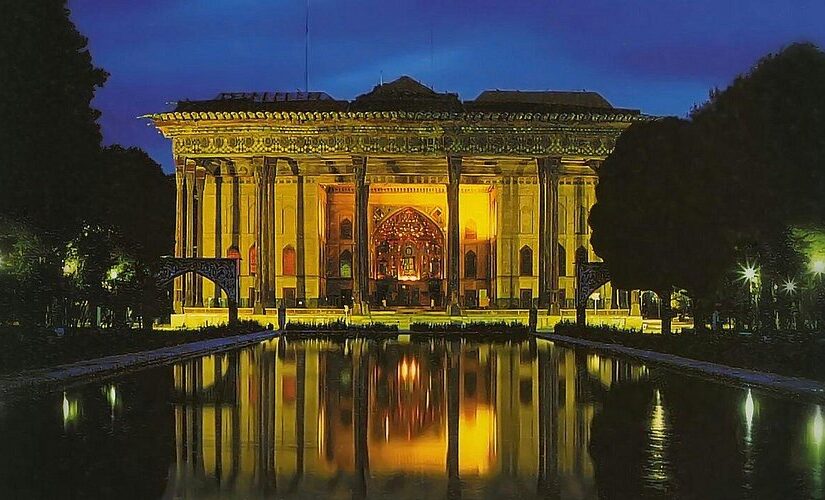
I have had the privilege to visit the Angkor Wat Complex in Siem Reap, Cambodia. The ASI has done some decent work there in restoring some of the buildings within. The Prambanan temple complex dates back to the 10th century and after Angkor, its the largest one in SE Asia. I would love to visit someday.

I did visit Bali briefly a couple of decades ago, which was a wonderful rabbithole to fall down into, in terms of Indic influence and syncretic culture in SE Asia. Balinese Hinduism is a fascinating fusion of what we Indians think of as ‘core’ Hinduism, along with local animist influences. What superficially can feel slightly alien and almost jarring – in terms of pooja thalis adorned with whole skinned chickens, is in fact, incredibly typical of how the Dharmic faith has spread all over the Indian sub-continent and beyond, absorbing local totems and figures into its mythology as manifestations and ‘Avtaars’ of its primary dieties.

Has anybody on BP or the commentariat visited Yogyakarta or any other Indonesian sites with Buddhist/Hindu influence?

The Strait That Broke the World

On February 28, 2026, the United States and Israel struck Iran.

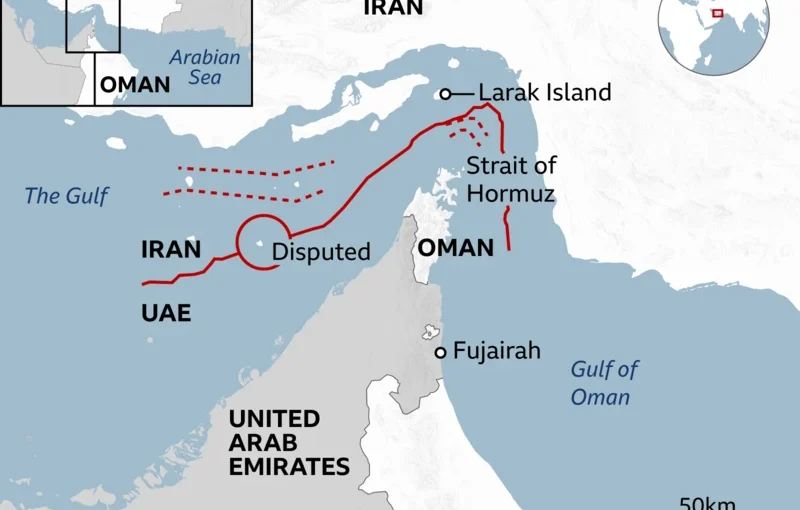
They hit fuel depots, missile sites, command infrastructure. Within seventy-two hours, the Strait of Hormuz, twenty-one nautical miles at its narrowest, carrying twenty percent of the world’s oil, closed. It has not reopened. Everything that follows from that sentence is not speculation. It is arithmetic.

The Price

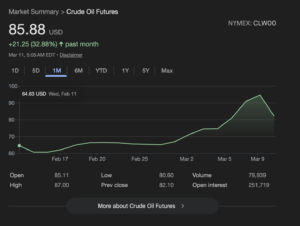
Oil was at sixty-five dollars a barrel when the bombs fell. Within days it touched one hundred and twenty. Analysts at Kpler said publicly that if Hormuz stayed shut through March, one hundred and fifty was not a ceiling. Barclays agreed. The IEA called the disruption the largest in the history of the global oil market, twice the scale of the 1956 Suez Crisis. People heard those numbers and thought: petrol prices. School run. Heating bills. They were thinking too small.

The Cascade

Oil is not just fuel. It is the circulatory fluid of the entire industrial world. When it doubles overnight, everything that moves, everything that is made, everything that is insured, financed, or shipped reprices simultaneously.

Marine insurance becomes unwritable. Trade credit freezes. Every CFO at every company in every sector looks at their cost assumptions, built at seventy dollar oil, and cancels the next quarter’s capex in the same morning meeting. That coordinated freeze is not a symptom of recession. It is the recession, arriving before a single GDP figure confirms it.

The banks come next. Energy loans, airline debt, shipping company bonds, all underwritten at sixty to eighty dollar oil. At one hundred and twenty sustained, covenant breaches begin quietly. Not crashes. Tightening. The marginal credit that keeps service businesses alive stops flowing.

Then the Gulf sovereign wealth funds. ADIA. PIF. QIA. Mubadala. Two to three trillion dollars in global assets, equities, real estate, private equity, deployed as patient capital into Western markets for fifteen years. They are nominally richer at one hundred and twenty dollar oil. But their export infrastructure is disrupted, their domestic spending obligations spike immediately, and their liquidity needs arrive precisely when their asset values are falling.

The moment even one major fund moves from net buyer to net seller, it removes the price support it has been providing silently for years. Other funds follow. The risk premium they have been suppressing across global asset classes reasserts overnight.

This is not the 2008 financial crisis. That was a fire in the financial system’s wiring. This is the fuel supply to the engine failing. Different category. Larger consequences.

The Trap Continue reading The Strait That Broke the World

GDP of South Asian countries 1 : nominal vs real

In March 1776, exactly 250 years ago, Scottish economist Adam Smith published his work The Wealth of Nations, widely considered to be one of the most influential books on political economy.  In this book he highlighted the fact that people often confuse the real wealth of a country (the ability to buy goods and services) with  its nominal wealth. The idea is still relevant today, so let us have a closer look. If we rank the major South Asian countries by their per capita nominal GDP (size of the total economy in the local currency divided by the price of a dollar), the list goes as follows :

1. SriLanka : USD 4516 
2. India : USD 3051
3. Bangladesh : USD 2960 
4. Pakistan : USD 1710
5. Nepal : USD 1550
6. Afghanistan : USD 417 

Many people assume that these numbers measure how poor or rich a country is. In particular, the average Sri Lankan is 50 percent wealthier than the average Indian, and the average Bangladeshi is 70 percent wealthier than the average Pakistani. This is not really true. The nominal GDP accurately measures the real wealth of a country only in an utopian world where there are no taxes or other barriers on tradable goods, and transportation costs are completely absent. In reality, Americans can not instantly transport themselves to India to get cheap haircuts, and South Asian countries often impose huge taxes on imported goods. So nominal GDP is a flawed yardstick if we want to compare different countries.

Here’s a simple puzzle based on this idea : What steps should the Indian government take if they want to increase the country’s per capita nominal GDP from USD 3000 to USD 6000 within this year?

At first glance, achieving this may seem unattainable, given that India’s economy is currently growing at a rate of 6-7 percent annually. However, once we realize that nominal GDP also depends on trade policies, it is easy to come up with strategies to make this happen. For instance, the Indian government could implement an extra import duty of Rs 45 per dollar on all imported goods while simultaneously offering a Rs 45 per dollar subsidy (through tax incentives, free land, etc.) for all exported products. This will reduce the price of the dollar from Rs 90 to Rs 45 and double India’s nominal GDP. It’s also easy to see that this will have no impact on the real economy. Since the USD isn’t utilized in local transactions, the domestic market will stay the same. The extra tax imposed on imports will be balanced by the decrease in the dollar’s value. Likewise, the lower dollar rate will be offset by subsidies provided in the export sector.


A Deleted Tweet Just Moved the Oil Price 17%. Welcome to the New World.

The Graph Nobody Is Talking About

Oil Prices

BP Admin Note

September 2025 – Brown Pundits
Punditji

Before the oil, a brief note on Brown Pundits itself. Over recent months we have tried to move the comment threads toward a simple goal: remove noise while preserving disagreement. This is not a place for ideological conformity. It is a place where arguments should challenge substance rather than inflame style.

The density of comments has fallen slightly but the quality of disagreement has improved.

What the threads also reveal is a persistent misunderstanding about the relationship between civilisation and crisis. The caricature, that certain societies simply “fail to modernise“, misses the deeper negotiation underway.

Every tradition older than industrial modernity faces the same question: how to carry inherited principles into a world not built around them. That is not a uniquely Muslim or Persian problem. It is the defining problem of our age.

With that said, to the oil!

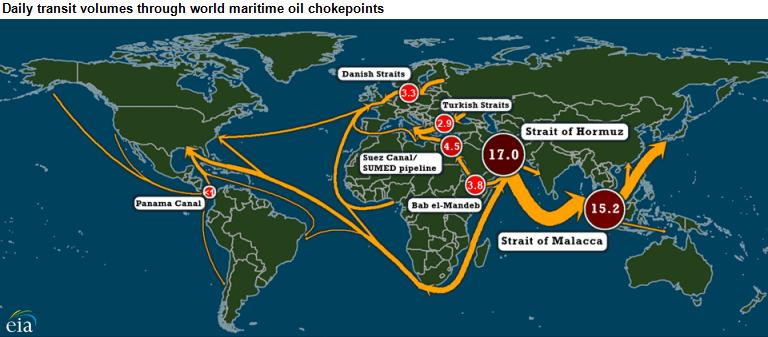
Oil Tanker Routes at Kimberly Clifton blog
SoH > SoM

The Only Number That Matters

Continue reading A Deleted Tweet Just Moved the Oil Price 17%. Welcome to the New World.

They Blinded the Attackers in 72 Hours. No One Is Saying It.

hat tip: Richard Medhurst — full satellite analysis here

Blinded?

The Thing In Front of Your Nose

The uncomfortable truth about this war is not what Iran destroyed. It is what the destruction revealed was always already hollow.

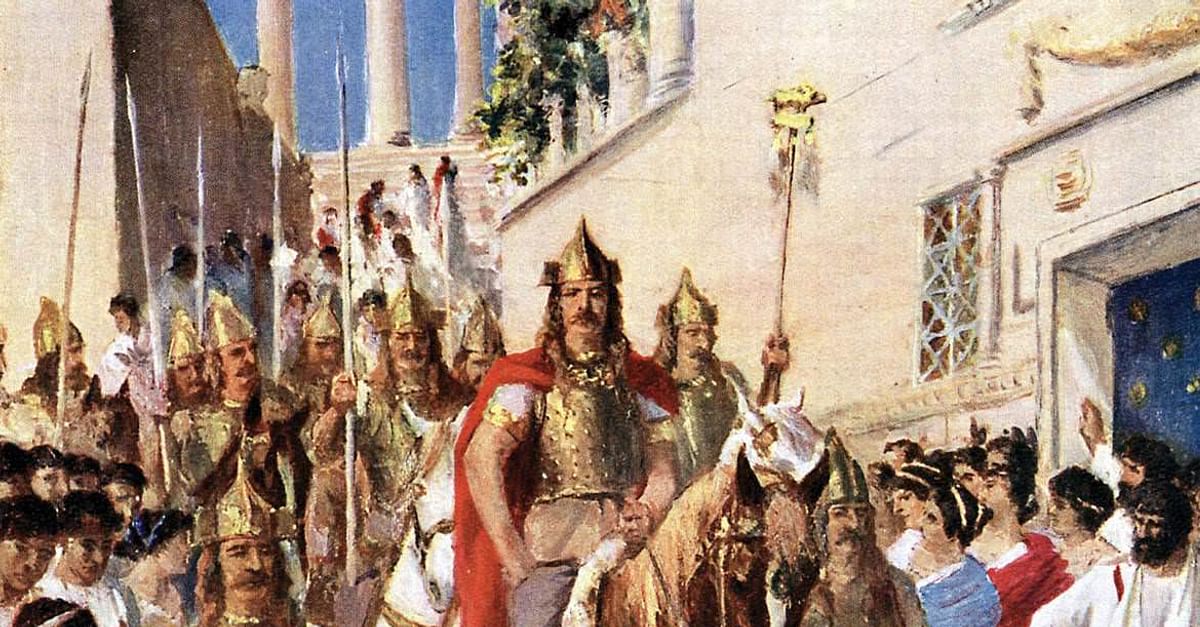
Alaric - World History Encyclopedia
Alaric the Conqueror of Rome

Empires do not collapse when they are defeated. They collapse when the gap between their self-image and their actual condition becomes impossible to maintain. The Roman legions did not disappear because the Visigoths were militarily superior in any comprehensive sense. They disappeared because the infrastructure of belief that sustained them; the idea that Rome was invincible, that the civilisational order it represented was permanent, had been quietly rotting for generations before the walls were breached. What Alaric provided in 410 AD was not a military verdict. It was a legibility event. He made visible what had already become true.

I’ll note here: I fully support removing Khamenei, Nasrallah, Hamas; the architects of civilian suffering. Not at the cost of the innocent. That distinction matters and I won’t pretend otherwise.

Medhurst has spent the last several days making the invisible visible; overlaying satellite photography on base after base across the Gulf, turning classified embarrassment into public record.

What Actually Happened

Iran strikes AN/FPS-132 early warning radar in Qatar | TURDEF
The billion dollar radar, one of 6 in the world

Continue reading They Blinded the Attackers in 72 Hours. No One Is Saying It.

2026 Iran War and the Gulf

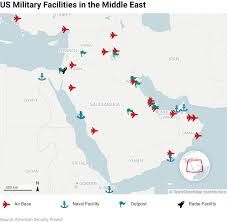
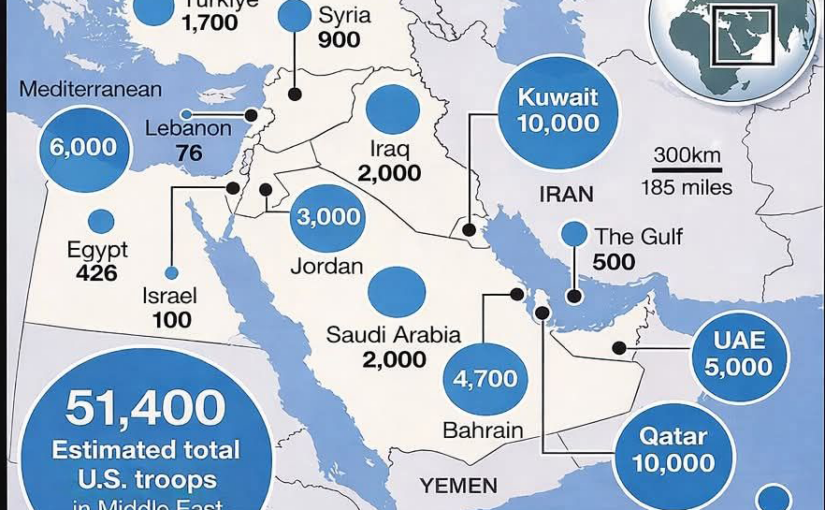
Header Image: US Bases in Mid East.  Iran is the only Sovereign country in the Mid East without US Bases 

“God created war so that Americans would learn geography” ― Mark Twain

Why are the Gulf Countries not attacking Iran. Because they are extremely vulnerable
a) Resource and Economic Vulnerability
b) Political, Regimes can be overthrown
c) Targets because they host US Bases.

The US though they have bases in the Gulf, have not come to the aid of Gulf Countries. To the contrary they are evacuating personnel from the Gulf.

Bahrain:  Politically Vulnerable: Hosts the biggest US base in the Gulf. It is also has Shia 50% with Sunni regime. The Shia majority have been very restive and any war related turmoil can allow the Shia to overthrow the  Sunni Regime. (Shias were previously the majority, being approximately 55% in 1979. However, the increased naturalization of Sunni migrants and persecution of Shia Muslims by the ruling Sunni Al Khalifa family led to an alteration in the demographics.)

Qatar: Has the biggest LNG production and they have shut down production. Why: Cant afford to have drones or missiles or even debris hitting the storage. The whole storage will go up like a Nuclear Bomb
Qatar accounts for 20% of global LNG exports, with 80% of those volumes to Asia.

Saudi Arabia: Like Qatar Saudi Arabia is Resource attack vulnerable. Oil production can go up in flames even though the oil is less volatile. Also with the Gulf or Hormuz shut down oil exports are nearly nill. However, they have pipeline to the Red Sea port of Yanbu. So Saudis need to also keep Houthis happy so that the oil that reaches Yanbu and loaded into Tankers is not attacked by Houthis. (Only about 1 million barrells/day to Yanbu, compared to 6.8 miilion Barrells/day thru Gulf Hormuz.
Saudi too has significant Shia population (10-15%) located near the oil fields in the Eastern Province (Najran, and Medina)

UAE/Dubai; Very Economically vulnerable. Falling Debris has closed Dubai Airport, the busiest in the world. Dubai is an Worlds Financial center in the League of Hong Kong, London and New York. 90*% of Dubai are expatriates, some extremely wealthy. Revenues from oil and natural gas account for less than 5% of the Emirate’s revenues. If Iran hits world’s tallest building, the Burj Khalifa thats the end of Dubais Economic Wonder.

So as you can see the Gulf countries need to play nice with Iran until the wsr End.

How will the War End. (some possibilities)
a) Iran Runs out of Missiles. (also low probability of layers of Iran Leadership Killed)
b) US Missiles are depleted
c) US has an Economic Shock (eg Stocks, DJI falls significantly eg to 40,000.  Or US Treasury Bond yields spike to above 5%

When the dust settles regardless of Iran having lost it is going to be new Landscape in the Gulf. The US bases are most likely gone. When personnel are evacuated the looters come in like ants to dead carcass.

https://upload.wikimedia.org/wikipedia/commons/3/34/Crude_oil%2C_condensate%2C_and_petroleum_products_transported_through_the_Strait_of_Hormuz_in_2014_through_2018_%2848097472312%29_%28cropped%29.pngSaudi East-West Pipeline can pump oil from the country’s main eastern oilfields to the Red Sea and has capacity to transport around five million bpd if Yanbu has the capacity to load that amount of crude the pipeline can carry onto ships, traders and buyers said. Crude loadings at Yanbu hit a peak of just under 1.5 million bpd in April 2020
https://www.bairdmaritime.com/shipping/tankers/aramco-moves-oil-flows-to-red-sea-as-hormuz-grinds-to-a-halt

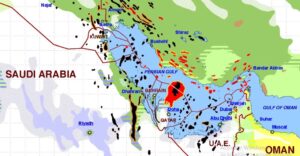
What the map below shows is that, due to a peculiar correlation of religious history and anaerobic decomposition of plankton, almost all the Persian Gulf’s fossil fuels are located underneath Shiites. This is true even in Sunni Saudi Arabia, where the major oil fields are in the Eastern Province, which has a majority Shiite population.

https://theintercept.com/2016/01/06/one-map-that-explains-the-dangerous-saudi-iranian-conflict/ 


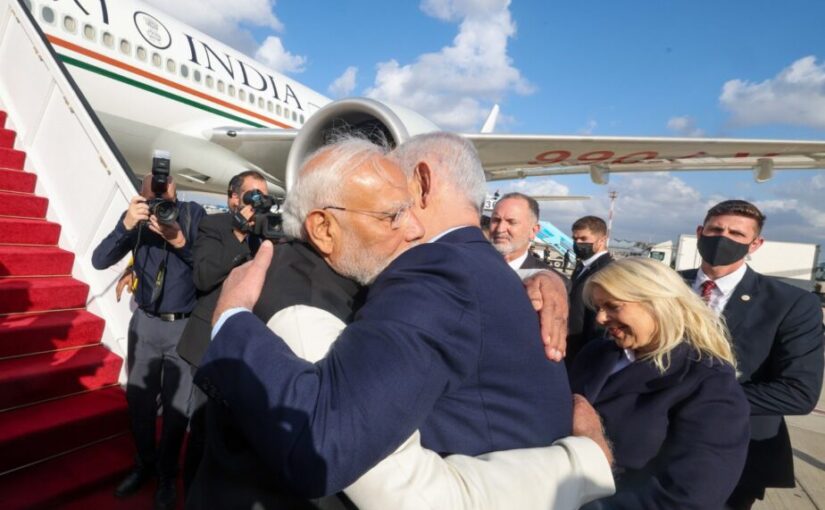
Modi Puts India Firmly in the Israel-US Camp

Modi’s strong support for Israel – and refusal to condemn the Israel-U.S. strikes on Iran, a long-time friend of India’s – have “diminished India’s stature in the eyes of the world.

Journalist Bharat Bhushan wrote in Deccan Herald that with the recent visit, Modi has put India “firmly in the U.S.-Israeli camp.”

That is not a space that India should be in if it is hoping to lead the Global South, especially in the context of Israel’s continuing war on Gaza and the latest Israel-U.S. military strikes on Iran.


Brown Pundits