Hindu philosophy was mathematical, but Hindu nationalists are innumerate

In the early 2000s, there was a lot of demographic alarmism about Islam and European societies. Pundits such as Mark Steyn were predicting Islam would take over some European nation-states by 2020 as the majority religion. For a while, I credited that sort of thing. After all, Islam is an assimilation problem in most Western democratic societies.

This is the politically incorrect truth that the Left is even more vigorous in denying to this day than it was in the 2000s.

But I happened to change my views to be less pessimistic. One thing is that I read Philip Jenkin’s God’s Continent: Christianity, Islam, and Europe’s Religious Crisis. Jenkins is a thorough and objective scholar. An Episcopalian with moderate views on the whole, he reviewed the evidence of violence in the Koran and the Bible and came away surprised to note that the Bible was far more violent (in large part due to the Hebrew Bible). I recommend all his books but in particular The Lost History of Christianity: The Thousand-Year Golden Age of the Church in the Middle East, Africa, and Asia–and How It Died (Jenkins is neither a fundamentalist nor secular, so he operates in a good middle-ground).

In any case, Jenkins lays out the argument that Christian identity is far stronger in Europe than American skeptics presume. Islam will be a large minority religion in 2100, not the dominant religion. The numbers are with Jenkins here, though the demographics are concerning to me over the long-term.

I bring this up because too often Hindu nationalists and their fellow travelers undermine the credibility of their arguments by forwarding ridiculous numbers. Here is a comment on my other weblog:

Small number converted and demography did the rest.

Conversions really began after Shah Jahan & peaked with Aurangzeb in Panjab.

Christianity in Rome was similar.

You can look at old census of Bengal and Panjab to see the few% increase every decade till partition.

Turks (turkey) had numeric parity and lower tfr than Greek Armenia till ww1. Today 8x more,

http://yugaparivartan.com/2016/02/17/demographic-seize-of-al-hind/

Hindus were there from Indonesia to Armenia.

Probably by 2050ad will just be hated minority in India.

35% of newborns in India already Muslim. More in cities.. Only Hindu migration from countryside has prevented full slide to civil war with outside support by Abrahamic powers.

The comment piqued my interest because of the assertion of conversion in the period between 1650-1700. This seems interesting. I wanted to follow this up. But then the person claims that

1) 35% of newborns in India are Muslim
2) Muses that by 2050 Hindus will be a minority

This makes no sense. First, the TFR for Muslims is 2.6 vs. 2.1 for Hindus across India as of the late 2010s. Assuming that 70% of the reproductively active population are Hindus and 20% Muslims (being generous to the numbers above) I still only get 26% newborns Muslim. The point about this is that lots of people throw numbers around to add firmness and plausibility to their argument, but lying about numbers just makes you seem like a charlatan.

Second, even if 35% of the newborns in 2020 are Muslim, how is it that in 30 years the majority of the population will be Muslim??? It is theoretically possible, but very unlikely. Using current rates of differential fertility Muslims will overtake Hindus in 200 years, not 30 years.

The comment above isn’t actually atypical. Many of the Hindu nationalists on this weblog have left similar comments, while I have Hindu nationalist friends who have suggested to be widespread conversion to crypto-Christianity all across India.

I am very skeptical of this in a broad sense now for a simple reason: Narendra Modi is incredibly popular.  It could be that all of these hidden Christians and Muslims love Modi, but I don’t think that’s the case. I think the reality is Hindus are about ~80% of India’s population, and Hindus on the whole love Modi.

My logic is similar to the argument around Yezidi numbers. For decades there were arguments about Yezidi numbers in Iraq. The answer was clear when they voted en masse for a particular political party. It turns out the Yezidis were right that there were many of them, and the Muslims were wrong.

To be clear, when it comes to the Hindus vs. the Muslims, my own personal bias is probably with the Hindus because I am a murtad. The personal is political to some extent. But that does not mean that I will accept and promote lies, stupidity, and misrepresentations. The truth is strong enough to stand on its own.
People of Indian ancestry need to learn things outside of India or they will sound stupid

At my other blog, The Decline Of Genocide And The Rise Of Rents. One of the comments is from someone with an Indian name:

The problem with the whitewashing of the islamic invasions of India is that first, nobody does that with the christian invasions of sub saharan Africa and even more so, central and South America and secondly, the genocides did not stop in the past.

I wonder how much of what the author wrote applied to the European conquests of central and south america where the aim was clearly to slaughter and convert.

Since the commenter is parochial, they don’t know about the Spanish Black Legend, which was an Anglo-Protestant propaganda effort to argue that the Catholic Spaniards were particularly cruel and evil. The reality is that the aim was to convert, but, it was also to turn the indigenous peasantry into sources of rents for the Spaniards, who were keen on living like aristocrats in the New World. The demographic collapse of the indigenous population prevented some of that and necessitated the importation of African slaves.

Why was there a demographic collapse? It wasn’t really the Spaniards killing the native people in large numbers (in fact, the conquest of America occurred with the large-scale cooperation of indigenous allies). Rather, it was disease, as outlined in Charles C. Mann’s 1491.  If you look at the comment about, you will notice a peculiar contradiction in the idea that one would want to “slaughter and convert.” Winning souls usually entails keeping them alive!

Henry Kamen’s Empire: How Spain Became a World Power, 1492-1763, the author outlines the contrasting case of what has become the Phillippines. Here Spaniards and mestizos were a tiny minority, and the indigenous peoples were the overwhelming majority, with a large number of Chinese engaging in trade. Why the difference? Because the Spaniards did not bring disease that were particularly impactful on the people of the Phillippines, and on the contrary, tropical climates in Asia were not healthful for Europeans. The mortality rate for the Dutch East India Company in Batavia was incredibly high, as Southeast Asia served as a great mortality maw for young men from the Netherlands and Germany for generations.

The contrast with Africa is the most extreme. Fatal disease meant that the European presence in Sub-Saharan Africa was constrained to isolated fortifications and trading center on the coast for centuries. The reason Africa was “dark” was that even after all this time much of it was unexplored into the 19th century. If you look at biographies of the “Arab slave traders” from this period you will observe that many were of predominant black African ancestry. The primary, but not exclusive, reason for this difficulty of conquest and domination was malaria. The introduction of quinine opened up the continent to Europeans and resulted in the scramble for Africa.

Though some European missionaries did come to continent with colonialism, in most places mass Christianization occurred after the end of European rule. It was driven by native Christians and often spread fastest among groups that were located adjacent to Muslims. Christianity was seen as a bulwark of the native culture against Islam,* which Vodun and other indigenous beliefs exhibited little resistance (it is a peculiar fact that “public paganism” persists in West Africa, but not in East Africa, where tribal religions are much more rural and marginal phenomenon).

What can this tell us about India? As I have posted at length, it testifies to the power and strength of native Indian religious ideas and systems. Though Hindus say they are “pagan”, they are not pagan like African pagans. Or pagans like the people of highland Southeast Asia, or the New World. Or Classical Antiquity. Muslim rulers dominated the region around Delhi from 1200 to 1770, but 80-90% of the people in the region remained non-Muslim at the end of this period!

And yet 30% of subcontinental people are now Muslim. They are concentrated on the margins, in the far west and far east. What does this tell us?

A standard model presented is that slaughter and mass-killings resulted in the shift of religion at the point of the sword. Were Muslims particularly brutal in the west and the east? More brutal in eastern Bengal than western Bengal? More brutal in southeast East Bengal than northern East Bengal?

The idea of an exceptionally violent and brutal occupation is promoted and encouraged by many factors. First, many Muslims in the past and even actually like the idea that the Turks and Mughals were particularly vicious and zealous. The Turks themselves had an interest in portraying themselves as such ghazis converting pagans at the point of the sword. For Hindus, the conversion of marginal, liminal, and low caste communities to Islam of their own free will is not something one would want to address, because it points to “push” factors within Hindu society. Defection says something about the group from which you defect.

Finally, there is the reality that the Muslims did engage in forms of cultural genocide. The destruction of temples, the selective targeting of the religious, the imposition of an alien Persian high culture, are all true things that occurred in a Hindu India.

Note: I may just delete a lot of comments on this post if they don’t meet my standard. Just warning.

* The attraction of highland Southeast Asians to Christianity has the same tendency: they see it as a bulwark against absorption into lowland Buddhist culture.

A collective religion in an individualistic age

Recently on Twitter someone asked why people of subcontinental backgrounds who leave Islam don’t refamiliarize themselves with the religion of their ancestors. One response could be “well actually, my ancestors weren’t really Hindu…” I think this is a pedantic dodge. In places like Iraqi Kurdistan and Tajikstan some people from Muslim backgrounds are embracing a Zoroastrian identity.


Iraqi Kurds turn to Zoroastrianism as faith, identity entwine:

In a ceremony at an ancient, ruined temple in northern Iraq, Faiza Fuad joined a growing number of Kurds who are leaving Islam to embrace the faith of their ancestors — Zoroastrianism.

Years of violence by the Islamic State jihadist group have left many disillusioned with Islam, while a much longer history of state oppression has pushed some in Iraq’s autonomous Kurdish region to see the millennia-old religion as a way of reasserting their identity.

“After Kurds witnessed the brutality of IS, many started to rethink their faith,” said Asrawan Qadrok, the faith’s top priest in Iraq’s autonomous Kurdish region.

But to be clear, not all the ancestors of the Kurds were Zoroastrian. Some were Christians. Others were probably Jews. The largest numbers on the eve of the Arab conquest were probably a mix of folk mountain pagan, with a patina of Zoroastrianism among the elites. Additionally, modern Mazdaist Zoroastrianism is only a single stream, and one strongly shaped by its Islamic captivity.

And yet on some level, it makes sense that Kurds convert to Zoroastrianism to reconnect with their ancestral Iranian tradition. It is part and parcel of that tradition. Similarly, people of Muslim subcontinental background turning toward Sanata Dharma is not crazy, even if their ancestors were Buddhist or pagans of some sort.

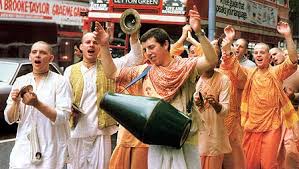
But there’s a problem with “converting” to Hinduism: modern Hinduism is organized around jatis, and being Hindu means being part of the community, and membership in that community is a matter of birth, not choice. Someone who was raised a Muslim and converts to Hinduism can’t just join one of the many local jatis. Of course, there are devotional sects such as ISKON, but these are exceptions, not the rule.

Obviously the same problem occurs in Islam and Christianity. I have read of converts to Islam who were single talk about the difficulty of finding a spouse since they have no “connections” within the community, and being single as a Muslim convert can be very isolating. But, Islam has within it more of an acceptance, like Christianity, that conversion of individuals is possible and even meritorious. Hindus are more ambiguous and ambivalent.

In the premodern world, Hindu communitarianism was a good fit. But in a more individualistic world, it puts Hinduism at some disadvantage.

Browncast Episode 98: Covid-19 India status update, May 5th

Another BP Podcast is up. You can listen on LibsynAppleSpotify,  and Stitcher (and a variety of other platforms). Probably the easiest way to keep up with the podcast since we don’t have a regular schedule is to subscribe to one of the links above!

Since we started the Brown Pundits Browncast we’ve seen significant listener growth. This is really a hobby and labor of love, so I’m pretty pleased with how it turned out. Though it’s by the Brown Pundits, the topic isn’t always “brown.” That being said, there is a significant number of listeners in India (especially with the topic is more Indocentric).

Due to the costs of both recording software and storage space, I would appreciate if you could also support the podcast as a patron. The primary benefit now is that you get the podcasts considerably earlier than everyone else. It also compensates me for my admittedly mediocre editing (I’m a data scientist/geneticist). If we get more patrons I have reached out to have someone professional edit…but really we don’t have the funds now.

If you can’t give (in these times may cannot!), I would appreciate more positive reviews!

In this episode, I talk to Kushal Mehra, the Carvaka, about what’s going on in India.

Review: Trevor Noah, Born a Crime

I listened to Daily Show host Trevor Noah’s memoir as an audiobook. I was expecting some sort of standard “third world middle class memoir with woke characteristics”, but it turned out to be something far more interesting; Trevor was born to a Black South African mother and a White father during apartheid, when such relationships were illegal. He grew up in poverty with a single mom who sounds like an amazingly strong and independent woman and the story of those early years is the best part of the book. You will learn more than you may expect about daily life in Black South Africa and the story is told with great verve and wit. There is the expected craziness and cruelty of apartheid, but he is also refreshingly blunt about the social evils prevalent in the ghetto and the various divisions (generally violent, sometimes outright vicious) within Black society. South Africa becomes a real (and far more colorful) place for the reader, well beyond the somewhat simple and superficial “black and white” story we all know from (distant) headline news reports. Trevor and his family attend 3 churches every Sunday, escape a possible rape/killing by jumping from a moving minibus, deal with poverty, crime and prejudice (mostly from other Blacks and “Colored” people, since interaction with White society is very limited in any case) and through it all, his mother manages to somehow hold things together and give him a reasonably good education. A violent stepfather (who eventually shot his mother, she survived) and a life of adolescent and early adult crime round out the picture. As a window into South Africa, it was much more colorful (and more interesting) than I expected.

Many of the quirks of Black life that he describes (always with empathy and sympathy) are not too unexpected or shocking to anyone with some knowledge of the world. When his teenage dance troupe goes to a Jewish school and they all start shouting “Go Hitler”  (the name of their lead dancer) it is very funny, and Trevor’s explanation of why they did not see this as some sort of faux pas is sensible and reasonable. But one other episode was personally harder to process for me and that is: cruelty to cats. 2 of the author’s cats were lynched, skinned and hung from their gate because Black South Africans have a thing about cats and witches. And while talking about this, Trevor casually throws in the fact that a Black security guard beat a cat to death on live TV when she ran out onto a sports event in a stadium and Trevor seems to think this is just a cultural quirk and we all have them. He lost me at that point I am afraid. Yes, Spaniards publicly torture bulls, some Chinese do horrible things to various animals and modern people all eat meat from cruel factory farms, but I find it very hard to see this kind of cruelty as somehow “normal”, and Trevor lost a few points in my estimation with his attempt at cultural sensitivity on this topic.

Trevor is, as expected, ready with modern liberal tropes for most of the historical and political references in the book. That is OK, but one does get the feeling that he thinks his experience as a rather unique mixed-race South African, and the lessons he draws from this life, can be smoothly transposed into the experiences, attitudes and priorities of any generic “third world” person.  In actual fact, South Africa is a rather extreme case, and his life is unique and unusual even within that case; the lessons he learned may not apply to every country as much as he thinks.

At the end he jumps from his life of petty crime (basically pirating and selling music and fencing stolen goods) to a successful career as a comedian, but this part lacks the detail we get of his early life. He does not in fact tell us anything about how he came to be a successful comedian. Maybe that will be in some future book. Or maybe he is just a smart guy and does not want to get too far into a phase of life whose characters he still deals with professionally.

Overall, a fascinating and very interesting book. More interesting and insightful than I expected it to be. Worth a read.

Hindu racism against Muslims

Tom Haverford

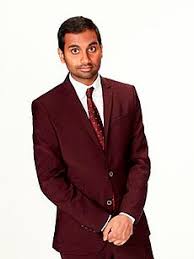
On the TV show Parks & Recreation Aziz Asnari’s character, Darwish Ghani, changes his name to Tom Haverford. The joke is that as a brown-skinned man he can change his name all he wants, but he’ll always be Darwish Ghani to the fair citizens of Indiana.

I thought of this while after I listened to Mindy Kaling on Fresh Air talking about her new show, Never Have I Ever, and a scene where aunties are ostracizing a woman who had married a Muslim. Kaling mentions offhand that the “racism” against Muslims is something that she remembers from her childhood. She uses the word racism, rather than prejudice, because for the predominantly white liberal/progressive listeners of NPR Muslims are a “race” after a fashion.

But if Darwish Ghani changed his name to Vikram Chokalingam, he would be able to “pass.”

Kaling’s peculiar interpolation of the Western view of Islam, as a “nonwhite religion,” has resonances in the Indian subcontinent with some Hindu nationalists, who view Muslims as an alien race, the scions of foreigners, and some Muslims, who proclaim their Arab, Iranian or Turkic antecedents. All the while, genetics and the plain evidence of our faces makes it clear we are basically all the same “race” (i.e., Punjabi Hindus and Punjabi Muslims aren’t really different except a tiny bit on the margins*).

* Muslims are more likely to have a bit of ‘exotic’ ancestry.

Browncast Episode 96: From Vietnam with Phở

Another BP Podcast is up. You can listen on LibsynAppleSpotify,  and Stitcher (and a variety of other platforms). Probably the easiest way to keep up the podcast since we don’t have a regular schedule is to subscribe to one of the links above!

You can also support the podcast as a patron. The primary benefit now is that you get the podcasts considerably earlier than everyone else. This website isn’t about shaking the cup, but I have noticed that the number of patrons plateaued a long time ago.

I would though appreciate more positive reviews! Alton Brown’s “Browncast” has 30 reviews on Stitcher alone! Help make us the biggest browncast! At least at some point

This episode is a discussion Jasper Gregory, an expat living in Danang. Having basically “beaten” Covid-19, is coming out of “lockdown.” We talk about how this happened, and what “normalcy” looks like.

Jasper and I also discuss the geopolitics, religion, and popular culture of Vietnam and Southeast Asia. Also, does he prefer northern or southern phở?

Brown Pundits