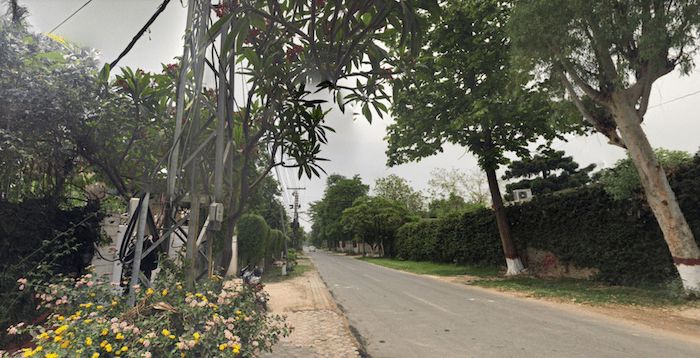
My Urdu teacher said something that lodged itself in my brain. India is vastly richer than Pakistan; and yet Pakistan’s Punjab, in his experience, feels cleaner. More ordered. Less like South Asia. I pushed back. Then I stopped.
The Numbers
In 2024, India’s GDP per capita was $2,695 against Pakistan’s $1,479; roughly 1.8 times higher on a nominal basis, and India’s total economy at $3.9 trillion is approximately ten times Pakistan’s $372 billion. Until 2008, Pakistan was actually richer per person; India led that measure for only 14 of the 60 years after independence. The divergence is real but recent and accelerating.
The sanitation data cuts against the perception: 81% of Indians have access to basic sanitation versus 72% of Pakistanis (WHO/UNICEF, 2024). On paper, India leads. So the paradox isn’t statistical. It is visual. The question isn’t who has more toilets. It is why certain Pakistani streets feel more governed.
Before anything about this blog, its standards, or its arguments, I want to begin with a story; because sometimes a single human life cuts through every debate and reminds us what any of this is actually for.
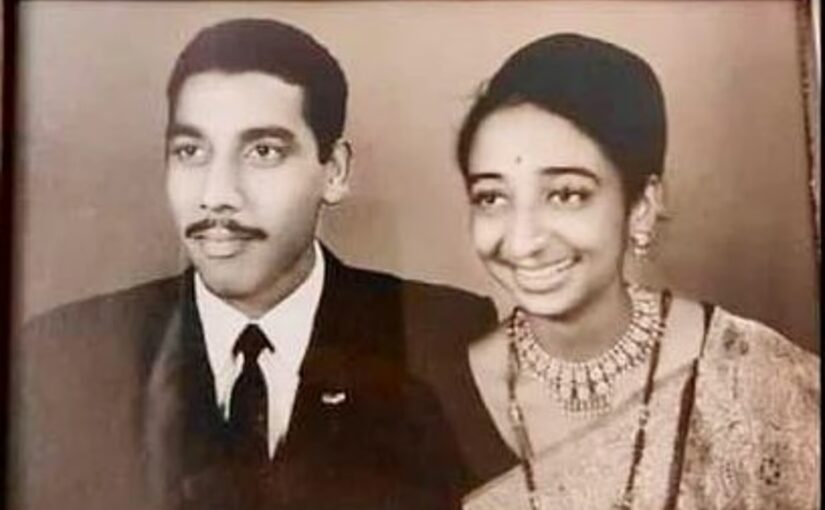
Damayanti Tambay was 21 years old, a three-time national badminton champion, when she married Flight Lieutenant Vijay Tambay in April 1970. Twenty months later, war broke out. On 3 December 1971, they drove together to a garage in Ambala cantonment to park their bottle-green Fiat. That was the last time she saw him.
On 5 December, flying a strike mission over Shorkot Airbase in West Pakistan, Vijay was hit by anti-aircraft fire and ejected. Radio Pakistan later broadcast his name among those captured. Damayanti heard it alone. She felt relief. A prisoner of war comes home eventually, she thought.
RecoveringNewsJunkie · February 20, 2026 · 9 comments
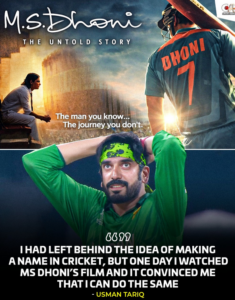
Usman Tariq Image from CricTracker
The last few days have really been dominated by a cacophony of ….tu, tu, mai, mai in the BP comment threads with competitive “patriotism” flying thick and fast. Amidst all the noise generated by …certain hostility focused agendas, its easy to lose sight of the fact that for all the problems and challenges faced by the 2 nation-states, the people that inhabit the subcontinent, still continue to have a bunch of things in common.
So allow me this …palette cleanser of a post. The ICC T20 Cricket World Cup is in progress, and the teams of both India and Pakistan have managed to qualify for the “Super 8” stage. Usman Tariq, is a rising star who has recently joined the Pakistani team, as a bowler who serves up ‘mystery spin’ from a unique bowling action, enabled slightly in part due to an anatomically exceptional elbow which has elicited some allegations of chucking (throwing). He has undergone test and has been cleared of this allegations already.
What I found notable about Usman, apart from his repertoire of unique googlies and arm angles, is him sharing the fact that watching an Indian movie inspired him to pursue his dream – a career in cricket. M.S. Dhoni a former India captain, had a biopic made about him a few years ago, which was a massive hit in India and beyond. Usman, as we know, is hardly an exception when it comes to Pakistanis consuming Indian content including movies. Pakistanis, in some ways, are arguably even more ardent consumers and fans of ‘Bollywood’ than Indians. As an Indian listener to Pakistani podcasts, you can’t help but notice how movie and song quotes from Indian films and pop culture, are seamlessly used by Pakistanis as metaphors to describe situations. Even more so than is common for Indians to do so.
On the flip side, Indians are enthusiastic consumers of Pakistani music – the popularity and opinions on the ‘quality’ of Pakistani Coke Studio abound, so does a sizeable number of fans for Pakistani soap operas.
The point is, as much as the interactions of India and Pakistan is dominated by the disproportionate shadow cast by the history of conflict between the two states, and especially the untenable history of PakMil sponsored multi-decade history of terrorism and “non-state actor” violence, we still see a common culture interwoven through the day-to-day existence of the …awaam
“No one wants a strong India. But PM Modi opened doors. He strengthened the military, advanced the economy, maintained balanced relations with the West, Russia, and China. That is serious statecraft” –Aleksandar Vučić, President of Serbia
India is richer
Strip away the noise and a simple asymmetry remains. India will almost certainly remain richer than Pakistan for the foreseeable future. The gap in GDP, fiscal depth, technology, and demographic scale is widening, not narrowing. On material indicators, India has the advantage. Yet material advantage does not always translate into strategic dominance.
India is louder
India is a mass democracy. It is electorally accountable, media-saturated, and sensitive to public opinion. Governments must justify escalation. Markets react to instability. Voters punish miscalculation. This imposes restraint.
Pakistan is tighter
Pakistan is structured differently. Power is narrower. Decision-making is concentrated within a smaller elite, with the military as the central institution. That creates rigidity in some domains but flexibility in others. Strategic continuity does not reset every five years. Public opinion matters, but it does not directly determine policy in the same way it does across the border.
Structural Differences
This structural difference shapes behaviour. India must think about global markets, coalition politics, and reputational cost. Pakistan can absorb economic stress more easily because its political system is already insulated from full electoral volatility. That insulation produces durability, even under strain.
Last week, there was a lot of discussion about Basant and its place in Pakistani culture. In that context, I’m sharing this essay I wrote while I was preparing for my panel at the Faiz festival last weekend. The panel was entitled “Faiz and the Cultural Policy of Pakistan”. My co-panelists were Asad Gilani— presently serving as Secretary National Heritage and Culture Division– and Mahtab Akbar Rashdi-– a former actress, bureaucrat, and parliamentarian.
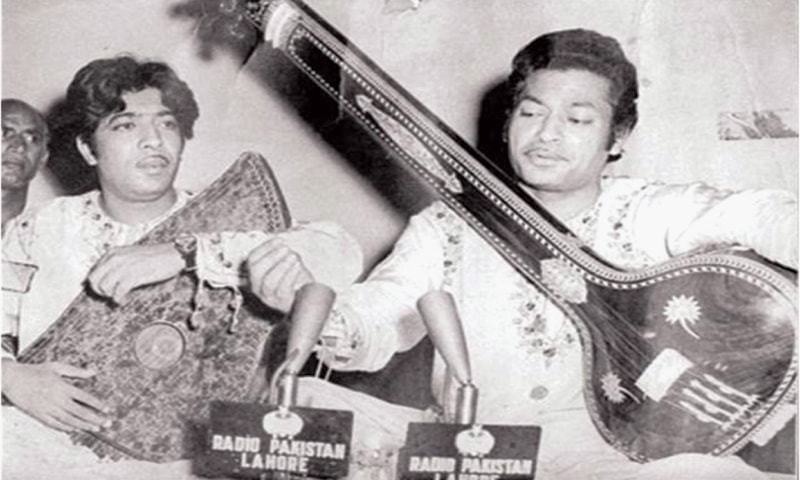
I spoke at the 10th Faiz Festival held in Lahore last weekend (February 14-15) as part of a panel titled “Faiz and the Cultural Policy of Pakistan”. I was invited to be a part of this panel primarily because of my book A New Explanation for the Decline of Hindustani Music in Pakistan (Aks Publications 2024).1 Though my book–a republication of my M.Mus thesis in Ethnomusicology– focuses narrowly on Hindustani music, I did discuss the Faiz Cultural Report of 1968, particularly in the context of arguments that Hindustani music declined in Pakistan because it did not accord with the national identity of the newly formed Pakistani state.
I thought I’d briefly share some of my thoughts here since others might find them interesting.
I would like Pakistan to be a secular democracy and give up its ambitions on Kashmir. Badshah
Similarly the core Hindu-Dharmic civilizational nature of India, that is Bharat, is for Indians to decide. Outsiders demanding secularism often mistake their own preferences for universal law.
Meanwhile, Pakistan’s average number of children per woman has dropped sharply from 3.61 in 2023 to 3.19 in 2024, reflecting shifting fertility patterns. By comparison, India’s rate declined more modestly from 2.14 to 2.12.
Those are not marginal adjustments. That is acceleration. For decades, Pakistan was treated as a demographic outlier. India fell below replacement. Bangladesh stabilised. Iran collapsed to European levels. Turkey dropped. The Gulf states hollowed out. Pakistan remained “young.” That youth dividend now looks fragile.
Economic Pressures
The fertility transition is no longer creeping. It is sprinting. The familiar explanation is economic pressure. Urban housing costs more. Education lasts longer. Children are expensive. Women delay marriage. This is all true but incomplete. The deeper shift is cultural. Modernity changes how individuals see time.
Rural Norms
In agrarian societies, children are labour, security, and continuity. In urban societies, children are choice. Once children become a choice rather than a necessity, fertility becomes elastic. It bends downward.
Everyone; please do not violate our rules egregiously. If moderation collapses, I will stop doing it. And if that happens, the comment boards will descend into noise very quickly. That helps no one.
The comments are growing again after a lull, which is a good sign. But it also puts real strain on time. I would rather focus on writing and commissioning strong posts than constantly firefighting threads. If you value the quality of this space, help maintain it.
If anyone would like to volunteer as a balanced and fair moderator, step forward. Not a partisan enforcer. Not a factional referee. Someone steady. I have given BB authorship privileges because Kabir, while diligent, is beginning to police too aggressively, and BB, when restrained, can bring levity without venom. That balance matters.
On a separate note, a thought. Bharat, that is, India in her most sublime and civilizational sense, possesses something like sacred geography. Rivers, mountains, pilgrimage circuits. The land itself carries immense metaphysical weight as both the home and centre of Dharma.
Pakistan, by contrast, was founded less on geography than on mission. It has an animating purpose, often framed as unifying or protecting the Ummah, but that is not the same thing as sacred land. One is spatial and civilizational; the other is ideological and directional. They are not equivalents, and confusion between them produces bad arguments.
Keep the debates sharp. Keep them serious. But keep them civil. If moderation fails, everyone loses.
The email is dated 1 May 2013. Jeffrey Epstein writes that he has “finally left Peshawar,” describes the city as under bombing turbulence ahead of elections, and details meetings with tribal representatives, provincial health officials, and federal authorities. He claims to have spoken, via a fixer, to a “senior Taliban guy” about polio vaccination resistance. He references funding from the UAE government and suggests granular political intelligence was obtained.
This is not gossip. It is a field report. In 2013, Peshawar and the Federally Administered Tribal Areas were among the most volatile zones in the world. Polio workers were being assassinated. After the CIA’s fake vaccination campaign during the Bin Laden operation, vaccination drives had become politically radioactive. Negotiating access required tribal intermediaries, security assurances, and tacit accommodation with insurgent actors.
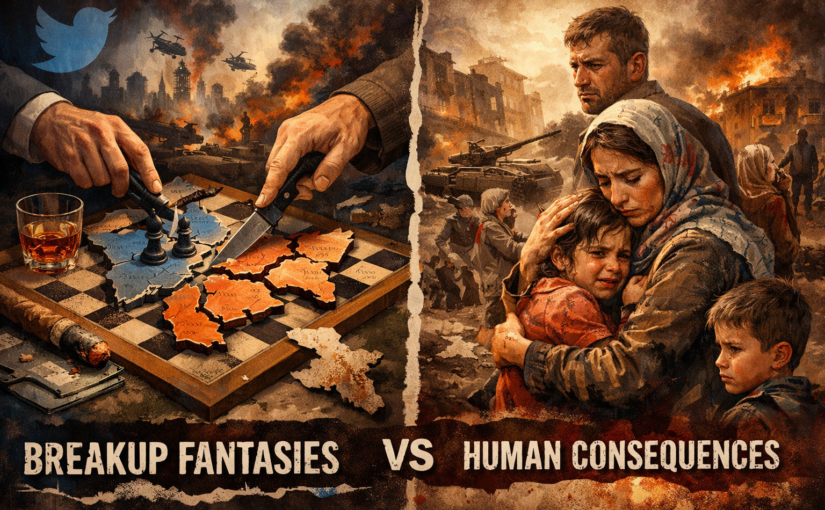
Following my conversation with Kabir; I mulled on the difference between criticising a state and fantasising about its dismemberment.
What should be the type of Critique?
Criticising a political party, a military institution, or a government’s failures is normal. It is necessary. Democracies depend on it. Even flawed democracies depend on it. Pakistan’s military can be criticised. India’s ruling party can be criticised. Iran’s clerical establishment can be criticised. No state is beyond scrutiny. But imagining the territorial breakup of a country, and doing so with visible satisfaction, is something else entirely.
Sacred States?
States are not debating societies. They are containers of memory, trauma, and blood. They are “almost” sacred spaces. For Pakistanis, 1971 is not an abstract lesson in federalism. It is a civilisational rupture. It was war, humiliation, loss of half the country, and a wound that still shapes the national psyche. For Indians, similar fantasies about Tamil Nadu, Punjab, or Kashmir breaking away would be equally triggering. Every nation has red lines embedded in its historical trauma.