Review: In the City of Gold and Silver by Kenize Mourad

In the spirit of discussing Indian history, I am sharing this book review of a fictionalized biography of Begum Hazrat Mahal.  The author, Kenize Mourad, comes from a fascinating background. Her mother, Selma Hanimsultan, was the granddaughter of Murad V, Sultan of the Ottoman Empire. Her father was Syed Sajid Hussain Ali, the Raja of Kotwara. 

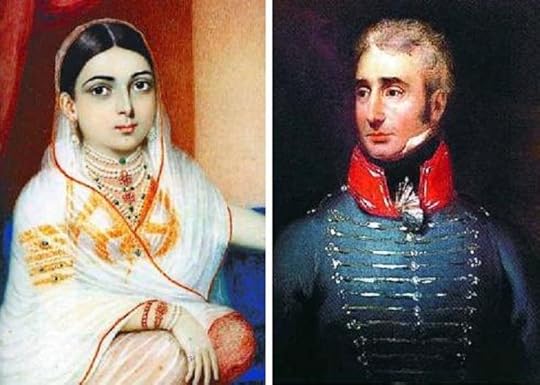
Kenizé Mourad’s In the City of Gold And Silver is a fictionalized biography of Begum Hazrat Mahal (c.1820-1879), one of the wives of Nawab Wajid Ali Shah (1822-1887), the last ruler of Awadh –one of the major North Indian princely states. After the British deposed Wajid Ali Shah and annexed the state, Hazrat Mahal became one of the major leaders of the Revolt of 1857 . She had her eleven-year-old son, Birjis Qadir, crowned king and took on the role of regent (who would rule until the sovereign attained the age of majority). Although the rebellion was ultimately defeated and Hazrat Mahal died a prisoner in Nepal, she is remembered today as a major figure in Indian nationalist history.

Mourad’s novel does an excellent job at evoking the atmosphere of Awadh during 1856-1858: the crucial period in which the state was annexed and the rebellion occurred. As the novel begins, the ladies of the court are staging a play satirizing the British. The narrative then flashes back to Hazrat Mahal’s childhood as an orphan and details how she was trained as a courtesan and then became part of the Nawab’s harem. However, the bulk of the book takes place during the Rebellion and describes the various battles fought with the British. The Nawab himself is a minor character since he had been exiled from Awadh and spent most of this period imprisoned in Fort William in Calcutta. While it is not a major part of this novel, Wajid Ali Shah is an enormously important figure in the development of Hindustani Classical Music, particularly in the genres of thumri and kathak. In fact, his devotion to music was one of the justifications that the British gave for annexing Awadh, deeming him unfit to rule. Continue reading Review: In the City of Gold and Silver by Kenize Mourad
Arab Fathers are not fabrications (entirely)

“Bad Gays: Qutbuddin Mubarak Shah” (Kabir’s Open Thread)

This is not exactly current events but in the spirit of discussing Indian History:

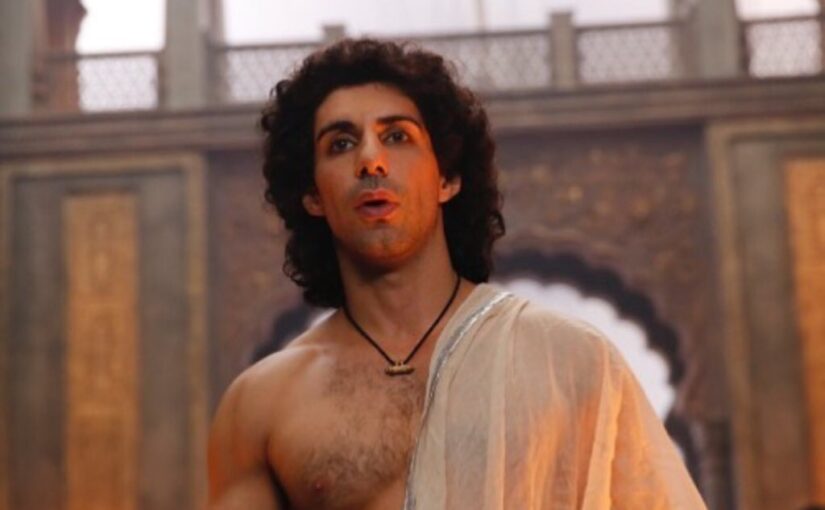
The podcast “Bad Gays” which defines itself as a “podcast about evil and complicated queers in history” did an episode a while back about Qutbuddin Mubarak Shah, who was the son of Alauddin Khalji (of “Padmavat” fame).  IIRC, this was the only time the podcast has featured a South Asian figure.

They also have a book called Bad Gays: A Homosexual History (Verso 2022).

On Qutbuddin Mubarak Shah, they write: Continue reading “Bad Gays: Qutbuddin Mubarak Shah” (Kabir’s Open Thread)

A secular state does not allow a minority place of worship to be destroyed

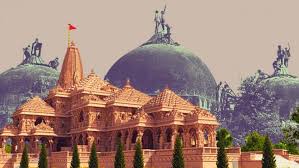
In the last few days, there has been a lot of discussion of the destruction of the Babri Masjid.   Predictably, the “Saffroniate” has argued that while the mob destruction of the mosque was wrong, the decision to build a Ram Temple on the site of the mosque is justified.

This post will serve as a brief rebuttal to this argument.  India is a constitutionally secular state. In a constitutionally secular state, there is absolutely no excuse for destroying a minority place of worship–no matter what the circumstances.  This is a red line that must never be crossed.  While Babri may not be equivalent to Notre Dame–I am personally agnostic about this argument– there is no excuse for even one mosque to be destroyed in a secular state.  The decision to build a Ram Temple where the mosque used to be is a post-facto justification of the mob destruction of the minority place of worship.

The argument has been made that India instituted a new piece of legislation–the Places of Worship Act– in order to make sure that such an incident doesn’t take place again.  The question was asked if Pakistan has instituted similar legislation. Continue reading A secular state does not allow a minority place of worship to be destroyed

India is the successor state of the Mughal Empire (and the various Sultanates)

A precedent post on who is the successor state of the Mughal Empire (as specified by X.T.M in a comment)

There has been a lot of back-and-forth in the comments section about who gets to “claim” the Mughals.

The Republic of India is the successor state of the Mughal Empire as I explain below.

Note: When I use India below I mean the current day Republic of India, not the region of “India” which also encompasses some territories of the modern day states of Bangladesh and Pakistan

The Land

The Republic of India encompasses around 70 percent of the Mughal Empire at its greatest extent.

Again, possession of majority of the land is not a necessary condition. The UK is the successor state of the British Empire, Turkey is the successor state of the Ottoman Empire and so on. But having possession of the majority of the land makes the case stronger.

The reason that the UK, Turkey, France etc are the successor states of various empires is because they house the “core” – the capital, the ruling elite, the major monuments etc.

The Capital

The Mughal Empire lasted for around 300 odd years. 

It’s capitals were:
Agra for 61 years
Delhi for 228 years
Fatehpur Sikri for 14 years
Lahore for 12 years

The first and last capitals were in India and for 96% of the existence of the empire, the capital was in India.

These capitals still exist in India and are UNESCO World Heritage Sites as well as Monument of National Importance by the Archaeological Survey of India.

The last capital is still used by India in official functions but more on that below.

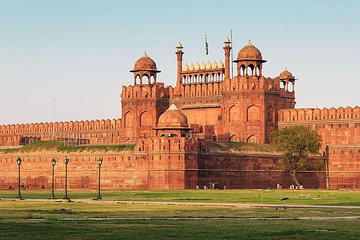
Agra Fort, Agra

Continue reading India is the successor state of the Mughal Empire (and the various Sultanates)

Pakistani Diversity

Q’s comment, on Kabir’s excellent post, deserves to be reproduced in full.

Several points are wrong here:

I have never actually met a Pakistani who thinks they are Arab or Turk ethnically. Claiming lineage is not ethnicity, not even the Syeds identify with Arabs although they will try to flex their Syed status occassionally. Many Syeds in the family, never heard anyone claim they were ethnically Arab.

Ergutral did not make people in Pakistan think they were Turks, what they identified with was the Islamic history and mannerisms being portrayed. A pasthun guy told me that it portrayed ‘our history’ and while I completely understdood the ‘our’ part because he was using it in an Islamic context (because he is a proud Pasthun, not Arab or Turk), but I did correct him that it was mostly fiction. Continue reading Pakistani Diversity

Some Thoughts on Pakistani Culture

Since XTM’s latest post discusses Pakistani culture, I am excerpting from one of my articles “Some Thoughts on Pakistani Culture”.  You can read the complete essay on my Substack

One of the dominant explanations for the decline of Hindustani music in Pakistan is that these musical genres were not compatible with Pakistan’s national identity. The 1947 Partition of British India was largely justified by the “Two Nation Theory”–the idea that the Muslims of British India were a different “nation” from the Hindus and were therefore entitled to their own state. It is argued that while the proponents of this view succeeded in achieving a sovereign Pakistan, they struggled to define a new cultural identity not shared with India. Since it was a part of the syncretic Indo-Islamic culture, classical music became entangled in this struggle to separate Pakistan’s culture from India’s.

In actual fact, there was no concerted action on the part of the state to define a national identity. Rather, many opinions were in circulation in which the xenophobic ones were not met with sufficient resistance. It is ironic that the one committee founded in 1968 to frame a national policy on art and culture, under the leadership of Faiz Ahmed Faiz, came to a conclusion contradicting the narrow-minded national identity viewpoint. In the report, Faiz responded to the contention that Muslim or Islamic ideologies were the rightful frame for defining Pakistani culture. He noted that this position “ignores the reality of the non-ideological components of culture, e.g. language, dress, cuisine, architecture, arts and crafts, non-religious customs and social observances, etc. These are mundane products of historical origin and geographical environment and cannot be dubbed Islamic or un-Islamic”. He noted that what differentiates one Islamic state from another is their nationhood or culture. Faiz concluded quite categorically that “There is little justification, therefore, for any ambivalent or apologetic attitude either towards Pakistan (sic) nationhood or towards Pakistani culture” (Salim and Ishfaq 2013: 50).

When I say that Pakistan is a South Asian country and that our culture is South Asian, I am referring to what Faiz called the “non-ideological” components of culture (language, food, dress, art etc).

I disagree with XTM that Pakistan should have opted to claim a Persianiate identity.  I think most Pakistanis would have found Persian even more foreign than they find Urdu.  I myself attempted to learn Persian at the Middle East Institute in Washington, DC.  I took the course for two semesters and while I did fine, it wasn’t a language that I particularly related to.

Where I differ from some of the “Saffroniate” commenters on BP is that I don’t think that the fact that Pakistan shares a lot of cultural elements with North India necessarily de-legitimizes the Pakistani nation-state.  It is just a fact that historically what is now Pakistan has been ruled from Delhi-based empires.


You Cannot Demolish His Mosque and Claim His High Culture

A precedent post on hybridity, custodial duty, and the elites who want it both ways

The argument running through the recent threads is sharper than the usual India versus Pakistan braggadocio. It is a claim about high culture itself. A civilisation cannot demolish a man’s mosque and claim his high culture in the same breath. The two moves cancel. The elites on both sides of the 1947 line have been performing both moves for eighty years, and the contradiction is now visible.

What high culture is

High culture is the foundational settlement of values, ordinarily anchored in religion, that a civilisation runs on. It can be syncretic in formation. Plural ownership is harder to sustain, and most attempts eventually close into a single settlement or fracture into rival ones; some imperial frames (Ottoman, Mughal, the Republic of India itself) did hold the tension for longer than the simple model would predict. The point is not that plurality is impossible. The point is that plurality is unstable, and the instability is what generates events like 1992.

England is the cleanest worked example of closure. The English high culture is a hybridisation of Anglo-Saxon, Anglo-Norman, and an absorbed Celtic remainder. Scotland and Wales sit inside the matrix without breaking it. The hybridisation closed; one settlement emerged.

Ireland is the test case in the negative. The same Anglophone substrate produced a different high culture in the Catholic south, and in the Catholic pockets of the north, because religion did the foundational work and religion would not blend. Two islands, one language family, two high cultures. Language is the medium. Religion is the substrate.

Ludwig von Mises, in Nation, State, and Economy, argued the related half. The nation is a speech community, but the speech community is shaped by what the school teaches and what the church says. Plattdeutsch villages on the Dutch border could have gone either way two centuries ago; the descendants would now be just as good Hollanders or just as good Germans, depending only on where the school and the church sat. Language carries national consciousness. The religious settlement decides which language wins.

Notre Dame: The custodial bargain Continue reading You Cannot Demolish His Mosque and Claim His High Culture

Bhatkhande: The Contradiction of Music’s Modernity

As a follow up to my piece “A Brief History of Hindustani Music”,  I’m sharing this essay on Pandit Bhatkhande.  

Also see my review of Max Katz’s Lineage of Loss: Counternarratives of North Indian Music (Wesleyan University Press, 2017). 

In her book Two Men and Music: Nationalism and the Making of an Indian Classical Tradition (Oxford University Press 2005), Professor Janaki Bakhle extensively discusses Vishnu Narayan Bhatkhande (1860-1936), a musicologist largely responsible for the standardization of Hindustani Classical Music. Bakhle describes Pandit Bhatkhande as “one of Indian music’s most contentious, arrogant, polemical, contradictory, troubled and troubling characters. It may be better to view him not as a charlatan or a savior, but as a tragic figure, one who was his own worst enemy. All through his writings, there is ample evidence of elitism, prejudice, and borderline misogyny” (99). She goes on to note the irony that though Bhatkhande is revered as a great figure in Hindustani music, his vision for the art form is not being followed today. For example, Bhatkhande wanted to create a national tradition for Indian music, not necessarily a Hindu tradition. Yet today, much of Hindustani Classical music is “suffused with sacrality” (99). Bakhle describes how at a recent musical gathering in Bombay, Bhatkhande’s portrait was adorned by a marigold garland with a silver incense stand placed in front of it. She asks the crucial question: “How did it happen that a vision that began with scholastics, debate, and secularism culminated in garlands and incense?” (100).

Vishnu Narayan Bhatkhande was born on August 10, 1860, into a Brahmin family in Bombay. Although neither of his parents was a professional musician, he and his siblings were taught music. This was not unusual in a family of his class background. At age 15, Bhatkhande began receiving instruction in sitar and studying Sanskrit texts on music theory, a field of inquiry that would remain his obsession throughout his life. In 1884, he joined the Gayan Uttejak Mandali, the music appreciation society, which exposed him to a rapidly expanding world of music performance and pedagogy. He studied with musicians such as Shri Raojibua Belbagkar and Ustad Ali Husain, learning a huge number of compositions, both khayal and dhrupad (100-101).

In 1887, Bhatkhande received his LLB from Bombay University and began a brief career as a criminal lawyer. After the death of his wife in 1900 and of his daughter in 1903, he abandoned this career to turn his full attention to music. The first thing he did was to embark on a series of musical research tours, the first of which was conducted in 1896. He traveled with a series of questions. His major project was to search out and then write a “connected history” of music and it began with these tours, which he believed would give him some clues to help recover some missing links. He was less interested in the actual performance of music than in the theory that underpinned the education of the musician. He kept several diaries of his tours, which served not only as an account of his travels but also as blueprints for his future writings. Bakhle notes that he “did not interview the people he met so much as he interrogated them, seeking out what he judged to be their ignorance. In all these encounters Bhatkhande met only men. He had little regard for women musicians and did not believe he could learn anything from them” (103). Continue reading Bhatkhande: The Contradiction of Music’s Modernity

Brown Pundits