
Do your thing.
A minor note: like a frog being boiled, I’ve unconsciously been increasing the threshold of moderation on a lot of these posts. This applies to my posts in particular, as I’m more ‘liberal’ on other threads and let them rip.
Do your thing.
A minor note: like a frog being boiled, I’ve unconsciously been increasing the threshold of moderation on a lot of these posts. This applies to my posts in particular, as I’m more ‘liberal’ on other threads and let them rip.
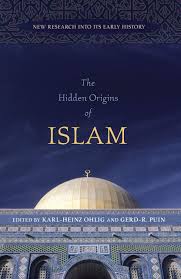 Since many readers of this weblog have rather naive views of Islam and its interaction with the Indian subcontinent, I thought they might appreciate my post on my other weblog, The Myth Of Arabian Paganism, And The Jewish-Christian Origins Of The Umayyads.
It wasn’t emphasized in the piece, but I will make it clear here: the development of Sunni Islam as we understand it was strongly conditioned on the cultural influences from the matrix of Iranian-Indian religious and social thought which matured in Turan. In fact, one of the early Abbasids, the son of an Iranian mother, even considered moving the capital of the Caliphate to Central Asia, in particular, the city of Merv.
The aspects of Islamic thought most clearly a product of this period and place? I believe that this is the hadith culture embedded within the institutions of the madrassa. Many argue the madrassa is a modification of the Central Asia vihara, and the analysis of proper practice due to religious law was a major function of the religious within these viharas.
Some snippets on Economy, Population. The seeds for the darkest years of our history were being laid. China was lending a helping hand, and India was backstabbing Sri Lanka by training the LTTE.
Sri Lankas population was approx 7 million in 1948
By 1971 had increased 12 million (70% increase)
Until 1967 or so high rubber prices, were able to sustain a welfare system. Free rice etc. Development of better synthetic rubber, dropped natural rubber price.
Sri Lanka economy crashed and unlike now, no one was willing to lend.
A large part of food, including rice was imported. Gal-Oya type scheme (Large dam/Irrigation system, see here for more descriptive) etc was not sufficient for a population that was increasing by the day. There wasnt enough land to go around for the large population increase.
The first big sign of the crisis caused by the population and an economy unable to keep pace was the 71 insurrection by Sinhalese mainly southern rural youth. Once the insurrection was suppressed, Land Reform was put into place and imposed a ceiling of twenty hectares (50 acres) on privately owned land and sought to distribute lands in excess of the ceiling for the benefit of landless peasants.
No foreign exchange, we had to engage in barter, eg the Rubber Rice pact with China. Then as usual the Americans twisted our balls. Their surplus wheat that had gone mouldy was given under PL480. It was not free, SL had to pay for it.
So, we had to learn from scratch, without much capital to be self sufficient.
The economy of Jaffna and the Vanni boomed. Much of the veggies, chillies came from there.
Then in 1977 JR Jayawardene opened up the economy. The farming economy and local industry, collapsed specially in the North. !977 riots, burning of the Jaffna library helped us well on the way to self destruction.
Well worth reading
Prime Minister, Dudley Senanayake, however, fully backed his Minister of Commerce and was prepared to pay this price; he realized that the benefits to Sri Lanka from the agreement far outweighed losses consequent to the cutting-off of American aid. He argued:
“Ceylon’s oil trade pattern has been knocked out by changes in the world market and we have to seek new markets for our needs of essential foodstuffs and for our exports”
R. G. Senanayake: “We noted on the Chinese side the absence of the spirit of bargaining and haggling on comparatively small points. On the other hand, they gave us the impression of being large minded and forthright in their dealings”
Do your thing.
In Cixin Liu’s sci-fi trilogy (The Three Body Problem), humanity is under attack by a more advanced alien civilization. The aliens have sent sophons (modified photons) that can read/see/hear everything that is outside our heads, but they cannot read minds (apparently the Trisolarians have not solved the mind-body problem either), so the UN selects some people to be “wallfacers”; selected humans who are given free rein to develop a strategy to stop the aliens; they keep their strategy hidden inside their own minds, while using whatever resources humanity can put in their hands. In some sense, charismatic leaders are a bit like wallfacers; we trust their leadership without necessarily knowing what goes on in their head. As the Covid-19 pandemic continues to rage, we have the organized (relatively transparent) commissions and committees of the world hard at work, trying to figure out the best possible strategy. But much is unknown about the pandemic and how it will play out, especially in economic and political domains; in such times, leadership matters more because sane people disagree and no algorithm can decide who is right. The leader really has to lead, to make difficult decisions, to take original initiatives, to look for fresh answers. So who, out of the current crop of world leaders, is likely to do something above (or well below) “normal” handling?
What else? who is your wallfacer? and why? (I clearly know nothing about the leaders of South Korea, Taiwan or Japan.. feel free to tell us more about them in the comments section)
Just to be clear, I am not talking about “routine” response to the pandemic. That is important and it follows protocols and plans developed by bureaucrats and public health professionals, for better AND for worse. The thought here was that there may be an opportunity here for some nation to go beyond that level (or to significantly sink below it). IF that happens, who is likely to outperform the herd, who is likely to underperform? (e.g. I am guessing that Trump will under-perform, by American standards). For the purposes of this post, I am thinking more about the economic and political consequences, not so much the caseload and death rate.
Trump seems to suggest this as a possible coronavirus treatment: “And then I see the disinfectant, where knocks it out in a minute. One minute. And is there a way we can do something like that, by injection inside or almost a cleaning … It’ll be interesting to check that.”
— Kyle Griffin (@kylegriffin1) April 23, 2020
 Another BP Podcast is up. You can listen on Libsyn, Apple, Spotify, and Stitcher (and a variety of other platforms). Probably the easiest way to keep up the podcast since we don’t have a regular schedule is to subscribe to one of the links above!
You can also support the podcast as a patron. The primary benefit now is that you get the podcasts considerably earlier than everyone else. This website isn’t about shaking the cup, but I have noticed that the number of patrons plateaued a long time ago.
I would though appreciate more positive reviews! Alton Brown’s “Browncast” has 30 reviews on Stitcher alone! Help make us the biggest browncast! At least at some point
This episode is a discussion with a person who was a participant in the Stanford serological study. Basically he talks about the selection bias in the study sample, and the wrong inferences we can make from that.
This comment reflects in many ways important elements about how and why the Chinese view the Indians as they do:
… your question has answers in two periods. The second and most recent was during the cold war, shaped by Chinese elite (diplomatic) interaction with their Indian counterparts during this period who came to see Indians as unserious prevaricators. Big talkers and little doers, whether or not you agree with this assumption, it is what drives Chinese elite opinion today.
The first and older break was an earlier schism in worldview at the dawn of the 20th century when Chinese elites chose to take the path of Darwinian materialism towards national salvation. This meant radical politics and a restructuring of Chinese society towards any ends at any cost as long as it meant material prosperity and power. This left China lurching between fascism and communism. At the same time they came to view simultaneous Indian political trends, another vast nation under Western power, as being embodied by Tagore and Gandhi. That is focused towards traditionalism and eastern metaphysics as a path to revival. This is again may or may not be true but it became the default opinion. This was actually shared by elements of the Chinese elites as well, though the losing faction. The winners of the debate viewed such a policy as childish escapism verging on nihilistic passivity in the face of real threats and India, as the eidolon of such defeated views became tarred by association.
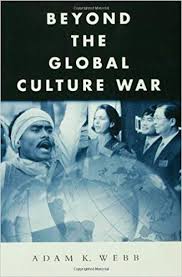 As I have noted before, Adam K. Webb’s Beyond the Global Culture War highlights attempts by early 20th century Asian traditionalists to coordinate. Some of the same characters appear in Mark Sedgwick’s Against the Modern World: Traditionalism and the Secret Intellectual History of the Twentieth Century. For all the influence of Fabian socialism on Nehru and the early leaders of India, nothing on the scale of what happened in China to the traditional society occurred in India.
But today as many Chinese transition to post-materialism they are looking back to their own past. This is natural. But the past destroyed is not so easy to access and rebuild.
Addendum: Chinese liberals and progressives of the early 20th century adopted and modified racial theory from Europeans.
Do your thing.
Update: I forgot I had an open thread in queue. So that’s why it’s redundant. At least you have two places to bicker over Hindu/Muslim-India/Pakistan-Cow dung/Camel Urine
Talk about what you want to talk about.
How is everyone holding up in lockdown?
Another BP Podcast is up. You can listen on Libsyn, Apple, Spotify, and Stitcher (and a variety of other platforms). Probably the easiest way to keep up the podcast since we don’t have a regular schedule is to subscribe to one of the links above!
You can also support the podcast as a patron. The primary benefit now is that you get the podcasts considerably earlier than everyone else. This website isn’t about shaking the cup, but I have noticed that the number of patrons plateaued a long time ago.
I would though appreciate more positive reviews! Alton Brown’s “Browncast” has 30 reviews on Stitcher alone! Help make us the biggest browncast! At least at some point.
 Readers might want to know that last month was our biggest month in terms of traffic in the last year and a half of the Brown Pundits Browncast. This is probably due to the copious number of podcasts.
If you skip a week, make sure to check the backlog, because some weeks we post three podcasts!
This episode is a discussion with Camilo Gomez, a Left-libertarian intellectual and activist based out of Lima. We discussed:
– Covid-19 in Ecuador
– Racial dynamics in Peru
– The influence of Chinese in Peru
– What’s going on with Bolsonaro in Brazil?
– The long-term prospects of libertarianism in Latin America