Five billionaires have as much wealth as half of humanity ~ Vandana Shiva
Prime Minister of Uzbekistan, Singing Raj Kapoor’s Song.
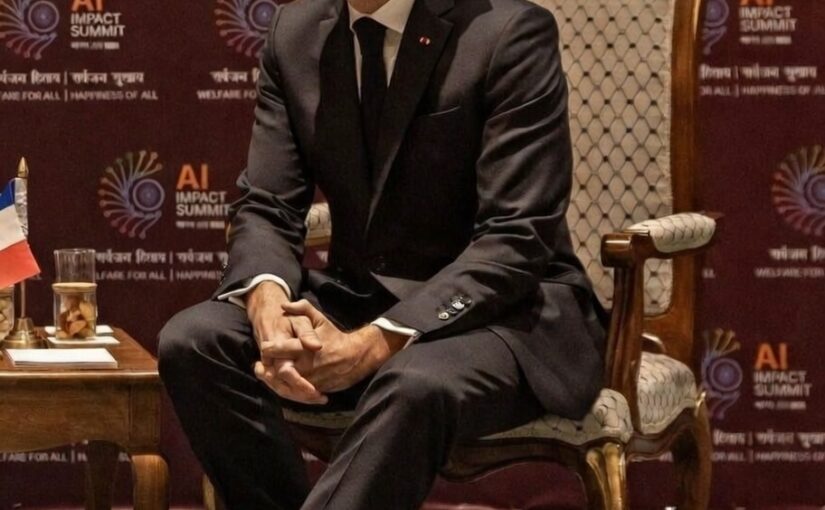
Seems LV also stole its TM design from India. Continue reading Open Thread: Bharat overawes France
Five billionaires have as much wealth as half of humanity ~ Vandana Shiva
Prime Minister of Uzbekistan, Singing Raj Kapoor’s Song.
Seems LV also stole its TM design from India. Continue reading Open Thread: Bharat overawes France
Imran Khan’s sons speak out: “Our father’s prison conditions aren’t bad, they’re awful.” Whatever one thinks of Pakistani politics, the treatment of a former prime minister is a measure of a state’s institutional health.
Is the Paknationalism or Indophilia; the strange twist of Pakistan is that both can be true at the same time.
It was my birthday two days ago on the 15th. The official celebration will be later this month in Sri Lanka, but the last few weeks have been unusually hectic with travel and work. Continue reading Open Thread (Birthday)
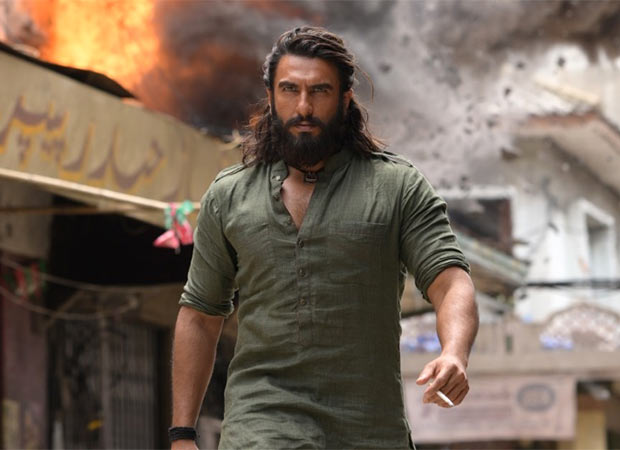
We watched Dhurandhar last night at Apple Cinemas (the last time we went to see Ishaan Khatter’s Homebound). It is the best mass-market Bollywood film I’ve seen since Animal, and far more immersive. What struck me most was not the action, nor the plot, but Bollywood’s new formula: a full-scale fetishisation of Pakistan.
Kabir keeps claiming that Bollywood casts Pakistanis as villains. This misses the point. The villain is always the sexiest figure in any film. Bollywood has finally realised this. Raazi hinted at it. Animal stumbled on it with Bobby Deol’s star stealing turn. Dhurandhar perfects it.
For the first time, Hindu actors are not performing cartoon versions of Pakistan. They are cosplaying Pakistanis with forensic precision; the clothes, the diction, the swagger, the social codes. In earlier decades the attempt was clumsy. Now the calibration is exact. Pakistan, in these films, becomes the Wild West of the subcontinent: familiar enough to feel intimate, distant enough to feel dangerous. Continue reading Dhurandhar showcases Bollywood’s New Obsession: The Sexy Pakistani Villain
Happy Birthday Pradhan Mantri:
I watched several videos — four or five, maybe more — of public figures sending their wishes. Among them: Donald Trump, Narendra Modi, Benjamin Netanyahu, Shah Rukh Khan, Aamir Khan, Mohammed Siraj, and Mukesh Ambani.
Mukesh Ambani, of course, remains closely aligned with the establishment, and Aamir Khan seemed to lean heavily into his Hindu heritage — adorned with Rakhis on his wrist, even a Bindi. He’s presenting himself now in a distinctly Hindu cultural idiom, though he comes from a very prominent Indian Muslim family.
By contrast, Shah Rukh Khan stood out. His message was subtly sardonic — he remarked that the recipient was “outrunning young people like me.” It was light, but just subversive enough to feel intentional. Interestingly, both Shah Rukh and Aamir spoke in shuddh Hindi, which added a certain performative weight to their gestures.
Hindu Art
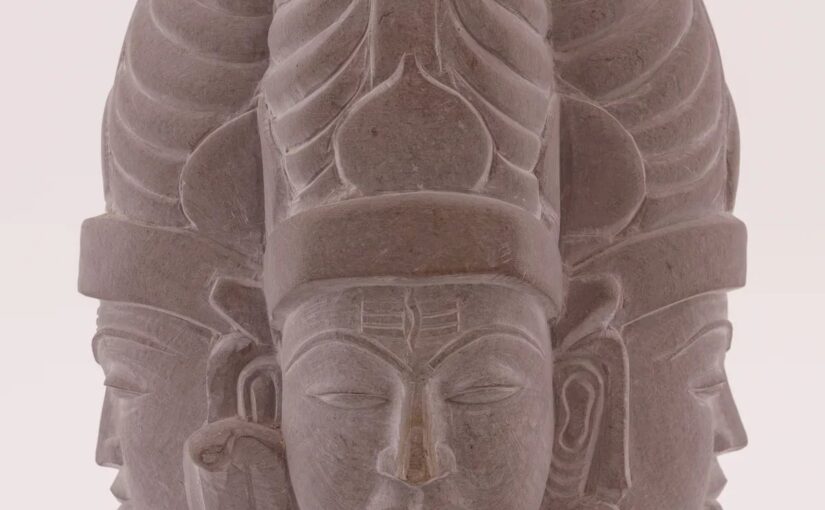
I’ve been fairly busy the past few days, mostly focused on BRAHM Collections; writing about carpets, curating Trimurti sculptures, and exploring Ardhanarishvara iconography. It’s been a deep dive into the civilizational grammar of India and by extension, the porous boundary between sacred art and civil religion.
In the background, I’ve also been chipping away at longer-form reflections; trying to crack the formula for my newsletter (believe it or not the readership is neck to neck with BP but different demographics). It’s all a bit scattered, but the writing has become its own brown paper trail.
On the Commentariat (and Why I’m Stepping Back)
I still follow the commentariat but I’m slowly easing off. There’s a rhythm to it, sure, but too often it turns into exhaustion. I’ve removed all of Honey Singh’s abusive posts. Abuse is now a hard red line for me, but beyond that, I’m stepping back from constant moderation or sparring. Continue reading Threads, Carpets, and PM Modi’s 75th
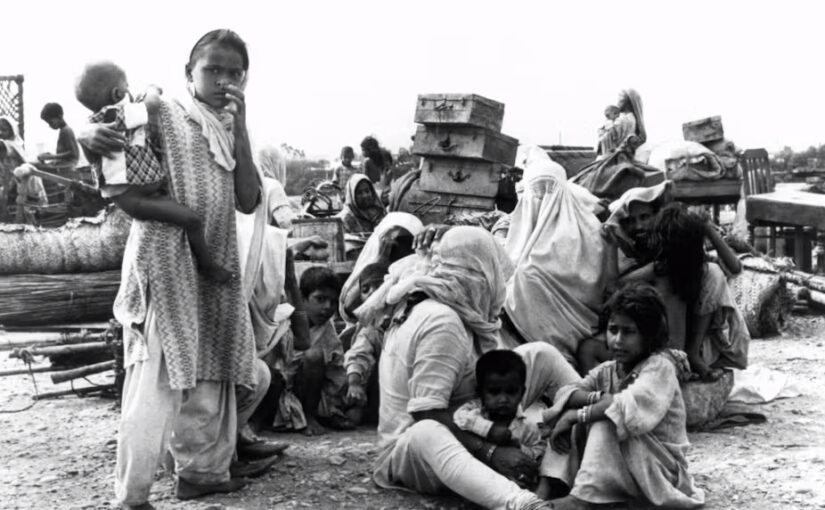
I just saw a comment that genuinely crossed the line; not just a misstep, but something hateful, dehumanizing, and deeply communal. It invoked Partition violence in a way that glorified massacre. That’s not just a dogwhistle, that’s a foghorn.
As most of you know, I’m a light-touch moderator. I tolerate a lot. I believe in messy dialogue. I’ve been fair on my WhatsApp groups, fair on BP, and generally try to err on the side of letting things play out. But this? This wasn’t a close call. It was a clear failure of moral language.
Even if the commenter didn’t “mean it,” this kind of rhetoric has consequences. When you’re speaking about events like 1947, where entire families were destroyed, you need to speak with care, not contempt. There’s no room for casual violence, coded language, or historical gloating. None. Zero.
Before this commenter contributes further to the blog, he will need to fully retract and apologise for the communal language he used. Criticism is fair game. But hate speech is not. Kabir can be theatrical, yes but he does not traffic in dehumanization. The standards must be consistent, and that comment clearly crossed the line.
Please observe this on the thread. I’m traveling, and this is an open post. I’ll be back with more soon. I’ve written a bit in my newsletter but I will expand on those.
In the meantime:
➡️ Yes, it appears Pakistan is running smart diplomacy — both with Iran and the U.S.
➡️ I don’t have time to share the links (plane about to take off); they’re all Google-able.
➡️ But credit where it’s due. There is no infallibility in foreign affairs. But when someone cannot stand to see Pakistan get anything right, it reveals more about their own biases than about geopolitics.
This isn’t about defending states or “sides”; it’s about defending basic decency in discourse.
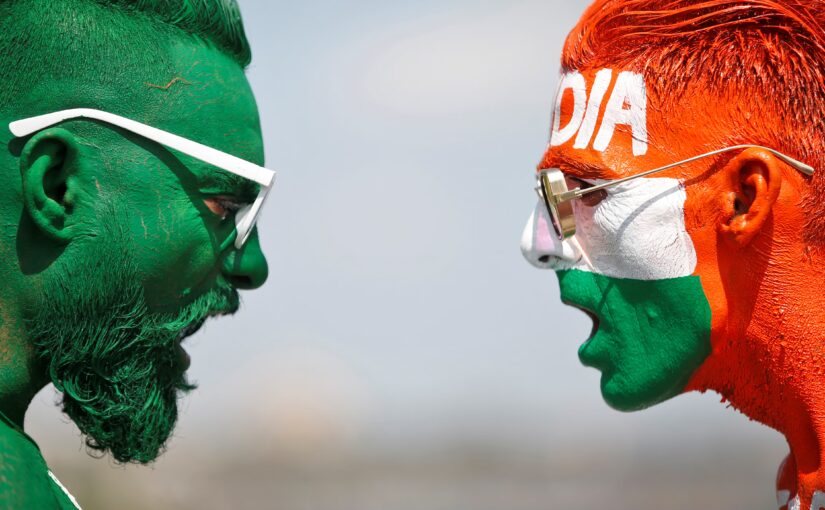
India and Pakistan used to dance together; locked in step, even if offbeat. Now, they move in opposite directions, occasionally brushing shoulders, never quite facing each other.
Take this month. On one hand, India is set to join the Central Asian Football Association’s (CAFA) Nations Cup; a sporting signal of its growing diplomatic footprint across post-Soviet Asia. On the other hand, India pulled out of the WCL 2025 cricket semi-final against Pakistan, citing the tragic Pahalgam terror attack. The result? Pakistan walked into the final uncontested.
Two headlines. Two very different moods. One shows India gaining legitimacy in a new regional club. The other reflects how fragile the bilateral dance with Pakistan remains. Continue reading India, Pakistan & the Central Asian Dancefloor
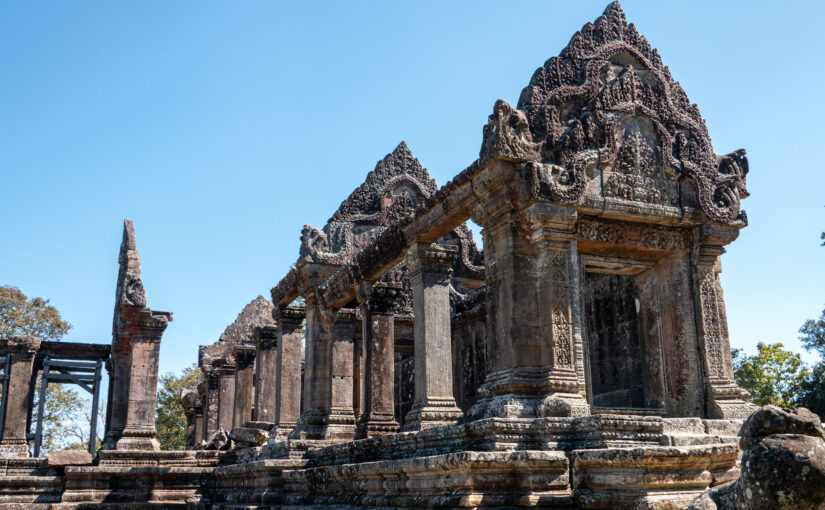
The long-running dispute between Thailand and Cambodia dates back more than a century, when the borders of the two nations were drawn after the French occupation of Cambodia.
Things officially became hostile in 2008, when Cambodia tried to register an 11th Century temple located in the disputed area as a Unesco World Heritage Site – a move that was met with heated protest from Thailand.
Why A Cluster Of Hindu Temples Is At Heart Of Thailand-Cambodia Conflict
It’s striking to see just how deeply Dharmic culture shaped Southeast Asia — not just as historical residue, but as a living civilizational layer. Buddhism, in many respects, prepared the civilizational terrain that Islam would later traverse.
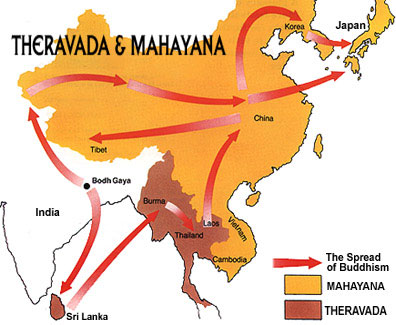
Buddhism, too, was not monolithic. The Sri Lankan Theravāda tradition influenced the western flank of Indo-China, while Mahayana currents, traveling through Sumatra, appear to have looped back toward Guangzhou, feeding into the Sinosphere.

The sectarian divergence between Thailand and Cambodia — Theravāda vs. Mahayana— adds nuance to territorial and cultural disputes like the Preah Vihear Temple, whose iconography and inheritance clearly align more with Cambodian history.
These are not just archaeological debates. They’re about cultural legitimacy, historical continuity, and civilizational memory.
In such moments, India, that is Bharat, must not remain a bystander. As the civilizational fountainhead, it should be playing a constructive role in cultural mediation and soft power diplomacy.
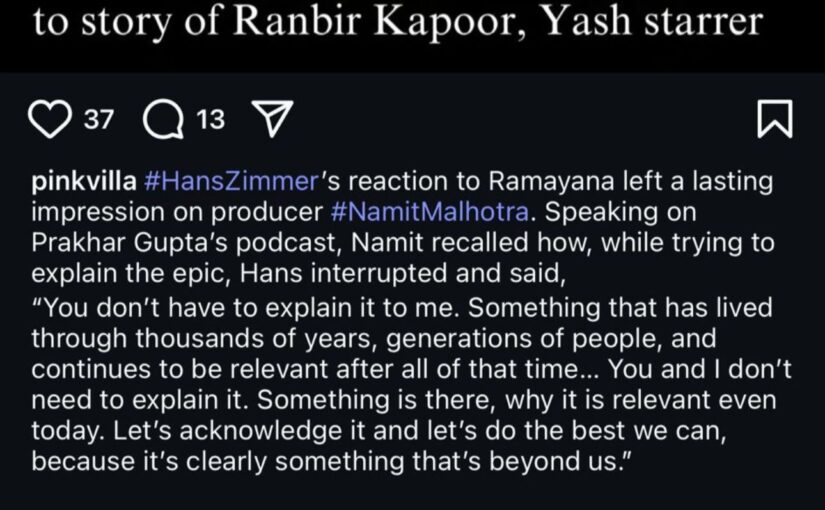
When producer Namit Malhotra began explaining the Ramayana to Hans Zimmer, the legendary composer cut him off:
“You don’t have to explain it to me. Something that has lasted thousands of years clearly has meaning. Let’s just do our best. It’s beyond us.”
Malhotra took this as reverence. In fact, it was erasure.
No serious Western artist would score The Ten Commandments or Schindler’s List without knowing the story. Imagine a composer saying, “Don’t explain the Illiad to me, it’s beyond me.” They’d be fired. But when it comes to Indian epics? The bar is subterranean. That’s not reverence.
That’s: I’m Western, I’m famous, I’m here for the cheque; not the history. The tragedy isn’t Zimmer’s line. It’s Malhotra’s awe. A Westerner shrugs off our most sacred text, and we call it wisdom. That’s not cultural pride. That’s civilizational confusion. It’s a pattern. Many elite Indians are fluent in the language of Islamic grievance; but tone-deaf to Western condescension.
Divide and rule still works:
Hindus thank the British for “freeing” them from Muslim rule
Muslims thank the British for “protecting” them from Hindu majoritarianism
Meanwhile, the West shrugs at our stories and we applaud.
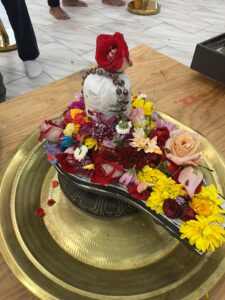
Shravan Monday at the New England Temple
Continue reading Hans Zimmer and the Polite Dismissal of the Ramayana
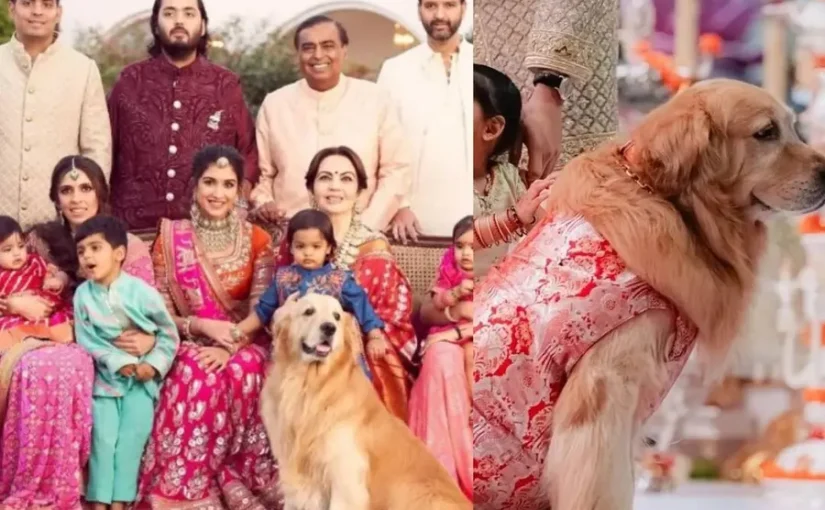
While reading Brad DeLong’s fascinating newsletter on centi-billionaires and political power (I’m going to ignore Elon’s self-imploding stunt), I noticed something that jarred me more than it should have: Mukesh Ambani’s name was misspelled as “Mukash.” A minor slip, perhaps. But it was the only error in a list that included Bernard Arnault, Warren Buffett, and Michael Bloomberg—men whose names command a certain global familiarity.
What does it say that even after spending nearly half a billion dollars on a wedding for his son, India’s wealthiest man doesn’t merit a spellcheck? It says a lot.
🧠 The Chimera of Respect via Capital Continue reading 🪙 What’s in a Name? Mukesh, Not Mukash.
Vice President JD Vance recently declared that America doesn’t need to “import a foreign class of servants” to remain competitive. “We did it in the ’50s and ’60s,” he said. “We put a man on the moon with American talent. Some German and Jewish scientists who had come over during World War two, but mostly by American citizens.”
The line is memorable—not for its nationalism, but for its breathtaking amnesia.
The moon landing was not the product of some closed, white-bread meritocracy. It was powered by German engineers, Jewish refugees, and immigrant scientists—many quite literally “imported.” Wernher von Braun, the face of NASA’s rocket program, was a former Nazi, repurposed by America for its Cold War dreams.
Today, the immigrant pipeline Vance sneers at includes his own in-laws—his wife’s parents, Indian-born academics. I’ve highlighted this problematic tendency before. They weren’t servants. They were scholars. Like hundreds of thousands who have powered this country’s universities, tech firms, hospitals, and labs. America doesn’t run on pedigree. It runs on brains. And yes, those brains often have accents.
America First doesn’t mean America stays first Continue reading “A Foreign Class of Servants” — JD Vance and the Great American Amnesia