The Honey Trap of the Ummah:

šŸ•Œ Reflections on Kabir, Afridi, and the Compact of Coexistence

The recent incident involving KabirĀ / Bombay Badshah / Honey Singh, and the orchestrated drama around his entrapment has, quite unexpectedly, become a catalyst for deeper discussion on Brown Pundits. While none have chosen to focus on analytics (ā€œ2,000 daily visitorsā€ā€”thank you very much:-), the real story lies in how this drama has exposed, yet again, the deep ideological fissures within South Asian identity; especially in the India-Pakistan-Muslim triad.

Let’s begin by being honest: Brown Pundits, for all its digressions into Sri Lanka, Nepal, or Bangladesh, is still primarily a blog about India and Pakistan, and more crucially, about Indian and Pakistani Muslims. This is a feature, not a bug. The origins of the blog lie in the Sepia Mutiny, a scattered band of intellectually independent thinkers questioning dogma from every direction (which started in 2004 and if we are a “daughter blog” that we means have 20+yrs of intellectual antecedents on the Brownet), and it has now matured into one of the few platforms willing to wrestle with the ideological ambiguities at the heart of the subcontinent.

šŸ§• Kabir’s Point: Brotherhood, Boundaries, and the Big Choice

Kabir made an astute, if difficult, observation: that he views Indian Muslims as ā€œbrothersā€, but does not feel the same about Pakistani non-Muslims.

This sounds contradictory until one understands the emotional exhaustion of watching Muslims oscillate between claiming ummah-hood when convenient, and weaponizing liberal values when needed. It’s a cognitive dissonance that creates what I can only call the moral coexistence trap: the idea that Muslims, especially in India, demand maximum accommodation, of their food (their nauseating right to murder Gau Mata on Bharat’s sacred soil itself), Faith, festivals, and foreign affiliations, while rarely extending the same pluralistic courtesy in return.

And then there’s that infamous Shahid Afridi clip, the one where he smashed his television after watching an Aarti, being performed. To many of us, that wasn’t just a cringe-inducing moment of bigotry; it begged a real question: Why do Indian cricketers continue to shake hands with Hinduphobes Hindu-hating men like Afridi and his ilk (the Pakistan cricket team)? At what point does tolerance become indulgence?

🚩 The Compact of Indian Minorities: Understand It or Leave It

Continue reading The Honey Trap of the Ummah:

Ghosts of 1947

I’m Sumayya from Pakistan, it’s very nice to meet you all. I need your help, it’s about my Dadi.
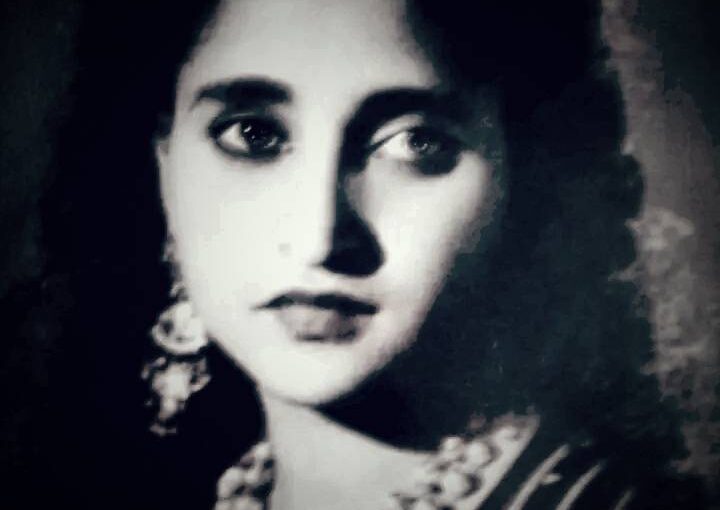
I’m attaching a picture of my Dadi a year after Partition. She opened up about Partition 1947. I believe it has been a severe kind of trauma where it took her nearly 70 years to open up completely, and even then she stopped talking after a while. It was a bloody massacre, Kashmir sadly bearing the brunt of it. Her last memories are being deceived to get in a bus which would take them to Pakistan, but then women yelling at the driver that he was taking them somewhere else.
Then men standing outside scaring them with swords, while women ran away from the bus and jumped into a nearby river. My Dadi (fourteen at the time) and her younger sister also ran to jump, but her father held them and said nothing would happen to them, and directed them to hide under a seat. She doesn’t remember much after that, just the fact that she heard her baby sister being taken away, and then herself being dragged out, upon which she tried to clutch onto her mother’s kurta but it tore. At that point, herself and her mother were the last in the bus, everyone else was either killed or taken away.
I am not sure, but she firmly, firmly believes that her sister was the most beautiful of them all and must not have been killed and maybe taken away to get married to someone. During her youth she tried posting about her in newspapers but it never helped. I know it’s probably too late, but maybe if she did get married and had children, she must’ve told her story to her kids, whom I could locate? I’ve registered to many Kashmiri directories and pages, let me know what else I could do to locate her family.
The only information I know is that they lived in Jammu, Kashmir and my Dadi’s name is Mehmooda. Her sister was Kulsoom (Ummul Kulsoom), they had eight more siblings. Their parents were Hakim Din and Amna.This is in no way a religious/political debate. Just want to use the internet to locate my long lost family.
Post Credit: Sumayya T Malick

Continue reading Ghosts of 1947

Zohran Mamdani and the Question of Civilizational Belonging

Kabir:

I would question how one defines ā€œIndianā€ culture vs ā€œHinduā€ culture (this is a real question, I’m not being snarky). Zohran speaks Urdu/Hindi, wears shalwar kameez and uses Bollywood references in his campaign. So clearly, he has no issues with Indian culture. He’s not a Hindu so he doesn’t go to temples etc. I’m not sure exactly what you expect him to do?

While Zohran Mamdani expresses outward familiarity with ā€œIndianā€ culture — speaking Hindi/Urdu, referencing Bollywood, wearing traditional attire — these are surface markers. They do not, on their own, constitute rootedness in Indian civilizational identity. Indian culture, especially post-Partition, is not simply a composite of languages and aesthetics. It is anchored in Dharma — a diffuse but pervasive civilisational ethos shaped over millennia by Hindu, Buddhist, Sikh and Jain worldviews.

Despite being born to a Hindu mother, Zohran’s public identity is strongly framed within a Muslim, Middle Eastern, and postcolonial activist context. His political and cultural instincts appear more aligned with pan-Islamic and Western progressive causes than with any articulation of Indian philosophical or spiritual heritage. His Syrian Muslim spouse, activist framing, and lack of visible engagement with Indic traditions contribute to this perception.

This is not a religious critique but a civilizational one. Just as Israel defines its national identity through a broadly Jewish character — irrespective of belief — India’s cultural self-understanding is inseparable from its Hindu roots. To be Indian, in this view, is not to perform cultural familiarity but to resonate with the metaphysical and historical rhythms of the civilization.

By that measure, Zohran — despite South Asian ancestry — does not code as civilizationally Indian, but rather as an American progressive of South Asian Muslim extraction. The distinction is subtle but important.

Rest in Peace

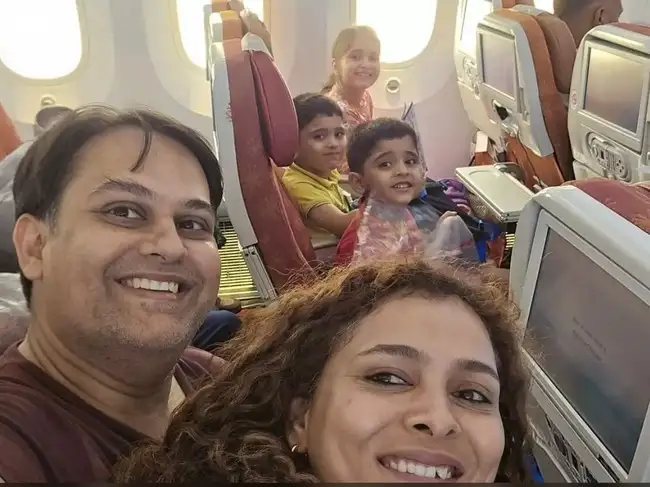
This is so incredibly heartbreaking; this beautiful family excited about a new life in the United Kingdom.

The picture was taken to celebrate ‘new beginnings’ as Komi Vyas, a doctor who worked in Udaipur, had quit her job and was moving to join her husband, Dr Prateek Joshi, in London, with their three children.Ā 

Joshi family killed in Ahmedabad crash

But, tragically, the family are among the at least 241 dead after the Gatwick-bound aircraft crashed moments after take-off from Ahmedabad Airport in the northwestern Indian state of Gujarat yesterday.Ā 

May they and the rest of the victims of the Air India crash rest in the Highest Heaven.

Denial Isn’t Just a River in Egypt—It’s a Dammed Indus Too

By X.T.M | Acting Editor, Brown Pundits

ā€œQureshiā€ has glibly informed me that caste doesn’t exist in Pakistan, and that had I not deleted his comment, I would have seen his thoughtful explanation on why his ancestors would (or wouldn’t- tough to follow) have ā€œembraced caste.ā€

Let’s address both claims.

I. Denial, and the Geography of Amnesia

First: the deletion. The reason I removed Qureshi’s comment was simple—it referred to ā€œwhen the Hindus left Pakistan in 1947.ā€ As if they left. As if it were a long vacation. That turn of phrase is emblematic of a deep, disturbing historical erasure—a civilizational amnesia that’s not just inaccurate, but actively offensive.

To phrase the violent dislocation of millions as ā€œleavingā€ is a textbook case of internalized Hinduphobia—a posture so normalized in Pakistani elite discourse that it barely registers as cruelty.

This is not about word policing. It’s about confronting the inherited violence buried in euphemism. Continue reading Denial Isn’t Just a River in Egypt—It’s a Dammed Indus Too

Brown Pundits